

We research everything we recommend. When you buy through our links, we may earn a commission. Learn more

Buying guide · 10 min read · Updated October 2, 2026

4 Best Camping Coolers For Food in 2026: A Practical Camping Guide

Best camping coolers for food: four coolers and ice packs picked for keeping meat, dairy and produce cold, compared on insulation, zones and liners.

Danny WalkerBy Danny WalkerCamping Editor at RV Gear Lab4 products comparedSpec-sheet researched
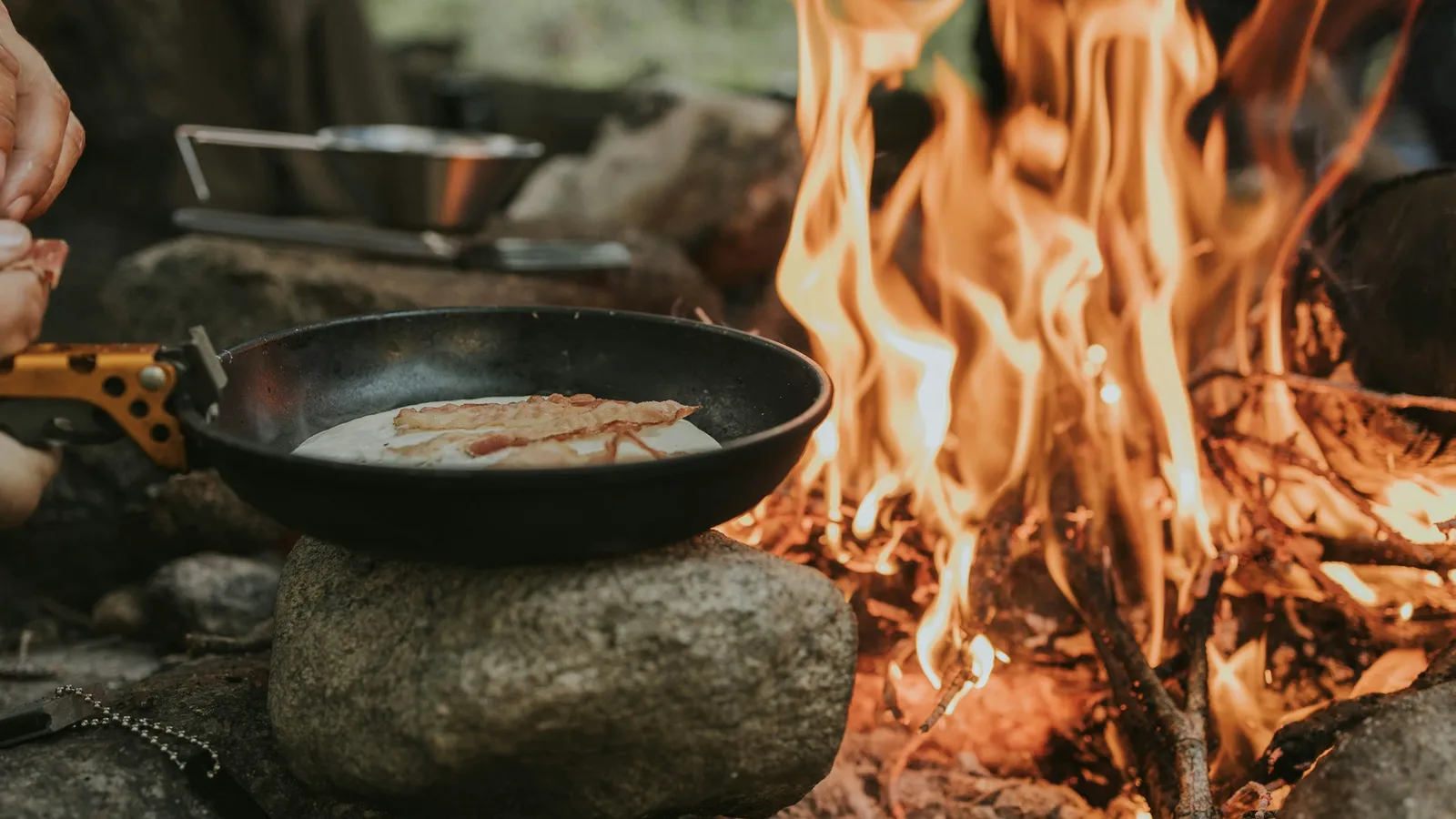
Breakfast cooking in a cast iron skillet over a campfire

At a glance

Our top picks

Keeping drinks cold is easy. Keeping chicken, eggs and cheese at a safe temperature for a weekend is harder, and a cooler that works for cans may not work for food.

These four lean toward food safety: a thick-walled hard cooler, a backpack with two compartments, a dry-and-wet soft cooler and slim ice packs. We compared insulation, compartment layout and liner design, because separating raw meat from produce matters as much as ice.

RV Gear Lab field notes

The Campsite Fit Check

Start with the job
VEVOR Ultra-Light Hard Cooler 52 QT leads this shortlist for Multi-day trips with raw meat. Use that fit as a reference point, then compare the alternatives against your own space and workload.
Specs that separate the picks
The first details to compare are 52 qt, 2.5 inch foam walls, 30L, 48 cans, Two independent zones. Confirm the exact model and included components before ordering.
Trade-off to plan for
Costs the most in this guide

Before you buy

What Matters Before You Choose a Camping Cooler For Food

Key buying criteria so you get the right fit the first time.

  1. 01

    Insulation thickness

    Food needs to stay below 40F, which takes thick walls and a tight lid. A 2.5 inch foam wall holds temperature far longer than thin foam. Look for stated wall thickness and a seal.

  2. 02

    Wet and dry zones

    Raw meat should not sit with ready-to-eat food, since juices can contaminate salads and bread. Two compartments let you separate them without extra containers. Look for independent zones on the listing.

  3. 03

    Leakproof liner

    A heat-welded or silicone-sealed liner keeps meltwater off food and out of the car, and a stain-resistant surface wipes clean after raw meat. Stitched liners leak at the seams and hold odors. Look for wording like heat-welded, seamless or stain-resistant on the listing.

  4. 04

    Ice packs and cold packs

    Frozen packs stay dry and slide between food, while block ice lasts longer but melts into the cooler. Using both gives you the longest cold with the least mess. Plan packs for the top and block ice for the bottom.

  5. 05

    Capacity for food

    Food takes more room than cans, because containers and packages do not stack as neatly. A 52 quart cooler holds a weekend of meals for four. Check the quart size and plan ice in the same space.

  6. 06

    Hold time claims

    A soft cooler rated for 12 hours is a day cooler, while a hard cooler gives you days. For raw meat, that difference matters for food safety. Match your food plan to the stated claim.

Our standards

Why You Can Trust RV Gear Lab

At RV Gear Lab, we compare products based on campsite fit, verified specifications, usability, setup requirements, weight, durability, and real-world trade-offs. We do not rank products purely on marketing claims or commission rates.

We have not personally tested every product listed. Where hands-on testing is not available, recommendations are based on verified manufacturer specifications, product documentation, use-case fit, and comparative research.

How we review camping gear →

Detailed reviews

The 4 best camping coolers for food, explained

01
Best for: Multi-day trips with raw meat

Our take

The only hard cooler here, and the one to trust with raw meat over a weekend.

Why it made the shortlist

VEVOR is a 52 quart hard cooler with 2.5 inches of closed-cell foam insulation and a commercial-grade silicone seal. It weighs 20.5 pounds, which the listing says is 30 percent lighter than rotomolded coolers.

It holds about 45 to 50 cans or a weekend of meats and produce. Its thick walls give it more insulation than the soft picks here.

Choose it for multi-day trips when food safety matters. It is a good fit for families who grill.

What works

  • 2.5 inch closed-cell foam walls
  • Commercial-grade silicone seal
  • Lighter than rotomolded coolers
  • Holds a weekend of meats and produce

Watch out for

  • Costs the most in this guide
  • Bulkier than a soft bag
The catch
It is the most expensive pick and takes up real space.
02
Best for: Hike-in picnics

Our take

A carry-anywhere food pack. It covers a day, not a week.

Why it made the shortlist

Hulongo is a 30L backpack cooler with 8 mm thickened foam and two insulated compartments. The listing says it keeps contents cool for up to 12 hours, and the waterproof nylon is scratch-resistant.

Two compartments separate drinks from food, and pockets add storage. The other soft pick, TOURIT, splits its zones side by side instead.

Choose it for a day on the trail or a hike-in picnic. It carries food hands-free.

What works

  • Two compartments keep food dry
  • Thickened 8 mm foam
  • Waterproof nylon with PU coating
  • Pockets for utensils

Watch out for

  • Rated for about 12 hours
  • Not for multi-day food storage
The catch
Twelve hours is enough for lunch, not for raw meat over two days.
03

Best Dry-and-Wet Split · 3 of 4

TOURIT 2-Zone Soft Cooler Bag

TOURIT 2-Zone Soft Cooler Bag
  • Two independent zones
  • Heat-welded leakproof liner
  • 30 or 48 can sizes
Check price on Amazon for TOURIT 2-Zone Soft Cooler Bag (opens in a new tab)
Best for: Picnics with raw and ready-to-eat food

Our take

A tidy and cheap way to keep raw items away from bread and fruit.

Why it made the shortlist

TOURIT has two independent side-by-side zones with high-density thermal walls and a heat-welded, stain-resistant interior. The listing claims 12 hours of cold, and sizes run 30 or 48 cans.

Keeping wet items such as meat apart from dry bread is the whole point of this design. It also takes ice packs well.

Choose it for picnics where you pack a mix of ready-to-eat and raw foods. It stays easy to wipe clean.

What works

  • Separate wet and dry zones
  • Stain-resistant welded liner
  • Ice pack friendly

Watch out for

  • Rated for about 12 hours
  • Smaller zones than one big chamber
The catch
Hold time is a few hours, not days.
04
Best for: Add-on for any cooler

Our take

A cheap upgrade for any cooler. Slide a few between food layers.

Why it made the shortlist

Fit & Fresh's XL slim ice packs measure 7 x 4.75 x 0.5 inches, and a set of 8 is slim enough to fit in a fully packed lunch bag. They are reusable and sold as a pack of 4.

They are also dry, so no meltwater soaks the food.

Choose them as an add-on to any cooler here. They are cheap and reusable.

What works

  • Slim enough for packed bags
  • Reusable pack of ice packs
  • No meltwater soaking food

Watch out for

  • Not a cooler by itself
  • Packs thaw faster than block ice
The catch
Small packs thaw faster than a block of ice.

Methodology

How We Built This Shortlist

Each pick was assessed across 5 criteria weighted for real-world use.

01

Insulation

Wall thickness and claims.

02

Compartments

Wet and dry separation.

03

Liners

Leakproof and stain-resistant.

04

Capacity

Cans and quarts.

05

Value

Price band.

Decision guide

Match a Camping Cooler For Food to Your Camp Setup

By Trip Length

Your situationRecommended pickWhy
Weekend with raw meatVEVOR 52 QT Hard Cooler2.5 inch foam walls
Day hike picnicHulongo Backpack CoolerTwo compartments
Picnic with raw and ready foodTOURIT Dry-Wet CoolerSeparate zones
Boost any coolerFit & Fresh Ice PacksSlim reusable packs

By Budget

BudgetRecommended pick
$0 to $20Fit & Fresh Ice Packs or TOURIT Dry-Wet Cooler
$30 to $120Hulongo Backpack Cooler or VEVOR 52 QT Hard Cooler

Hard Cooler vs Soft Cooler for Food

Hard cooler

Thick walls and a seal protect food for days. VEVOR 52 QT Hard Cooler.

Soft cooler

Light and portable for a day. Hulongo Backpack Cooler and TOURIT Dry-Wet Cooler.

Most campers cooking over a weekend should take VEVOR 52 QT Hard Cooler.

By Packing Style

PreferenceRecommended pick
Meat and produce apartTOURIT Dry-Wet Cooler
Hands-free carryHulongo Backpack Cooler
More cold in the same coolerFit & Fresh Ice Packs
One big chestVEVOR 52 QT Hard Cooler

For Raw Meat Specifically

Look for

A thick-walled cooler and a leakproof liner. Keep meat on the bottom and frozen.

In this comparison

VEVOR 52 QT Hard Cooler has 2.5 inch walls and a silicone seal, and TOURIT Dry-Wet Cooler separates zones.

When to Spend More

Spend more if

Spend more on VEVOR 52 QT Hard Cooler for multi-day food storage.

Save if

Save with TOURIT Dry-Wet Cooler and Fit & Fresh Ice Packs for day trips.

FAQ

Before You Bring One Home

What temperature should the cooler stay at?

Keep perishable food at 40F or below. A thermometer in the cooler helps you check. If ice melts away completely, the food may not be safe.

Should I use block ice or cubes?

Block ice melts slower, and cubes fill gaps around food. A mix of both works best. Frozen packs add dry cold between layers.

Is a hard cooler worth it over a soft one for food?

For a weekend, yes. Soft coolers lose cold in hours, which is risky for raw meat. Use a soft cooler for day picnics and a hard cooler for multi-day food.

How do I pack food in a cooler?

Pre-chill the cooler, put raw meat on the bottom in sealed bags, and layer ready-to-eat items above. Keep the lid shut as much as possible. A thermometer inside helps you check the temperature.

How do I keep a cooler clean?

Wash the cooler with mild soap after each trip and dry it with the lid open. Wipe the gasket and latches, where odors collect. Store it with the lid ajar.

Bottom line

The short version

Browse more camping coolers for food on Amazon →
Danny Walker, Camping Editor at RV Gear Lab

About the author

Danny Walker

Camping Editor at RV Gear Lab

Danny covers camping gear, campsite setup, outdoor power, sleep systems and practical camping advice, with a focus on helping campers make better gear decisions.

More from Danny →Editorial standards

Keep reading

Related guides