

We research everything we recommend. When you buy through our links, we may earn a commission. Learn more

Buying guide · 10 min read · Updated October 2, 2026

5 Best Collapsible Water Containers For Backpacking in 2026: A Practical Camping Guide

Best collapsible water containers for backpacking compared on capacity, opening, spigot and freezer safety for dry camps where you carry extra water.

Danny WalkerBy Danny WalkerCamping Editor at RV Gear Lab5 products comparedSpec-sheet researched
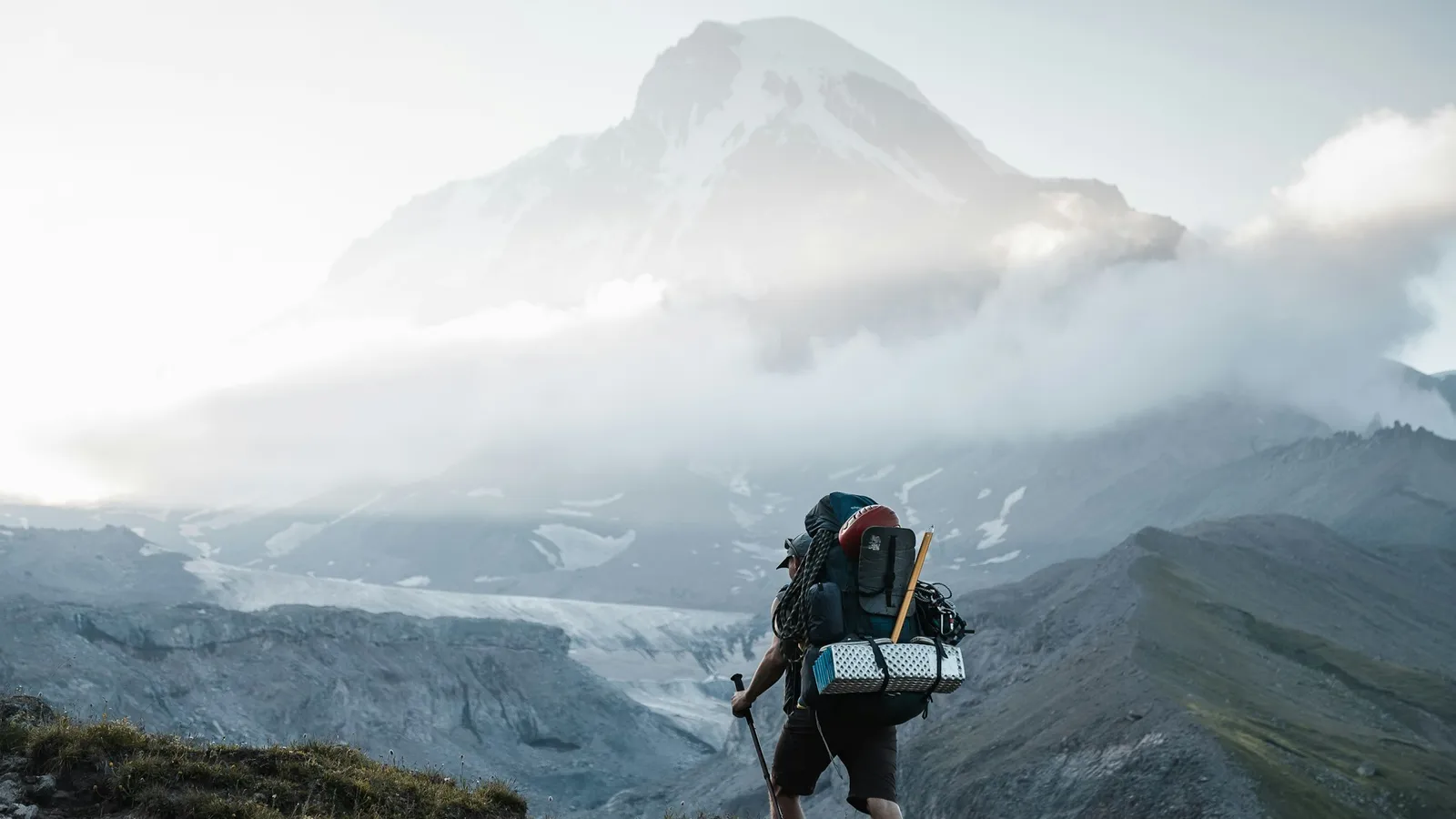
Hiker with a loaded backpack climbing a mountain trail

At a glance

Our top picks

On the trail you carry a collapsible container for camp water, not as your main bottle, so it should fold small and hold a size you can actually lift. A 1.3 gallon bag is about 11 lb when full, and a 2 gallon jug is about 17 lb.

None of the listings print a weight or packed size, so this guide ranks five options by capacity, opening, spigot and material, and tells you what to check. Two are 1.3 gallon bags, two are 2 gallon jugs and one is a pair of 5.3 gallon jugs for vehicle use.

RV Gear Lab field notes

The Campsite Fit Check

Start with the job
CoreMuse Camping Water Container 2 Gallon Collapsible Water Jug with Spout leads this shortlist for Camp cooking water. Use that fit as a reference point, then compare the alternatives against your own space and workload.
Specs that separate the picks
The first details to compare are 2.1 gal (8 L) jug, Four 1.3 gal bags. Confirm the exact model and included components before ordering.
Trade-off to plan for
Weight and packed size are not printed

Before you buy

What Matters Before You Choose a Collapsible Water Container For Backpacking

Key buying criteria so you get the right fit the first time.

  1. 01

    What the water weighs

    Water weighs about 8.3 lb per gallon, so a 1.3 gallon bag is about 11 lb and a 2 gallon jug about 17 lb. That sets how far you can walk with it. Fill containers part way when the trail is long.

  2. 02

    Packed size

    A collapsible container should fold to a small flat shape. None of these listings prints a packed size, so check the dimensions once you have it. Look for a flat-fold claim and roll rather than crease the plastic.

  3. 03

    Opening size

    A wide mouth fills quickly from a stream or tap, and a narrow 1.27 inch opening is slower. A narrow opening is harder to clean as well. Look for the opening size on the listing.

  4. 04

    Spigot and leaks

    A spigot makes pouring easy but adds a part that can leak. Bags without a spigot have fewer failure points but are awkward to pour. Test any spigot with water at home before the trip.

  5. 05

    Food-safe and freezer claims

    Look for BPA-free and food-safe wording for drinking water. A freezer rating, such as the SOCATER's -10 degrees C, lets the bag double as an ice pack. Do not freeze a full container, since water expands.

Our standards

Why You Can Trust RV Gear Lab

At RV Gear Lab, we compare products based on campsite fit, verified specifications, usability, setup requirements, weight, durability, and real-world trade-offs. We do not rank products purely on marketing claims or commission rates.

We have not personally tested every product listed. Where hands-on testing is not available, recommendations are based on verified manufacturer specifications, product documentation, use-case fit, and comparative research.

How we review camping gear →

Detailed reviews

The 5 best collapsible water containers for backpacking, explained

01
Best for: Camp cooking water

Our take

The best all-round size for carrying camp water.

Why it made the shortlist

The CoreMuse is a 2.1 gallon (8 liter) collapsible jug with a spout, a separated inlet and outlet to balance air pressure, and reinforced seams with upgraded sealing. The listing includes a lifetime warranty handled through the Amazon order.

It strikes the balance between the 1.3 gallon bags and the 5.3 gallon Alaeseje pair, holding enough for a few people at camp without the full weight of a larger jug. The separate inlet and outlet gives smoother pouring than the MIAJO.

It suits backpackers who want a camp water jug for cooking and washing. The reinforced seams add confidence on a rough trail.

What works

  • Separate inlet makes pouring smooth
  • Reinforced seams
  • Lifetime warranty on the listing
  • Right-sized for a few people

Watch out for

  • Weight and packed size are not printed
  • Spout detail is brief
The catch
At 2.1 gallons it weighs about 17 lb full, so fill it only part way for a long walk.
02

Best Lightweight Bags · 2 of 5

SOCATER Water Container Bags

SOCATER Water Container Bags
  • Four 1.3 gal bags
  • Freezer-safe to -10 C
  • 1.27 in opening
Check price on Amazon for SOCATER Water Container Bags (opens in a new tab)
Best for: Splitting water between hikers

Our take

Four small bags that spread water weight across a group.

Why it made the shortlist

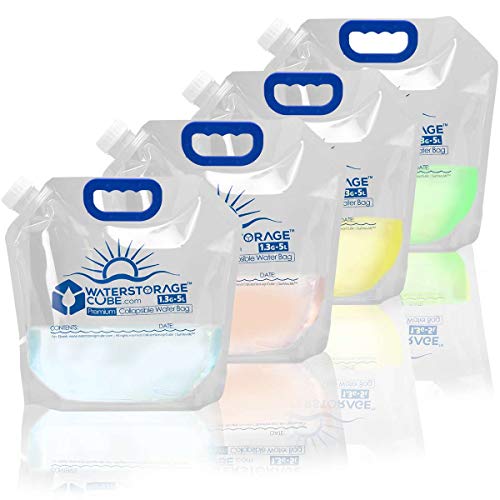
The SOCATER is a four-pack of 1.3 gallon bags made from PET PA PE plastics that the listing says are free of BPA, PVC and DEHP. The listing says they are freezer-safe down to -10 degrees C and have a 1.27 inch opening.

The bags are the smallest containers here, so each weighs about 11 lb when full, and four let you split water between several people. Compared with the WaterStorageCube bags, the listing gives the freezer temperature and the opening size.

It suits backpackers who want to carry water in small, shareable portions. A bag per hiker keeps the weight even.

What works

  • Four bags let you split the load
  • Freezer-safe to -10 degrees C
  • BPA, PVC and DEHP free

Watch out for

  • No spigot
  • Narrow 1.27 inch opening
The catch
There is no spigot, so pouring takes care.
03
Best for: Chilling water and drinks

Our take

Four small bags that can also chill drinks.

Why it made the shortlist

The WaterStorageCube is a four-pack of 1.3 gallon collapsible bags made from BPA-free, food-grade PET plastic. The listing says they fold flat and can be used to chill beverages or store frozen items.

It is a lean four-pack like the SOCATER, with a freeze-friendly use that doubles as a cooler pack. The SOCATER adds a stated freezer temperature.

What works

  • Four bags in one pack
  • Can chill or hold frozen items
  • Folds flat for storage
  • Food-grade PET

Watch out for

  • No spigot
  • Limited detail on the opening
The catch
Without a spigot or detailed opening size, filling and pouring takes practice.
04
Best for: Low-cost camp jug

Our take

A cheap jug with a spigot, good for casual backpacking.

Why it made the shortlist

The MIAJO is a 2 gallon collapsible jug with an upgraded leak-resistant spigot, a food-safe material and a flat fold. The listing positions it for camping, hiking, car camping and survival gear.

Priced under every other pick, it still gives a spigot where the bags do not.

It suits budget-minded hikers who want a simple camp jug. The spigot lets you pour without lifting the whole jug.

What works

  • Includes a spigot
  • Food-safe material
  • Folds flat in a pack

Watch out for

  • No warranty stated
  • Fewer details on build
The catch
The listing gives few build details, so check it for leaks before you rely on it.
05
Best for: Vehicle-supported camps

Our take

The big-capacity pair for camps close to the car.

Why it made the shortlist

The Alaeseje is a pair of 5.3 gallon BPA-free containers with a spigot, a hook and reinforced carry handles. The listing describes a wide-mouth opening for fast filling and easy cleaning, and food-contact thickened material.

The listing says it suits vehicle, cabinet and backpack carrying.

It suits trailhead camps and vehicle-supported trips where weight is less critical. The hook lets you hang the jug at a wash station.

What works

  • Wide mouth for fast fills
  • Reinforced carry handles
  • Spigot and hanging hook
  • Two large containers

Watch out for

  • Too heavy full for a long hike
The catch
A full 5.3 gallon jug weighs about 44 lb, so it is not for a backpack.

Methodology

How We Built This Shortlist

Each pick was assessed across 5 criteria weighted for real-world use.

01

Capacity and weight

We matched each container's capacity to the weight you would carry, at about 8.3 lb per gallon.

02

Opening and fill

We compared the opening size and how easy each is to fill from a stream or tap.

03

Spigot or no spigot

We separated jugs with spigots from bags that pour from the top.

04

Material

We noted food-safe, BPA-free and freezer-safe claims.

05

Warranty and build

We looked for warranties and seam reinforcement.

Decision guide

Match a Collapsible Water Container For Backpacking to Your Camp Setup

By Trip Style

Your situationRecommended pickWhy
Weekend backpack, camp cookingCoreMuse 2 Gal2.1 gallons with a separate inlet.
Splitting water between hikersSOCATER 1.3 Gal 4-PackFour small bags.
Cold drinks and ice packsWaterStorageCube 1.3 Gal 4-PackFreeze-friendly bags.
Lowest costMIAJO 2 Gal JugCheapest jug with a spigot.
Trailhead camp near the carAlaeseje 5.3 Gal 2-PackTwo large containers with a wide mouth.

By Budget

BudgetRecommended pick
$0 to $10MIAJO 2 Gal Jug or SOCATER 1.3 Gal 4-Pack
$10 to $20WaterStorageCube 1.3 Gal 4-Pack or CoreMuse 2 Gal
$10 to $20Alaeseje 5.3 Gal 2-Pack

Bags vs Jugs

Bags

The SOCATER 1.3 Gal 4-Pack and WaterStorageCube 1.3 Gal 4-Pack are small, fold flat and split the load, but have no spigot.

Jugs

The CoreMuse 2 Gal, MIAJO 2 Gal Jug and Alaeseje 5.3 Gal 2-Pack have spigots and hold more, at higher weight.

Choose the CoreMuse 2 Gal for most backpackers and the bags for splitting weight.

By Water Need

NeedRecommended pick
Few liters for a solo hikerSOCATER 1.3 Gal 4-Pack
Cooking and washing for twoCoreMuse 2 Gal
Group at a vehicle-supported campAlaeseje 5.3 Gal 2-Pack

For Dry Camps Specifically

Look for

A capacity you can lift full, a spigot or a wide mouth and a flat fold.

In this comparison

The CoreMuse 2 Gal lists 2.1 gallons with reinforced seams, and the Alaeseje 5.3 Gal 2-Pack lists a wide-mouth opening and hook.

When to Spend More

Spend more if

Spend more on the CoreMuse 2 Gal for the warranty and separate inlet, or the Alaeseje 5.3 Gal 2-Pack if your camp is near the car.

Save if

Save with the MIAJO 2 Gal Jug or a bag pack like the SOCATER 1.3 Gal 4-Pack if you want simple, low-cost carrying.

FAQ

Before You Bring One Home

How much water should I carry to a dry camp?

Plan about 1 gallon per person per day for drinking and basic cooking. A 2 gallon jug covers two people for a night. Carry less if you can filter on site.

Can I put these in my pack?

The 1.3 gallon bags and 2 gallon jugs fold flat and fit in a pack when empty. Fill them at camp or the last source. The 5.3 gallon Alaeseje pair is better for the car.

Are the bags safe for drinking water?

The listings describe BPA-free, food-grade materials. A container does not treat water, so use treated or tap water. Rinse the bag before first use.

Can I freeze water in them?

The WaterStorageCube and SOCATER list freeze-friendly use, with the SOCATER citing -10 degrees C. Fill only partway, since water expands. Freeze flat.

How do I clean a collapsible jug?

Rinse with warm water, then air dry open. A wide mouth like the Alaeseje makes this easier. Do not fold it damp.

Bottom line

The short version

Browse more collapsible water containers for backpacking on Amazon →
Danny Walker, Camping Editor at RV Gear Lab

About the author

Danny Walker

Camping Editor at RV Gear Lab

Danny covers camping gear, campsite setup, outdoor power, sleep systems and practical camping advice, with a focus on helping campers make better gear decisions.

More from Danny →Editorial standards

Keep reading

Related guides