

We research everything we recommend. When you buy through our links, we may earn a commission. Learn more

Buying guide · 10 min read · Updated October 2, 2026

6 Best RV Wifi Booster With External Antenna in 2026: A Practical RV Guide

Best external antennas for RV Wi-Fi boosting, six omni, panel and cellular models compared by gain, band and connector type.

Bowen HigginsBy Bowen HigginsRV Editor at RV Gear Lab6 products comparedSpec-sheet researched

At a glance

Our top picks

An external antenna improves what a router or extender can hear, but only if the connector and band match. This list has two Wi-Fi omni antennas, one 20 dBi Wi-Fi panel, one dual-band omni at 7 dBi, and two cellular antennas.

Picks were ordered by how clearly each listing states gain, frequency and connector. A cellular antenna helps a cellular router, not a Wi-Fi extender, and the entries say which is which.

RV Gear Lab field notes

The Rig Fit Check

Start with the job
Tupavco WiFi Panel Antenna leads this shortlist for Point-to-point links. Use that fit as a reference point, then compare the alternatives against your own space and workload.
Specs that separate the picks
The first details to compare are 20 dBi, 2.4 GHz panel, 10 dBi omni, dual band, 9 dBi dual-band omni. Confirm the exact model and included components before ordering.
Trade-off to plan for
2.4 GHz only

Before you buy

What Matters Before You Choose an RV Wifi Booster With External Antenna

Key buying criteria so you get the right fit the first time.

  1. 01

    Gain against beam width

    More dBi does not always mean better. Antenna gain in dBi describes how tightly the antenna focuses signal, and higher gain narrows the beam. A 10 dBi directional antenna must be pointed at the source, while an omni antenna covers every direction with less reach. Match the gain to whether your rig moves often, and check the connector type on the listing.

  2. 02

    Connector match

    Connectors must match. Connector type decides whether an antenna fits your router: RP-SMA, SMA and N-female are not interchangeable without adapters. A wrong connector is the most common reason an antenna sits unused. Compare the connector named on the antenna with the one printed beside your router's ports.

  3. 03

    Wi-Fi or cellular

    Antenna type must match device. A cellular booster amplifies existing phone signal and is a separate product from a Wi-Fi extender, which repeats a Wi-Fi network. Boosters need an outside signal to amplify and do not create internet on their own. Confirm which kind a listing is before buying, and read what carriers or bands it names.

  4. 04

    Band coverage

    Bands decide which networks work. Wi-Fi band decides range and speed: 2.4 GHz travels farther through walls and trees, while 5 GHz is faster at short distance. A dual-band product lets you use both, and listed speed totals are lab maximums rather than what a campground link delivers. Look for the band names and treat the headline Mbps figure as a ceiling.

  5. 05

    Weather and mount

    Outdoor use needs a rating and mount. Mounting method changes both reach and installation effort: a roof mount clears metal walls but needs a cable pass-through, while a suction or magnetic mount installs without drilling. Check whether a mast, bracket or hardware is included, since some listings leave the mast out.

Our standards

Why You Can Trust RV Gear Lab

At RV Gear Lab, we compare products based on rig fit and power or hookup compatibility, verified specifications, usability, setup requirements, weight, durability, and real-world trade-offs. We do not rank products purely on marketing claims or commission rates.

We have not personally tested every product listed. Where hands-on testing is not available, recommendations are based on verified manufacturer specifications, product documentation, use-case fit, and comparative research.

How we review RV gear →

Detailed reviews

The 6 best rv wifi booster with external antenna, explained

01

Best Long Reach Panel · 1 of 6

Tupavco WiFi Panel Antenna
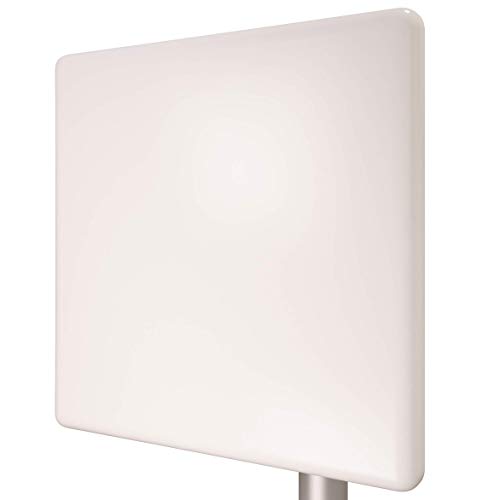
Tupavco WiFi Panel Antenna
  • 20 dBi, 2.4 GHz panel
  • N-female connector
  • Outdoor directional
Check price on Amazon for Tupavco WiFi Panel Antenna (opens in a new tab)
Best for: Point-to-point links

Our take

Best for aiming at one distant access point.

Why it made the shortlist

The Tupavco TP511 is a 2.4 GHz outdoor directional panel antenna with 20 dBi gain and an N-female connector. The listing says it collects signal from a remote location or bridges two points.

It has the highest gain in the group, which narrows the beam and extends reach compared with the 7 to 10 dBi omnis.

Another reason it earns a slot: bridges two points.

What works

  • Highest gain in the group
  • Directional focus cuts interference
  • Outdoor design
  • Bridges two points

Watch out for

  • 2.4 GHz only
  • Must be aimed at the source
02
Best for: Router antenna upgrades

Our take

A fit for owners who want an omni upgrade on a router.

Why it made the shortlist

The TREADALT is a 10 dBi dual-band 2.4 and 5 GHz omni antenna with an RP-SMA connector for routers, access points, USB adapters and cameras. It is compact for its gain.

It carries the highest omni gain here and both bands, ahead of the 9 dBi and 7 dBi eifagur models. It costs about the same.

What works

  • Highest omni gain here
  • Both bands covered
  • RP-SMA fits many routers

Watch out for

  • Detail is thin on the listing
  • Omni reach is shorter than a panel
03
Best for: Outdoor omni mounts

Our take

Good for outdoor mounts on a rig.

Why it made the shortlist

The eifagur 9 dBi antenna covers 2.4 GHz and 5 or 5.8 GHz and is described as built for outdoor conditions, with uses including RV cameras and security gear. On the plus side, outdoor-ready build.

It sits between the 10 dBi TREADALT and the 7 dBi eifagur in gain and states an outdoor build.

What works

  • Dual-band coverage
  • Outdoor-ready build
  • Works with RV cameras

Watch out for

  • Connector not named in listing
  • Lower gain than the 10 dBi
04
Best for: Simple antenna swaps

Our take

A fit for owners who want a simple RP-SMA upgrade.

Why it made the shortlist

The eifagur 7 dBi antenna covers 2.4, 5 and 5.8 GHz with an omni pattern and an RP-SMA connector. The listing notes use with IP cameras, routers and RV rear-view cameras.

It has the lowest gain in the group and the clearest connector statement. It costs the least among the Wi-Fi antennas.

What works

  • Connector clearly named
  • Three bands listed
  • Works with cameras

Watch out for

  • Lowest gain in the group
  • Omni reach is limited
05

Best Cellular Directional · 5 of 6

Maswell 4G 5G Directional 2X2 MIMO Antenna Outdoor

Best for: Cellular router owners

Our take

Best for owners with a cellular router and a distant tower.

Why it made the shortlist

The Maswell is a 4G and 5G directional 2x2 MIMO antenna at 10 dBi covering 700 to 3800 MHz with a 10 km range figure. It boosts cellular reception for a router or hotspot with matching ports.

It carries the broadest frequency range in the group.

What works

  • Covers 4G and 5G bands
  • MIMO design for two streams
  • Directional gain
  • Outdoor use

Watch out for

  • Cellular only, not Wi-Fi
  • Needs matching ports on the router
06
Best for: Sierra RV55 owners

Our take

A fit for RV55 owners wanting a magnetic replacement.

Why it made the shortlist

This magnetic antenna is a 5 dBi unit with a 5 foot cable and an SMA connector listed for the Sierra Wireless AirLink RV55 LTE router. Its frequency range covers 690 to 960, 1710 to 2170 and 2500 to 2700 MHz.

What works

  • Magnetic mount is easy
  • Cable included
  • LTE band coverage
  • Matched to RV55

Watch out for

  • Only fits listed router
  • Low gain

Methodology

How We Built This Shortlist

Each pick was assessed across 4 criteria weighted for real-world use.

01

Gain

Stated dBi values were compared with beam shape.

02

Bands

Wi-Fi bands and cellular ranges were read.

03

Connector

RP-SMA, SMA and N-female were listed.

04

Fit

Router matches were noted.

Decision guide

Match an RV Wifi Booster With External Antenna to Your RV

By goal

Your situationRecommended pickWhy
Aim at one distant access pointTupavco 20dBi Panel20 dBi directional
Better router antennaTREADALT 10dBi10 dBi dual band
Outdoor omnieifagur 9dBiOutdoor-ready dual band
Simple swapeifagur 7dBiRP-SMA connector
Cellular routerMaswell 4G5G700 to 3800 MHz

By Budget

BudgetRecommended pick
$10 to $20TREADALT 10dBi or eifagur 9dBi
$10 to $40eifagur 7dBi or Sierra RV55 Antenna
$50 to $80Tupavco 20dBi Panel or Maswell 4G5G

Panel vs omni

Panel

Focused beam and reach, but must be aimed. Tupavco 20dBi Panel sits here.

Omni

Covers all directions with less reach. TREADALT 10dBi, eifagur 9dBi and eifagur 7dBi sit here.

Most buyers should default to the TREADALT 10dBi unless one distant source needs a panel.

By connector

ConnectorRecommended pick
N-femaleTupavco 20dBi Panel
RP-SMAeifagur 7dBi
SMA magneticSierra RV55 Antenna
Cellular portsMaswell 4G5G

For Boosting Campground Wi-Fi Specifically

Look for

a Wi-Fi band match, a connector match and a clear aim

In this comparison

The Tupavco 20dBi Panel works on 2.4 GHz with N-female, and the TREADALT 10dBi adds 5 GHz.

When to Spend More

Spend more if

Spend more if you want the Tupavco 20dBi Panel for reach or the Maswell 4G5G for cellular.

Save if

Save with the eifagur 7dBi or TREADALT 10dBi.

FAQ

Before You Bring One Home

Does an antenna alone boost Wi-Fi?

It only helps a device with a matching connector. A router with fixed antennas needs a different approach.

What mistake do buyers make?

Buying the wrong connector. Check RP-SMA, SMA and N-female on both ends.

Is the Tupavco 20dBi Panel worth it over the TREADALT 10dBi?

It reaches farther but covers 2.4 GHz only and must be aimed. The TREADALT is easier.

How do I install one?

Mount it high with a clear path, attach the cable and tighten the connector. Aim a panel at the source.

How do I maintain it?

Check the connector for corrosion each season. Re-aim a directional antenna after every move.

Bottom line

The short version

Browse more rv wifi booster with external antenna on Amazon →
Bowen Higgins, RV Editor at RV Gear Lab

About the author

Bowen Higgins

RV Editor at RV Gear Lab

Bowen covers RV power, water systems, towing and leveling, upkeep and interior comfort, with a focus on matching gear to the rig, the hookups and the way you actually travel.

More from Bowen →Editorial standards

Keep reading

Related guides