

We research everything we recommend. When you buy through our links, we may earn a commission. Learn more

Buying guide · 10 min read · Updated October 2, 2026

6 Best Camping Lanterns For Backpacking in 2026: A Practical Camping Guide

Packable camping lanterns for backpacking compared on weight, packed size, brightness and battery type, from inflatable solar to collapsible AA models.

Danny WalkerBy Danny WalkerCamping Editor at RV Gear Lab6 products comparedSpec-sheet researched
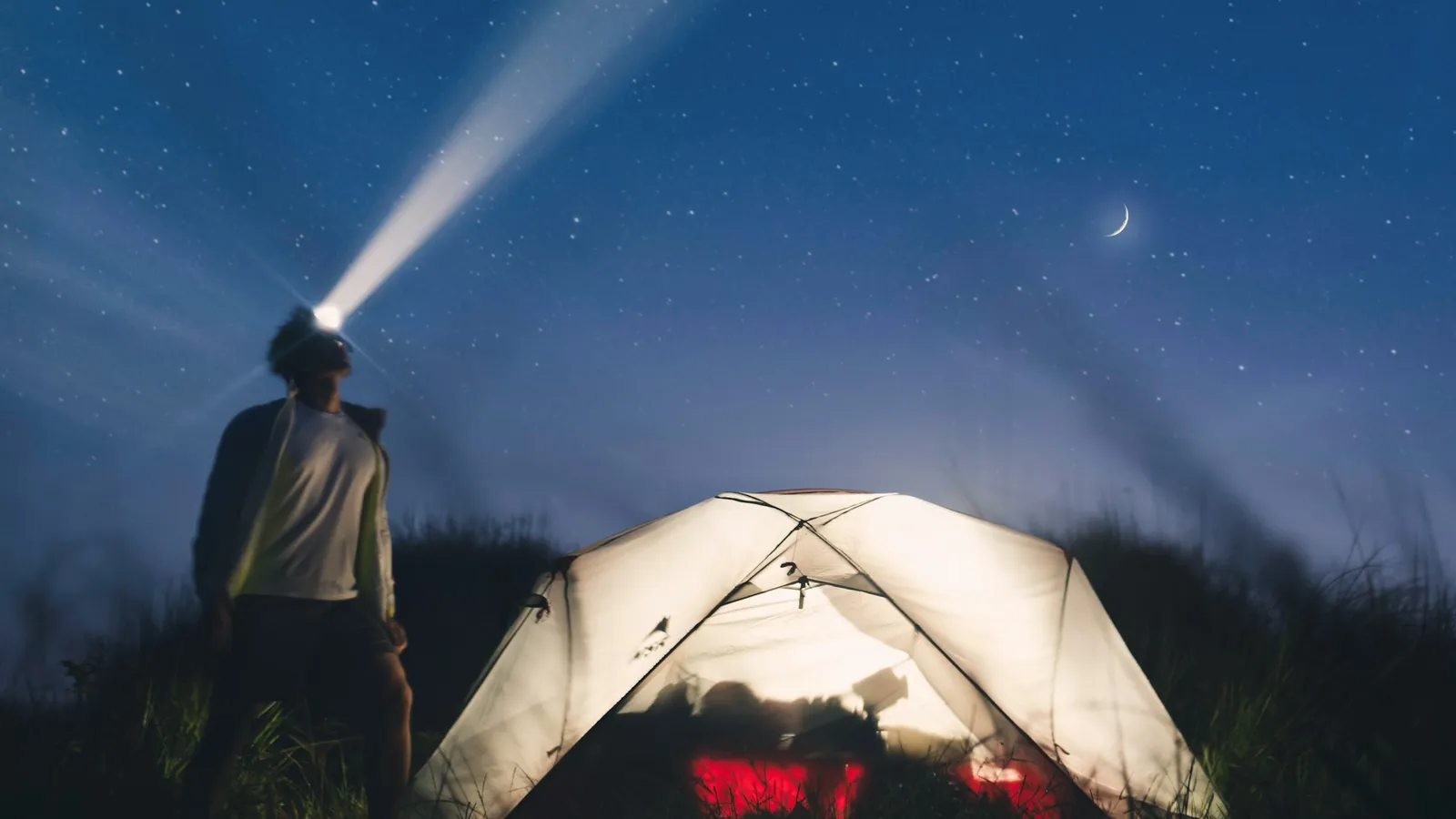
Camper wearing a headlamp in front of a tent at night

At a glance

Our top picks

On the trail every ounce and cubic inch counts, so a backpacking lantern is judged by how small it packs and how long it runs, not by peak lumens. This list covers six lights that collapse, inflate or fit in a palm.

Listings were compared on stated weight or packed size, light output, power source and water rating. Several do not give a weight, so the guide points out where to check before you buy.

RV Gear Lab field notes

The Campsite Fit Check

Start with the job
DIBMS Solar Camping Lantern leads this shortlist for Rechargeable, packable all-rounder. Use that fit as a reference point, then compare the alternatives against your own space and workload.
Specs that separate the picks
The first details to compare are 300 lumens, 8.02 oz, 75 lumens, 24 hours, 300 lumens, 3 AA included. Confirm the exact model and included components before ordering.
Trade-off to plan for
Solar charging needs 9 hours of sun

Before you buy

What Matters Before You Choose a Camping Lantern For Backpacking

Key buying criteria so you get the right fit the first time.

  1. 01

    Weight and pack volume

    Weight is what you feel after ten miles, and collapsed size decides what else fits in the pack. A light listed at 8 ounces behaves very differently from an unlisted weight. Look for an ounce or gram figure and a stated packed height in the listing.

  2. 02

    Power source on the trail

    Built-in rechargeable cells need a power bank or sun, while AA and AAA cells can be swapped anywhere. On trips longer than three nights, spare batteries often weigh more than a small charging bank. Check whether batteries are included and what charge cable is in the box.

  3. 03

    Real brightness for camp tasks

    Backpacking tasks such as cooking, reading and tent setup need roughly 100 to 300 lumens, not thousands. Very high lumen claims often drain a small battery in an hour or two. Look for brightness levels and the runtime listed at each.

  4. 04

    Water and impact resistance

    A lantern strapped to a pack faces rain, drops and condensation. IPX4 resists splashes, IPX5 handles jets and IP67 handles brief immersion. Read the actual IP number rather than the word waterproof.

  5. 05

    Hanging and standing options

    A light you cannot hang is hard to use in a small tent. A hook, magnet or handle puts the light overhead, where it spreads best. Look for the hanging method named on the listing and check it fits your tent loops.

  6. 06

    Single light or multi-pack

    Packs offer a light per tent or per person and lower the cost of each lamp. A single lantern is simpler and usually brighter. Think about group size before choosing.

Our standards

Why You Can Trust RV Gear Lab

At RV Gear Lab, we compare products based on campsite fit, verified specifications, usability, setup requirements, weight, durability, and real-world trade-offs. We do not rank products purely on marketing claims or commission rates.

We have not personally tested every product listed. Where hands-on testing is not available, recommendations are based on verified manufacturer specifications, product documentation, use-case fit, and comparative research.

How we review camping gear →

Detailed reviews

The 6 best camping lanterns for backpacking, explained

01

Best Overall · 1 of 6

DIBMS Solar Camping Lantern

DIBMS Solar Camping Lantern
  • 300 lumens, 8.02 oz
  • 1600mAh, USB or solar
  • Collapsible, IPX4
Check price on Amazon for DIBMS Solar Camping Lantern (opens in a new tab)
Best for: Rechargeable, packable all-rounder

Our take

The light that best matches the packing and charging needs of a trail trip. Good value for a collapsible solar lantern.

Why it made the shortlist

The DIBMS is a collapsible lantern that lists 300 lumens from six LED chips and an 8.02 ounce weight. It has a built-in 1600mAh battery that charges by USB cable in about 4 hours or by solar in 9 hours of direct sun.

It also lists 6 to 11 hours of light and IPX4 protection.

It suits backpackers who want a rechargeable light that packs down and needs no spare batteries. A folding hook lets it hang from a tent loop.

What works

  • Lists a weight under half a pound
  • Charges by USB or solar
  • Collapses for packing
  • No spare batteries needed

Watch out for

  • Solar charging needs 9 hours of sun
  • 6 to 11 hours of light per charge
The catch
Full solar charging takes about 9 hours of direct sunlight.
02

Best Ultralight Packability · 2 of 6

LuminAID Nova Inflatable Solar LED Lantern for Camping

Best for: Packing flat and wet trips

Our take

The pick for minimal pack volume and wet conditions. Plan it as a table or tent light, not a camp floodlight.

Why it made the shortlist

Blow it up and the LuminAID Nova becomes a 75 lumen solar lantern with several brightness steps and an IP67 body. A full charge is listed at up to 24 hours, with no spare cells to carry.

It packs flatter than any other pick here and carries the highest water rating, at IP67. Compared with the DIBMS, it trades brightness for a body that deflates to almost nothing.

It suits trekkers who prize space over output, such as kayak-camp or river trips. A shatterproof body suits rough handling in a pack.

What works

  • Packs flat when deflated
  • IP67 handles full immersion
  • Shatterproof body
  • No batteries to carry

Watch out for

  • Only 75 lumens
  • Solar charging only
The catch
At 75 lumens it gives soft light and depends on sun to recharge.
03

Best Collapsible AA · 3 of 6

Lewis N. Clark Collapsible Camping Lantern

Lewis N. Clark Collapsible Camping Lantern
  • 300 lumens, 3 AA included
  • Packs down to 5 inches
  • IPX4 weather resistant
Check price on Amazon for Lewis N. Clark Collapsible Camping Lantern (opens in a new tab)
Best for: Swappable-battery trips

Our take

A simple lantern that runs on common AA cells. Pick it when charging options are limited.

Why it made the shortlist

The Lewis N. Clark is a collapsible lantern that packs down to 5 inches tall and lists 300 lumens. It runs on 3 AA batteries, which are included, and has an IPX4 body with a carry handle.

It needs no charging time, unlike the DIBMS.

It suits backpackers who prefer swappable AA cells for long trips. The included batteries mean it works the moment it is unboxed.

What works

  • Batteries come in the box
  • Slide to set brightness
  • Packs to about 5 inches
  • Carry handle for hanging

Watch out for

  • Weight is not stated
  • AA cells add pack weight
The catch
The listing gives no weight, and spare AA cells add to what you carry.
04
Best for: Lighting a group with minimal weight

Our take

A small lamp for every tent and pack, with a rain rating to match. Easy to share among a group.

Why it made the shortlist

The FLY2SKY is a five-pack of palm-sized tent lights, each 5.7 by 2.1 inches with three LED beads and 150 lumens.

Clark. It also lists the strongest water rating after the LuminAID.

It suits groups who want a light per tent or per person on a trail trip. Three modes cover high, low and strobe.

What works

  • Five lamps in one set
  • Small enough for a pocket
  • IPX8 water resistance listed
  • Carabiner clips to a pack

Watch out for

  • Batteries are not included
  • 150 lumens each is modest
The catch
AAA batteries are sold separately and each lamp is modest in output.
05

Best Budget Pair · 5 of 6

ILEEDear LED Camping Lantern

ILEEDear LED Camping Lantern
  • 350 lumens, 2-pack
  • 20, 50, 100 percent levels
  • 360 degree light
Check price on Amazon for ILEEDear LED Camping Lantern (opens in a new tab)
Best for: Budget pair for two tents

Our take

The best low-cost way to get two lights. Choose it for car-to-trail hybrid camping where weight matters less.

Why it made the shortlist

The ILEEDear is a two-pack of battery lanterns listed at 350 lumens with 360 degree light and three brightness levels of 20, 50 and 100 percent. The body is described as rugged and waterproof.

It gives the highest lumen figure in the list for the least money, ahead of the Lewis N. Clark's 300.

It suits budget backpackers who want a spare light or a pair for two tents. Three fixed steps keep operation simple.

What works

  • Two lanterns in one set
  • Highest lumens listed here
  • Three clear brightness steps
  • Kid-friendly operation

Watch out for

  • Battery type and weight not stated
  • Does not collapse
The catch
The listing does not give the battery type or weight, so check before packing it.
06
Best for: Long hikes with fewer charges

Our take

The long-runtime pick when pack weight is not the first concern. Treat it as a base-camp light.

Why it made the shortlist

This light puts out 1000 lumens from a 6700mAh pack and claims as much as 300 hours when dimmed to its lowest level. It sticks to metal with a magnet or hangs from a hook, and carries an IPX5 rating.

It has the biggest battery of the six and the longest stated runtime, ahead of the DIBMS at 1600mAh. It also doubles as a phone power bank per the listing.

The 2-year warranty named in the listing adds some confidence.

What works

  • Largest battery of the six
  • Phone power bank use
  • Magnet and hook for hanging
  • IPX5 water resistance

Watch out for

  • Heavier than the packable picks
  • Peak lumens drain it quickly
The catch
Weight is not stated and it is bulkier than the collapsible options.

Methodology

How We Built This Shortlist

Each pick was assessed across 4 criteria weighted for real-world use.

01

Weight and packed size

We compared stated weights and collapsed or palm-size dimensions, noting where the listing gives neither.

02

Power source

Built-in rechargeable, solar and swappable AA or AAA cells were compared for how they suit multi-day trips.

03

Output and runtime

Lumen figures were read alongside the hours listed, with the dimmest setting treated separately.

04

Weather rating

IP ratings were compared since a trail light often rides outside the pack and hangs in the rain.

Decision guide

Match a Camping Lantern For Backpacking to Your Camp Setup

By Pack Priority

Your situationRecommended pickWhy
Smallest possible packed sizeLuminAID Nova InflatableIt deflates flat and runs on sun alone.
Rechargeable and collapsibleDIBMS Solar CollapsibleUSB or solar with a listed 8.02 ounce weight.
Swappable cells, no chargingLewis N. Clark Pop-UpThree AA batteries are included.
A light for each tentFLY2SKY Tent Lamp 5-PackFive palm-sized lamps in one set.
Two lights on a budgetILEEDear Battery Lantern 2-PackA pair with 350 lumens each.

By Budget

BudgetRecommended pick
$0 to $10DIBMS Solar Collapsible or ILEEDear Battery Lantern 2-Pack
$10 to $20Lewis N. Clark Pop-Up or FLY2SKY Tent Lamp 5-Pack
$20 to $40ZMNT 6700mAh or LuminAID Nova Inflatable

Built-in Battery vs Swappable Cells

Built-in

The DIBMS Solar Collapsible and ZMNT 6700mAh charge by cable, and the DIBMS also charges by solar. They save battery weight but need a charge source.

Swappable

The Lewis N. Clark Pop-Up, FLY2SKY and ILEEDear run on AA or AAA cells you can replace on the trail. They add spare-cell weight but never need a charger.

Most weekend backpackers do well with the DIBMS Solar Collapsible, while long remote trips favor swappable cells.

By Brightness Need

NeedRecommended pick
Soft tent light onlyLuminAID Nova Inflatable
Cooking and camp tasksLewis N. Clark Pop-Up
Maximum output at base campZMNT 6700mAh

For Ultralight Hikers Specifically

Look for

A stated weight under about half a pound, a collapsed or deflated body and a built-in or solar charging route.

In this comparison

The DIBMS Solar Collapsible lists 8.02 ounces and collapses. The LuminAID Nova Inflatable packs flatter for kayak or river camps, at lower output.

When to Spend More

Spend more if

Spend more on the ZMNT 6700mAh if you want a long runtime and a phone power bank at base camp, or the DIBMS Solar Collapsible for a light that fits trail packing.

Save if

Save with the ILEEDear Battery Lantern 2-Pack for two lights at the lowest cost, or the FLY2SKY Tent Lamp 5-Pack when several people need small lights.

FAQ

Before You Bring One Home

How bright should a backpacking lantern be?

Around 100 to 300 lumens is plenty for cooking and reading in camp. More light drains the battery faster and rarely helps inside a small tent. Most of the picks here fall within that range.

What is the most common backpacking lantern mistake?

Buying a heavy, high-lumen light and then leaving it at home. A packable model you actually carry beats a brighter one that stays in the car. Check weight and packed size first.

Is an inflatable lantern worth it over a collapsible one?

An inflatable such as the LuminAID Nova Inflatable packs flatter and handles water well. A collapsible like the DIBMS Solar Collapsible is brighter and charges by USB as well as sun. Pick the inflatable for wet trips and the collapsible for brightness.

How do I charge a solar lantern on the trail?

Clip it to the outside of your pack or set it in direct sun while you cook or rest. Direct sun gives the fastest charge, and clouds can slow it a lot. A small USB power bank is a good backup.

How do I keep lantern batteries from draining in the pack?

Make sure the switch cannot be bumped on by turning it fully off or removing a battery. Pack it in a pocket away from the stove. Store it with a partial charge between trips.

Bottom line

The short version

Browse more camping lanterns for backpacking on Amazon →
Danny Walker, Camping Editor at RV Gear Lab

About the author

Danny Walker

Camping Editor at RV Gear Lab

Danny covers camping gear, campsite setup, outdoor power, sleep systems and practical camping advice, with a focus on helping campers make better gear decisions.

More from Danny →Editorial standards

Keep reading

Related guides