

We research everything we recommend. When you buy through our links, we may earn a commission. Learn more

Buying guide · 10 min read · Updated October 2, 2026

5 Best Ice Axe For General Mountaineering in 2026: A Practical Camping Guide

Best ice axes for general mountaineering: five straight-shaft axes for glacier travel and snow climbs, compared on weight, head design and shaft length.

Danny WalkerBy Danny WalkerCamping Editor at RV Gear Lab5 products comparedSpec-sheet researched
Dome tent and hammock at a forest campsite at golden hour

At a glance

Our top picks

A general mountaineering ice axe is a walking aid, a self-arrest tool and an anchor, not a technical climbing tool. A straight shaft, a curved pick and the right length matter more than light weight alone.

The five axes here suit glacier walks and moderate snow slopes. The order reflects how clearly each is built for classic mountaineering use, with shaft length and construction as the tiebreakers.

RV Gear Lab field notes

The Campsite Fit Check

Start with the job
Grivel G1 SA 66 cm Classic Mountaineering Ice Axe leads this shortlist for Glacier and classic snow routes. Use that fit as a reference point, then compare the alternatives against your own space and workload.
Specs that separate the picks
The first details to compare are 66 cm, forged steel head with adze, 65 cm, chromoly steel pick and adze, 60 cm straight shaft. Confirm the exact model and included components before ordering.
Trade-off to plan for
Pricier than the CAMP Neve

Before you buy

What Matters Before You Choose an Ice Axe For General Mountaineering

Key buying criteria so you get the right fit the first time.

  1. 01

    Shaft length

    A standard rule is that the axe head should reach about to your ankle when you hold it by your side, with a shorter axe for steeper terrain. Longer shafts help walking and shorter ones help climbing. Compare the stated length in cm with your height.

  2. 02

    Straight vs curved shaft

    Straight shafts plunge cleanly into snow and work as a cane, while curved shafts help on steeper ice. For general mountaineering, straight is the safe pick. Look for the shaft shape on the listing.

  3. 03

    Head material

    Steel heads last longer and bite harder than aluminum. Forged or chromoly steel suits self-arrest, and aluminum saves weight. Look for steel pick and adze on the listing.

  4. 04

    Safety certification

    A CE or UIAA mark means an axe passed a test, and an axe without a stated mark has not shown one. For serious terrain, choose a certified axe. Look for certification wording in the title or bullets.

  5. 05

    Leash and clip points

    A leash keeps the axe from dropping if your grip fails. Holes in the head and spike allow a carabiner or sling for anchoring or carrying. Look for a leash and for clip holes in the description.

Our standards

Why You Can Trust RV Gear Lab

At RV Gear Lab, we compare products based on campsite fit, verified specifications, usability, setup requirements, weight, durability, and real-world trade-offs. We do not rank products purely on marketing claims or commission rates.

We have not personally tested every product listed. Where hands-on testing is not available, recommendations are based on verified manufacturer specifications, product documentation, use-case fit, and comparative research.

How we review camping gear →

Detailed reviews

The 5 best ice axe for general mountaineering, explained

01
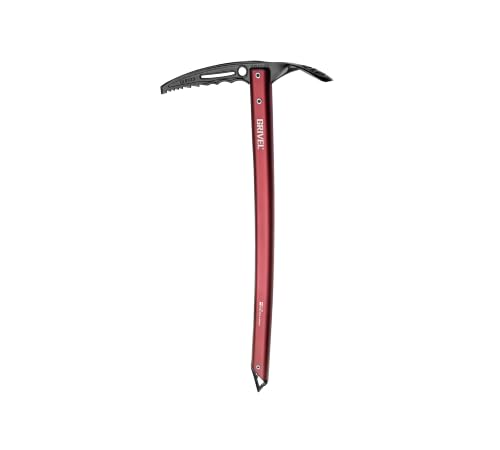
Grivel G1 SA 66 cm Classic Mountaineering Ice Axe
  • 66 cm, forged steel head with adze
  • Aluminum shaft, steel spike
  • For glacier and classic routes
Check price on Amazon for Grivel G1 SA 66 cm Classic Mountaineering Ice Axe (opens in a new tab)
Best for: Glacier and classic snow routes

Our take

A classic, strong axe for general mountaineering. A safe, plain choice.

Why it made the shortlist

The Grivel G1 SA is a classic mountaineering axe with a one-piece forged steel head with adze, an aluminum shaft and a steel spike. It is listed for glacier walking and classical mountaineering at 66 cm.

It uses a forged one-piece head, which gives it a traditional strong build. Compared with the CAMP Neve, it costs a bit more and describes forged steel in more detail.

It suits climbers who want a no-nonsense axe for glaciers and classic routes. The 66 cm length fits many users for walking.

What works

  • One-piece forged steel head
  • Aluminum shaft keeps weight down
  • Steel spike for firm snow
  • Built for classic mountaineering

Watch out for

  • Pricier than the CAMP Neve
  • Certification is not stated
The catch
The listing does not state a safety certification.
02

Best Value · 2 of 5

CAMP Neve Ice Axe

CAMP Neve Ice Axe
  • 65 cm, chromoly steel pick and adze
  • Continuous drop curved pick
  • Adze breaks firm snow
Check price on Amazon for CAMP Neve Ice Axe (opens in a new tab)
Best for: First-time mountaineers

Our take

The sensible first axe for glacier and snow. Learn self-arrest on it.

Why it made the shortlist

The CAMP Neve is billed as a budget-friendly ice axe for general mountaineering with a chromoly steel pick and adze. The curved pick has a continuous drop for controlled self-arrest, and the adze breaks up firm snow.

It costs less than the Grivel G1 SA and the Petzl Glacier Linkin, and it uses chromoly steel for strength at low weight. It is the 65 cm size here.

It suits first-time mountaineers who need a real axe at a reasonable price. The pick shape helps with self-arrest practice.

What works

  • Chromoly steel is strong for its weight
  • Curved pick supports controlled self-arrest
  • Adze handles firm snow

Watch out for

  • Fewer features than premium axes
  • Certification is not stated
The catch
The listing states no safety certification.
03

Best Straight-Shaft Cane · 3 of 5

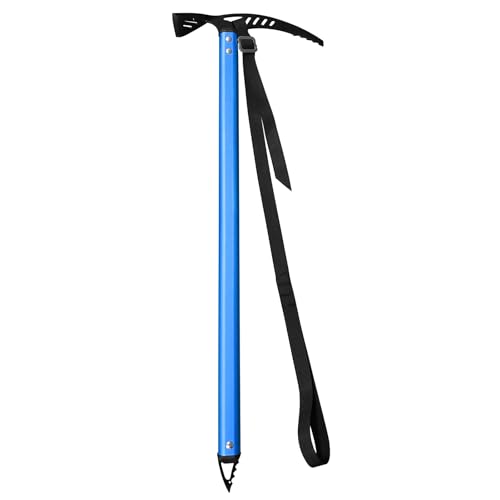
Ito Rocky Pro Beak Ice Axe

Ito Rocky Pro Beak Ice Axe
  • 60 cm straight shaft
  • Carbon steel head, clip holes
  • Anodized blue finish
Check price on Amazon for Ito Rocky Pro Beak Ice Axe (opens in a new tab)
Best for: Glacier walkers and shorter users

Our take

A good cane-style axe for low-angle terrain. Check length against your height.

Why it made the shortlist

The Ito Rocky Pro Beak is a 60 cm axe with a straight shaft that works as a cane on low-angle terrain and plunges cleanly into snow. Its pick gives grip for self-arrest, and the head and spike have holes for a carabiner or sling.

It costs the same as the CAMP Neve while adding anodized finish and clip holes.

It is for climbers who use the axe mostly as a walking support on glaciers. The carbon steel head curve is comfortable to hold.

What works

  • Straight shaft works as a cane
  • Clean plunge into snow
  • Holes in head and spike for clipping
  • Comfortable head curve

Watch out for

  • 60 cm is short for tall users
  • Certification is not stated
The catch
At 60 cm it may be too short for tall climbers.
04

Best Premium Ready-to-Go · 4 of 5

Petzl Glacier Linkin Ice Axe with Leash

Petzl Glacier Linkin Ice Axe with Leash
  • 68 cm, 3 mm tapered steel pick
  • Leash included
  • Stainless steel spike, shaft grooves
Check price on Amazon for Petzl Glacier Linkin Ice Axe with Leash (opens in a new tab)
Best for: Premium general-use kit

Our take

A refined axe with a leash. Pay for it if you climb often.

Why it made the shortlist

The Petzl Glacier Linkin comes with a leash and a 68 cm shaft. The steel pick is tapered to 3 mm at the tip for anchoring, and the shaft has grooves for grip.

It costs the most of the five and includes a leash, which the others do not list. The stainless steel spike penetrates hard snow, and holes in the pick and spike lighten it and add clip points.

What works

  • Leash included in the box
  • Pick tapers to 3 mm for anchoring
  • Grooves on the shaft improve grip
  • Stainless spike bites hard snow

Watch out for

  • More technical than basic needs
The catch
It costs the most and exceeds what basic glacier walks need.
05
Best for: Walking and practice use

Our take

A cheap walking and practice axe. Do not rely on it for serious terrain.

Why it made the shortlist

The Bobillow is a 70 cm aluminum alloy axe described as lightweight, with a curved toothed pick and a wide pick end for scraping ice and snow. The listing sells it for winter walking, hiking and skill training.

It is priced below every other axe here and is the longest at 70 cm, in aluminum alloy. It works as a walking pick on snowbanks.

It is best for walking, training and casual winter use.

What works

  • Lightweight aluminum alloy build
  • Wide pick end scrapes ice and snow
  • Good for skill training

Watch out for

  • All-aluminum head is not for serious climbs
The catch
The listing states no safety rating, so keep it to light use.

Methodology

How We Built This Shortlist

Each pick was assessed across 5 criteria weighted for real-world use.

01

Length and shaft

Compared stated shaft length and shape against typical walking and self-arrest use.

02

Head and pick design

Looked at the pick curve, adze and materials for self-arrest and snow work.

03

Materials

Compared steel and aluminum parts and stated certifications.

04

Features

Checked for leashes, clip holes and spike design.

05

Value

Weighed price against build and features.

Decision guide

Match an Ice Axe For General Mountaineering to Your Camp Setup

By Terrain

Your situationRecommended pickWhy
Glacier walking and snow slopesGrivel G1 SAForged steel head built for classic mountaineering.
First season on snowCAMP NeveChromoly head at a lower price.
Mostly low-angle walkingIto Rocky Pro BeakStraight shaft acts as a cane.
Frequent mountaineering tripsPetzl Glacier LinkinLeash included, tapered pick.
Winter walking and practiceBobillow 70cmCheap aluminum axe for training.

By Budget

BudgetRecommended pick
$80 to $100Bobillow 70cm or CAMP Neve
$90 to $110Ito Rocky Pro Beak or Grivel G1 SA
$140 to $150Petzl Glacier Linkin

Steel Head vs Aluminum Head

Steel head

A steel head bites harder and lasts longer. The Grivel G1 SA, CAMP Neve, Ito Rocky Pro Beak and Petzl Glacier Linkin use steel parts.

Aluminum head

An aluminum head weighs less and costs less but wears faster. The Bobillow 70cm is the aluminum option.

For anything beyond a walk, pick a steel-head axe such as the CAMP Neve.

By Height

PickRecommended pick
Under 5 foot 6Ito Rocky Pro Beak
5 foot 6 to 6 footCAMP Neve
Over 6 footPetzl Glacier Linkin
Walking only, tallBobillow 70cm

For Your First Mountaineering Course Specifically

Look for

A straight shaft, a steel pick that supports self-arrest and a length that fits your height

In this comparison

The CAMP Neve has a curved pick for controlled self-arrest, so it is a good choice for learning the technique.

When to Spend More

Spend more if

Spend more on the Petzl Glacier Linkin or Grivel G1 SA when you climb often and want a tougher, better-finished axe.

Save if

Save with the CAMP Neve or Bobillow 70cm for casual snow travel and practice.

FAQ

Before You Bring One Home

What length ice axe do I need?

A common rule is that the axe head reaches about your ankle when you stand with your arm down. Shorter axes suit steeper terrain, and longer ones suit walking. The Ito Rocky Pro Beak is 60 cm and the Petzl Glacier Linkin is 68 cm.

What is a common mistake with ice axes?

Buying without learning self-arrest. The axe only helps if you practice sliding stops on safe snow. Take a course before using one on exposed terrain.

Is a premium axe worth it over a basic one?

A premium axe adds features such as a leash and refined heads. For general use, the CAMP Neve is enough. Pay more only if you climb often.

How do I carry an ice axe on a pack?

Strap it through the loops with the pick covered and the spike protected. Use a head and spike cover on public transport. Keep it where you can reach it quickly on snow.

How do I maintain an ice axe?

Dry it after use, check the pick for rust and file out burrs. Replace any bent shaft or cracked part. Store it with covers on.

Bottom line

The short version

Browse more ice axe for general mountaineering on Amazon →
Danny Walker, Camping Editor at RV Gear Lab

About the author

Danny Walker

Camping Editor at RV Gear Lab

Danny covers camping gear, campsite setup, outdoor power, sleep systems and practical camping advice, with a focus on helping campers make better gear decisions.

More from Danny →Editorial standards

Keep reading

Related guides