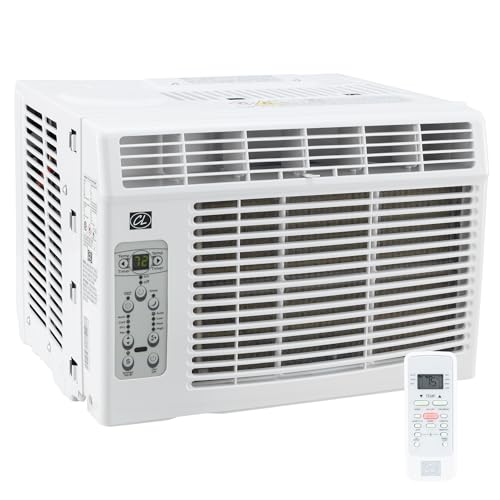
A 5,000 BTU air conditioner is a small machine with a very specific job. In a house, that size cools a bedroom of roughly 150 square feet. In an RV, it is a niche choice: far smaller than the 13,500 and 15,000 BTU rooftop units that dominate the market, yet it suits a tiny camper, a van conversion, a teardrop trailer or a tent shelter where a full rooftop unit makes no sense. Buyers searching this keyword are usually working around a small space, a limited power source or a rig with no existing air conditioner at all.
The first thing to know is that this keyword mixes three different product types. There are true RV window units such as the RecPro CL 5 and the COSTWAY, which are built to fit RV windows and are sold with RV in the name. There are ordinary home window air conditioners such as the two GE models, which cool well but are not RV-made. And there are portable units that sit on the floor and vent through a hose, which two listings offer at 490 watts of draw. Each type has a different install, a different power need and a different failure mode when it is used in a vehicle.
We compared six products from $139.99 to $550.95. The RecPro CL 5 is the RV-focused window unit with a stated CEER of 11.0 and a fit for 23 to 36 inch windows. The two portables share a 6-in-1 mode design and a low 490 watt draw. The GE units are the budget home-style window options, one with digital controls and one with mechanical dials. The COSTWAY is included even though it is 6,500 BTU, because it is sold as an RV window air conditioner with WiFi control. The ratings come from published specifications and owner reports, and we flag each spot where a listing leaves a key figure unstated.
Power is the other half of this decision. Even a small air conditioner needs a generator, shore power or a large inverter setup, and a 5,000 BTU unit can still trip a 15 amp circuit when it starts. The sections below tie each pick to the kind of space and power source you actually have, which is more useful than comparing BTU numbers alone. A shaded parking spot, reflective window covers and a few minutes of pre-cooling before the afternoon heat arrives will often do as much for comfort as another thousand BTU, so treat the unit as one part of a cooling plan rather than the whole plan.
Our standards
Why You Can Trust RV Gear Lab
At RV Gear Lab, we compare products based on rig fit and power or hookup compatibility, verified specifications, usability, setup requirements, weight, durability, and real-world trade-offs. We do not rank products purely on marketing claims or commission rates.
We have not personally tested every product listed. Where hands-on testing is not available, recommendations are based on verified manufacturer specifications, product documentation, use-case fit, and comparative research.
How we review RV gear →