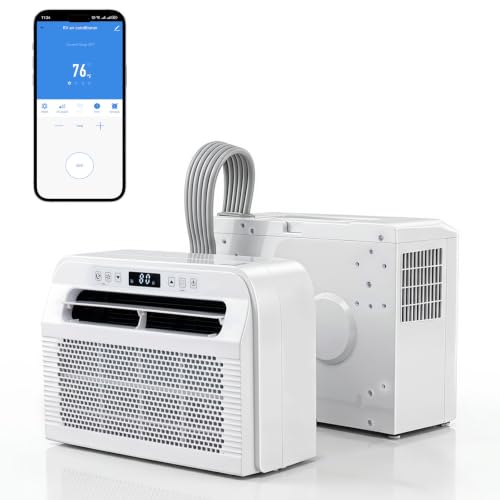
A 6,500 BTU air conditioner is the right size for a small space: a van, a teardrop camper, a compact trailer or a sleeping area you want to keep cool without running a full-size rooftop unit. It draws far less power than the 13,500 to 16,000 BTU units that dominate the RV market, which matters when you are on a small generator, a modest battery bank or a campground with a limited 30 amp supply. The catch is that very few products are actually sold at that size, and several listings that show up for the search are much larger.
That is why this guide is open about what each unit is. Three picks genuinely list 6,500 BTU: a window-style unit, an over-the-sill split design and a 12V rooftop unit. The other three, at 15,000, 13,500 and 16,000 BTU, are larger rooftop air conditioners included for comparison, and each is flagged with its true capacity so you do not buy a unit twice the size you expected. If your space is genuinely small, the bigger units are not an upgrade, they are overkill that costs more to run and install.
We evaluated the six on stated BTU capacity, power source, install method, airflow, noise, extra features such as heating and app control and price, against the spec sheets and owner feedback instead of hands-on testing. Prices run from $417.99 to $972.80. The decision between them depends first on how you plan to install the unit, whether through a window, over a sill or on a roof, and second on whether you need 12V battery power or a standard 115V supply.
Install method is the most overlooked part of the decision. A window or over-the-sill unit needs a suitable opening and often a sealing kit, and it leaves a visible unit in the window. A rooftop unit needs a roof opening, usually the standard 14.25 inch vent size, and wiring through the ceiling. A 12V unit needs a battery bank sized for the draw. Each path has different costs beyond the sticker price, and the sections below tie those costs to named picks. Read the install notes for each unit carefully, since a cheaper unit that needs extra parts or a professional install can end up costing as much as a pricier one.
Cooling a small space well also depends on more than the BTU number. Insulation, window area, shade, humidity and how often the door opens all change how hard the unit works. A 6,500 BTU unit in a well shaded van can feel luxurious, and the same unit in a sunbaked metal trailer may struggle on a hot afternoon. Keep that in mind as you read, and treat the capacity numbers as a starting point for matching a unit to your actual conditions.
Our standards
Why You Can Trust RV Gear Lab
At RV Gear Lab, we compare products based on rig fit and power or hookup compatibility, verified specifications, usability, setup requirements, weight, durability, and real-world trade-offs. We do not rank products purely on marketing claims or commission rates.
We have not personally tested every product listed. Where hands-on testing is not available, recommendations are based on verified manufacturer specifications, product documentation, use-case fit, and comparative research.
How we review RV gear →