

We research everything we recommend. When you buy through our links, we may earn a commission. Learn more

Buying guide · 10 min read · Updated October 2, 2026

6 Best Low Profile RV Air Conditioner in 2026: A Practical RV Guide

Low profile RV air conditioners keep roof height down: compare a 10 inch inverter heat pump, a 13.9 inch Mach 15 and 12V low-profile units.

Bowen HigginsBy Bowen HigginsRV Editor at RV Gear Lab6 products comparedSpec-sheet researched

At a glance

Our top picks

Low profile in RV air conditioners means less roof height, which matters for clearance, wind drag and fuel use. A listing that gives the profile in inches is more useful than one that only says slim.

The TURBRO states a 10.0 inch thickness and the Coleman-Mach 15 a 13.9 inch profile. Four 12V and Furrion units use a low-profile or compact design without giving a height in inches, so their entries focus on weight and power.

RV Gear Lab field notes

The Rig Fit Check

Start with the job
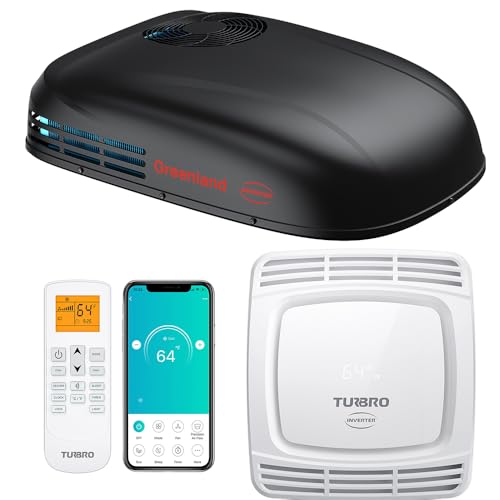
TURBRO Inverter 13.5K BTU RV Air Conditioner with Cooling and Heat Pump leads this shortlist for Low-clearance roofs. Use that fit as a reference point, then compare the alternatives against your own space and workload.
Specs that separate the picks
The first details to compare are 10.0 inch thickness, 15,000 BTU, 13.9 inch profile, 18K BTU variable speed. Confirm the exact model and included components before ordering.
Trade-off to plan for
Needs 115V shore or generator power

Before you buy

What Matters Before You Choose a Low Profile RV Air Conditioner

Key buying criteria so you get the right fit the first time.

  1. 01

    Profile height in inches

    A low-profile unit sits lower on the roof, which helps clearance and wind drag. Listings that state a number such as 10.0 or 13.9 inches are easier to compare than the word slim. Check the profile in inches.

  2. 02

    Capacity versus profile

    A thinner body can hold less hardware, so capacity may drop. A 10 inch unit at 13,500 BTU suits mid-size rigs, while 15K or 18K fit large ones. Match BTU to coach size.

  3. 03

    115V versus 12V

    A 115V unit runs from shore power or a generator, and a 12V unit runs from batteries and needs a big bank. Runtime figures such as 8 hours on 480Ah show the need. Check your bank before buying.

  4. 04

    Weight on the roof

    Heavier units add load to the roof. A 54 lb unit is easier on the structure than an 85 lb unit. Check the weight against your roof structure.

  5. 05

    Ducted versus non-ducted

    A ducted unit needs ceiling ducts and often an ADB. Non-ducted units fit a standard center vent. Check which your coach has.

  6. 06

    Noise and controls

    A 40 dB sleep mode is quieter than a 52 dB rating. App and remote controls add convenience. Look for stated dB numbers.

Our standards

Why You Can Trust RV Gear Lab

At RV Gear Lab, we compare products based on rig fit and power or hookup compatibility, verified specifications, usability, setup requirements, weight, durability, and real-world trade-offs. We do not rank products purely on marketing claims or commission rates.

We have not personally tested every product listed. Where hands-on testing is not available, recommendations are based on verified manufacturer specifications, product documentation, use-case fit, and comparative research.

How we review RV gear →

Detailed reviews

The 6 best low profile rv air conditioner, explained

01
Best for: Low-clearance roofs

Our take

Best for owners who want the slimmest unit and a heat pump.

Why it made the shortlist

The TURBRO inverter unit lists 13,500 BTU of cooling and heating, a thickness of 10.0 inches that it describes as up to 35 percent thinner than most competing products. It uses an inverter compressor with up to 30 percent greater efficiency and fits a 14.25 inch by 14.25 inch roof opening.

Against the Coleman-Mach 15, it is much thinner and adds a heat pump. Against the 12V units, it runs on shore power with a larger capacity.

What works

  • 10 inch thickness, thinner than most
  • Heat pump with inverter compressor
  • Fits 14.25 inch roof openings
  • App and remote control

Watch out for

  • Needs 115V shore or generator power
  • 13.5K is smaller than the 15K Mach
02

Best High-Capacity Low Profile · 2 of 6

Coleman-Mach 15 RV Air Conditioner 15K BTU

Coleman-Mach 15 RV Air Conditioner 15K BTU
  • 15,000 BTU, 13.9 inch profile
  • Strong airflow for ducted systems
  • 13.9 cooling amps
Check price on Amazon for Coleman-Mach 15 RV Air Conditioner 15K BTU (opens in a new tab)
Best for: Hot-climate ducted coaches

Our take

Best for big or ducted coaches that need maximum capacity in a low form.

Why it made the shortlist

The Coleman-Mach 15 is a 15,000 BTU unit with a 13.9 inch profile and strong airflow for ducted applications. It lists 13.9 cooling amps, 16 heating amps with the optional heater and 18 amps for desert conditions, and weighs about 85 lbs.

Against the Furrion Chill Cube 18K, it adds Coleman-Mach name recognition.

What works

  • 15,000 BTU of cooling capacity
  • 13.9 inch low profile design
  • Strong airflow in ducted systems
  • Electrical options for desert use

Watch out for

  • Heaviest at about 85 lbs
  • Taller than the TURBRO
03

Best Variable Speed 18K · 3 of 6

Furrion Chill Cube 18K Non-Ducted Rooftop RV AC

Furrion Chill Cube 18K Non-Ducted Rooftop RV AC
  • 18K BTU variable speed
  • 72.4 lbs, aerodynamic top
  • Continuous low amp draw
Check price on Amazon for Furrion Chill Cube 18K Non-Ducted Rooftop RV AC (opens in a new tab)
Best for: Large non-ducted coaches

Our take

Best for large non-ducted coaches that want variable speed.

Why it made the shortlist

The Furrion Chill Cube 18K non-ducted unit uses variable speed compressors, weighs 72.4 lbs and has a bolt-on installation. The listing says it is about 10 percent lighter than other units and has an aerodynamic rooftop design to reduce drag.

Against the Mach 15, it is lighter and offers higher capacity. Against the 12V units, it brings 18,000 BTU for large rooms.

What works

  • Variable speed compressors reduce amp spikes
  • About 10 percent lighter than typical units
  • Aerodynamic design reduces drag
  • Bolt-on installation

Watch out for

  • Air distribution box is sold separately
04
Gidrox 10000 BTU 12V DC RV Air Conditioner
  • 10,000 BTU, 12V DC inverter
  • 40 dB sleep mode, 54 lbs
  • Hardware and 19.7 ft cable
Check price on Amazon for Gidrox 10000 BTU 12V DC RV Air Conditioner (opens in a new tab)
Best for: Off-grid vans

Our take

Best for off-grid vans and small trailers that want quiet 12V cooling.

Why it made the shortlist

The Gidrox is a 10,000 BTU 12V DC unit with inverter technology, a 40 dB sleep mode and app, remote and panel controls. It weighs 54 lbs, includes mounting hardware and a 19.7 foot power cable.

Against the OutEquip units, it lists a lower noise level and app control. Against the shore power picks, it runs from a battery bank.

What works

  • Inverter technology for steady cooling
  • 40 dB sleep mode stated
  • Light at 54 lbs
  • App, remote and panel control

Watch out for

  • 10K BTU is limited for large coaches
  • Needs a sizable battery bank
05

Best Value 12V Pick · 5 of 6

Outequip RV Air Conditioner

Outequip RV Air Conditioner
  • 10,000 BTU, 12V low profile
  • 8 hr on 480Ah, 10 hr on 600Ah
  • EPDM gasket, zinc condenser
Check price on Amazon for Outequip RV Air Conditioner (opens in a new tab)
Best for: 12V van builds

Our take

Best for owners who want runtime figures on a 12V unit.

Why it made the shortlist

The OutEquipPro is a 10,000 BTU 12V low-profile unit that lists 8 hours of cooling on a 480Ah power source and 10 hours on 600Ah. It has UV-stabilized ABS, an EPDM foam gasket, a zinc-coated condenser and brushless copper motor fans.

Against the OutEquip with heater, it costs less. Against the Gidrox, it lists runtime hours on two battery sizes.

What works

  • Runtime stated for two battery sizes
  • Weather-resistant materials listed
  • Remote and eco, sleep, turbo modes

Watch out for

  • Cooling only on this listing
  • Large battery bank needed
06

Best 12V With Heating · 6 of 6

12V RV Rooftop Air Conditioner with Heater

12V RV Rooftop Air Conditioner with Heater
  • 10,000 BTU, 12V with heater
  • 8 hr on 480Ah bank
  • Remote, digital display
Check price on Amazon for 12V RV Rooftop Air Conditioner with Heater (opens in a new tab)
Best for: All-season 12V use

Our take

Best for 12V buyers who want a heater too.

Why it made the shortlist

The OutEquip is a 10,000 BTU 12V rooftop unit with a heater listed in the title. It cools in 15 minutes per the listing and delivers 8 hours on a 480Ah bank and 10 hours on 600Ah.

Against the OutEquipPro, it adds a heater at a higher price. Against the Gidrox, it combines cooling and heating.

What works

  • Includes a heater
  • Runtime stated on two bank sizes
  • Dual brushless copper motor fans
  • Eco, sleep and turbo modes

Watch out for

  • Heater output not stated in detail

Methodology

How We Built This Shortlist

Each pick was assessed across 5 criteria weighted for real-world use.

01

Profile height

We compared stated profile and thickness in inches.

02

Capacity and power

We compared BTU, voltage and amp or runtime statements.

03

Weight

We noted listed weights.

04

Fit

We noted roof opening, ducted notes and ADB needs.

05

Controls and noise

We compared dB figures and control options.

Decision guide

Match a Low Profile RV Air Conditioner to Your RV

By Roof Height Goal

Your situationRecommended pickWhy
Thinnest possible unitTURBRO Inverter 13.5KLists a 10.0 inch thickness.
Largest low profile capacityColeman-Mach 1515,000 BTU in a 13.9 inch profile.
Off-grid van, quietGidrox 10K 12V40 dB sleep mode on 12V.
12V with runtime figuresOutEquipPro 10K 12V8 and 10 hour runtimes stated.
12V with heaterOutEquip 10K HeaterAdds a heater.

By Budget

BudgetRecommended pick
$790 to $900Gidrox 10K 12V or OutEquipPro 10K 12V
$970 to $1100OutEquip 10K Heater or TURBRO Inverter 13.5K
$1130 to $1190Furrion Chill Cube 18K or Coleman-Mach 15

Shore Power vs 12V Battery

Shore power

A 115V unit gives more capacity. The TURBRO Inverter 13.5K, Coleman-Mach 15 and Furrion Chill Cube 18K sit here.

12V battery

A 12V unit runs off the bank. The Gidrox 10K 12V, OutEquipPro 10K 12V and OutEquip 10K Heater sit here.

Choose the TURBRO Inverter 13.5K for shore power and the Gidrox 10K 12V for off-grid.

By Extra Feature

PreferenceRecommended pick
Heat pumpTURBRO Inverter 13.5K
Variable speedFurrion Chill Cube 18K
Lowest noiseGidrox 10K 12V
Heater in 12VOutEquip 10K Heater

For Low-Clearance Roofs Specifically

Look for

Look for a stated profile in inches, a modest weight and a roof opening that matches your cutout, as the TURBRO Inverter 13.5K listing shows.

In this comparison

The TURBRO Inverter 13.5K lists a 10.0 inch thickness and 14.25 inch opening, and the Coleman-Mach 15 lists a 13.9 inch profile.

When to Spend More

Spend more if

Spend more if you need maximum capacity in a low form, as the Coleman-Mach 15 offers, or variable speed from the Furrion Chill Cube 18K.

Save if

Save if a 12V unit suits you: the Gidrox 10K 12V and OutEquipPro 10K 12V give 10,000 BTU for under $900.

FAQ

Before You Bring One Home

Does low profile matter?

It helps with low clearances and fuel use. A taller unit still cools. Choose by your roof and trips.

How do I check a low profile?

Look for a profile or thickness in inches, as on the TURBRO Inverter 13.5K. Compare with your current unit. Measure your roof clearance.

Is the Coleman-Mach 15 worth the premium?

It offers 15K BTU in a 13.9 inch profile. A 13.5K TURBRO is thinner. Choose by capacity needs.

How do I install a low profile unit?

Remove the old unit, check the 14.25 inch opening and place the new unit on its gasket. Connect wiring and seal. Test the unit.

How do I maintain it?

Clean filters monthly and rinse the roof coil each season. Check the gasket and mounts. Cover the unit in storage.

Bottom line

The short version

Browse more low profile rv air conditioner on Amazon →
Bowen Higgins, RV Editor at RV Gear Lab

About the author

Bowen Higgins

RV Editor at RV Gear Lab

Bowen covers RV power, water systems, towing and leveling, upkeep and interior comfort, with a focus on matching gear to the rig, the hookups and the way you actually travel.

More from Bowen →Editorial standards

Keep reading

Related guides