

We research everything we recommend. When you buy through our links, we may earn a commission. Learn more

Buying guide · 11 min read · Updated August 31, 2026

8 Best Space Heaters for Camping in 2026: A Practical RV Guide

We compared space heater for camping models by verified specs and real-world tradeoffs, not marketing claims alone. Every pick is checked against a real usage.

Bowen HigginsBy Bowen HigginsRV Editor at RV Gear Lab8 products comparedSpec-sheet researched

At a glance

Our top picks

Best Space Heaters for Camping look similar but differ in practice, so the listing hides real safety gaps.

Every pick here was judged on honest heat type and warm-up speed, because these details matter more than claims.

RV Gear Lab field notes

The Rig Fit Check

Start with the job
Mr. Heater 9,000 BTU Portable Buddy Radiant Propane Heater leads this shortlist for buyers who want the strongest all-around pick in this comparison and would rather not keep shopping around. Use that fit as a reference point, then compare the alternatives against your own space and workload.
Specs that separate the picks
The first details to compare are Emits 4,000 or 9,000 BTU/hr radiant heat, Dreo space heaters for indoor combines hyperamics 1500w, Battery powered. Confirm the exact model and included components before ordering.
Trade-off to plan for
Coverage claims assume a well-insulated, average-height room

Before you buy

What Matters Before You Choose a Space Heater for Camping

Key buying criteria so you get the right fit the first time.

  1. 01

    Wattage vs Actual Room Size

    The standard rule of thumb is about 10 watts of heating power per square foot of floor area, so a 1,500-watt heater (the max most household outlets safely support) is sized for roughly a 150 square foot room, not a whole floor or an open-concept living area. A heater with only a low 750-900 watt setting will run constantly and still underheat a larger room, while a 1,500-watt unit in a small bedroom can overshoot and cycle on and off more than necessary. Check the manufacturer's stated square footage coverage against your room's actual dimensions, not just the wattage number alone.

  2. 02

    Tip-Over and Overheat Protection Are Non-Negotiable

    Tip-over protection and overheat protection solve two different failure modes and a real space heater needs both: tip-over protection cuts power if the unit is physically knocked over, while a thermal fuse shuts it down if it overheats internally even while sitting upright. Check that the listing explicitly names both features, not just a generic 'safety shutoff' claim, particularly if the heater will be used somewhere it could get bumped, like a bathroom or a kid's room.

  3. 03

    Third-Party Safety Certification (UL, ETL, or CSA)

    A label from UL Solutions, ETL (Intertek), or CSA means the heater's construction and performance were independently tested against recognized U.S. safety standards, not just self-certified by the manufacturer. This matters more for space heaters than almost any other small appliance category, since they're a leading cause of home heating fires when a unit has a manufacturing defect or a corner-cut cord. If a listing doesn't mention one of these three certifications anywhere in the title, images, or bullet points, treat that as a real gap, not an oversight.

  4. 04

    Ceramic vs Infrared vs Oil-Filled Heat Type

    The three common heat types trade off speed, quiet operation, and how the warmth is distributed: ceramic heaters warm a room fastest but rely on a fan that adds noise and stops heating the moment it's off; infrared heaters warm people and objects directly rather than circulating air, ideal for a spot right next to a desk but weaker at heating an entire room; oil-filled radiators are the slowest to warm up and the quietest, holding heat for a long time after being turned off, which suits overnight bedroom use where fan noise is unwelcome.

  5. 05

    Running Cost at Full Wattage

    A typical 1,500-watt space heater costs roughly $0.12 to $0.23 per hour to run at the U.S. average electricity rate, which adds up fast if it's running for several hours a day through a whole winter, a heater with a 750-watt low setting and a working thermostat that actually cycles off (rather than running at full power constantly) can meaningfully cut that cost over a season. Check whether the listed wattage is a single fixed output or a range with a genuine low setting, since 'up to 1,500 watts' models that only run at that ceiling cost roughly twice as much per hour as a heater that can step down.

Our standards

Why You Can Trust RV Gear Lab

At RV Gear Lab, we compare products based on rig fit and power or hookup compatibility, verified specifications, usability, setup requirements, weight, durability, and real-world trade-offs. We do not rank products purely on marketing claims or commission rates.

We have not personally tested every product listed. Where hands-on testing is not available, recommendations are based on verified manufacturer specifications, product documentation, use-case fit, and comparative research.

How we review RV gear →

Detailed reviews

The 8 best space heaters for camping, explained

01
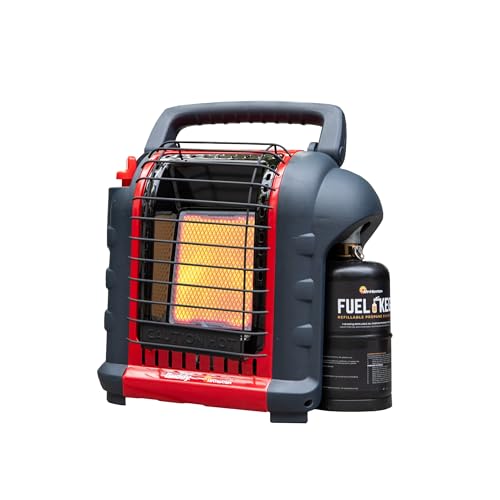
Mr. Heater 9,000 BTU Portable Buddy Radiant Propane Heater
  • Emits 4,000 or 9,000 BTU/hr radiant heat
  • Designed and approved for indoor and outdoor use
  • Heats up to approximately 225 square feet
Check price on Amazon for Mr. Heater 9,000 BTU Portable Buddy Radiant Propane Heater (opens in a new tab)
Best for: Buyers who want the strongest all-around pick in this comparison and would rather not keep shopping around

Our take

Go with this pick if you want the strongest all-around pick in this comparison and would rather not keep shopping around.

Why it made the shortlist

Mr. Heater 9,000 BTU Portable Buddy Radiant Propane Heater is the top pick in this comparison. Emits 4,000 or 9,000 BTU/hr radiant heat. Designed and approved for indoor and outdoor use.

Weighing this against DREO Space Heater, heats up to approximately 225 square feet ends up being the detail that matters most for most buyers.

The manufacturer's square-footage coverage assumes a reasonably insulated room, so a drafty or high-ceiling space may need more wattage than the listing suggests.

What works

  • Emits 4,000 or 9,000 BTU/hr radiant heat
  • Designed and approved for indoor and outdoor use
  • Heats up to approximately 225 square feet
  • Features emergency low oxygen safety system

Watch out for

  • Coverage claims assume a well-insulated, average-height room
  • Running at full wattage all day adds up on the electric bill
02

Also Worth Considering · 2 of 8

DREO Space Heater

DREO Space Heater
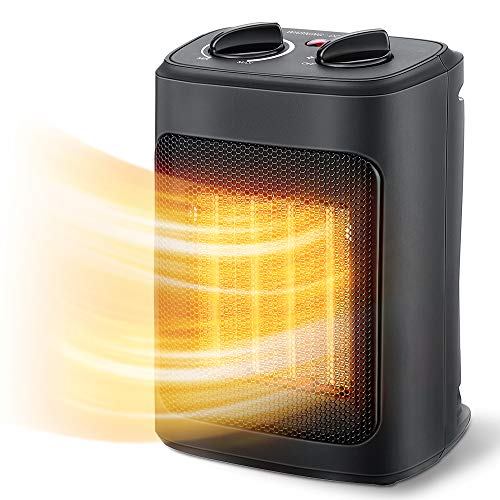
  • Dreo space heaters for indoor combines hyperamics 1500w
  • Unbreakable safety
  • Enhanced ntc chipset brings more precision
Check price on Amazon for DREO Space Heater (opens in a new tab)
Best for: Buyers who want a genuine alternative to the top pick with a different tradeoff worth comparing directly

Our take

Running any 1,500-watt heater for hours a day costs real money, roughly $0.12 to $0.23 per hour at average electricity rates, so a genuine low-wattage setting and working thermostat matter for the season's total cost.

Why it made the shortlist

DREO Space Heater is a strong alternative worth comparing directly against the top pick. Dreo goes beyond the unexpected to deliver peace of mind with every room heater.

Set next to Mr. Heater 9,000 BTU Portable Buddy Radiant Propane Heater, the two land close enough on paper that it's worth comparing both listings directly on the spec that matters most for your setup.

What works

  • Dreo space heaters for indoor combines hyperamics 1500w
  • Unbreakable safety
  • Enhanced ntc chipset brings more precision
  • Cozy quietness

Watch out for

  • Running at full wattage all day adds up on the electric bill
  • Coverage claims assume a well-insulated, average-height room
The catch
Go with this pick if you want a genuine alternative to the top pick with a different tradeoff worth comparing directly.
03
Best for: Buyers who want a genuine alternative to the top pick with a different tradeoff worth comparing directly

Our take

The manufacturer's square-footage coverage assumes a reasonably insulated room, so a drafty or high-ceiling space may need more wattage than the listing suggests.

Why it made the shortlist

This battery powered heater has two temperature settings(first level nature wind, second temperature 55-85°c), which can meet your different comfort needs. This rechargeable heater features a prevent tipping safety design.

Against Mr. Heater 9,000 BTU Portable Buddy Radiant Propane Heater, neither pick has an obvious edge on paper, so the deciding factor comes down to whichever spec matters most for your specific use case.

What works

  • Battery powered
  • Dual temperature settings
  • Safe and silent heating
  • Compact and portable

Watch out for

  • Coverage claims assume a well-insulated, average-height room
  • Running at full wattage all day adds up on the electric bill
The catch
It's worth picking this one if you want a genuine alternative to the top pick with a different tradeoff worth comparing directly.
04
Best for: Buyers who want a genuine alternative to the top pick with a different tradeoff worth comparing directly

Our take

Running any 1,500-watt heater for hours a day costs real money, roughly $0.12 to $0.23 per hour at average electricity rates, so a genuine low-wattage setting and working thermostat matter for the season's total cost.

Why it made the shortlist

Amazon Basics Ceramic Portable Mini Space Heater for Office Desk is a strong alternative worth comparing directly against the top pick. Measuring just 5.87”d x 3.15”w x 5.95”h, this heater is ideal for tables, desks, or other small spaces, providing warmth without taking up much room.

Against Mr. Heater 9,000 BTU Portable Buddy Radiant Propane Heater, neither pick has an obvious edge on paper, so the deciding factor comes down to whichever spec matters most for your specific use case.

What works

  • Compact design
  • Portable & lightweight
  • Fast & efficient heating
  • Built-in safety

Watch out for

  • Running at full wattage all day adds up on the electric bill
  • Coverage claims assume a well-insulated, average-height room
The catch
This makes sense for anyone who want a genuine alternative to the top pick with a different tradeoff worth comparing directly.
05
Space Heater, 1500W Electric Heaters Indoor Portable with Thermostat
  • Get nice & toasty faster
  • Without having to freeze
  • Adjust the temperature to your needs
Check price on Amazon for Space Heater, 1500W Electric Heaters Indoor Portable with Thermostat (opens in a new tab)
Best for: Buyers who want a genuine alternative to the top pick with a different tradeoff worth comparing directly

Our take

The manufacturer's square-footage coverage assumes a reasonably insulated room, so a drafty or high-ceiling space may need more wattage than the listing suggests.

Why it made the shortlist

Space Heater, 1500W Electric Heaters Indoor Portable with Thermostat is a strong alternative worth comparing directly against the top pick. The advanced ptc ceraming heating technology combined with the ultra-efficient fan will heat up any space faster and distribute the heat more evenly. Equipped with an adjustable thermostat, our space heater will keep you comfortable at all times.

Against Mr. Heater 9,000 BTU Portable Buddy Radiant Propane Heater, neither pick has an obvious edge on paper, so the deciding factor comes down to whichever spec matters most for your specific use case.

What works

  • Get nice & toasty faster
  • Without having to freeze
  • Adjust the temperature to your needs
  • Perfect for your home or office

Watch out for

  • Coverage claims assume a well-insulated, average-height room
  • Running at full wattage all day adds up on the electric bill
The catch
Go with this pick if you want a genuine alternative to the top pick with a different tradeoff worth comparing directly.
06
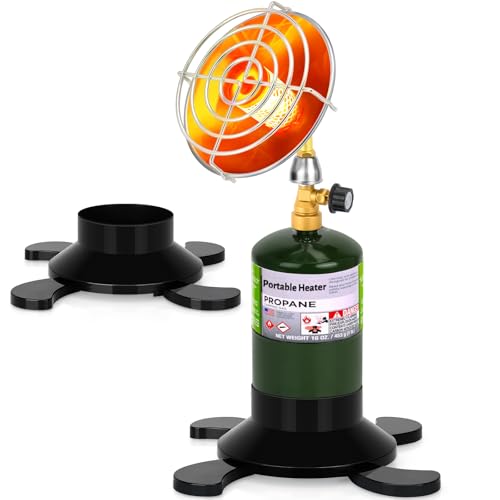
Portable Propane Heater for Camping Outdoor
  • Portable propane heater
  • Efficient outdoor heater
  • Two heating modes camping heater
Check price on Amazon for Portable Propane Heater for Camping Outdoor (opens in a new tab)
Best for: Buyers who want a genuine alternative to the top pick with a different tradeoff worth comparing directly

Our take

Running any 1,500-watt heater for hours a day costs real money, roughly $0.12 to $0.23 per hour at average electricity rates, so a genuine low-wattage setting and working thermostat matter for the season's total cost.

Why it made the shortlist

Portable Propane Heater for Camping Outdoor is a strong alternative worth comparing directly against the top pick. Take the warmth of home anywhere you go with our portable propane heater. Heats up to 200 square feet of radiant heat output, 2s quick heating.bring warmth in seconds your way.

Set next to Mr. Heater 9,000 BTU Portable Buddy Radiant Propane Heater, the two land close enough on paper that it's worth comparing both listings directly on the spec that matters most for your setup.

What works

  • Portable propane heater
  • Efficient outdoor heater
  • Two heating modes camping heater
  • Easy to use propane heater

Watch out for

  • Running at full wattage all day adds up on the electric bill
  • Coverage claims assume a well-insulated, average-height room
The catch
Choose this if you want a genuine alternative to the top pick with a different tradeoff worth comparing directly.
07

Great Alternative · 7 of 8

GiveBest Space Heater

GiveBest Space Heater
  • 2 In 1 heater fan
  • These heaters are made of v0 flame retardant material avoiding any fire hazard
  • Mini heater with build in carry handle
Check price on Amazon for GiveBest Space Heater (opens in a new tab)
Best for: Buyers who want a genuine alternative to the top pick with a different tradeoff worth comparing directly

Our take

The manufacturer's square-footage coverage assumes a reasonably insulated room, so a drafty or high-ceiling space may need more wattage than the listing suggests.

Why it made the shortlist

GiveBest Space Heater is a strong alternative worth comparing directly against the top pick. 2 In 1 heater fan: this ceramic heater offers dual heating modes (1500w/750w) plus a cool air fan, making it ideal for both winter and summer. These heaters are made of v0 flame retardant material avoiding any fire hazard.

Upgrade ABS material applied, which is more flame resident, which is the main thing that distinguishes this pick from Mr. Heater 9,000 BTU Portable Buddy Radiant Propane Heater.

What works

  • 2 In 1 heater fan
  • These heaters are made of v0 flame retardant material avoiding any fire hazard
  • Mini heater with build in carry handle
  • Quiet and fast heating

Watch out for

  • Coverage claims assume a well-insulated, average-height room
  • Running at full wattage all day adds up on the electric bill
The catch
This fits best if you want a genuine alternative to the top pick with a different tradeoff worth comparing directly.
08

Also Worth Considering · 8 of 8

Naturehike Camp Heater with Warming Shelf

Naturehike Camp Heater with Warming Shelf
  • Efficient warmth anywhere
  • Convenient & portable
  • Extended operation
Check price on Amazon for Naturehike Camp Heater with Warming Shelf (opens in a new tab)
Best for: Buyers who want a genuine alternative to the top pick with a different tradeoff worth comparing directly

Our take

Running any 1,500-watt heater for hours a day costs real money, roughly $0.12 to $0.23 per hour at average electricity rates, so a genuine low-wattage setting and working thermostat matter for the season's total cost.

Why it made the shortlist

Naturehike Camp Heater with Warming Shelf is a strong alternative worth comparing directly against the top pick. Experience rapid heating with high-performance technology that warms spaces from 54 to 108 sq ft in minutes. Designed with a detachable insulated shelf and comfortable carry handle for effortless transport and versatile use on the go.

Weighing this against Mr. Heater 9,000 BTU Portable Buddy Radiant Propane Heater, it also serves as a practical cooking surface and a handy warming shelf for your outdoor adventures ends up being the detail that matters most for most buyers.

What works

  • Efficient warmth anywhere
  • Convenient & portable
  • Extended operation
  • User-friendly & safe

Watch out for

  • Running at full wattage all day adds up on the electric bill
  • Coverage claims assume a well-insulated, average-height room
The catch
Choose this if you want a genuine alternative to the top pick with a different tradeoff worth comparing directly.

Methodology

How We Built This Shortlist

Each pick was assessed across 5 criteria weighted for real-world use.

01

Wattage vs Actual Room Size

The standard rule of thumb is about 10 watts of heating power per square foot of floor area, so a 1,500-watt heater (the max most household outlets safely support) is sized for roughly a 150 square foot room, not a whole floor or an open-concept living area.

02

Tip-Over and Overheat Protection Are Non-Negotiable

Tip-over protection and overheat protection solve two different failure modes and a real space heater needs both: tip-over protection cuts power if the unit is physically knocked over, while a thermal fuse shuts it down if it overheats internally even while sitting upright.

03

Third-Party Safety Certification (UL, ETL, or CSA)

A label from UL Solutions, ETL (Intertek), or CSA means the heater's construction and performance were independently tested against recognized U.S.

04

Ceramic vs Infrared vs Oil-Filled Heat Type

The three common heat types trade off speed, quiet operation, and how the warmth is distributed: ceramic heaters warm a room fastest but rely on a fan that adds noise and stops heating the moment it's off; infrared heaters warm people and objects directly rather than circulating air, ideal for a spot right next to a desk but weaker at heating an entire room; oil-filled radiators are the slowest to warm up and the quietest, holding heat for a long time after being turned off, which suits overnight bedroom use where fan noise is unwelcome..

05

Running Cost at Full Wattage

A typical 1,500-watt space heater costs roughly $0.12 to $0.23 per hour to run at the U.S.

Decision guide

Match a Space Heater for Camping to Your RV

By Room Size

Your roomRecommended pick
Small room or under a deskDREO Space Heater
Standard bedroom or officeMr. Heater 9,000 BTU Portable Buddy Radiant Propane Heater
Larger living spaceNaturehike Camp Heater with Warming Shelf

By Budget

BudgetRecommended pick
Lowest price in this lineupDREO Space Heater
Mid-range pickOdorkle Cordless Space Heater 200W 360° Rotatable not included battery
Higher budgetNaturehike Camp Heater with Warming Shelf

Ceramic vs Oil-Filled Heat

Ceramic (e.g. Mr. Heater 9,000 BTU Portable Buddy Radiant Propane Heater)

Heats a room fastest using a fan, but cools down quickly once switched off.

Oil-filled radiator

Slower to warm up but silent and holds heat long after being turned off, best for overnight use.

Match this to whether you need fast heat now or quiet, sustained warmth overnight.

By Safety Priority

Your situationRecommended pick
Kids or pets in the roomCheck for both tip-over AND overheat protection specifically
Standard adult-only roomMr. Heater 9,000 BTU Portable Buddy Radiant Propane Heater

For Overnight Bedroom Use Specifically

Look for

A genuine low-wattage setting, a working thermostat that cycles off, and UL/ETL/CSA safety certification.

In this comparison

Mr. Heater 9,000 BTU Portable Buddy Radiant Propane Heater is worth checking against its specific safety certifications before assuming any 'safe' label performs the same.

When to Spend More

Spend more if

You're heating a larger room and want a thermostat and multiple heat settings, where Naturehike Camp Heater with Warming Shelf justifies the extra cost.

Save if

You're heating a small space or supplementing central heat, where DREO Space Heater already covers the job at the lowest price here.

FAQ

Before You Bring One Home

What size space heater do I need for my room?

Use roughly 10 watts of heating power per square foot as a baseline, meaning a 1,500-watt heater (the practical ceiling for a standard household outlet) suits about a 150 square foot room; check the manufacturer's stated coverage against your room's actual square footage rather than assuming higher wattage always means better performance.

Do all space heaters have tip-over protection?

They should, but not all listings make this clear: look specifically for both a tip-over shutoff (cuts power if knocked over) and a separate overheat thermal fuse (shuts off if internal temperature climbs too high), since these are two distinct safety mechanisms and a real safety-conscious heater needs both.

Why does a UL, ETL, or CSA certification matter?

It means the heater's construction was independently tested against recognized U.S. safety standards rather than only self-certified by the manufacturer, which matters given that space heaters are a documented leading cause of residential heating fires; a listing missing all three certifications is a real gap to check for.

Is a ceramic, infrared, or oil-filled heater better?

It depends on your priority: ceramic heats a room fastest but uses a fan and cools quickly once off, infrared warms you directly and near-instantly but doesn't heat the whole room evenly, and oil-filled radiators are slow to warm up but run silently and hold heat long after being switched off, best for quiet overnight bedroom use.

How much does it cost to run a space heater all day?

A 1,500-watt heater costs roughly $0.12 to $0.23 per hour at average U.S. electricity rates, which adds up over a full day or a winter season; a heater with a genuine low-wattage setting and a working thermostat that cycles off once the room warms up can meaningfully reduce that cost versus one that runs at full wattage constantly.

Are space heaters safe to leave on overnight?

Only with real tip-over and overheat protection, third-party safety certification, and at least three feet of clearance from bedding, curtains, or other flammable material; an oil-filled radiator is often the safer overnight choice specifically because it has no exposed heating element or fan.

Bottom line

The short version

Browse more space heaters for camping on Amazon →
Bowen Higgins, RV Editor at RV Gear Lab

About the author

Bowen Higgins

RV Editor at RV Gear Lab

Bowen covers RV power, water systems, towing and leveling, upkeep and interior comfort, with a focus on matching gear to the rig, the hookups and the way you actually travel.

More from Bowen →Editorial standards

Keep reading

Related guides