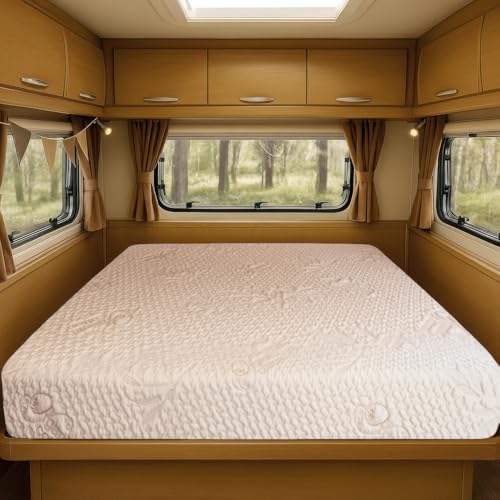
If you have ever tried to put a standard twin or full topper on an RV bed, you already know the problem. A three-quarter mattress measures about 48 by 75 inches, which sits between a twin at 38 inches wide and a full at 54 inches wide. A twin topper leaves a strip of bare mattress, and a full topper hangs over the edges, bunches at the corners and gets pinched against the wall. Fit is the first reason to buy a topper made for this size.
The second reason is comfort. Factory RV mattresses are often thin, firm and built to a price, and many owners find that a few weeks of travel leaves them waking up stiff. A 3 inch foam topper changes how the bed feels without replacing the mattress, which matters because replacing an RV mattress means finding a short or odd-sized one and hauling it through a narrow door. A topper is lighter, cheaper and easy to swap out when you want something different.
This guide compares four toppers, all from the same maker and cut to exactly 48 by 75 by 3 inches. Because the size is the same across the group, the choice comes down to the feel of the foam and whether you want a cover. Two use medium firm gel memory foam and two use firm high density foam, and each comes with or without an organic cotton cover. We evaluated them on foam type, density, certifications, cover options and price, by reading specifications against owner feedback rather than overnight testing.
Prices run from $129.99 to $179.99, which is a modest spread for a mattress upgrade. The difference between the cheapest and the most expensive is a gel layer and a washable cover, so the real question is whether those two things are worth about fifty dollars to you. The sections below answer that for different sleepers and different rigs, with every recommendation tied to a named topper so you can compare the exact price and feel.
One more point on size. Because this topper is cut to 48 by 75 inches, it also suits a handful of other short beds, but always compare the dimensions in the title against your own mattress before you order. Measure the mattress from edge to edge, not the bed frame, and allow for any tapering or rounded corners. A well fitted topper is the difference between a better night and a topper that creeps off the bed with every turn.
Temperature is the other thing RV sleepers underestimate. A coach bedroom can swing from cold mornings to hot afternoons, and foam responds to both. Memory foam softens as it warms and firms as it cools, so a topper that feels perfect in a heated coach may feel stiffer on a cold morning in the mountains. Gel layers are meant to take the edge off the warm side of that swing, while firm high density foam changes less with temperature. Keep that in mind when you decide how soft you really want the bed to feel.
Our standards
Why You Can Trust RV Gear Lab
At RV Gear Lab, we compare products based on rig fit and power or hookup compatibility, verified specifications, usability, setup requirements, weight, durability, and real-world trade-offs. We do not rank products purely on marketing claims or commission rates.
We have not personally tested every product listed. Where hands-on testing is not available, recommendations are based on verified manufacturer specifications, product documentation, use-case fit, and comparative research.
How we review RV gear →