

We research everything we recommend. When you buy through our links, we may earn a commission. Learn more

Buying guide · 10 min read · Updated October 2, 2026

5 Best Blister Kit for Hiking in 2026: A Practical Camping Guide

Five blister care picks for hikers compared by job, from moleskin that prevents hot spots to hydrocolloid pads that treat existing blisters on the trail.

Danny WalkerBy Danny WalkerCamping Editor at RV Gear Lab5 products comparedSpec-sheet researched

At a glance

Our top picks

Blisters are one of the most common reasons a good hike turns into a limp back to the trailhead, and they come in two stages that need two different fixes. A hot spot is a patch of skin that is warm, red and tender but not yet broken, and it responds to padding that removes friction. A blister is a fluid filled or already open wound, and it responds to a dressing that cushions and seals it.

That split shapes this guide. The Promifun Moleskin Strips are the prevention tool, a flannel backed adhesive pad you place over a hot spot before it blisters, while the Compeed pads, the Promifun Hydrocolloid Pads and the ZBQIEX Hydrocolloid Pads are gel dressings that treat blisters that have already formed. The Rescue Essentials Blister Kit is a small assortment aimed at temporary care for hot spots caused by walking, a handy pocket add on.

We compared each on what job it does, how many pieces and shapes come in the pack, and how long it stays on through sweat and water. The key rule from trail experience is simple: moleskin goes on intact skin before trouble starts, and a hydrocolloid pad is what goes on a blister, not moleskin on a raw broken one.

RV Gear Lab field notes

The Campsite Fit Check

Start with the job
Compeed Advanced Blister Care Pads leads this shortlist for Treating a blister on a multi day hike. Use that fit as a reference point, then compare the alternatives against your own space and workload.
Specs that separate the picks
The first details to compare are Hydrocolloid, adhesion up to 7 days, 28 hydrocolloid pads, 21 hydrocolloid pads. Confirm the exact model and included components before ordering.
Trade-off to plan for
Fewer pads than the multipacks

Before you buy

What Matters Before You Choose a Blister Kit for Hiking

Key buying criteria so you get the right fit the first time.

  1. 01

    Moleskin versus hydrocolloid

    Moleskin is a soft flannel pad that sits between skin and shoe to stop friction, and hydrocolloid is a gel dressing that seals a blister and cushions it while it heals. Trail experience is that moleskin goes on intact hot spots and never on a raw broken blister, where it can tear the skin when removed. A hydrocolloid pad belongs on the blister itself. Look for the dressing type in the listing title before buying. Putting this into practice on the trail is simple: check your feet at every break, and treat the first sign of heat rather than waiting for the skin to break. Carrying both types means you are never forced to improvise with the wrong dressing.

  2. 02

    Adhesion and stay time

    Adhesion is how long the pad stays on through sweat, socks and washing. A pad that peels off in an hour is useless on a long trail day, while one that stays on for days lets a blister heal undisturbed. Compeed lists up to 7 days, and other picks list days or all day wear. Check the stated stay time and prefer pads that mention water resistance. Dry skin and a pad warmed in the hand both help a dressing grip, so prep the area before you apply.

  3. 03

    Shapes and sizes

    Shapes are the cuts of pad in the pack, such as ovals, crescents, strips and large rectangles. Heels, toes and ankles each need a different fit, and one shape rarely covers all three. The Promifun hydrocolloid has four shapes and the ZBQIEX adds large patches. Look at the listing photos for the shapes and sizes. Round or oval cuts suit the back of a heel, while long strips wrap a toe or the side of a foot.

  4. 04

    Pad count per pack

    Pad count decides whether one box covers a weekend or a week, and whether it covers more than one person. A 28 count pack is more useful for a group than a 10 count. Keep a few pads in a pocket and the rest in the main kit. Check the count in the listing title. Splitting a large pack between a daypack and a car kit also protects you if one bag goes missing.

  5. 05

    Skin sensitivity and thickness

    Materials such as latex free adhesives and thin gels matter for sensitive skin and for fit inside tight shoes. A thick pad can rub against a boot and create a new hot spot. Thin hydrocolloid pads hide under socks, while moleskin is thicker but cushions better. Look for latex free and ultra thin in the listing.

  6. 06

    Race and trail rules

    Some races and trails restrict hydrocolloid dressings, so check event rules if you compete. Moleskin is usually accepted as a prevention product. For ordinary hiking, either works. Check event rules before you pack.

Our standards

Why You Can Trust RV Gear Lab

At RV Gear Lab, we compare products based on campsite fit, verified specifications, usability, setup requirements, weight, durability, and real-world trade-offs. We do not rank products purely on marketing claims or commission rates.

We have not personally tested every product listed. Where hands-on testing is not available, recommendations are based on verified manufacturer specifications, product documentation, use-case fit, and comparative research.

How we review camping gear →

Detailed reviews

The 5 best blister kit for hiking, explained

01

Best Overall Treatment · 1 of 5

Compeed Advanced Blister Care Pads

Compeed Advanced Blister Care Pads
  • Hydrocolloid, adhesion up to 7 days
  • Mixed sizes, 10 ct in 2 packs
  • Shapes for heels, toes and fingers
Check price on Amazon for Compeed Advanced Blister Care Pads (opens in a new tab)
Best for: Treating a blister on a multi day hike

Our take

It is the pick for hikers who want a trusted dressing for a blister that has already formed.

Why it made the shortlist

The Compeed Advanced Blister Care pads are hydrocolloid dressings that cushion the blister and act like a second skin, keeping natural moisture in and germs out. The listing describes adhesion of up to 7 days, and the mixed size pack has 10 pads in two packs. The shapes are made for hands, fingers, feet, heels and toes.

Compared with the two hydrocolloid multipacks below, the Compeed is the established brand with the longer stated adhesion window, which is what matters on a multi day hike. Compared with the Promifun Moleskin Strips, it treats a blister that already exists instead of preventing one.

The form fitting shapes let it sit on awkward spots like a heel or little toe. Many hikers carry one of these as the dedicated treatment dressing and pair it with a roll of tape for the trail.

What works

  • Second skin seal keeps moisture in and germs out
  • Stays on for up to 7 days
  • Mixed sizes fit heels, toes and fingers
  • Cushions pressure on the blister itself

Watch out for

  • Fewer pads than the multipacks
  • Priciest of the five picks here
  • Some races restrict hydrocolloid dressings
02

Best Variety Pack · 2 of 5

Promifun Blister Pads

Promifun Blister Pads
  • 28 hydrocolloid pads
  • Four different shapes
  • Water resistant, latex free
Check price on Amazon for Promifun Blister Pads (opens in a new tab)
Best for: Groups and long trips needing many pads

Our take

It is a strong fit for hikers who want enough dressings for several blisters across several people.

Why it made the shortlist

The Promifun Blister Pads are a 28 count pack of water resistant hydrocolloid bandages in four different shapes for foot, toe and heel. The gel is ultra light, thin, waterproof and latex free, and it absorbs fluid while protecting the blister. The listing says it stays secure through long hikes, showers and hot summer days.

Compared with the Compeed above, the Promifun gives 28 pads in four shapes rather than 10, so a group or a long trip is better covered. Compared with the ZBQIEX below, it offers more pads and a gentle adhesive that is described as leaving no residue.

The variety pack means one box covers the toe, the heel and the sole.

What works

  • Twenty eight pads cover a whole trip
  • Four shapes fit toes, heels and soles
  • Gentle adhesive leaves no residue
  • Water resistant for showers and sweat

Watch out for

  • Thin pads cushion less than thick moleskin
  • Not a prevention pad for intact skin
  • Brand has a shorter track record than Compeed
The catch
Sharing the pack among friends on a group trip stretches its value, since each person needs only a pad or two.
03

Best Waterproof Multipack · 3 of 5

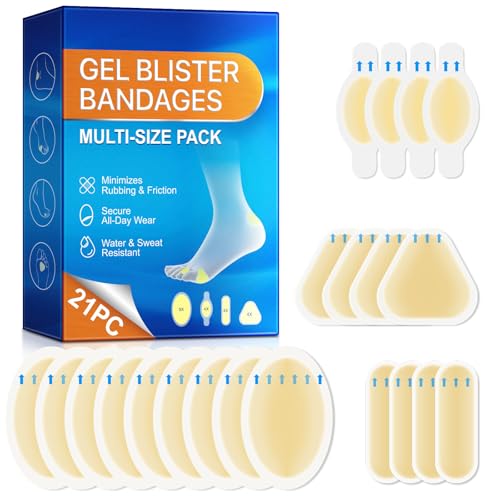
Blister Bandages for Feet

Blister Bandages for Feet
  • 21 hydrocolloid pads
  • Small rounds to large rectangles
  • 100 percent waterproof seal
Check price on Amazon for Blister Bandages for Feet (opens in a new tab)
Best for: Heel and ankle blisters on long runs

Our take

It suits runners and hikers who get blisters on heels and ankles and want a thin, discreet dressing.

Why it made the shortlist

The ZBQIEX set contains 21 medical grade hydrocolloid blister bandages in sizes from small rounds to large rectangular patches. The listing says they create a moist healing environment, stay in place for days during intense exercise or showers and are fully waterproof. The ultra thin, skin toned pads conform to heels and ankles.

Compared with the Promifun Hydrocolloid above, the ZBQIEX adds large rectangular patches for ankles and bigger areas, with 21 pads in total. Compared with the Compeed, it offers a broader range of shapes at a lower price.

The invisible look makes it easy to wear under socks all day. Because the pad is waterproof, it stays put through creek crossings and wet socks.

What works

  • Large patches cover heels and ankles
  • Waterproof seal stays on for days
  • Thin, skin toned pads hide under socks
  • Medical grade hydrocolloid supports healing

Watch out for

  • Fewer pads than the 28 count pack
  • Thin dressings give light padding
  • Needs clean, dry skin to stick well
04
Promifun Moleskin Strips with Adhesive Blister Prevention Pads
  • 24 pre cut moleskin pieces
  • Four shapes incl. crescents
  • Flannel with strong adhesive
Check price on Amazon for Promifun Moleskin Strips with Adhesive Blister Prevention Pads (opens in a new tab)
Best for: Stopping hot spots early on the trail

Our take

It is the pick for hikers who feel a hot spot early and want to stop a blister before it forms.

Why it made the shortlist

The Promifun Moleskin Strips are 24 pre cut flannel adhesive pads in four shapes, made to reduce friction between your feet and new shoes. The set includes 10 oval pieces, 6 long strips, 4 watch pieces and 4 crescent pieces. The adhesive is strong, latex free and described as non irritating for sensitive skin.

Compared with the hydrocolloid dressings above, the moleskin is a prevention tool you apply to a hot spot before it blisters, not a dressing for broken skin. Compared with the Rescue Essentials kit below, it gives 24 shaped pieces with a stated sticky backing.

A sheet of moleskin takes seconds to apply at a trail break. Cut a window in the pad around a tender spot to keep pressure off the center when the skin is already warm.

What works

  • Pre cut shapes fit heels and toes
  • Strong adhesive stays on in shoes
  • Latex free and gentle on sensitive skin
  • Stops friction before a blister forms

Watch out for

  • Never goes on a raw or broken blister
  • Pads can bunch up in damp socks
  • Not a healing dressing
05

Best Pocket Add On · 5 of 5

RESCUE ESSENTIALS BLISTER KIT

RESCUE ESSENTIALS BLISTER KIT
  • Blister treatment assortment
  • Temporary care for hot spots
  • Fits any first aid kit
Check price on Amazon for RESCUE ESSENTIALS BLISTER KIT (opens in a new tab)
Best for: A backup in a daypack or car kit

Our take

It suits day hikers and travelers who want an inexpensive backup in a daypack or a car kit.

Why it made the shortlist

The Rescue Essentials Blister Kit is an assortment of items for treating blisters, offered as temporary care for hot spots caused by walking. It is described as a perfect addition to any first aid kit and a handy item to keep in a purse or bag on walking heavy days. The contents are shown in the listing photos.

Compared with the multipacks above, the Rescue Essentials kit is a small, grab and go set rather than a large supply of pads. Compared with the Promifun Moleskin, it bundles an assortment of items so one small package supports a first aid kit.

The low price makes it easy to tuck into several bags. Because it is so small, it can live in the glovebox, a hip belt pocket and the first aid bag at once.

What works

  • Small enough for a purse or daypack
  • Adds blister care to any first aid kit
  • Designed for hot spots from walking

Watch out for

  • Contents are shown only in the photos
  • Limited quantity for long trips
  • Few details on pad type

Methodology

How We Built This Shortlist

Each pick was assessed across 4 criteria weighted for real-world use.

01

Prevention versus treatment

We sorted picks by the job they do. Moleskin prevents blisters on intact skin, hydrocolloid dressings treat existing blisters, and kits bundle a little of each.

02

Pack size and shapes

We compared piece counts from 10 up to 28, and shapes such as ovals, crescents, strips and large rectangles, since hikers need different sizes for toes, heels and ankles.

03

Adhesion and water resistance

We looked at stated stay on times such as up to 7 days, and at waterproof or water resistant claims, which matter through sweat, creek crossings and showers.

04

Skin comfort

We noted latex free materials, gentle adhesives and thin profiles, since a bulky dressing can create a new pressure point inside a boot.

Decision guide

Match a Blister Kit for Hiking to Your Camp Setup

By Stage of the Blister

Your situationRecommended pickWhy
Hot spot, skin still intactPromifun Moleskinits 24 flannel pieces in four shapes stop friction before a blister forms
Blister already formedCompeed Advanced Padsits hydrocolloid second skin seal stays on up to 7 days
Many blisters across a groupPromifun Hydrocolloidits 28 pads in four shapes cover several people
Heel or ankle blisterZBQIEX Blister Bandagesits large rectangular patches cover heels and ankles
Backup in a daypackRescue Essentials Kitits small assortment is made for hot spots from walking

By Budget

BudgetRecommended pick
Entry of this shortlistRescue Essentials Kit or Promifun Moleskin
Mid of this shortlistZBQIEX Blister Bandages or Promifun Hydrocolloid
Top of this shortlistCompeed Advanced Pads

Moleskin vs Hydrocolloid

Moleskin

The Promifun Moleskin is a flannel pad that stops friction on intact skin before a blister forms. It should not go on a raw blister.

Hydrocolloid

The Compeed Advanced Pads, Promifun Hydrocolloid and ZBQIEX Blister Bandages seal and cushion a blister that has formed, and several state days of wear.

Carry the Promifun Moleskin for early hot spots and the Compeed Advanced Pads for blisters.

By Trip Length

TripRecommended pick
Day hike backupRescue Essentials Kit
Weekend tripCompeed Advanced Pads
Week long trekPromifun Hydrocolloid
Hike with a groupZBQIEX Blister Bandages

For Thru Hikers Specifically

Look for

Long stay times, plenty of pads and both a prevention and a treatment option.

In this comparison

The Promifun Hydrocolloid has 28 pads and the Promifun Moleskin gives 24 pieces for prevention.

When to Spend More

Spend more if

Spend more on the Compeed Advanced Pads if you want a trusted dressing that stays on for up to 7 days.

Save if

Save with the Rescue Essentials Kit or ZBQIEX Blister Bandages if you want a basic backup.

FAQ

Before You Bring One Home

When should I use moleskin instead of a hydrocolloid pad?

Use moleskin on a hot spot when the skin is still intact, since it removes friction before a blister forms. The Promifun Moleskin is the prevention pick. Once a blister forms, switch to a hydrocolloid like the Compeed Advanced Pads. Check your feet at every break, since treating a hot spot early is far easier than recovering from an open blister.

Can I put moleskin on a broken blister?

No, because the adhesive can tear raw skin when you remove it. A hydrocolloid dressing such as the ZBQIEX Blister Bandages or Promifun Hydrocolloid is made for open or fluid filled blisters. Clean the area first. Check your feet at every break, since treating a hot spot early is far easier than recovering from an open blister.

Is Compeed worth it over a multipack?

The Compeed Advanced Pads list adhesion of up to 7 days and a second skin seal, which suits multi day hikes. The Promifun Hydrocolloid and ZBQIEX Blister Bandages give more pads for the money. Pick by trip length. Check your feet at every break, since treating a hot spot early is far easier than recovering from an open blister.

How do I apply a hydrocolloid pad?

Clean and dry the skin, warm the pad in your hands and press it on without stretching. The ZBQIEX Blister Bandages are thin and conform to heels. Leave it on until the edges lift. Check your feet at every break, since treating a hot spot early is far easier than recovering from an open blister.

How do I prevent blisters on a long hike?

Fit your shoes well, wear moisture wicking socks and apply moleskin at the first hot spot. The Promifun Moleskin has crescent and strip shapes for heels and toes. Stop and treat early rather than pushing on. Check your feet at every break, since treating a hot spot early is far easier than recovering from an open blister.

Bottom line

The short version

Browse more blister kit for hiking on Amazon →
Danny Walker, Camping Editor at RV Gear Lab

About the author

Danny Walker

Camping Editor at RV Gear Lab

Danny covers camping gear, campsite setup, outdoor power, sleep systems and practical camping advice, with a focus on helping campers make better gear decisions.

More from Danny →Editorial standards

Keep reading

Related guides