

We research everything we recommend. When you buy through our links, we may earn a commission. Learn more

Buying guide · 11 min read · Updated October 2, 2026

6 Best Budget Soft Starts for a 15,000 BTU RV AC in 2026: A Practical RV Guide

Six budget soft starts sized for 15,000 BTU RV air conditioners, with straight talk on generator claims, tonnage ratings and what each price step adds.

Bowen HigginsBy Bowen HigginsRV Editor at RV Gear Lab6 products comparedSpec-sheet researched

At a glance

Our top picks

Search for a 15,000 BTU soft start and nearly every listing promises the same thing: start the unit on a 2,200 watt generator. That sentence is the most repeated claim in the category, and it deserves a careful reading. The startup surge of the compressor is where a small generator stalls, and a soft start lowers it, but it leaves the running draw of the air conditioner exactly where it was. Read every one of those listings with that distinction in mind, and the shopping gets easier. Wiring that expectation correctly into your plans saves disappointment later.

The six picks below are close cousins. Most are generic modules from the same family of designs, quoting a 65 to 70 percent reduction in startup current, which is the makers' own figure. They differ in the details that decide daily ownership: whether the capacitor and contactor are already inside the box, how much tonnage the listing rates the module for, whether there are indicator lights, and how weatherproof the housing is. That short list of differences is where a sensible buyer should spend their attention. Matching these details to your own roof is the real work of choosing.

Because a 15,000 BTU unit is a heavier job than a 13,500 BTU one, a module rated for a published tonnage range deserves extra credit over one that merely says it fits all air conditioners. The entry end of this shortlist is genuinely inexpensive, and the top end is not much dearer, which means the choice rests on features rather than on stretching a tight budget. Any of them can do the job; the question is which details you will notice after a summer of use. Weigh the practical differences, not the product names on the boxes.

RV Gear Lab field notes

The Rig Fit Check

Start with the job
SEEMINE RV AC Soft Start Kit for 1.75-3.5 Ton Air Conditioners, 115-240V 50/60Hz leads this shortlist for Owners of 15,000 BTU units who want a rated tonnage range and fewer loose parts.. Use that fit as a reference point, then compare the alternatives against your own space and workload.
Specs that separate the picks
The first details to compare are Rated up to 3 ton (36K BTU), Self-learning microprocessor, Starts 15K BTU on a 2,200W generator. Confirm the exact model and included components before ordering.
Trade-off to plan for
Maker's reduction claim is unverified

Before you buy

What Matters Before You Choose a Budget Soft Start for a 15,000 BTU RV AC

Key buying criteria so you get the right fit the first time.

  1. 01

    Rated tonnage versus your compressor

    Roughly a 1.25 ton unit, a 15,000 BTU air conditioner needs a module rated for the compressor's locked rotor amperage, which is printed on its data plate. Published typical ranges disagree, so a range you read online is no substitute for your own plate. Look for a stated tonnage or BTU ceiling in the listing and make sure your plate fits inside it. Any promise to fit all RV air conditioners without a limit is a claim, not a specification.

  2. 02

    Capacitor and contactor inside the box

    Some modules ship with the start and run capacitors and the contactor already inside the housing, and others expect you to reuse the air conditioner's own parts. Built-in components reduce the number of connections you must make and remove a common source of wiring mistakes. They also mean fewer separate items that can fail on a hot roof. Read the listing for words such as preinstalled or built-in, and ask the seller if it is unclear.

  3. 03

    Reading a generator claim

    The line about starting a 15,000 BTU air conditioner on a 2,200 watt generator is about the first second of operation, not the next three hours. Once the compressor is running, the air conditioner draws its normal running current, and the soft start does nothing to lower it. A generator that cannot carry that continuous load will still fail after the ramp. Compare your generator's rated running watts with the unit's running amps before you buy anything.

  4. 04

    Voltage and frequency range

    Most RV air conditioners run on 120 volt, 60 hertz power, yet some listings advertise 115 to 240 volt, 50 or 60 hertz operation. A wider range is mostly a convenience for unusual installs and imported units, not a reason to pay more on a standard US rig. Match the module's range to the supply your air conditioner uses. For a normal rooftop unit on campground or generator power, standard 120 volt operation is all you need.

  5. 05

    Indicators and protective circuits

    Three LED indicators, an overload cutout, short circuit protection and reverse motor protection are not decoration. Indicators let you tell a tripped module from a dead supply without a meter, and the protective circuits stop a fault from reaching the compressor. A bare module can still ramp the start, but it leaves you guessing when something goes wrong. Check which of these each listing actually names before choosing the cheapest.

  6. 06

    One module per unit and a built-in soft start

    Each module controls a single compressor, so a two-unit rig needs two, and claims about running two air conditioners together assume one module per unit. Newer rooftop air conditioners can already include soft start in the compressor, which makes an add-on unnecessary. Check the model number and spec sheet first. Warranty terms also vary by air conditioner maker, so ask before you cut into the control box.

Our standards

Why You Can Trust RV Gear Lab

At RV Gear Lab, we compare products based on rig fit and power or hookup compatibility, verified specifications, usability, setup requirements, weight, durability, and real-world trade-offs. We do not rank products purely on marketing claims or commission rates.

We have not personally tested every product listed. Where hands-on testing is not available, recommendations are based on verified manufacturer specifications, product documentation, use-case fit, and comparative research.

How we review RV gear →

Detailed reviews

The 6 best budget soft starts for a 15,000 btu rv ac, explained

01
Best for: Owners of 15,000 BTU units who want a rated tonnage range and fewer loose parts.

Our take

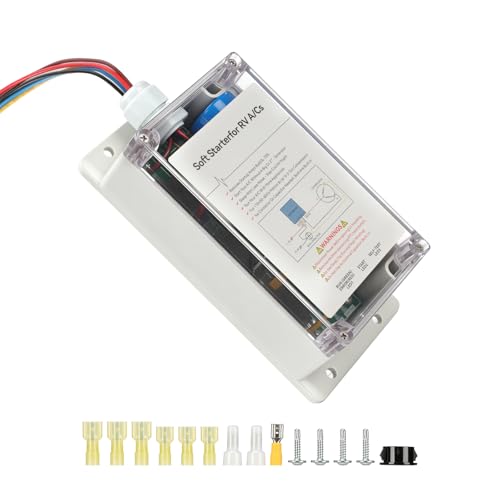
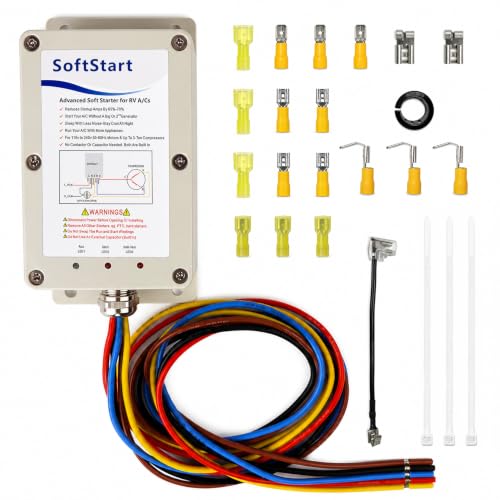
The kit includes color-coded wires, insulated terminals, butt splices and mounting screws with a wiring schematic, and it works across 115 to 240 volts at 50 or 60 hertz.

Why it made the shortlist

SEEMINE's kit is the module in this guide that publishes the clearest rating. The listing gives a tonnage range running to 3 tons, or 36,000 BTU, which comfortably includes a 15,000 BTU rooftop unit and gives you a real ceiling to compare with your compressor's plate rather than a vague promise of broad compatibility. That clarity is the reason it takes the top spot.

Start and run capacitors are preinstalled inside the housing and no external contactor is required, so there are less separate components to source and wire. Per the maker, a 65 to 70 percent cut in compressor surge current comes with a gradual voltage ramp that removes the harsh thump, and three LED indicators that make troubleshooting simple.

It sits in the middle of the price range, below the Briidea Soft Start and the HIITIO Soft Start, and gives you the most documentation per unit of cost.

What works

  • Capacitors and contactor already inside
  • Three LEDs help with troubleshooting
  • Full install kit and wiring schematic

Watch out for

  • Maker's reduction claim is unverified
02
GEARBONE 2026 Upgraded RV AC Soft Start Kit for 15,000 BTU
  • Self-learning microprocessor
  • IP65 enclosure, heat-resistant build
  • Targets 13.5K and 15K BTU units
Check price on Amazon for GEARBONE 2026 Upgraded RV AC Soft Start Kit for 15,000 BTU (opens in a new tab)
Best for: Owners who want a microprocessor that adapts to their compressor's behavior.

Our take

A comprehensive installation guide and all necessary wiring parts come in the box, and the maker puts a typical install between 30 and 60 minutes.

Why it made the shortlist

Gearbone's kit is the one module here that describes a self-learning algorithm. A microprocessor watches current and voltage in real time and the maker says it tunes the ramp to the compressor it finds, which is an intelligent approach for owners who would rather not guess at settings.

The listing targets 13,500 and 15,000 BTU air conditioners on a 2,000 to 2,200 watt generator or a limited 30 amp shore power connection, and the maker quotes a 60 to 70 percent cut in startup current spikes. It sits behind an IP65 enclosure built from high-temperature resistant materials for a hot rooftop. It is a rooftop-ready design for a hot, hard-working compressor.

Positioned at the entry end of the shortlist, it offers adaptive logic at a price usually reserved for fixed-ramp modules, which is why it takes second place. A full guide and the needed wiring parts make the job approachable for most owners.

What works

  • Adaptive ramp tunes itself to the unit
  • IP65 enclosure suits a hot roof
  • Cheapest way into this shortlist
  • Wiring parts and guide in the box

Watch out for

  • Listing does not state an LRA ceiling
  • Newer model with less track record
03
Briidea Soft Starter for RV Air Conditioner Enables Easy Start A/C on Small Generator
  • Starts 15K BTU on a 2,200W generator
  • 20A household hookup use
  • Overload and short circuit protection
Check price on Amazon for Briidea Soft Starter for RV Air Conditioner Enables Easy Start A/C on Small Generator (opens in a new tab)
Best for: Owners running from a 20 amp household outlet or two units on one service.

Our take

A detailed instruction manual and support from the maker help with the wiring.

Why it made the shortlist

Briidea's starter is built around a specific promise: starting a 15,000 BTU air conditioner on a 2,200 watt generator while leaving room for other appliances. It also targets two common setups beyond that, running one unit from a 20 amp household hookup and running two units together on a shared service. That pairing is the reason people shop for this style of module in the first place.

The maker says it trims starting current by 65 to 70 percent, which smooths each start and prevents the generator overload that trips protective breakers. A flame-retardant, dust-proof ABS enclosure holds built-in overload and short circuit protection, so the module guards its own circuit as well as the compressor. The result is a module that looks after its own circuit while it looks after yours.

It sits at the top of this shortlist on price alongside the HIITIO Soft Start, a small step above the SEEMINE Kit, and the extra goes toward the household-outlet and dual-unit use cases that the cheaper picks describe less clearly. Owners who plug in at home or at a family driveway before a trip will find it a thoughtful option.

What works

  • Built for 20 amp household outlet use
  • Overload and short circuit protection included
  • Flame-retardant, dust-proof ABS case
  • Instruction manual and maker support

Watch out for

  • No LED indicators listed
04
HIITIO Soft Start for RV Air Conditioners, Cuts Inrush Current by 65%-70%
  • Reverse motor protection
  • Supports 20A and 30A circuits
  • Waterproof, flame-retardant ABS
Check price on Amazon for HIITIO Soft Start for RV Air Conditioners, Cuts Inrush Current by 65%-70% (opens in a new tab)
Best for: Owners on flaky campground power where the supply drops out and returns.

Our take

Color-coded wires, detailed instructions and professional support keep the install within reach of a DIY owner, and the maker says it eliminates the loud startup noise.

Why it made the shortlist

HIITIO's module puts reverse motor protection and waterproofing on the front of the listing. Reverse protection matters on unreliable campground power, where a brief outage followed by a restart can try to spin a compressor backward, a condition the module is designed to guard against. That focus on a real-world power problem is the module's strongest selling point.

Inrush current falls by 65 to 70 percent according to the maker, which helps stop lights flickering and breakers tripping, and it is said to support 20 or 30 amp circuits and works with generators, solar systems and standard shore power. A flame-retardant, dust-proof ABS housing carries built-in overload and short circuit protection. It is also a reassurance for owners who park in places with a patchy supply.

Pricing places it with the Briidea Soft Start at the top of the shortlist, a modest step above the SEEMINE Kit, and the added cost is for the reverse safeguard.

What works

  • Reverse motor protection built in
  • Works on 20 or 30 amp circuits
  • Overload and short circuit protection
  • Color-coded wires and support available

Watch out for

  • Claims to suit all RVs, which is marketing
05
LLANNDER Soft Start for RV Air Conditioner, RV AC Soft Start Kit
  • Five color-coded wires
  • Contactor and capacitor built in
  • Installation kit included
Check price on Amazon for LLANNDER Soft Start for RV Air Conditioner, RV AC Soft Start Kit (opens in a new tab)
Best for: First-time installers who want a clean five-wire job with an install kit.

Our take

It lands in the lower-middle of the price range, close to the SEEMINE Kit and a small step above the HQPASFY Kit, and the difference is the integrated contactor and capacitor along with the included install kit.

Why it made the shortlist

LLANNDER's kit keeps things simple. A five-wire color-coded bundle makes identification and connection straightforward, and the contactor and capacitor are already built in, so the box needs no extra components. A package of one soft start plus one installation kit contains everything the listing says you need. The simplicity is intentional and it makes sense for a first install.

Startup current is reduced by 65 to 70 percent, the maker states, preventing generator overload and breaker tripping, with built-in overload and short circuit protection guarding the circuit. It is described as made from high-quality materials and applicable across various air conditioner brands, so it sits comfortably on a mixed roof. That broad brand coverage suits owners who are not sure what else may sit on the roof.

It suits an owner who wants a tidy, uncomplicated weekend job. It is an easy recommendation for a beginner who wants no surprises.

What works

  • Five color-coded wires keep wiring simple
  • Contactor and capacitor already inside
  • Install kit comes in the box
  • Overload and short circuit protection

Watch out for

  • Listing does not state a tonnage ceiling
  • No LEDs or monitoring features
06
HQPASFY Soft Start for RV Air Conditioner, AC Soft Start Kit
  • Photo instructions for install
  • Supports 15K BTU on 2,200W
  • Smooth ramp and quieter start
Check price on Amazon for HQPASFY Soft Start for RV Air Conditioner, AC Soft Start Kit (opens in a new tab)
Best for: Budget owners who want photo-guided instructions and a plain, quiet-start module.

Our take

It lands near the low end of the price range, just above the Gearbone Kit and under the LLANNDER Kit, and its cost advantage comes from leaving out extras such as status lights.

Why it made the shortlist

HQPASFY's module focuses on the basics: a smooth, gradual ramp that shrinks the initial surge and keeps the compressor quieter. The maker says it lowers startup current by 65 to 70 percent and describes supporting a 15,000 BTU air conditioner on a 2,200 watt generator. For a first-time buyer, that plain focus is a refreshing change from long feature lists.

The listing leans on instructional pictures and points to online install videos, which is a friendly resource for an owner who has never opened a rooftop control box. It is described as built for RV air conditioners and capable of powering a range of small appliances alongside the unit. Seeing the steps pictured removes much of the fear around a first rooftop job.

For a buyer who wants the ramp and little else, this is an honest, uncomplicated starter. A sensible option for a seasonal camper who wants a calmer start without fuss.

What works

  • Illustrated install instructions
  • Smooth ramp for quieter starts
  • Meant for 15,000 BTU units

Watch out for

  • Listing does not state a tonnage ceiling
  • No LEDs or extra protection details

Methodology

How We Built This Shortlist

Each pick was assessed across 5 criteria weighted for real-world use.

01

Published rating versus a 15,000 BTU unit

We compared how clearly each listing states what size of air conditioner it covers. A module rated to a tonnage range gave us a number to hold against a compressor plate, while a blanket promise to fit any RV did not. Based on product specs, the clearer the rating, the higher the module ranked.

02

Generator claims read skeptically

Most listings repeat that a 15,000 BTU unit can start on a 2,200 watt generator. We treated that as a manufacturer claim about startup, not a statement about continuous running. The modules that spelled out their limits or the conditions of the claim earned more trust than those that simply repeated the line.

03

Components inside the box

Whether a capacitor and contactor are built in changes both the install and the parts you must source. We favored kits that include them, along with terminals, splices and a schematic. A module that leaves the buyer sourcing parts from a hardware store scores lower for a first-time installer.

04

Diagnostics and protection

LED indicators, overload and short circuit protection, reverse motor protection and a self-learning ramp were counted as real features. They help a compressor and a power source in ways the ramp alone does not. We noted which listings publish them and which stay silent.

05

Housing and weather rating

These modules ride on a hot, wet, vibrating roof, so we looked at IP ratings, flame-retardant plastics and heat-resistant materials. A stated rating counts for more than an adjective like rugged. We evaluated what each listing commits to in writing.

Decision guide

Match a Budget Soft Start for a 15,000 BTU RV AC to Your RV

By Air Conditioner Rating

Match the module to the unit before anything else, because the rating decides whether it is safe to use.

Your unitWhat to look forPick
15,000 BTU unit, want a published tonnage ceilingRating that spans 1.75 to 3.5 tonsSEEMINE Kit
13,500 or 15,000 BTU unit, want adaptive rampingSelf-learning microprocessorGearbone Kit
Household outlet or dual-unit rigStated 20 amp and two-unit useBriidea Soft Start
Unreliable campground powerReverse motor protectionHIITIO Soft Start
Simple install on a standard unitFive wires and an install kitLLANNDER Kit

By Budget

The whole group sits in a narrow band, so the spread is about features rather than raw cost.

Price bandWhat the money buysPick
Top of this shortlistHousehold outlet and dual-unit claimsBriidea Soft Start
Top of this shortlistReverse motor protectionHIITIO Soft Start
Mid of this shortlistPublished tonnage range and three LEDsSEEMINE Kit
Lower-mid of this shortlistBuilt-in contactor with an install kitLLANNDER Kit
Entry of this shortlistPhoto-guided installHQPASFY Kit
Cheapest way inSelf-learning microprocessor and IP65 caseGearbone Kit

Adaptive Ramp vs Fixed Ramp

Most modules apply a fixed ramp to the compressor, while one listing describes a unit that adjusts itself.

Adaptive ramp

The Gearbone Kit uses a microprocessor that watches current and voltage and tunes the start to the compressor it finds. That suits owners who want the device to handle tuning and who value a modern design.

Fixed ramp

The SEEMINE Kit, Briidea Soft Start, HIITIO Soft Start, LLANNDER Kit and HQPASFY Kit apply a set ramp with protective circuits around it. They have longer track records as designs and are simple to understand and wire.

Choose the SEEMINE Kit for the clearest published rating, or the Gearbone Kit if the adaptive logic appeals to you.

By Install Confidence

How comfortable you are inside a control box shapes which kit makes sense.

Your comfort levelWhat helpsPick
First time on a roof unitPhotos and online install videosHQPASFY Kit
Comfortable following a schematicWiring diagram and full hardware kitSEEMINE Kit
Want the fewest loose partsContactor and capacitor already built inLLANNDER Kit
Want clear status indicationLED indicators to confirm operationSEEMINE Kit

For Small Generator Use Specifically

Look for

A module whose listing is specific about the generator size and the air conditioner size, plus stall or overload protection. Check that the generator can run the unit continuously, because the soft start only helps the start. The Gearbone Kit and Briidea Soft Start both name the pairing directly.

In this comparison

The Gearbone Kit is the cheapest route and mentions 13.5K and 15K BTU units on 2,000 to 2,200 watt generators. The SEEMINE Kit adds a published tonnage rating, which is useful when you need more than a marketing line.

When to Spend More

Spend more if

You need household-outlet or dual-unit use from the Briidea Soft Start, or the reverse motor protection of the HIITIO Soft Start on unreliable power. The step up buys specific safeguards rather than a different ramp.

Save if

You are on stable shore power and want calmer starts, in which case the HQPASFY Kit or the Gearbone Kit gives the basics at the entry end, with the LLANNDER Kit as a small step up for the integrated parts.

FAQ

Before You Bring One Home

Is a 15,000 BTU air conditioner the same as a 1.25 ton unit?

Yes, roughly, because one ton of cooling equals 12,000 BTU per hour. That conversion helps when a listing rates its module in tons, as the SEEMINE Kit does. Compressor surge depends on the specific unit, so the locked rotor amperage on the data plate is still the number to match.

Will a soft start run a 15,000 BTU unit on a 2,200 watt generator?

It helps the generator through the start, which is where a small generator stalls, but it does not reduce the running load. If the generator cannot carry the air conditioner after the compressor spins up, the ramp will not change that. Treat the generator claim as a startup aid and check running watts separately.

What is the difference between the cheapest and the dearest pick here?

The Gearbone Kit sits at the entry end and brings an adaptive microprocessor and IP65 enclosure. The Briidea Soft Start and HIITIO Soft Start cost a little more and emphasize household-outlet use and reverse motor protection. The ramp itself is similar across the group.

Do I need a separate capacitor or contactor?

Not with the SEEMINE Kit or LLANNDER Kit, which list these parts as built in. For other modules, read the listing to see whether you reuse the air conditioner's own components. Built-in parts mean fewer connections to make.

Do two air conditioners need two soft starts?

Yes, one module per compressor. A two-unit rig needs two, and any claim about running both together assumes a module on each. Nor is it a surge protector, so a pedestal protector remains a separate purchase.

How do I install one on a rooftop air conditioner?

You wire the module into the compressor circuit inside the unit's control box, usually following the color-coded diagram supplied. Install times quoted by makers run from about fifteen minutes to an hour. Turn off all power first, and ask the air conditioner's maker about warranty terms before you cut any wire.

Bottom line

The short version

Browse more budget soft starts for a 15,000 btu rv ac on Amazon →
Bowen Higgins, RV Editor at RV Gear Lab

About the author

Bowen Higgins

RV Editor at RV Gear Lab

Bowen covers RV power, water systems, towing and leveling, upkeep and interior comfort, with a focus on matching gear to the rig, the hookups and the way you actually travel.

More from Bowen →Editorial standards

Keep reading

Related guides