

We research everything we recommend. When you buy through our links, we may earn a commission. Learn more

Buying guide · 6 min read · Updated August 19, 2026

2 Best FlashFish Portable Power Stations in 2026: A Practical RV Guide

We compared flashfish portable power stations by measured usable energy, continuous output, and safety documentation rather than ranking by headline wattage alone.

Bowen HigginsBy Bowen HigginsRV Editor at RV Gear Lab2 products comparedSpec-sheet researched

At a glance

Our top picks

The real test for flashfish portable power stations comes down to mapping FlashFish's current model lineup instead of assuming every listing is a current product, not a glance at the listing photo.

Rather than trust manufacturer claims, we checked measured usable energy and safety documentation plus mapping FlashFish's current model lineup instead of assuming every listing is a current product for every station on this list.

RV Gear Lab field notes

The Rig Fit Check

Start with the job
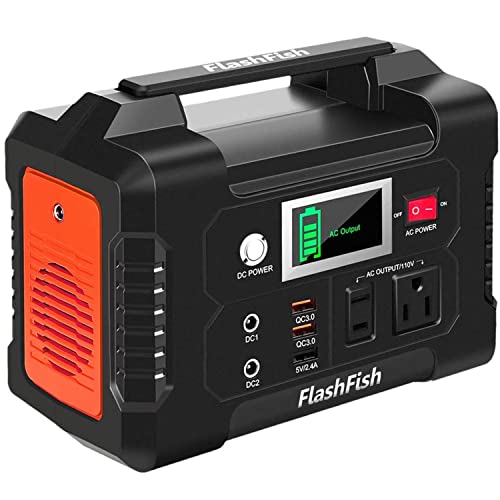
Flashfish Portable Power Station 200W, 40800mAh leads this shortlist for buyers prioritizing 151wh, 200w, 4.07 lbs. Use that fit as a reference point, then compare the alternatives against your own space and workload.
Specs that separate the picks
The first details to compare are 151Wh, 200W, 4.07 lbs, 400Wh, 400W (800W surge), 8.44 lbs. Confirm the exact model and included components before ordering.
Trade-off to plan for
Solar panel for the third charging path is sold separately

Before you buy

What Matters Before You Choose a FlashFish Portable Power Station

Key buying criteria so you get the right fit the first time.

  1. 01

    Build a Current Model Map First

    Confirm which flashfish models are currently sold rather than assuming an older listing reflects the current lineup, since capacity and features change between generations.

  2. 02

    Publish Rated Wh and Continuous W by Model

    Verify exact rated capacity, continuous output, and battery chemistry for the specific model, not the brand's range in general.

  3. 03

    Verify AC/Solar/Car Charging Input

    Check documented charging input limits and current app or firmware requirements before assuming fast-charge claims apply automatically.

  4. 04

    Compare Cycle-Life Claims and Warranty

    Compare cycle-life test conditions, warranty length, and documented safety certification by exact model.

  5. 05

    Separate Current Generation From Older Listings

    Check regional availability and support status, since older generation products often stay heavily indexed after being succeeded.

Our standards

Why You Can Trust RV Gear Lab

At RV Gear Lab, we compare products based on rig fit and power or hookup compatibility, verified specifications, usability, setup requirements, weight, durability, and real-world trade-offs. We do not rank products purely on marketing claims or commission rates.

We have not personally tested every product listed. Where hands-on testing is not available, recommendations are based on verified manufacturer specifications, product documentation, use-case fit, and comparative research.

How we review RV gear →

Detailed reviews

The 2 best flashfish portable power stations, explained

01
Flashfish Portable Power Station 200W, 40800mAh
  • 151Wh, 200W, 4.07 lbs
  • LCD with separate AC/DC controls
  • 12-month warranty
Check price on Amazon for Flashfish Portable Power Station 200W, 40800mAh (opens in a new tab)
Best for: Buyers prioritizing 151wh, 200w, 4.07 lbs

Our take

A user-friendly LCD display with separate AC/DC control buttons simplifies operation, clearly showing remaining power and charge status even in low-light camping conditions.

Why it made the shortlist

This 151Wh (40,800mAh) station delivers reliable power for outdoor, home backup, travel, camping, and long road trips through a 110V AC outlet (200W), dual DC ports, dual QC3.0 USB, and one auto-sensing USB port. At just 4.07 lbs with a soft handle, it's genuinely easy to store in a backpack or car.

Three recharge paths (wall AC adapter in 4-4.5 hours, car charger in 5 hours, or Flashfish's compatible 60W solar panel sold separately in 5-6 hours) give genuine flexibility, backed by a BMS with voltage control and short-circuit protection plus a 12-month warranty.

What works

  • Separate AC/DC control buttons genuinely simplify device-specific operation
  • 4.07 lbs with a soft handle is genuinely easy to carry
  • LCD display clearly shows status even in low-light camping

Watch out for

  • Solar panel for the third charging path is sold separately
  • 200W output limits use to lighter appliances only
02
Flashfish K53 Portable Power Station, 400Wh/109200mAh
  • 400Wh, 400W (800W surge), 8.44 lbs
  • 9 total ports, one-hand carry
  • 9-10hr full charge
Check price on Amazon for Flashfish K53 Portable Power Station, 400Wh/109200mAh (opens in a new tab)
Best for: Buyers prioritizing 400wh, 400w (800w surge), 8.44 lbs

Our take

At roughly 8.44 lbs with dimensions of 9.2x5.8x6.0 inches, this stays light enough to carry with one hand despite the capacity increase, with an integrated carry handle for moving between rooms during outages.

Why it made the shortlist

Three charging methods (AC wall, Flashfish's 100W solar panel sold separately, or car outlet) reach a full charge in 9-10 hours, and a built-in BMS protects against overcurrent, overvoltage, and over-temperature for genuinely clean, quiet, fumeless outdoor power.

What works

  • 400W output genuinely runs appliances like electric grills and coffee makers
  • 8.44 lbs stays one-hand carryable despite the larger 400Wh capacity
  • 9 total ports covers a genuinely wide range of device types

Watch out for

  • 100W solar panel for outdoor charging is sold separately
  • 9-10 hour full charge is slower than fast-charge-focused rivals
The catch
This 400Wh (109,200mAh) station steps up from Flashfish's smaller models with a genuine 400W AC output (800W surge) across 9 total ports including an AC outlet, 3 USB ports, a USB-C port, 3 DC ports, and a car port.

Methodology

How We Built This Shortlist

Each pick was assessed across 5 criteria weighted for real-world use.

01

Rated Wh Verified Against Usable Energy

Checked documented battery capacity separately from continuous AC output, since a high wattage rating doesn't guarantee enough stored energy to run a device for long.

02

Continuous Output vs Surge Separated

Compared continuous inverter rating against surge or boost mode claims, since many listings blend the two into one headline number.

03

Charging Speed and Path Documented

Verified AC, solar, and car charging times from official specs, noting where fastest speeds require specific modes, apps, or additional hardware.

04

Safety and Certification Evidence Checked

Looked for UL, UL2743, or other documented safety certification and battery chemistry evidence rather than trusting a safety claim alone.

05

Real Ownership Costs Included

Weighed included cables, solar panel bundling, warranty length, and app requirements as part of the real cost and usability of each pick.

Decision guide

Match a FlashFish Portable Power Station to Your RV

Build a Current Model Map First

Confirm which flashfish models are currently sold rather than assuming an older listing reflects the current lineup, since capacity and features change between generations.

Publish Rated Wh and Continuous W by Model

Verify exact rated capacity, continuous output, and battery chemistry for the specific model, not the brand's range in general.

Verify AC/Solar/Car Charging Input

Check documented charging input limits and current app or firmware requirements before assuming fast-charge claims apply automatically.

Compare Cycle-Life Claims and Warranty

Compare cycle-life test conditions, warranty length, and documented safety certification by exact model.

Separate Current Generation From Older Listings

Check regional availability and support status, since older generation products often stay heavily indexed after being succeeded.

FAQ

Before You Bring One Home

Are all flashfish models currently sold, or does the lineup include discontinued products?

Check current first-party store pages directly, since older portable power stations often stay heavily indexed in search results long after being succeeded by newer generations.

Does buying flashfish guarantee the same battery chemistry across every model?

No. A brand's lineup can span different battery chemistries and generations, so verify the exact model's documented chemistry and cycle-life rather than assuming brand consistency.

What's the real difference between watts and watt-hours for a power station?

Watts (W) measure how much power the station can deliver at once, essentially how many devices it can run simultaneously, while watt-hours (Wh) measure total stored energy, essentially how long it can run those devices. A station with high W but low Wh can power a lot at once but only briefly.

Does a surge or peak wattage rating mean the station can run appliances at that power level?

No. Surge or peak ratings describe a brief burst the inverter can handle, typically for a compressor or motor startup, not a sustained output level. Always check the continuous or rated wattage figure for what the station can actually run for extended periods.

Is LiFePO4 battery chemistry actually safer than standard lithium-ion?

LiFePO4 (LFP) cells are generally considered more thermally stable than standard lithium-ion or lithium-polymer cells, with a lower risk of thermal runaway, and most current portable power stations have shifted to LFP for this reason. Still, verify UL or UL2743 safety certification directly rather than assuming chemistry alone guarantees safety.

Bottom line

The short version

Browse more flashfish portable power stations on Amazon →
Bowen Higgins, RV Editor at RV Gear Lab

About the author

Bowen Higgins

RV Editor at RV Gear Lab

Bowen covers RV power, water systems, towing and leveling, upkeep and interior comfort, with a focus on matching gear to the rig, the hookups and the way you actually travel.

More from Bowen →Editorial standards

Keep reading

Related guides