

We research everything we recommend. When you buy through our links, we may earn a commission. Learn more

Buying guide · 22 min read · Updated September 25, 2026

Our Guide to the Best Jackery Solar Generator 300 in 2026

Compare jackery solar generator 300 by fit, capacity, safety, compatibility, setup needs, ownership burden, and real product details.

Bowen HigginsBy Bowen HigginsRV Editor at RV Gear Lab5 products comparedSpec-sheet researched
Best Jackery Solar Generator 300

At a glance

Our top picks

Best Jackery Solar Generator 300 should be chosen around the job the product needs to do, not only the biggest number in a product title. This guide compares current product listings, published specifications, product images, and feature details so the shortlist is grounded in real available products.

The recommendations focus on compatibility, safety, output or capacity, connection style, portability, setup burden, and long-term ownership. Use it as a buying shortlist, then verify the final manual, local code requirements, and fit with the rest of the backup-power system before purchase.

RV Gear Lab field notes

The Rig Fit Check

Start with the job
Jackery Solar Generator 300 and 40W Solar Panel,292Wh,300W AC leads this shortlist for Buyers comparing jackery solar generator 300 with real product details and system compatibility in mind.. Use that fit as a reference point, then compare the alternatives against your own space and workload.
Specs that separate the picks
The first details to compare are Capacity: 292Wh. Confirm the exact model and included components before ordering.
Trade-off to plan for
Balanced design may not lead every specification

Before you buy

What Matters Before You Choose a Jackery Solar Generator 300

Key buying criteria so you get the right fit the first time.

  1. 01

    Check solar input voltage and realistic recharge time

    Solar compatibility is not just panel wattage. Open-circuit voltage, current limit, connector type, MPPT range, shading, panel angle, and daily sun hours decide whether the system can actually recover overnight use. A product with a large battery but weak input can be excellent for one-day backup and frustrating for multi-day off-grid use.

  2. 02

    Decide whether expansion matters

    Expansion is useful when the base station is part of a long-term system. For simple camping or router backup, a non-expandable unit may be cleaner.

  3. 03

    Plan recharge after the first day

    Wall charging is useful before a storm, but solar, car, alternator, or generator charging can matter after the first night. Compare recharge paths, not just capacity.

  4. 04

    Balance capacity with portability

    Weight should match the job. A van-life station, desk backup, and home outage station do not need the same form factor.

  5. 05

    Test UPS behavior before relying on it

    UPS or EPS claims do not guarantee every device will stay online. Routers, PCs, and medical-adjacent equipment should be tested with the exact station before an outage.

Our standards

Why You Can Trust RV Gear Lab

At RV Gear Lab, we compare products based on rig fit and power or hookup compatibility, verified specifications, usability, setup requirements, weight, durability, and real-world trade-offs. We do not rank products purely on marketing claims or commission rates.

We have not personally tested every product listed. Where hands-on testing is not available, recommendations are based on verified manufacturer specifications, product documentation, use-case fit, and comparative research.

How we review RV gear →

Detailed reviews

The 5 best jackery solar generator 300, explained

01
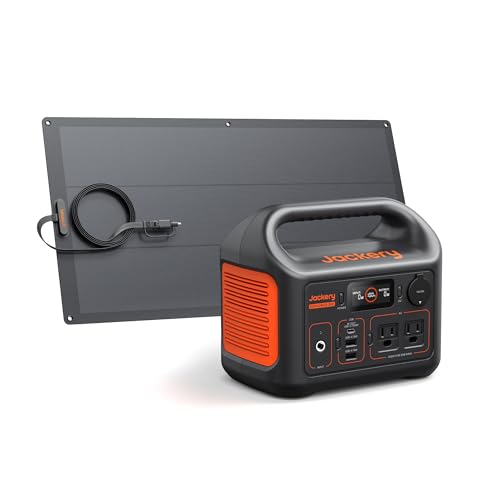
Jackery Solar Generator 300 and 40W Solar Panel,292Wh,300W AC
  • Capacity: 292Wh
  • Continuous output: 300W
  • Surge output: 600W
  • Listed weight: 7.5 lb
Check price on Amazon for Jackery Solar Generator 300 and 40W Solar Panel,292Wh,300W AC (opens in a new tab)
Best for: Buyers comparing jackery solar generator 300 with real product details and system compatibility in mind.

Our take

Its value drops quickly if the buyer expects one box to cover every emergency load.

Why it made the shortlist

Jackery Solar Generator 300 and 40W Solar Panel, 292Wh, 300W AC earns the best overall slot because it has a clearer role than a generic budget battery: laptops, mini fridges with verified startup demand, small tools, and longer outage kits. 292Wh moves it into a more useful weekend and short-outage tier, especially when the buyer can recharge daily or keep the load list narrow. For jackery solar generator 300, the useful comparison is how the product behaves in the buyer's actual routine rather than how large the headline numbers look.

Keep it for a short, named device list and move up a tier if the plan includes motors, heat, or unattended overnight runtime.

What works

  • Balanced specification mix suits most general buyers
  • Solar input supports off-grid energy recovery
  • 300W keeps appliance expectations clearly defined
  • 600W surge supports brief motor startup loads

Watch out for

  • Balanced design may not lead every specification
  • Cloud cover can extend recharge time
  • 300W excludes heaters and most cooking appliances
02
Jackery Explorer 300 Portable Power Station,292Wh
  • Capacity: 292Wh
  • Continuous output: 300W
  • Surge output: 600W
  • Listed weight: 7.5 lb
Check price on Amazon for Jackery Explorer 300 Portable Power Station,292Wh (opens in a new tab)
Best for: Buyers comparing jackery solar generator 300 with real product details and system compatibility in mind.

Our take

Choose it when the job is narrow, repeatable, and easy to test before an outage or trip.

Why it made the shortlist

Jackery Explorer 300 Portable Power Station, 292Wh earns the best heavy-duty option slot because it has a clearer role than a generic budget battery: laptops, mini fridges with verified startup demand, small tools, and longer outage kits. 292Wh moves it into a more useful weekend and short-outage tier, especially when the buyer can recharge daily or keep the load list narrow. For jackery solar generator 300, the useful comparison is how the product behaves in the buyer's actual routine rather than how large the headline numbers look.

What works

  • Heavier-duty design suits demanding regular use
  • Solar input supports off-grid energy recovery
  • 292Wh suits phones, lights, and laptops
  • 300W supports basic low-draw campsite devices

Watch out for

  • Heavy-duty format can increase transport burden
  • Cloud cover can extend recharge time
  • 292Wh limits refrigerator and overnight CPAP runtime
03
Jackery Solar Generator 300 and SolarSaga 100W Light,292Wh,300W AC
  • Capacity: 292Wh
  • Continuous output: 300W
  • Surge output: 600W
  • Listed weight: 7.5 lb
Check price on Amazon for Jackery Solar Generator 300 and SolarSaga 100W Light,292Wh,300W AC (opens in a new tab)
Best for: Buyers comparing jackery solar generator 300 with real product details and system compatibility in mind.

Our take

Choose it when the job is narrow, repeatable, and easy to test before an outage or trip.

Why it made the shortlist

Jackery Solar Generator 300 and SolarSaga 100W Light, 292Wh, 300W AC earns the best compact option slot because it has a clearer role than a generic budget battery: laptops, mini fridges with verified startup demand, small tools, and longer outage kits. 292Wh moves it into a more useful weekend and short-outage tier, especially when the buyer can recharge daily or keep the load list narrow. For jackery solar generator 300, the useful comparison is how the product behaves in the buyer's actual routine rather than how large the headline numbers look.

What works

  • Compact design favors limited storage spaces
  • Solar input supports off-grid energy recovery
  • LiFePO4 cells suit regular repeated battery use
  • 7.5 lb weight stays easy to carry

Watch out for

  • Compact format limits maximum capability headroom
  • Cloud cover can extend recharge time
  • 300W excludes heaters and most cooking appliances
04
Portable Solar Generator 300W Portable Power Station
  • Included panel: 60W
  • Buyer check: Verify current model compatibility
  • Buyer check: Verify current model compatibility
  • Buyer check: Verify current model compatibility
Check price on Amazon for Portable Solar Generator 300W Portable Power Station (opens in a new tab)
Best for: Buyers comparing jackery solar generator 300 with real product details and system compatibility in mind.

Our take

This is the kind of station that rewards realistic expectations: charge essentials, keep communications running, and leave high-watt loads to a larger system.

Why it made the shortlist

Portable Solar Generator 300W Portable Power Station belongs in this shortlist when the buyer wants a defined small-power role instead of chasing the biggest printed number. For jackery solar generator 300, the useful comparison is how the product behaves in the buyer's actual routine rather than how large the headline numbers look. That makes it easier to compare against the other picks by real use, not by category label.

Runtime should be estimated from the actual device wattage, because small stations can look generous until several low-draw devices run together for hours.

It is strongest when every device on the list has a known watt draw.

What works

  • Value-focused design prioritizes essential practical capabilities
  • Solar input supports off-grid energy recovery
  • Includes 60W panel for solar charging
  • Published ports simplify device compatibility checks

Watch out for

  • Value focus may omit premium conveniences
  • Cloud cover can extend recharge time
  • 60W panel makes full recharging relatively slow
05
Jackery Solar Generator 1000 v2 and 200W Solar Panel,1070Wh,1500W AC
  • Capacity: 1,070Wh
  • Continuous output: 1,500W
  • Surge output: 3,000W
  • Listed weight: 23.8 lb
Check price on Amazon for Jackery Solar Generator 1000 v2 and 200W Solar Panel,1070Wh,1500W AC (opens in a new tab)
Best for: Buyers comparing jackery solar generator 300 with real product details and system compatibility in mind.

Our take

At 23.8 lb, portability becomes part of the decision rather than a background detail.

Why it made the shortlist

For jackery solar generator 300, the useful comparison is how the product behaves in the buyer's actual routine rather than how large the headline numbers look. Its best use is a planned low-draw kit where the buyer knows which devices matter first.

1,500W output is enough for many common essentials, yet the station still needs a plan for surge loads and recharge timing.

This is the kind of station that rewards realistic expectations: charge essentials, keep communications running, and leave high-watt loads to a larger system. It is strongest when every device on the list has a known watt draw.

What works

  • Backup positioning offers a simpler alternative
  • Solar input supports off-grid energy recovery
  • Pure sine output protects sensitive electronic devices
  • 1,070Wh offers useful multi-device runtime headroom

Watch out for

  • Backup role offers less performance headroom
  • Cloud cover can extend recharge time
  • High-watt appliances still drain capacity quickly

Methodology

How We Built This Shortlist

Each pick was assessed across 4 criteria weighted for real-world use.

01

Product-role clarity

We looked for products that clearly fit the search intent behind jackery solar generator 300, not items that merely mentioned similar words in the title. Strong picks had a defined buyer role, visible product images, and enough listing detail to understand how the item would be used in a real backup-power setup. Listings with vague compatibility claims were treated cautiously.

02

Energy math and recharge realism

Solar-generator and power-station picks were evaluated by usable watt-hours, inverter output, solar input limits, connector fit, and likely recharge time. A large battery with weak solar input can be poor for multi-day use, while a smaller unit may be better if the load is clearly defined and easy to refill.

03

Safety and ownership burden

Backup-power gear often gets used during storms, travel days, dark garages, or stressful outages. We favored products that make setup, labeling, inspection, maintenance, storage, and repeated operation easier. We also penalized options that could encourage unsafe shortcuts, unclear wiring assumptions, or unrealistic runtime expectations.

04

System compatibility

Each pick was reviewed as part of a complete system rather than as a standalone box. A generator must match the cord and transfer path, a power station must match the load and recharge plan, and an accessory must match the exact panel, inlet, outlet, or generator model. This matters more than small differences in headline numbers.

Decision guide

Match a Jackery Solar Generator 300 to Your RV

Use a decision path, not only a rank

StepWhat to checkWhy it matters
Recharge mathMatch battery capacity to daily use, then match solar input to realistic recovery hours.Prevents a system that runs well once but cannot refill fast enough.
First filterRemove products that do not match the core connection, capacity, fuel, or installation requirement.Prevents a strong-looking listing from becoming an incompatible purchase.
Second filterCompare the weak link: surge output, cord rating, solar input, service amperage, or fuel supply.Finds the constraint most likely to cause failure during real use.
Final filterChoose the product with the clearest setup path, safest operating routine, and easiest verification steps.Makes the pick easier to own after the order arrives.
Shortlist exampleUse Jackery Solar Generator 300 and 40W Solar Panel,292Wh,300W AC as the reference point, then compare every alternative against its role, limits, and setup burden.This keeps the jackery solar generator 300 decision anchored to a real product rather than an abstract spec target.

Verify the weak link

Before buying, identify the weakest part of the system: cord gauge, outlet type, battery capacity, solar input, enclosure rating, fuel storage, service amperage, or installation path. Most bad purchases happen when one quiet compatibility limit is discovered after delivery. Confirm that limit first, then use the rankings as a shortlist instead of treating them as a substitute for system design.

Build a test routine

After purchase, test the setup before the first outage, trip, or storm season. Label cables, record compatible loads, read the manual, photograph settings, and store small parts together. A product that has never been connected under calm conditions is much harder to trust when the power is out and the household is making decisions under pressure.

FAQ

Before You Bring One Home

Can a power station run a sump pump?

A sump pump needs both surge output and enough energy for repeated cycles. Many small stations are not appropriate for this job.

Do I need solar panels?

Solar is not required for short outages, but it becomes valuable when outages last beyond one battery cycle. The panel must match the station input limits.

Can a power station run a refrigerator?

Many refrigerators can run from a suitable power station, but startup surge and total runtime must be checked before relying on it.

Is LiFePO4 worth it?

LiFePO4 is often worth it for frequent use, long storage life, and higher cycle expectations. It can weigh more than some alternatives.

How should I store a power station?

Store the station where temperature is stable and check charge on a schedule. Battery care affects long-term capacity.

Can a power station work as a UPS?

Some models advertise UPS or EPS behavior, but transfer time and device tolerance vary. Test the actual router, computer, or device before relying on it.

Bottom line

The short version

Browse more jackery solar generator 300 on Amazon →
Bowen Higgins, RV Editor at RV Gear Lab

About the author

Bowen Higgins

RV Editor at RV Gear Lab

Bowen covers RV power, water systems, towing and leveling, upkeep and interior comfort, with a focus on matching gear to the rig, the hookups and the way you actually travel.

More from Bowen →Editorial standards

Keep reading

Related guides