


We research everything we recommend. When you buy through our links, we may earn a commission. Learn more

Buying guide · 22 min read · Updated September 25, 2026

Our Guide to the Best Portable Generator with 30 Amp RV Outlet in 2026

Compare portable generator with 30 amp rv outlet by fit, capacity, safety, compatibility, setup needs, ownership burden, and real product details.

Bowen HigginsBy Bowen HigginsRV Editor at RV Gear Lab5 products comparedSpec-sheet researched
Best Portable Generator with 30 Amp RV Outlet

At a glance

Our top picks

Best Portable Generator with 30 Amp RV Outlet should be chosen around the job the product needs to do, not only the biggest number in a product title. This guide compares current product listings, published specifications, product images, and feature details so the shortlist is grounded in real available products.

The recommendations focus on compatibility, safety, output or capacity, connection style, portability, setup burden, and long-term ownership. Use it as a buying shortlist, then verify the final manual, local code requirements, and fit with the rest of the backup-power system before purchase.

RV Gear Lab field notes

The Rig Fit Check

Start with the job
Oxseryn 4400-Watts Inverter Generator, Open Frame Generator Gas Powered, Emergency Home Backup, RV Ready leads this shortlist for Buyers comparing portable generator with 30 amp rv outlet with real product details and system compatibility in mind.. Use that fit as a reference point, then compare the alternatives against your own space and workload.
Specs that separate the picks
The first details to compare are Continuous output: 3,400W, Continuous output: 3,600W, Continuous output: 5,300W. Confirm the exact model and included components before ordering.
Trade-off to plan for
30A label still needs system matching

Before you buy

What Matters Before You Choose a Portable Generator with 30 Amp RV Outlet

Key buying criteria so you get the right fit the first time.

  1. 01

    Plan maintenance before first use

    Oil, spark plug, air filter, fuel stabilizer, and hour tracking should be ready before storm season. A generator that sits untested for months is not a backup plan.

  2. 02

    Do not ignore weight and movement

    A generator that cannot be staged quickly may not be useful during a real outage. Weight, handle design, wheels, and storage route should be part of the purchase decision.

  3. 03

    Prioritize CO shutdown, but do not rely on it alone

    CO sensors are valuable, but they do not make indoor or garage operation safe. The operating location still needs outdoor placement, exhaust clearance, weather protection, and working household alarms.

  4. 04

    Size from running watts first

    Running watts decide what can stay on after startup. Peak watts help with motor starts, but they should not be treated as normal operating capacity. Leave headroom for heat, altitude, long cords, and aging equipment.

  5. 05

    Match noise level to the setting

    A generator for camping or tailgating needs different sound expectations than a storm backup unit behind a house. Inverter models often handle light loads more quietly, while open-frame units trade refinement for output.

Our standards

Why You Can Trust RV Gear Lab

At RV Gear Lab, we compare products based on rig fit and power or hookup compatibility, verified specifications, usability, setup requirements, weight, durability, and real-world trade-offs. We do not rank products purely on marketing claims or commission rates.

We have not personally tested every product listed. Where hands-on testing is not available, recommendations are based on verified manufacturer specifications, product documentation, use-case fit, and comparative research.

How we review RV gear →

Detailed reviews

The 5 best portable generator with 30 amp rv outlet, explained

01
Best for: Buyers comparing portable generator with 30 amp rv outlet with real product details and system compatibility in mind.

Our take

Fuel use, noise, oil service, cord rating, and weather protection all affect whether it works during a real outage.

Why it made the shortlist

3,400W continuous output, 4,400W surge output, and 56 lb listed weight give buyers enough substance to compare it against the other picks. Among this group, it has the broadest combination of usable specs and manageable ownership demands. For amperage-specific searches, the rating should match the generator outlet, inlet, breaker, conductor size, and selected loads without adapter stacking. It is best read as a fuel generator with a defined lane, not a universal answer for every backup plan.

A higher-watt unit can be reassuring, yet it can also be harder to move and place correctly. That makes connection planning and safe operating distance just as important as output.

The best owner for this pick has already planned where it will sit and what it will power first.

What works

  • 30A intent gets clearer fit screening
  • Balanced specification mix suits most general buyers
  • Portable format fits mobile power planning
  • 3,400W supports a broad appliance mix

Watch out for

  • 30A label still needs system matching
  • Balanced design may not lead every specification
  • Outlet type must match RV service
The catch
Do not choose it only for the largest watt number.
02
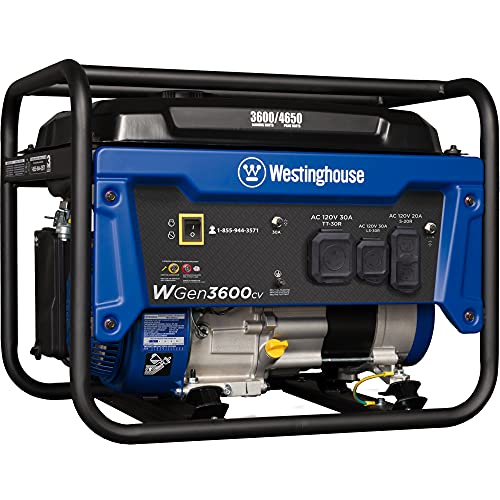
Westinghouse 4650 Peak Watt Portable Generator, RV Ready 30A Outlet, Gas Powered, CO Sensor
  • Continuous output: 3,600W
  • Surge output: 4,650W
  • Runtime claim: Up to 14 hours
  • Fuel format: Gasoline
Check price on Amazon for Westinghouse 4650 Peak Watt Portable Generator, RV Ready 30A Outlet, Gas Powered, CO Sensor (opens in a new tab)
Best for: Buyers comparing portable generator with 30 amp rv outlet with real product details and system compatibility in mind.

Our take

A mismatched extension cord, overloaded transfer setup, stale fuel supply, or poor exhaust location can erase the benefit of a strong engine.

Why it made the shortlist

Westinghouse 4650 Peak Watt Portable Generator, RV Ready 30A Outlet, Gas Powered, CO Sensor earns the best heavy-duty option label because 3,600W continuous output, 4,650W surge output, and up to 14 hours claimed runtime give it a clear role in RV power. This is the pick for shoppers who would rather carry extra size than run short on headroom. For amperage-specific searches, the rating should match the generator outlet, inlet, breaker, conductor size, and selected loads without adapter stacking. As a fuel generator, it should be compared against products solving the same job, not against every power product with a similar title.

This is a combustion generator, so its strengths and burdens travel together. Treat peak output as startup help, not a promise of continuous appliance coverage. The right buyer is the one who can support the generator with the correct setup around it.

Keep it when the supporting equipment is as well planned as the generator itself.

What works

  • 30A intent gets clearer fit screening
  • Heavier-duty design suits demanding regular use
  • Portable format fits mobile power planning
  • 3,600W supports a broad appliance mix

Watch out for

  • 30A label still needs system matching
  • Heavy-duty format can increase transport burden
  • Outlet type must match RV service
03
Best for: Buyers comparing portable generator with 30 amp rv outlet with real product details and system compatibility in mind.

Our take

Keep it when it creates a repeatable, understandable outage routine.

Why it made the shortlist

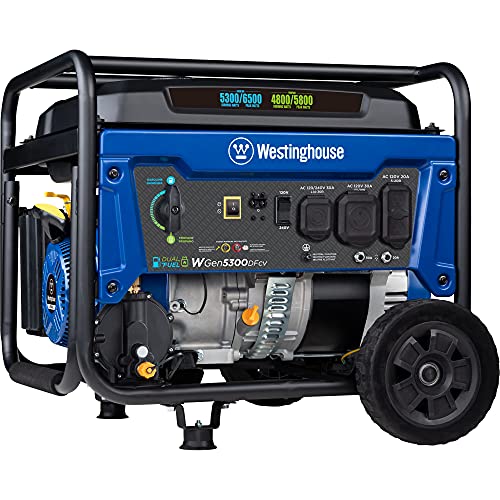
Westinghouse 6500 Watt Dual Fuel Home Backup Portable Generator, Transfer Switch Ready 30A Outlet, RV Rea earns the best compact option label because 5,300W continuous output, 6,500W surge output, and up to 14.5 hours claimed runtime give it a clear role in RV power. Its case is strongest when storage space, vehicle room, or hand-carry distance matters as much as output. For amperage-specific searches, the rating should match the generator outlet, inlet, breaker, conductor size, and selected loads without adapter stacking. As a transfer and connection component, it should be compared against products solving the same job, not against every power product with a similar title.

This pick should be evaluated as part of the whole electrical path. It is a way to make portable backup power cleaner and safer when the rest of the system is planned correctly.

What works

  • 30A intent gets clearer fit screening
  • Compact design favors limited storage spaces
  • Portable format fits mobile power planning
  • Dual-fuel design adds propane backup flexibility

Watch out for

  • 30A label still needs system matching
  • Compact format limits maximum capability headroom
  • Outlet type must match RV service
The catch
The product is only one piece of a code-sensitive installation.
04
MECMO NEMA L5-30P to TT-30R 30 Amp RV Adapter, Portable Compact Adaptor, 3 Prong 30A 125V Twist Locking G
  • Product type: Backup-power accessory
  • Buyer check: Verify current model compatibility
  • Buyer check: Verify current model compatibility
  • Buyer check: Verify current model compatibility
Check price on Amazon for MECMO NEMA L5-30P to TT-30R 30 Amp RV Adapter, Portable Compact Adaptor, 3 Prong 30A 125V Twist Locking G (opens in a new tab)
Best for: Buyers comparing portable generator with 30 amp rv outlet with real product details and system compatibility in mind.

Our take

If those details are unclear, the safer move is to buy from the generator maker's compatibility list.

Why it made the shortlist

The available listing detail is thinner than ideal, so buyers should compare it against clearer alternatives before committing. Its strongest case is practical coverage at a more restrained level of complexity. For amperage-specific searches, the rating should match the generator outlet, inlet, breaker, conductor size, and selected loads without adapter stacking. It is best read as a backup-power accessory with a defined lane, not a universal answer for every backup plan.

Because the public listing provides limited measurable detail, this should be treated as a fit-dependent accessory. It should not be selected on category match alone.

Keep it when the listing lines up with the exact setup already planned.

What works

  • 30A intent gets clearer fit screening
  • Value-focused design prioritizes essential practical capabilities
  • Portable format fits mobile power planning
  • Purpose-built part supports cleaner organization

Watch out for

  • 30A label still needs system matching
  • Value focus may omit premium conveniences
  • Outlet type must match RV service
05
Oxseryn 5000-Watts Portable Inverter Generator, Gas Generator
  • Continuous output: 4,000W
  • Surge output: 5,000W
  • Listed weight: 60 lb
  • Runtime claim: Up to 6 hours
Check price on Amazon for Oxseryn 5000-Watts Portable Inverter Generator, Gas Generator (opens in a new tab)
Best for: Buyers comparing portable generator with 30 amp rv outlet with real product details and system compatibility in mind.

Our take

Fuel use, noise, oil service, cord rating, and weather protection all affect whether it works during a real outage.

Why it made the shortlist

4,000W continuous output, 5,000W surge output, and 60 lb listed weight give buyers enough substance to compare it against the other picks. For amperage-specific searches, the rating should match the generator outlet, inlet, breaker, conductor size, and selected loads without adapter stacking. It is best read as a fuel generator with a defined lane, not a universal answer for every backup plan.

A higher-watt unit can be reassuring, yet it can also be harder to move and place correctly. That makes connection planning and safe operating distance just as important as output.

The best owner for this pick has already planned where it will sit and what it will power first.

What works

  • 30A intent gets clearer fit screening
  • Backup positioning offers a simpler alternative
  • Portable format fits mobile power planning
  • 4,000W provides useful household load flexibility

Watch out for

  • 30A label still needs system matching
  • Backup role offers less performance headroom
  • Outlet type must match RV service
The catch
Do not choose it only for the largest watt number.

Methodology

How We Built This Shortlist

Each pick was assessed across 4 criteria weighted for real-world use.

01

Product fit

We ranked products by how clearly they solve the search intent behind portable generator with 30 amp rv outlet. The strongest picks had a specific role, clear listing details, product images, and a connection path that buyers can verify. We did not rank by temporary prices, star ratings, or review counts.

02

Specification usefulness

We looked for details that help a buyer make a real decision: output, capacity, plug type, enclosure style, cable rating, chemistry, compatible use case, or included components. Products with vague listings were treated more cautiously, even when the title sounded impressive.

03

Safety and ownership burden

Backup-power products are used during stressful outages, storms, travel days, and work sessions. We favored options that make setup, inspection, labeling, portability, or maintenance easier. We also considered where a product could create false confidence if installed or used incorrectly.

04

System compatibility

Each pick was compared against the rest of a likely system, not only against similar products. That means a cord must match the inlet, a solar cable must match the power station input, and a generator accessory must match the exact generator or panel arrangement.

Decision guide

Match a Portable Generator with 30 Amp RV Outlet to Your RV

Choose by primary job

If you needPrioritizeExample
The safest default shortlistClear role and compatibilityOxseryn 4400-Watts Inverter Generator, Open Frame Generator Gas Powered, Emergency Home Backup, RV Ready
More capacity or durabilityHeavier-duty listing detailsWestinghouse 4650 Peak Watt Portable Generator, RV Ready 30A Outlet, Gas Powered, CO Sensor
A compact or simpler setupPortability and easy storageWestinghouse 6500 Watt Dual Fuel Home Backup Portable Generator, Transfer Switch Ready 30A Outlet, RV Rea

Verify the weak link

Before buying, identify the weakest part of the system: cord gauge, outlet type, battery capacity, solar input, enclosure rating, fuel storage, or installation path. The best pick in this guide only works well when that weak link is addressed first.

Build a test routine

After purchase, test the setup before the first outage or trip. Label cables, record compatible loads, read the manual, and store small parts together. A product that has never been connected under calm conditions is much harder to trust during a storm.

FAQ

Before You Bring One Home

Is propane or gasoline better?

Gasoline often gives higher output, while propane stores longer and avoids carburetor fuel varnish. The best choice depends on what can be stored and rotated safely.

How do I size a portable generator?

Use appliance labels or measured wattage when possible. Refrigerators, pumps, furnaces, and RV air conditioners can need extra startup headroom.

Can I run a generator in the rain?

Only with manufacturer-approved weather protection that keeps ventilation and exhaust clear. Never move a running generator indoors, into a garage, or onto an enclosed porch.

Where should a generator be placed?

Generator placement should prioritize exhaust safety first, then cord routing and weather protection. CO shutoff does not replace safe distance.

How long will a generator run?

Runtime depends on tank size, load, fuel, eco mode, and engine design. Published claims usually assume a partial load, not everything running at once.

Can a portable generator power a house?

A portable generator can support selected home circuits when the inlet, transfer equipment, cord, and generator outlet are correctly matched.

Bottom line

The short version

Browse more portable generator with 30 amp rv outlet on Amazon →
Bowen Higgins, RV Editor at RV Gear Lab

About the author

Bowen Higgins

RV Editor at RV Gear Lab

Bowen covers RV power, water systems, towing and leveling, upkeep and interior comfort, with a focus on matching gear to the rig, the hookups and the way you actually travel.

More from Bowen →Editorial standards

Keep reading

Related guides