


We research everything we recommend. When you buy through our links, we may earn a commission. Learn more

Buying guide · 11 min read · Updated August 19, 2026

8 Best Portable Power Stations With UPS Functionality in 2026: A Practical RV Guide

We compared portable power stations with ups functionality by measured usable energy, continuous output, and safety documentation rather than ranking by headline wattage alone.

Bowen HigginsBy Bowen HigginsRV Editor at RV Gear Lab8 products comparedSpec-sheet researched

At a glance

Our top picks

Before ranking any pick for portable power stations with ups functionality, the real work is requiring an explicit UPS or EPS mode in official documentation, not inferred from pass-through charging.

Measured usable energy and safety documentation plus requiring an explicit UPS or EPS mode in official documentation, not inferred from pass-through charging decided this ranking far more than star counts did.

RV Gear Lab field notes

The Rig Fit Check

Start with the job
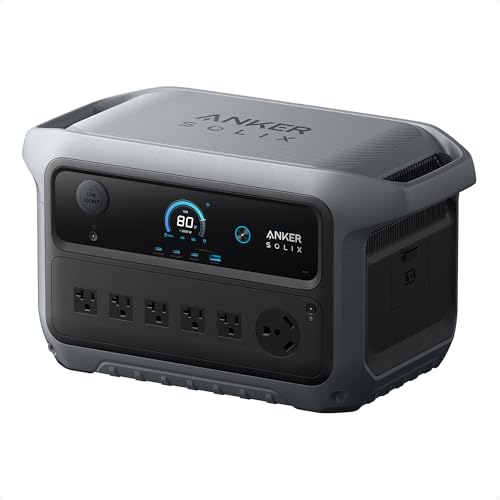
Anker SOLIX C2000 Gen 2 Portable Power Station, 2048Wh, 2400W leads this shortlist for buyers prioritizing 2048wh (expandable to 4kwh), 2400w (4000w peak). Use that fit as a reference point, then compare the alternatives against your own space and workload.
Specs that separate the picks
The first details to compare are 2048Wh (expandable to 4kWh), 2400W (4000W peak), 1024Wh, 2000W output, 10 ports, 1024Wh, 1800W (3600W X-Boost surge). Confirm the exact model and included components before ordering.
Trade-off to plan for
Full 4kWh expansion requires a separately purchased battery

Before you buy

What Matters Before You Choose a Portable Power Station With UPS Functionality

Key buying criteria so you get the right fit the first time.

  1. 01

    Require an Explicit UPS Mode

    Confirm portable power stations with ups functionality documents an explicit UPS, EPS, or backup mode in official specs, not just implied pass-through behavior.

  2. 02

    Verify Transfer Time for Your Equipment

    Check documented transfer time and compare it against the sensitivity of your specific connected equipment.

  3. 03

    Test Behavior at Full and Low Charge

    Verify behavior when the battery is full, low, actively charging, and after repeated outage events.

  4. 04

    Check Online vs Transfer-Based Output

    Confirm whether output is genuinely online/double-conversion or simply transfer-based, where the manufacturer specifies.

  5. 05

    Check Long-Term Plugged-In Battery Behavior

    Verify auto-restart behavior, bypass limits, and long-term battery management while permanently plugged in.

Our standards

Why You Can Trust RV Gear Lab

At RV Gear Lab, we compare products based on rig fit and power or hookup compatibility, verified specifications, usability, setup requirements, weight, durability, and real-world trade-offs. We do not rank products purely on marketing claims or commission rates.

We have not personally tested every product listed. Where hands-on testing is not available, recommendations are based on verified manufacturer specifications, product documentation, use-case fit, and comparative research.

How we review RV gear →

Detailed reviews

The 8 best portable power stations with ups functionality, explained

01
Anker SOLIX C2000 Gen 2 Portable Power Station, 2048Wh, 2400W
  • 2048Wh (expandable to 4kWh), 2400W (4000W peak)
  • 100% charge in 58 min
  • 9W standby, 41.7 lbs
Check price on Amazon for Anker SOLIX C2000 Gen 2 Portable Power Station, 2048Wh, 2400W (opens in a new tab)
Best for: Buyers prioritizing 2048wh (expandable to 4kwh), 2400w (4000w peak)

Our take

2400W rated output with 4000W peak easily runs multiple appliances including most window and RV air conditioners simultaneously.

Why it made the shortlist

A documented 9W standby draw powers a dual-door fridge for up to 32 hours, extending to 64 hours with an optional expansion battery reaching 4kWh total capacity. Six recharge methods reach a genuine 100% charge in 58 minutes, among the fastest full-charge times documented in this capacity class.

What works

  • 58-minute full charge is genuinely among the fastest at this capacity
  • 9W standby draw genuinely extends real-world fridge runtime
  • 8x faster car alternator charging than a standard socket

Watch out for

  • Full 4kWh expansion requires a separately purchased battery
The catch
Alternator charging via car reaches 100% in 3 hours, 8x faster than a standard car socket, and at just 41.7 lbs and 18.1x9.8x10.1 inches, this is documented 25% lighter and 29% smaller than similar products.
02
Anker SOLIX C1000 Gen 2 Portable Power Station, 1024Wh, 2000W
  • 1024Wh, 2000W output, 10 ports
  • 49-min recharge at 1600W
  • <10ms UPS switchover
Check price on Amazon for Anker SOLIX C1000 Gen 2 Portable Power Station, 1024Wh, 2000W (opens in a new tab)
Best for: Buyers prioritizing 1024wh, 2000w output, 10 ports

Our take

The battery retains at least 80% capacity after 4000 cycles for a documented 10-year lifespan.

Why it made the shortlist

HyperFlash tech delivers a genuine 49-minute full recharge at 1600W once enabled in the Anker app, and 2000W output across 10 ports covers most home and RV backup scenarios.

Under-10ms UPS switchover keeps CPAP machines and laptops running through outages, and TOU mode via the app helps avoid peak utility charges for remote work setups.

What works

  • 49-minute full recharge is genuinely fast for 1024Wh
  • 14% smaller and 11% lighter than comparable models
  • TOU mode helps avoid peak utility charges automatically

Watch out for

  • Fastest recharge speed requires enabling it in the app
  • No DC 12V port included on this specific model
The catch
At 14% smaller and 11% lighter than similar models, it's a real improvement in portability for the capacity class.
03
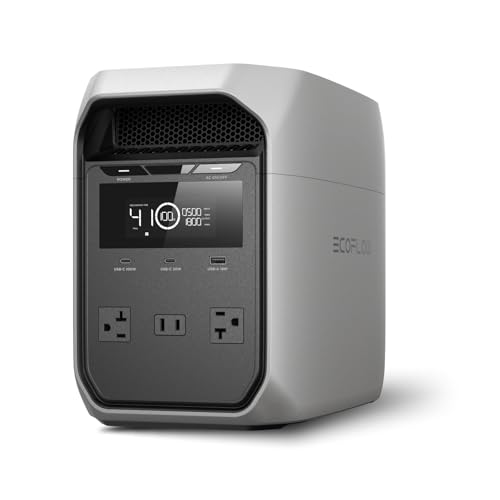
EcoFlow DELTA 3 Classic Portable Power Station, 1024Wh 1800W
  • 1024Wh, 1800W (3600W X-Boost surge)
  • 45-min 0-80% X-Stream charge
  • <10ms UPS switchover
Check price on Amazon for EcoFlow DELTA 3 Classic Portable Power Station, 1024Wh 1800W (opens in a new tab)
Best for: Buyers prioritizing 1024wh, 1800w (3600w x-boost surge)

Our take

Under-10ms UPS switchover protects PCs and medical devices from data loss during outages, and LiFePO4 cells rated for 10+ years pair with EV-grade CTC design for durability.

Why it made the shortlist

X-Stream AC charging hits 0-80% in a genuine 45 minutes.

A 500W solar panel (sold separately) recharges the unit in 2.5 hours, and the EcoFlow app adds Storm Alert and Self-Powered Mode for proactive outage prep.

What works

  • X-Boost expands rated output to a genuine 2600W continuous
  • 45-minute 0-80% charge is genuinely fast via X-Stream
  • Storm Alert mode proactively preps for incoming outages

Watch out for

  • Not compatible with DELTA 2 or Delta 3 Smart Extra Batteries
  • Solar panel for the 2.5-hour charge is sold separately
The catch
X-Boost technology pushes rated 1800W output to a documented 3600W surge, expandable to 2600W continuous with X-Boost for heavier loads like refrigerators and microwaves.
04
BLUETTI Elite 100 V2 Portable Power Station, 1024Wh 1800W
  • 1024Wh, 1800W (2700W Power Lifting)
  • 70-min fast charge, 30dB silent mode
  • 25 lbs, 17L compact design
Check price on Amazon for BLUETTI Elite 100 V2 Portable Power Station, 1024Wh 1800W (opens in a new tab)
Best for: Buyers prioritizing 1024wh, 1800w (2700w power lifting)

Our take

Silent mode runs at just 30dB, 50% quieter than typical 1kWh stations, genuinely suited to overnight camping or indoor use.

Why it made the shortlist

1800W rated output (2700W with Power Lifting) genuinely covers 90% of everyday appliances across 11 ports, and 1200W TurboBoost AC charging or up to 1000W solar input delivers a documented 70-minute full recharge, the fastest solar charge rate BLUETTI states for this capacity class.

What works

  • 30dB silent mode is 50% quieter than typical 1kWh stations
  • 70-minute fast charge is genuinely quick for this capacity
  • 25 lbs and 17L is compact for the power delivered

Watch out for

  • Fastest charging requires the 1200W TurboBoost mode
  • Silent mode likely trades off maximum charge speed
05
ABOK Ark3600 Portable Power Station, 3600W, 3840Wh
  • 3840Wh (expandable to 11,520Wh), 3600W
  • 1.29hr fastest full charge
  • Telescoping handle + wheels
Check price on Amazon for ABOK Ark3600 Portable Power Station, 3600W, 3840Wh (opens in a new tab)
Best for: Buyers prioritizing 3840wh (expandable to 11,520wh), 3600w

Our take

3600W rated output (4500W peak) supports a stated 99% of household appliances, with AC (1500W), PV (2000W), and car charging combining for a full charge in just 1.29 hours, or 3 hours via AC alone.

Why it made the shortlist

This documents eligibility for up to a 30% U.S. A 3840Wh capacity, expandable to 11,520Wh, pairs with EV-grade LiFePO4 cells rated for over 4000 cycles and up to a 10-year lifespan.

Fifteen output ports handle a genuinely wide device range, and an extendable telescoping handle with durable wheels makes this large-scale unit realistically transportable, with integrated Bluetooth app monitoring for remote adjustments.

What works

  • Documents eligibility for a real U.S. solar tax credit directly
  • 1.29-hour fastest full charge is genuinely quick at 3840Wh scale
  • Telescoping handle and wheels make this large unit realistically mobile

Watch out for

  • Must charge above 32°F or wait 30 min-2hr for the unit to warm up
  • Tax credit eligibility requires separate confirmation from a professional
06
LIBRIDS Portable Power Station 640Wh, 1200W Surge, 4 AC
  • 640Wh, 600W (1200W surge)
  • 1.5hr full AC charge
  • 5-year warranty, UL indoor-use label
Check price on Amazon for LIBRIDS Portable Power Station 640Wh, 1200W Surge, 4 AC (opens in a new tab)
Best for: Buyers prioritizing 640wh, 600w (1200w surge)

Our take

A genuinely fast 1.5-hour full AC charge keeps the unit ready for emergencies, and eight output ports across 4 AC outlets plus USB power up to 8 devices at once.

Why it made the shortlist

Built-in 10ms UPS automatically switches to battery power during outages, keeping WiFi routers and CPAP machines running without interruption from a 640Wh capacity. Industry-leading PowerRaise technology handles 1200W surge appliance startup loads that a standard 600W rating might otherwise trip.

The automotive-grade LiFePO4 battery rates for 4000+ cycles in a durable metal enclosure with better heat dissipation, and pure sine wave delivery protects laptops and medical devices, with a genuine 5-year warranty backing it.

What works

  • 1.5-hour full charge is genuinely fast for this capacity
  • Metal enclosure improves heat dissipation over plastic bodies

Watch out for

  • UL label specifically restricts use to indoor or dry conditions only
  • 600W continuous output is modest for larger appliances
07
UDPOWER S2400 Portable Power Station, 2083Wh, 2400W (Surge 3000W)
  • 2083Wh, 2400W (3000W surge), 41 lbs
  • 0.01s instant backup switch
  • 1.3hr 0-100% recharge at 1600W
Check price on Amazon for UDPOWER S2400 Portable Power Station, 2083Wh, 2400W (Surge 3000W) (opens in a new tab)
Best for: Buyers prioritizing 2083wh, 2400w (3000w surge), 41 lbs

Our take

Instant backup protection switches within a documented 0.01 seconds during outages, keeping sensitive electronics running without interruption.

Why it made the shortlist

Fifteen simultaneous devices connect across 6 AC outlets, dual USB-C, four USB-A, dual DC5521, a car port, and a solar input, genuinely comprehensive for this capacity class.

What works

  • 41 lbs is genuinely lighter than similarly-rated 2000Wh+ rivals
  • 0.01-second backup switch is documented exceptionally fast
  • 15 simultaneous device ports covers nearly every connection type

Watch out for

  • 440W max solar input trails some rivals' 800W+ ceilings
  • 15-year lifespan claim depends on documented 4000-cycle usage
08
AFERIY P210 Solar Generator, 2048Wh Portable Power Station, 2400W
  • 2048Wh, 2400W (4800W surge), 48.5 lbs
  • 16dB at normal load, 30dB at full
  • 7-year extended warranty
Check price on Amazon for AFERIY P210 Solar Generator, 2048Wh Portable Power Station, 2400W (opens in a new tab)
Best for: Buyers prioritizing 2048wh, 2400w (4800w surge), 48.5 lbs

Our take

Sixteen ports support up to 16 simultaneous devices, including six 20Ah AC outlets, dual USB, four USB-C (20W and 100W), dual DC5521, a car port, and an XT60 port.

Why it made the shortlist

A 2400W inverter (4800W surge) exclusively uses pure sine wave for both input and output, delivering power identical to standard wall outlet quality for genuine sensitive-electronics safety. A server-level under-10ms UPS response instantaneously activates battery backup during outages.

Silent operation stays under 30dB at full load and just 16dB at normal load, genuinely quiet enough not to disturb sleep, and the AFERIY app manages energy consumption remotely. A documented 7-year extended warranty, two years longer than standard, backs this at just 48.5 lbs, 20% lighter than typical for this capacity.

What works

  • 7-year warranty is genuinely two years longer than standard coverage
  • 16dB normal-load noise is genuinely quiet for overnight use
  • 48.5 lbs is documented 20% lighter than typical for this capacity

Watch out for

  • MPPT and car charging modules require separate compatible adapters
  • 16 ports adds real setup complexity for casual users

Methodology

How We Built This Shortlist

Each pick was assessed across 5 criteria weighted for real-world use.

01

Rated Wh Verified Against Usable Energy

Checked documented battery capacity separately from continuous AC output, since a high wattage rating doesn't guarantee enough stored energy to run a device for long.

02

Continuous Output vs Surge Separated

Compared continuous inverter rating against surge or boost mode claims, since many listings blend the two into one headline number.

03

Charging Speed and Path Documented

Verified AC, solar, and car charging times from official specs, noting where fastest speeds require specific modes, apps, or additional hardware.

04

Safety and Certification Evidence Checked

Looked for UL, UL2743, or other documented safety certification and battery chemistry evidence rather than trusting a safety claim alone.

05

Real Ownership Costs Included

Weighed included cables, solar panel bundling, warranty length, and app requirements as part of the real cost and usability of each pick.

Decision guide

Match a Portable Power Station With UPS Functionality to Your RV

Require an Explicit UPS Mode

Confirm portable power stations with ups functionality documents an explicit UPS, EPS, or backup mode in official specs, not just implied pass-through behavior.

Verify Transfer Time for Your Equipment

Check documented transfer time and compare it against the sensitivity of your specific connected equipment.

Test Behavior at Full and Low Charge

Verify behavior when the battery is full, low, actively charging, and after repeated outage events.

Check Online vs Transfer-Based Output

Confirm whether output is genuinely online/double-conversion or simply transfer-based, where the manufacturer specifies.

Check Long-Term Plugged-In Battery Behavior

Verify auto-restart behavior, bypass limits, and long-term battery management while permanently plugged in.

FAQ

Before You Bring One Home

Is pass-through charging the same as portable power stations with ups functionality?

No. Pass-through charging means the battery charges while powering connected devices, but that's not the same as an automatic UPS switchover during a grid outage. Confirm the station documents an explicit UPS or EPS mode separately.

How fast does a UPS-rated power station actually switch over?

Current models document switchover times ranging from under 10ms to around 20ms, fast enough to prevent most computers and routers from rebooting, though highly sensitive equipment may need to check the exact documented figure.

What's the real difference between watts and watt-hours for a power station?

Watts (W) measure how much power the station can deliver at once, essentially how many devices it can run simultaneously, while watt-hours (Wh) measure total stored energy, essentially how long it can run those devices. A station with high W but low Wh can power a lot at once but only briefly.

Does a surge or peak wattage rating mean the station can run appliances at that power level?

No. Surge or peak ratings describe a brief burst the inverter can handle, typically for a compressor or motor startup, not a sustained output level. Always check the continuous or rated wattage figure for what the station can actually run for extended periods.

Is LiFePO4 battery chemistry actually safer than standard lithium-ion?

LiFePO4 (LFP) cells are generally considered more thermally stable than standard lithium-ion or lithium-polymer cells, with a lower risk of thermal runaway, and most current portable power stations have shifted to LFP for this reason. Still, verify UL or UL2743 safety certification directly rather than assuming chemistry alone guarantees safety.

Bottom line

The short version

Browse more portable power stations with ups functionality on Amazon →
Bowen Higgins, RV Editor at RV Gear Lab

About the author

Bowen Higgins

RV Editor at RV Gear Lab

Bowen covers RV power, water systems, towing and leveling, upkeep and interior comfort, with a focus on matching gear to the rig, the hookups and the way you actually travel.

More from Bowen →Editorial standards

Keep reading

Related guides