


We research everything we recommend. When you buy through our links, we may earn a commission. Learn more

Buying guide · 10 min read · Updated October 2, 2026

4 Best RV Battery For Cold Weather in 2026: A Practical RV Guide

Cold weather RV battery picks: Redodo and LiTime self heating LiFePO4, a VATRER 300Ah with low temp cutoff and a Renogy AGM, compared on freezing charge.

Bowen HigginsBy Bowen HigginsRV Editor at RV Gear Lab4 products comparedSpec-sheet researched

At a glance

Our top picks

Cold weather exposes the biggest weakness of lithium: most LiFePO4 batteries will discharge in the cold, but they will not safely charge below freezing. That one fact decides which battery belongs in a winter rig. We selected four options that handle it differently: two with built-in heaters, one with a low temperature cutoff only, and an AGM that tolerates cold but has less usable power. Read the charging limits before the price, because a battery that refuses to charge on a frosty morning is dead weight.

RV Gear Lab field notes

The Rig Fit Check

Start with the job
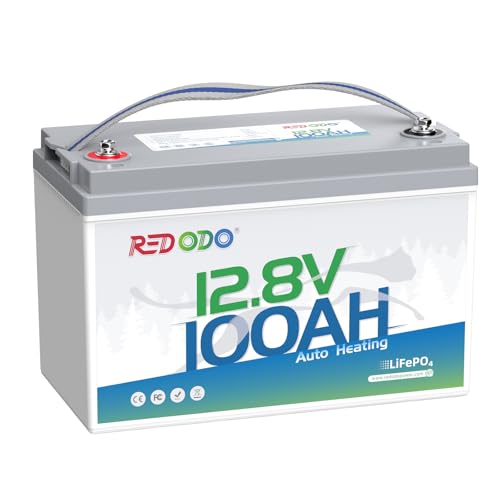
Redodo 12V 100Ah Self-Heating LiFePO4 Lithium Battery for Outdoor Fishing leads this shortlist for Winter camping with a charging source. Use that fit as a reference point, then compare the alternatives against your own space and workload.
Specs that separate the picks
The first details to compare are 12V 100Ah LiFePO4, 2x 12V 100Ah, Group 24, 12V 300Ah LiFePO4. Confirm the exact model and included components before ordering.
Trade-off to plan for
Heater needs a charging source to work

Before you buy

What Matters Before You Choose an RV Battery For Cold Weather

Key buying criteria so you get the right fit the first time.

  1. 01

    Charging below freezing

    Charging lithium cells below 32F can plate metal inside the cell and permanently reduce capacity. A heated battery warms itself first. Look for a stated temperature range for heating, such as Redodo's -4F to 32F.

  2. 02

    Heater power source

    A self heating battery draws power to warm itself, often from the charger rather than its own cells. If the heater runs off your solar controller, a cloudy winter day may not provide enough. Check the listing for whether heating needs an external charger.

  3. 03

    Low temperature cutoff

    A cutoff stops charging when the cells fall below about 32F and resumes above about 41F. It protects the battery but leaves you without charge in a deep freeze. Look for both the stop and resume temperatures, as the Redodo listing gives.

  4. 04

    Usable capacity in cold

    Every battery loses available capacity as it gets colder, and lead acid loses it faster. A 100Ah AGM may give far less than 50Ah on a freezing night. Size the bank with a 30% cold buffer.

  5. 05

    Starter versus house battery

    Some lithium batteries are not meant to start engines. The LiTime listing says it is for energy storage, not for starting. Check the listing and use a separate starter battery for engines.

Our standards

Why You Can Trust RV Gear Lab

At RV Gear Lab, we compare products based on rig fit and power or hookup compatibility, verified specifications, usability, setup requirements, weight, durability, and real-world trade-offs. We do not rank products purely on marketing claims or commission rates.

We have not personally tested every product listed. Where hands-on testing is not available, recommendations are based on verified manufacturer specifications, product documentation, use-case fit, and comparative research.

How we review RV gear →

Detailed reviews

The 4 best rv battery for cold weather, explained

01
Best for: Winter camping with a charging source

Our take

Against the Renogy AGM it is $85.50 more.

Why it made the shortlist

The Redodo 12V 100Ah Thermal LiFePO4 starts its heater when connected to a charger at -4F to 32F, and stops heating at 41F so normal charging begins. The listing says its upgraded 100W heating pads are 2X faster than others, with a 100A BMS and 4,000 cycle rating.

Pick this if you winter camp with shore power or solar and need one battery.

What works

  • Heater starts automatically from -4F to 32F
  • Stops heating at 41F, then charges normally
  • 100A BMS handles an inverter running a space heater

Watch out for

  • Heater needs a charging source to work
  • Costs $85.50 more than a 100Ah AGM
02
Best for: A heated 200Ah bank

Our take

At $726.69 the pair works out to $363.35 each, which is $113.36 more per battery than the Redodo Heated 100Ah.

Why it made the shortlist

The LiTime listing is a 2 pack of 12V 100Ah self heating LiFePO4 batteries in Group 24, 22.71 lbs each. It offers Regular and Energy Efficient heating modes, with Regular heating below 41F and stopping at 50F, plus Bluetooth 5.0 monitoring.

In return you get a 200Ah bank in a Group 24 footprint. Pick this if you want a heated 200Ah bank.

What works

  • Two heating modes let you save power or warm faster
  • Group 24 fit in standard RV battery boxes
  • Bluetooth 5.0 app shows heater and charge status

Watch out for

  • Costs $113.36 more per battery than Redodo
  • Not for starting engines per the listing note
03
12V 300AH Low Temp Cutoff LiFePO4 Lithium Battery
  • 12V 300Ah LiFePO4
  • 200A BMS, 5,000+ cycles
  • Low temp cutoff, no heater listed
Check price on Amazon for 12V 300AH Low Temp Cutoff LiFePO4 Lithium Battery (opens in a new tab)
Best for: Heated bays that stay above freezing

Our take

At $539.99 it costs $290.00 more than the Redodo Heated 100Ah and offers three times the capacity.

Why it made the shortlist

The VATRER 12V 300Ah LiFePO4 offers a 200A BMS and 5,000+ cycles, plus a low temperature cutoff.

Pick this if your battery lives in a heated bay or basement, so the cutoff rarely triggers.

What works

  • 300Ah gives a large reserve for long cold nights
  • 200A BMS supports high inverter loads
  • Low temperature cutoff protects cells from damage

Watch out for

  • No heater listed, so charging stops in a freeze
  • Costs $290.00 more than the Redodo Heated 100Ah
04
Renogy 12 Volt 100Ah Deep Cycle AGM Battery
  • 12V 100Ah AGM
  • Discharges -4 to 140F
  • Under 3% monthly self discharge
Check price on Amazon for Renogy 12 Volt 100Ah Deep Cycle AGM Battery (opens in a new tab)
Best for: Low cost cold weather backup

Our take

Pick this if you want zero fuss in the cold at a low price.

Why it made the shortlist

The Renogy 12V 100Ah AGM lists discharge performance from -4 to 140F and under 3% monthly self discharge.

What works

  • Listed to discharge from -4F up to 140F
  • Cheapest cold weather option at $164.49
  • No cutoff logic, works with older chargers

Watch out for

  • Only about 50Ah is practically usable
  • Listing gives no weight, expect a heavy case

Methodology

How We Built This Shortlist

Each pick was assessed across 4 criteria weighted for real-world use.

01

Cold charging

We checked whether each listing heats, cuts off, or simply allows charging below freezing.

02

Heater power draw

We noted listed heating modes and what source the heater needs to run.

03

Usable capacity

We compared rated amp hours with how much of that you can safely use in the cold.

04

Fit and weight

We compared listed case sizes and weights, flagging anything the listing omits.

Decision guide

Match an RV Battery For Cold Weather to Your RV

By Where the Battery Lives

Your situationRecommended pickWhy
Unheated bay, hard freezesRedodo Heated 100AhHeater starts from -4F
Unheated, need 200Ah bankLiTime Heated 2-PackTwo heated 100Ah batteries
Heated basement, above freezingVATRER 300AhCutoff rarely triggers, big capacity
Occasional cold, lowest costRenogy AGM 100AhDischarges from -4F at $164.49

By Budget

BudgetRecommended pick
$160 to $250Renogy AGM 100Ah or Redodo Heated 100Ah
$530 to $730VATRER 300Ah or LiTime Heated 2-Pack

Self Heating vs Low Temp Cutoff

Self heating

Redodo Heated 100Ah and LiTime Heated 2-Pack warm the cells during charging, so charging still happens at -4F, but the heater uses charger power.

Cutoff only

VATRER 300Ah protects the cells by stopping charging near 32F, which is safe but leaves you without charging in a deep freeze.

Most winter campers should choose self heating unless the battery stays in a heated space.

By Power Source

Best pickRecommended pick
Shore power all winterRedodo Heated 100Ah
Solar only, short winter daysRenogy AGM 100Ah
Generator top upsLiTime Heated 2-Pack
Heated compartment, big loadsVATRER 300Ah

For Winter Boondocking Specifically

Look for

A heater that runs from the charger and a way to lower its draw, since sunlight is scarce and every watt matters.

In this comparison

LiTime Heated 2-Pack has an Energy Efficient heating mode that heats less, which stretches limited winter charging. Redodo Heated 100Ah heats faster but uses more.

When to Spend More

Spend more if

Spend more on LiTime Heated 2-Pack if you need 200Ah and a heater with an energy saving mode.

Save if

Save with Renogy AGM 100Ah if you only winter camp on hookups and can accept lower usable capacity.

FAQ

Before You Bring One Home

Can I charge a LiFePO4 battery at 20F?

Not safely unless it has a heater. Redodo Heated 100Ah and LiTime Heated 2-Pack warm the cells first, so charging proceeds.

Does a self heating battery drain itself?

It uses charger power to heat, not stored energy, per the Redodo listing. LiTime also offers an Energy Efficient mode.

Is AGM better than lithium in winter?

AGM tolerates cold charging better, but loses more usable capacity. Lithium with a heater gives more energy overall.

Will the VATRER 300Ah work in an unheated bay?

It will discharge, but charging stops near freezing. Use it in heated space or add insulation.

Bottom line

The short version

Browse more rv battery for cold weather on Amazon →
Bowen Higgins, RV Editor at RV Gear Lab

About the author

Bowen Higgins

RV Editor at RV Gear Lab

Bowen covers RV power, water systems, towing and leveling, upkeep and interior comfort, with a focus on matching gear to the rig, the hookups and the way you actually travel.

More from Bowen →Editorial standards

Keep reading

Related guides