

We research everything we recommend. When you buy through our links, we may earn a commission. Learn more

Buying guide · 10 min read · Updated October 1, 2026

5 Best RV Converters for LiFePO4 Batteries in 2026: A Practical RV Guide

Five drop-in WF-8955 converter sections for LiFePO4 batteries, compared on 14.6V charging, mode switching, fit in WF-8900 power centers, and warranty.

Bowen HigginsBy Bowen HigginsRV Editor at RV Gear Lab5 products comparedSpec-sheet researched

At a glance

Our top picks

Many travel trailers do not have a separate converter box at all. The converter lives inside a WFCO WF-8900 series power center, the same panel that holds the breakers and DC fuses, and the part that actually charges the battery is a slide-out main board assembly, usually labeled WF-8955-MBA. If you just moved to LiFePO4, replacing that one section is often the cleanest way to get proper lithium charging without rebuilding the panel.

So this guide sticks to 55 amp drop-in sections for that panel family. We compared how each one reaches the 14.6V a 12V LiFePO4 battery needs, whether the mode is automatic or locked by a switch, how exactly it fits the WF-8955 footprint, and what warranty backs it. Five units genuinely fit the brief; the rest of the market was standalone converters better covered in our other guides.

RV Gear Lab field notes

The Rig Fit Check

Start with the job
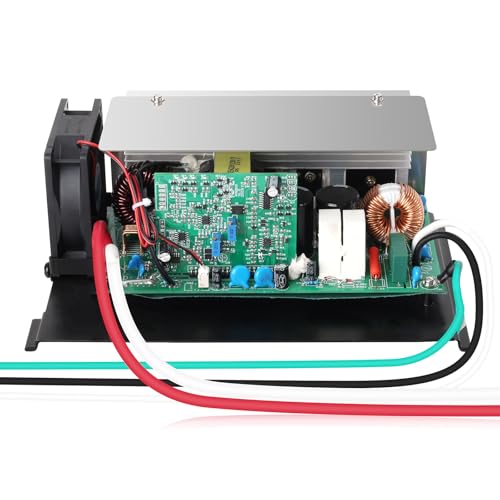
Rugaest WF-8955-MBA 55A Converter Section, Manual Lead-Acid/LiFePO4 leads this shortlist for most owners upgrading a WF-8900 panel to LiFePO4. Use that fit as a reference point, then compare the alternatives against your own space and workload.
Specs that separate the picks
The first details to compare are 55A, 14.6V bulk / 13.6V float, 950W, three-stage, 55A output. Confirm the exact model and included components before ordering.
Trade-off to plan for
Third-party clone, not WFCO original

Before you buy

What Matters Before You Choose an RV Converter for LiFePO4 Batteries

Key buying criteria so you get the right fit the first time.

  1. 01

    14.6V lithium charge voltage

    A 12V LiFePO4 battery reaches full near 14.2 to 14.6V, while many original WF-8955 boards sit near 13.6V. At 13.6V the battery fills slowly and often stops well below full, so your 100Ah may behave like far less. Confirm the listing names 14.6V or a similar lithium bulk voltage, not just the words lithium ready.

  2. 02

    Exact board compatibility

    WF-8900 series panels use slide-in main board assemblies, and model suffixes such as AD, AN, PEC, and REP matter. A board that does not match can leave wires short or mounting holes off. Read the label on your current section and match it to the listing's compatibility list, then compare dimensions.

  3. 03

    Hold voltage after charging

    Unlike lead-acid, LiFePO4 does not need a constant float and is happier resting a little below full. A section that drops to around 13.6V or a trickle mode after bulk keeps loads running without stressing cells on long hookups. Look for a stated float, idle, or trickle voltage in the description.

  4. 04

    Mode switch or auto-detect

    Auto-detect boards choose a profile based on battery behavior, which can be fooled by solar input or a deeply discharged bank. A labeled switch costs nothing in convenience once set and removes the guess. Check whether the listing describes the indicator light for each mode so you can verify it later.

  5. 05

    Cooling inside the panel

    The section lives in a closed power center, often under a cabinet, so heat builds when it runs near 55 amps. Fans that ramp with load act before temperature climbs, while heat-triggered fans react later. Look for a description of fan control and make sure the panel vents are clear after install.

  6. 06

    Low-temperature charging protection

    LiFePO4 should not be charged below about 32F, and none of these sections measure battery temperature. That job falls to the battery's BMS or a self-heating battery. Before winter camping, check your battery's spec sheet for a low temperature charge cutoff.

Our standards

Why You Can Trust RV Gear Lab

At RV Gear Lab, we compare products based on rig fit and power or hookup compatibility, verified specifications, usability, setup requirements, weight, durability, and real-world trade-offs. We do not rank products purely on marketing claims or commission rates.

We have not personally tested every product listed. Where hands-on testing is not available, recommendations are based on verified manufacturer specifications, product documentation, use-case fit, and comparative research.

How we review RV gear →

Detailed reviews

The 5 best rv converters for lifepo4 batteries, explained

01
Best for: Most owners upgrading a WF-8900 panel to LiFePO4

Our take

This is the best fit for most owners upgrading to LiFePO4 in a WF-8900 panel.

Why it made the shortlist

The Rugaest WF-8955-MBA tops this list because it pairs a clear LiFePO4 profile with the widest documented fit. One button switches between lead-acid and LiFePO4 charging, with 14.6V bulk and 13.6V float at 55 amps continuous, and it is listed as a direct replacement for WF-8955-MBA, WF-8955-AD-MBA, WF-8955-AN, WF-8955PEC, and WF-8955REP boards as well as WF-8900 and WF-8900-AD converters.

Against the genuine WFCO section ranked second, it costs about $179 less and lets you lock the lithium profile by hand, while the WFCO relies on factory auto-detection. It also has a load-based cooling fan that ramps with demand instead of waiting for heat, and a 5-year warranty, both of which put it ahead of the WAVLINK below.

Rugaest lists 9.53 x 7.17 x 3.56 inches and asks you to compare mounting holes and wire routing with your existing section.

What works

  • Fits WF-8955 boards and WF-8900 series panels
  • One button locks the LiFePO4 profile
  • Fan ramps with load, not just heat
  • 5-year warranty

Watch out for

  • Third-party clone, not WFCO original
  • Must confirm dimensions against your panel
02
Best for: Owners who want the genuine factory section

Our take

Choose this for a warranty-sensitive rig or an owner who wants to avoid any clone.

Why it made the shortlist

This is WFCO's own main board assembly for the WF-8900-AD series, the auto-detect generation of the power center many trailers ship with. It is a three-stage converter charger rated at 950 watts from a 105 to 130VAC input and weighs about 5 pounds.

It ranks below the Rugaest because its listing is sparse and it costs roughly $249, more than three times as much. What you buy is the exact factory part, which matters if your RV is under warranty or you want the panel to stay all WFCO. Compared with the WAVLINK and Onylraep sections below, there is no manual lithium switch; the AD board handles detection on its own.

What works

  • Exact factory part for WF-8900-AD panels
  • Keeps the panel all WFCO for warranty peace of mind
  • Three-stage charging from a 950W board

Watch out for

  • Costs over three times the clones
  • Listing lacks lithium voltage details
  • No manual mode lock
03
WAVLINK WF-8955-MBA 55A RV Converter Section
  • 55A output
  • Lead, lithium, fixed modes
  • 13.0V to 16.5V fixed range
Check price on Amazon for WAVLINK WF-8955-MBA 55A RV Converter Section (opens in a new tab)
Best for: Owners whose battery specifies a custom voltage

Our take

Pick it if you want flexibility in a WF-8955 slot.

Why it made the shortlist

The WAVLINK WF-8955-MBA gives a drop-in section more modes than any other here. It has a lead-acid mode, a lithium mode, and a customizable fixed voltage range from 13.0V to 16.5V, with a temperature-controlled fan and short circuit, software over-voltage, thermal, current limiting, and reverse polarity protection.

What works

  • Three modes including a fixed voltage setting
  • Five listed electrical protections
  • Metal case helps shed heat

Watch out for

  • 16.5V fixed setting can overcharge if misused
  • Fit list less detailed than the Rugaest
The catch
Next to the Rugaest above, it lacks the published fit list and the 5-year warranty, and its fan waits for heat rather than load.
04
Best for: Parallax 7155 or mixed-panel owners

Our take

Buy it if you have a Parallax 7155 style panel or want an obvious mode indicator.

Why it made the shortlist

The Onylraep WF-8955-AD-MBA uses a physical switch with labeled orange LEDs: LA lights for lead-acid at 13.6V and LI lights for lithium at 14.6V. It also lists compatibility with WF-8955 and Parallax 7155 converters, which widens the panels it can serve.

The fan stays off until load requires it. Compared with the SUPLIFE below, the Onylraep can still serve lead-acid if you ever switch back.

What works

  • Labeled LEDs show the active battery mode
  • Lists Parallax 7155 compatibility
  • Fan stays off at light load

Watch out for

  • No warranty length stated
  • No fixed voltage option
05
Best for: Owners committed to LiFePO4 for good

Our take

This is for owners who are sure they will never go back to lead-acid.

Why it made the shortlist

The SUPLIFE WF-8955-MBA is the simplest LiFePO4 section here.

There is no mode switch, so it ranks below the switchable units above. If you have committed to lithium for good, that simplicity can be a plus because nothing can be bumped into the wrong mode. It costs about $12 less than the Onylraep and adds a 3-year warranty.

What works

  • Lithium-only design avoids wrong-mode mistakes
  • Charges to 14.6V then trickles
  • Fan speed follows battery temperature
  • 3-year warranty

Watch out for

  • Cannot charge lead-acid correctly
  • Fit described mainly for WF-8955PEC

Methodology

How We Built This Shortlist

Each pick was assessed across 5 criteria weighted for real-world use.

01

Correct LiFePO4 voltage

We checked that each section publishes a lithium charge near 14.6V and a lower hold voltage, the range a 12V LiFePO4 battery expects.

02

Drop-in fit for WF-8900 panels

We compared listed model compatibility and dimensions so the section slides into the existing power center without rewiring.

03

Mode control

Units were compared on auto-detect, labeled switches, and lithium-only designs, weighing how easy it is to confirm the active mode.

04

Cooling and protection

We looked at fan behavior and documented protections, since the section sits inside an enclosed panel.

05

Warranty and price gap to genuine

Clone pricing was weighed against warranty length and the cost of the genuine WFCO board.

Decision guide

Match an RV Converter for LiFePO4 Batteries to Your RV

By Power Center Model

Your panel or boardRecommended pick
WF-8900-AD, keeping it all WFCOWFCO WF-8955-AD-MBA
WF-8955-MBA, WF-8955-AN, or WF-8900Rugaest WF-8955-MBA
WF-8955PEC, lithium onlySUPLIFE WF-8955-MBA
Parallax 7155 or 7145 power centerOnylraep WF-8955-AD-MBA

By Budget

BudgetRecommended pick
Under $80SUPLIFE WF-8955-MBA
About $70 to $90Rugaest WF-8955-MBA or Onylraep WF-8955-AD-MBA
About $90 with extra modesWAVLINK WF-8955-MBA
About $250WFCO WF-8955-AD-MBA

Switchable vs Lithium-Only

Switchable

A switch or button chooses lead-acid or LiFePO4, so the board still works if batteries change or the RV is sold. That covers the Rugaest WF-8955-MBA, WAVLINK WF-8955-MBA, and Onylraep WF-8955-AD-MBA.

Lithium-only

The board charges only to the LiFePO4 profile, which removes any risk of the wrong mode but locks you in. That is the SUPLIFE WF-8955-MBA.

Most owners should choose switchable; lithium-only only makes sense if you will never reinstall lead-acid.

By Mode Visibility

PreferenceRecommended pick
Clear labeled light for each modeOnylraep WF-8955-AD-MBA
Single button with lock-inRugaest WF-8955-MBA
Factory auto handlingWFCO WF-8955-AD-MBA
Custom voltage setpointWAVLINK WF-8955-MBA

For a First LiFePO4 Swap in a Factory Trailer Specifically

Look for

A section that matches your exact board model, charges at 14.6V in lithium mode, and keeps a lead-acid mode in case the old battery goes back in for a trip.

In this comparison

The Rugaest WF-8955-MBA fits the widest list of WF-8955 boards, locks LiFePO4 with one button, and has a 5-year warranty.

When to Spend More

Spend more if

Your RV is under warranty or a dealer services it; the WFCO WF-8955-AD-MBA keeps the panel original.

Save if

You do your own maintenance; the Rugaest WF-8955-MBA covers LiFePO4 charging for under $70.

FAQ

Before You Bring One Home

Will these sections fit any WFCO power center?

They are designed for the WF-8900 series and the WF-8955 board family. Check your board's exact model label, such as WF-8955-AD-MBA or WF-8955PEC, and compare it with the listing before ordering.

Do I have to replace the whole power center to use LiFePO4?

Usually not. The charging circuit lives in the main board assembly, so swapping just that section, like the Rugaest WF-8955-MBA, upgrades charging while keeping your breakers and fuses.

Is the genuine WFCO board worth it over a clone?

It is worth it if warranty or dealer service matters, since it is the original part. Otherwise the clones here document a 14.6V lithium mode and longer warranties for a fraction of the price.

How do I swap the main board safely?

Disconnect shore power, switch off any inverter, and remove the battery negative. Photograph the wiring, remove the screws and leads, slide in the new section, reconnect every wire to the matching terminal, and restore battery then shore power.

What happens if I leave a switchable board in lead-acid mode with LiFePO4?

The battery will charge to around 13.6V and stop short of full, so usable capacity drops. It is not usually dangerous, but switch to lithium mode and confirm the indicator light.

Can I go back to lead-acid with the SUPLIFE board?

Not properly. It charges only to a lithium profile, so a lead-acid battery would not receive the correct staging; choose a switchable section if that is a possibility.

Bottom line

The short version

Browse more rv converters for lifepo4 batteries on Amazon →
Bowen Higgins, RV Editor at RV Gear Lab

About the author

Bowen Higgins

RV Editor at RV Gear Lab

Bowen covers RV power, water systems, towing and leveling, upkeep and interior comfort, with a focus on matching gear to the rig, the hookups and the way you actually travel.

More from Bowen →Editorial standards

Keep reading

Related guides