Roof sealant is one of those RV chores that looks simple until the tube is in your hand. Walk the roof of any travel trailer or fifth wheel and you will find lap joints around vents, skylights, the front cap and the edge trim, all of them flexing a little with every mile and baking under the sun. A sealant that cracks or peels at one of those joints lets water behind the roof membrane, and water damage there is far more expensive than any tube of caulk. Choosing black is a deliberate aesthetic and practical choice for many owners, since black hides road grime and blends with dark trim, vent lids and older patched areas.
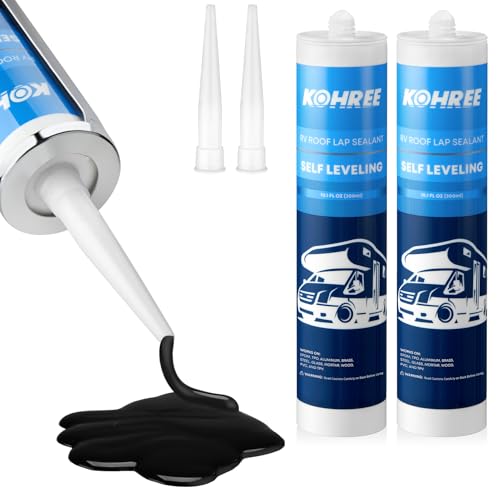
The catch is that black is the hardest color to find among RV roof products. The mainstream lap sealant lineup is built around white, beige, gray and almond, because those tones match common EPDM and TPO roofs and reflect heat. This guide sorts the tubes that actually come in black from the ones that only look similar on the shelf, and it flags two white or multi-color products that belong here as honest contrast picks. Two Kohree self-leveling tubes, the Geocel 4500 bonding sealant and the Dicor 351CSB-1 cap sealant are the true black options, priced from $10.00 to $28.99.
Just as important is the shape of the job. Self-leveling sealants are made for flat, horizontal surfaces, since they flow out and settle on their own. Cap or trim sealants are made for vertical joints around windows, doors and edges. Using the wrong type is the most common reason a repair fails within a season. We evaluated each pick on color availability, which roof materials its listing names, whether it levels or stays put, and how much material you actually get for the money, working only from published specifications and what buyers report, with no claim of bench work on our part. The tables further down match a tube to a specific roof.
Our standards
Why You Can Trust RV Gear Lab
At RV Gear Lab, we compare products based on rig fit and power or hookup compatibility, verified specifications, usability, setup requirements, weight, durability, and real-world trade-offs. We do not rank products purely on marketing claims or commission rates.
We have not personally tested every product listed. Where hands-on testing is not available, recommendations are based on verified manufacturer specifications, product documentation, use-case fit, and comparative research.
How we review RV gear →