

We research everything we recommend. When you buy through our links, we may earn a commission. Learn more

Buying guide · 10 min read · Updated October 2, 2026

6 Best RV Roof Coating in 2026: A Practical RV Guide

Compare six one-gallon RV roof coatings by chemistry, coverage per gallon and elongation so you match the product to your roof type.

Bowen HigginsBy Bowen HigginsRV Editor at RV Gear Lab6 products comparedSpec-sheet researched

At a glance

Our top picks

A roof coating is a system choice before it is a brand choice. Acrylic, silicone and MS polymer coatings behave differently on EPDM, TPO and metal roofs, and a gallon that covers 50 square feet at one coat does not mean a full roof.

This hub ranks six coatings and explains what each is made for, but a coating never repairs soaked decking or a failed seam. Check your roof membrane, coverage and recoat rules before buying, and avoid mixing brands casually.

RV Gear Lab field notes

The Rig Fit Check

Start with the job
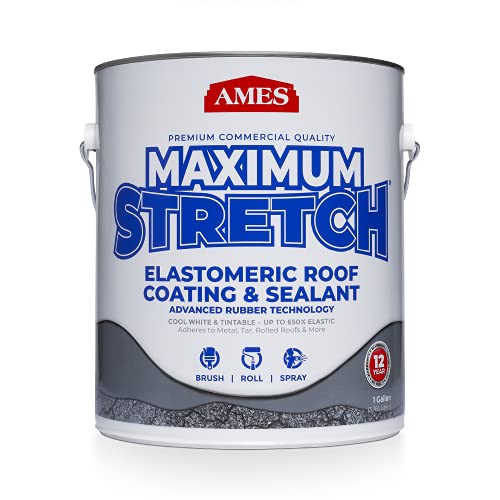
AMES RESEARCH LABORATORIES MSS1 Maximum Stretch Roof Coating leads this shortlist for Metal and rolled roofs. Use that fit as a reference point, then compare the alternatives against your own space and workload.
Specs that separate the picks
The first details to compare are Acrylic elastomeric coating, 1000%+ elongation, 1000% flexibility claim. Confirm the exact model and included components before ordering.
Trade-off to plan for
Elongation lower than the 1000% coatings

Before you buy

What Matters Before You Choose an RV Roof Coating

Key buying criteria so you get the right fit the first time.

  1. 01

    Roof membrane type

    EPDM, TPO and metal roofs each need a compatible coating, and some need a primer. A mismatch can peel within a season. Read the roof type listed and check your roof label.

  2. 02

    Coating chemistry

    Acrylic is common and recoatable, silicone sheds water but resists later coatings, and MS polymer bonds to mixed materials. This changes maintenance. Look for the chemistry name on the listing.

  3. 03

    Coverage per gallon

    A gallon often covers about 40 to 50 square feet at the recommended thickness, so a full roof needs many gallons. Cheap per gallon can cost more per roof. Measure and divide before you buy.

  4. 04

    Elongation and film thickness

    Elongation describes how far a cured coating stretches, while thickness decides durability. A thin coat cracks sooner. Look for both figures on the listing.

  5. 05

    Cure window and recoat rules

    Coatings need dry weather and a set cure time between coats. Rain too early washes out the film. Read the cure and recoat instructions.

  6. 06

    Repair limits

    A coating cannot fix saturated decking, failed seams or structural damage. Patch problem areas first. Inspect the roof, and use tape or sealant where needed.

Our standards

Why You Can Trust RV Gear Lab

At RV Gear Lab, we compare products based on rig fit and power or hookup compatibility, verified specifications, usability, setup requirements, weight, durability, and real-world trade-offs. We do not rank products purely on marketing claims or commission rates.

We have not personally tested every product listed. Where hands-on testing is not available, recommendations are based on verified manufacturer specifications, product documentation, use-case fit, and comparative research.

How we review RV gear →

Detailed reviews

The 6 best rv roof coating, explained

01
Best for: Metal and rolled roofs

Our take

Best for metal and rolled roofs where a clear acrylic system is wanted.

Why it made the shortlist

The AMES Maximum-Stretch is a white, elastomeric, acrylic rubberized coating with 650 percent elongation, designed to resist cracking, flaking and peeling. It adheres to metal roofing, tar and rolled roofs and is described as low VOC and made in the USA.

What works

  • 650% elongation resists cracking
  • Adheres to metal, tar and rolled roofs
  • Low VOC and non-toxic claim
  • Made in the USA per the listing

Watch out for

  • Elongation lower than the 1000% coatings
  • No coverage per gallon figure listed
02

Best Value Elongation · 2 of 6

Tenee RV Roof Coating

Tenee RV Roof Coating
  • 1000%+ elongation
  • 88% solar reflectivity
  • Up to 50 sq ft per gallon
Check price on Amazon for Tenee RV Roof Coating (opens in a new tab)
Best for: TPO roofs on a budget

Our take

Best for budget buyers with a TPO roof.

Why it made the shortlist

The Tenee is a one-gallon white liquid rubber coating listed with 1000 percent plus elongation and 88 percent solar reflectivity. It is described as working on TPO and, with proper prep, EPDM and fiberglass, and covering up to 50 square feet per gallon.

Compared with the AMES, it adds elongation and reflectivity figures for a similar price.

Measure your roof, because one gallon rarely covers a whole rig.

What works

  • States 1000%+ elongation
  • 88% solar reflectivity listed
  • Works on TPO with notes on EPDM prep
  • Easy application

Watch out for

  • Only about 50 sq ft per gallon
  • Surface prep is critical on EPDM
03

Best Heavy-Duty Pail · 3 of 6

RV Roof Coating White

RV Roof Coating White
  • 1000% flexibility claim
  • 1 gal per 50 sq ft
  • Brush, roller or sprayer
Check price on Amazon for RV Roof Coating White (opens in a new tab)
Best for: Clear coverage planning

Our take

Best for buyers who want a clear coverage rule and a flexible coating.

Why it made the shortlist

The Wadities is a white solar-reflective, flexible coating claiming 1000 percent flexibility. The listing says to apply a minimum thickness equal to one gallon per 50 square feet, requiring two to three heavy coats.

Versus the Tenee, it costs far more for a similar single gallon. Versus the CUKWUYBY kit, it is a pure pail with no tape or tubes.

What works

  • Clear coverage guidance of 1 gal per 50 sq ft
  • Applies by brush, roller or sprayer
  • Solar reflective white finish
  • UV resistant membrane

Watch out for

  • Costs far more than similar pails
  • Needs two to three heavy coats
04

Best Repair Kit · 4 of 6

RV Roof Sealant Waterproof

RV Roof Sealant Waterproof
  • 1 gal coating plus sealant
  • 4 in x 20 ft tape included
  • Water-based, solvent-free
Check price on Amazon for RV Roof Sealant Waterproof (opens in a new tab)
Best for: Patch and coat bundle

Our take

Best for owners who need a repair kit and a coat.

Why it made the shortlist

The CUKWUYBY kit bundles one gallon of white waterproof coating, two 10.5 oz self-leveling sealant tubes and a 4 inch by 20 foot roll of tape. It is a water-based, solvent-free coating with a white reflective finish.

Compared with the Wadities, it includes sealant and tape for a lower price. Compared with the AMES, it is a bundle for patching rather than a pure coating.

What works

  • Includes coating, sealant tubes and tape
  • Water-based, solvent-free formula
  • White reflective finish

Watch out for

  • Tape and sealant types are unspecified
  • Less brand detail on chemistry
05

Best Silicone Option · 5 of 6

Ziollo RV Roof Sealant

Ziollo RV Roof Sealant
  • 100% silicone liquid rubber
  • Self-leveling white
  • Reflective finish
Check price on Amazon for Ziollo RV Roof Sealant (opens in a new tab)
Best for: Flat silicone roofs

Our take

Best for flat roofs where silicone is the chosen chemistry.

Why it made the shortlist

The Ziollo is a self-leveling liquid rubber described as 100 percent silicone, with a highly reflective white finish. The listing says it flexes from desert heat to cold.

Compared with the E-SDS, it is more of a leveling coating than a sealant.

Check recoat rules, because many products will not stick to silicone.

What works

  • Silicone chemistry stated plainly
  • Self-leveling for flat surfaces
  • Highly reflective white finish
  • Flexes with heat and cold

Watch out for

  • Silicone can block future recoats
  • Self-leveling is not for slopes
06
Best for: Mixed-material repairs

Our take

Choose E-SDS Camper Roof Sealant Metal RV Roof Coating 1 Gallon for states a 10+ year service life.

Why it made the shortlist

The E-SDS is an MS polymer sealant listed with a 10 plus year service life. One gallon covers 40 square feet, and two to three coats build a 0.8 to 1 mm film.

Versus the Ziollo, it adheres to rubber, metal and concrete.

What works

  • States a 10+ year service life
  • Adheres to rubber, metal and concrete
  • Zero-odor, non-toxic formula claim
  • Covers 40 sq ft with 2 to 3 coats

Watch out for

  • Lowest coverage per gallon in the group
  • Service life is a listing claim

Methodology

How We Built This Shortlist

Each pick was assessed across 5 criteria weighted for real-world use.

01

Chemistry

We separated acrylic, silicone and MS polymer coatings because each bonds and recoats differently.

02

Coverage rate

We compared stated square feet per gallon and coat counts to judge real cost per roof.

03

Elongation and flexibility

We noted stated elongation figures as manufacturer claims.

04

Roof type fit

We compared EPDM, TPO and metal compatibility statements.

05

System completeness

We looked at whether a primer, tape or sealant is included or needed.

Decision guide

Match an RV Roof Coating to Your RV

By Roof Type

Your situationRecommended pickWhy
Metal or rolled roofAMES Maximum StretchNames metal, tar and rolled roofs.
TPO roof, budgetTenee WhiteLists TPO and 88% reflectivity.
Flat roof, silicone chosenZiollo Silicone100% silicone self-leveling coating.
Mixed materialsE-SDS MS PolymerAdheres to rubber, metal and concrete.
Needs patch supplies tooCUKWUYBY KitIncludes sealant tubes and tape.

By Budget

BudgetRecommended pick
$40 to $50AMES Maximum Stretch or E-SDS MS Polymer
$40 to $70Tenee White or CUKWUYBY Kit
$70 to $190Ziollo Silicone or Wadities White

Acrylic vs Silicone Coating

Acrylic

The AMES Maximum Stretch and Tenee White are acrylic or liquid-rubber coatings that can usually be recoated later. Check each listing.

Silicone

The Ziollo Silicone is silicone-based, sheds water well but may refuse later coatings or sealants.

Most owners should choose an acrylic such as the AMES Maximum Stretch unless the Ziollo Silicone chemistry is a firm requirement.

By Coverage Needs

NeedRecommended pick
Clear coverage ruleWadities White
Small repair plus coatCUKWUYBY Kit
Large roof, budgetTenee White
Low VOC acrylicAMES Maximum Stretch

For Resealing an Aging EPDM or TPO Roof Specifically

Look for

A listing that names your membrane, a primer rule, and a coverage figure so you buy enough gallons, as the AMES Maximum Stretch listing shows.

In this comparison

The Tenee White names TPO and EPDM with preparation, and the Wadities White gives a 1 gallon per 50 square feet guideline. Neither replaces repair of damaged areas.

When to Spend More

Spend more if

Spend more on the Wadities White or AMES Maximum Stretch if you want stated coverage and a recoatable acrylic system you can plan around.

Save if

Save with the Tenee White or CUKWUYBY Kit if you need a basic coat or patch on a sound roof.

FAQ

Before You Bring One Home

Can I coat over a leaking RV roof?

A coating will not fix wet decking or failed seams. Repair those first and then coat. Inspect from above and inside.

How many gallons do I need?

Measure the roof area and divide by the listed coverage, such as 50 square feet per gallon for the Tenee White, and plan for two or three coats. Add some extra for edges.

Is the Wadities White worth more than the Tenee White?

Only if you value its clear coverage guidance. Otherwise the Tenee White gives similar claims for much less.

How do I prepare the roof?

Wash and dry it, remove loose material and repair seams. Follow the listing's primer rules. Apply in dry weather.

Can I put silicone over my old coating?

Be careful, since silicone generally will not accept other coatings later. Test a small area and check the Ziollo Silicone listing first.

Bottom line

The short version

Browse more rv roof coating on Amazon →
Bowen Higgins, RV Editor at RV Gear Lab

About the author

Bowen Higgins

RV Editor at RV Gear Lab

Bowen covers RV power, water systems, towing and leveling, upkeep and interior comfort, with a focus on matching gear to the rig, the hookups and the way you actually travel.

More from Bowen →Editorial standards

Keep reading

Related guides