

We research everything we recommend. When you buy through our links, we may earn a commission. Learn more

Buying guide · 10 min read · Updated October 2, 2026

3 Best 20 Degree Down Sleeping Bags in 2026: A Practical Camping Guide

Best 20 degree down sleeping bags compared on ISO comfort and limit figures, fill power, weight and cut, so you can pick a bag by real warmth.

Danny WalkerBy Danny WalkerCamping Editor at RV Gear Lab3 products comparedSpec-sheet researched
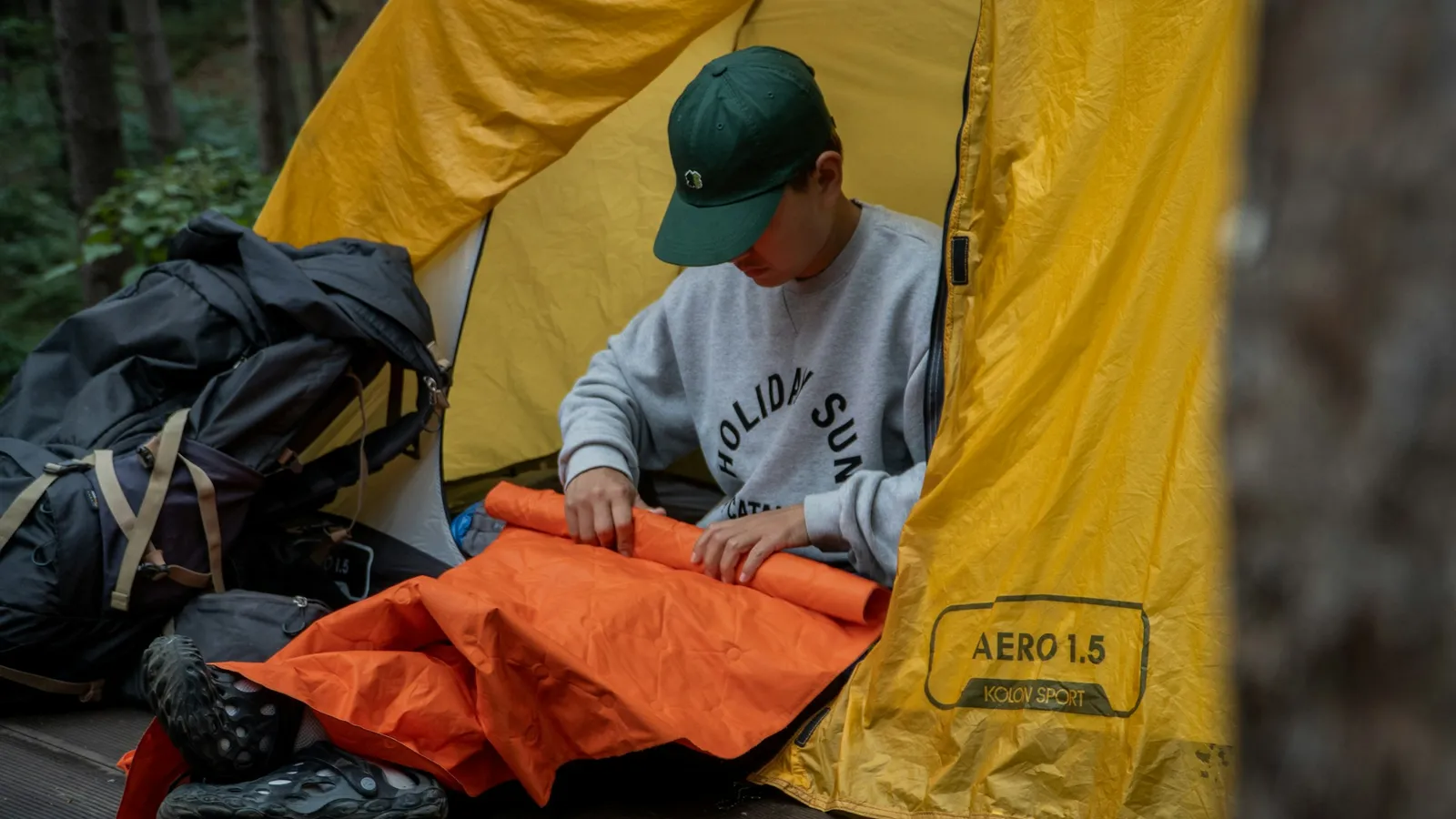
Camper sitting inside a tent next to an unrolled sleeping bag

At a glance

Our top picks

A 20 degree down bag is the three-season workhorse, but the 20 on the label is usually a limit rating, not a comfort rating. The honest comparison is the ISO comfort and limit figures a listing prints, because those tell you what the number really means.

Only two listings here are true 20 degree down bags, so a third nearest-fit bag with a different headline is included and flagged. All three print enough detail to compare warmth, weight and cut.

RV Gear Lab field notes

The Campsite Fit Check

Start with the job
Sierra Designs Cloud 20 Degree Down Sleeping Bag leads this shortlist for Lightweight 20F backpacking. Use that fit as a reference point, then compare the alternatives against your own space and workload.
Specs that separate the picks
The first details to compare are 800FP DriDown, 16.4 oz fill, 550FP RDS down, 650FP RDS down. Confirm the exact model and included components before ordering.
Trade-off to plan for
Zipperless design takes practice

Before you buy

What Matters Before You Choose a 20 Degree Down Sleeping Bag

Key buying criteria so you get the right fit the first time.

  1. 01

    What 20 degrees means

    A 20 degree rating is usually the limit, which is the coldest temperature at which an average sleeper can survive a night. The comfort rating is higher. The Sierra Designs Cloud 20 gives both, a 26 degree F comfort figure and a 15 degree F limit.

  2. 02

    Fill power

    Fill power measures loft per ounce, and higher numbers give more warmth for the same weight. The Sierra bag is 800, the Naturehike 650 and the Kelty 550. Compare fill power with fill weight, since more low-grade down can equal less high-grade down.

  3. 03

    Weight and packed size

    A 20 degree down bag usually weighs between 1.8 and 3 lb. Lighter bags cost more because of finer shell fabrics. Check the printed trail weight and the fill weight.

  4. 04

    Zipperless or zippered

    A zipperless comforter design saves weight but works differently from a standard mummy. A zippered bag is easier to enter and vent. Try both if you can.

  5. 05

    Sizing

    A bag that is too short compresses the foot box and cools your feet, and a bag that is too long adds dead air. The Kelty Cosmic 20 comes in Short, Regular and Long. Match the size to your height.

Our standards

Why You Can Trust RV Gear Lab

At RV Gear Lab, we compare products based on campsite fit, verified specifications, usability, setup requirements, weight, durability, and real-world trade-offs. We do not rank products purely on marketing claims or commission rates.

We have not personally tested every product listed. Where hands-on testing is not available, recommendations are based on verified manufacturer specifications, product documentation, use-case fit, and comparative research.

How we review camping gear →

Detailed reviews

The 3 best 20 degree down sleeping bags, explained

01
Sierra Designs Cloud 20 Degree Down Sleeping Bag
  • 800FP DriDown, 16.4 oz fill
  • ISO comfort 26F, limit 15F
  • Trail weight 1 lb 13.3 oz
Check price on Amazon for Sierra Designs Cloud 20 Degree Down Sleeping Bag (opens in a new tab)
Best for: Lightweight 20F backpacking

Our take

The lightest and highest-fill 20 degree bag here, with clear ISO figures.

Why it made the shortlist

The Sierra Designs Cloud 20 is a zipperless down bag with 800 fill power DriDown (16.4 oz of fill), a 15D nylon ripstop shell and a trail weight of 1 lb 13.3 oz. Its ISO figures read 26 degrees F for comfort and 15 degrees F for the limit.

Its 800 fill power tops the other two and it weighs less than the Naturehike medium, plus a self-sealing foot vent and an integrated pad sleeve that keeps the bag on the mat. It trades the zipper for an oversized comforter, which suits side and active sleepers more than the Kelty Cosmic 20.

It suits backpackers who want a lightweight, high-fill bag that moves with them. The pad sleeve keeps it from sliding off the mat.

What works

  • Highest fill power of the three
  • Clear ISO comfort and limit figures
  • Pad sleeve stops sliding
  • Self-sealing foot vent

Watch out for

  • Zipperless design takes practice
The catch
The comforter-style, zipperless layout feels different at first.
02
Best for: Tall sleepers and car camping

Our take

A proven down bag with three lengths and traceable down.

Why it made the shortlist

The Kelty Cosmic 20 uses 550 fill power RDS-traceable down in recycled nylon and polyester taffeta fabrics with a PFAS-free DWR finish. It has dual-direction zippers and sizes that fit up to 5 ft 6 (Short), 6 ft (Regular) and 6 ft 6 (Long).

Its ISO limit sits at 21 degrees F with an extreme of -11 degrees F, and each size adds 6 inches of length. It has the lowest fill power of the three, which means more weight for the same loft.

It suits campers and backpackers who want a tested down bag in a choice of lengths, including a Long for tall sleepers. The dual-direction zippers make venting easier.

What works

  • ISO limit and extreme figures printed
  • Three length options
  • PFAS-free recycled fabrics
  • Dual-direction zippers

Watch out for

  • Lower fill power than the others
  • No ISO comfort figure listed
The catch
At 550 fill power it packs bigger than the Sierra Designs Cloud 20.
03
Best for: Weight-conscious backpackers

Our take

A lightweight, well-documented bag, though not exactly 20 degrees.

Why it made the shortlist

Naturehike builds the CW series with RDS down at 650 fill power inside a 400T 20D ripstop shell and YKK zippers, and its title prints 28.9 degrees F. The medium weighs 2.37 lb at 82.68 by 29.53 inches, and the large weighs 2.9 lb at 86.61 by 33.46 inches.

The listing's CW1000 model drops to a 12 degrees F comfort and -2 degrees F extreme, while the CW700 is 29 degrees F.

It suits ultralight-minded backpackers who want a bag under 3 lb with ISO-style figures printed, choosing the model that matches the cold. Two sizes cover different heights.

What works

  • Under 3 lb in both sizes
  • ISO-style figures printed
  • 20D ripstop keeps weight low
  • Two sizes for different heights

Watch out for

  • Warmest model is a separate CW1000
The catch
The model in the title lists about 29 degrees F, so treat it as a loose match for 20 degrees.

Methodology

How We Built This Shortlist

Each pick was assessed across 5 criteria weighted for real-world use.

01

ISO figures

We compared the ISO comfort, limit and extreme ratings each listing prints.

02

Fill power and weight

We lined up fill power, fill weight and trail weight.

03

Cut and fit

We noted zipperless, mummy and sizing options.

04

Features

We checked foot vents, pad sleeves and draft control.

05

True 20F fit

We separated bags whose 20 degree rating is stated from nearest-fit models.

Decision guide

Match a 20 Degree Down Sleeping Bag to Your Camp Setup

By Priority

Your situationRecommended pickWhy
Lowest weight, highest fillSierra Designs Cloud 20800 fill DriDown and 1 lb 13.3 oz.
Tall sleepersKelty Cosmic 20 DownLong size fits to 6 ft 6.
Under 3 lb with figuresNaturehike CW Series Down2.37 lb medium.
Side sleepers who rollSierra Designs Cloud 20Pad sleeve and a comforter design.

By Budget

BudgetRecommended pick
$150 to $160Naturehike CW Series Down
$180 to $190Kelty Cosmic 20 Down
$240 to $250Sierra Designs Cloud 20

Zipperless vs Standard

Zipperless

The Sierra Designs Cloud 20 uses an oversized comforter and a pad sleeve, which suits restless sleepers.

Standard mummy

The Kelty Cosmic 20 Down and Naturehike CW Series Down use zippers and a traditional shape.

Choose the Sierra Designs Cloud 20 if you move a lot and the Kelty Cosmic 20 Down for a traditional bag.

By Budget

BudgetRecommended pick
Lowest costNaturehike CW Series Down
Mid cost, tall sizesKelty Cosmic 20 Down
Highest cost, lightestSierra Designs Cloud 20

For Three-Season Backpacking Specifically

Look for

An ISO limit near 20 degrees F, a trail weight under 3 lb and a fill power of 550 or more.

In this comparison

The Sierra Designs Cloud 20 lists a 15 degree F limit and 1 lb 13.3 oz, and the Kelty Cosmic 20 Down lists a 21 degree F limit.

When to Spend More

Spend more if

Spend more on the Sierra Designs Cloud 20 for 800 fill power and the lowest weight, or the Kelty Cosmic 20 Down for length options and extreme figures.

Save if

Save with the Naturehike CW Series Down if you want a light bag and can accept a warmer headline figure.

FAQ

Before You Bring One Home

Is a 20 degree bag warm enough at 20 degrees?

Only barely, since 20 is the limit and not the comfort. The Sierra Designs Cloud 20 prints a comfort of 26 degrees F. Plan for the comfort figure.

What does DriDown mean?

It is a hydrophobic treatment that helps down keep loft in damp conditions. The Sierra Designs Cloud 20 uses 800 fill DriDown. It is not waterproof.

Is the Kelty Cosmic 20 true to its rating?

The listing prints an ISO limit of 21 degrees F and an extreme of -11 degrees F, so the 20 label is close to the limit. No comfort figure is printed. Plan for a cooler comfort level.

Do I need a zipper?

A zipper makes entry and venting easier. The Sierra Designs Cloud 20 uses a foot vent instead. Try both styles.

How do I care for a down bag?

Store it loose, not compressed, and wash it only when needed with a down-specific soap. Dry on low with clean tennis balls. Check the care label.

Bottom line

The short version

Browse more 20 degree down sleeping bags on Amazon →
Danny Walker, Camping Editor at RV Gear Lab

About the author

Danny Walker

Camping Editor at RV Gear Lab

Danny covers camping gear, campsite setup, outdoor power, sleep systems and practical camping advice, with a focus on helping campers make better gear decisions.

More from Danny →Editorial standards

Keep reading

Related guides