


We research everything we recommend. When you buy through our links, we may earn a commission. Learn more

Buying guide · 10 min read · Updated October 2, 2026

6 Best Backpacking Sleeping Pad Under 100 in 2026: A Practical Camping Guide

Best backpacking sleeping pads under $100: six foam and inflatable pads, from a 7.2 R-value air pad to ultralight foam, sorted by what each saves in weight.

Danny WalkerBy Danny WalkerCamping Editor at RV Gear Lab6 products comparedSpec-sheet researched
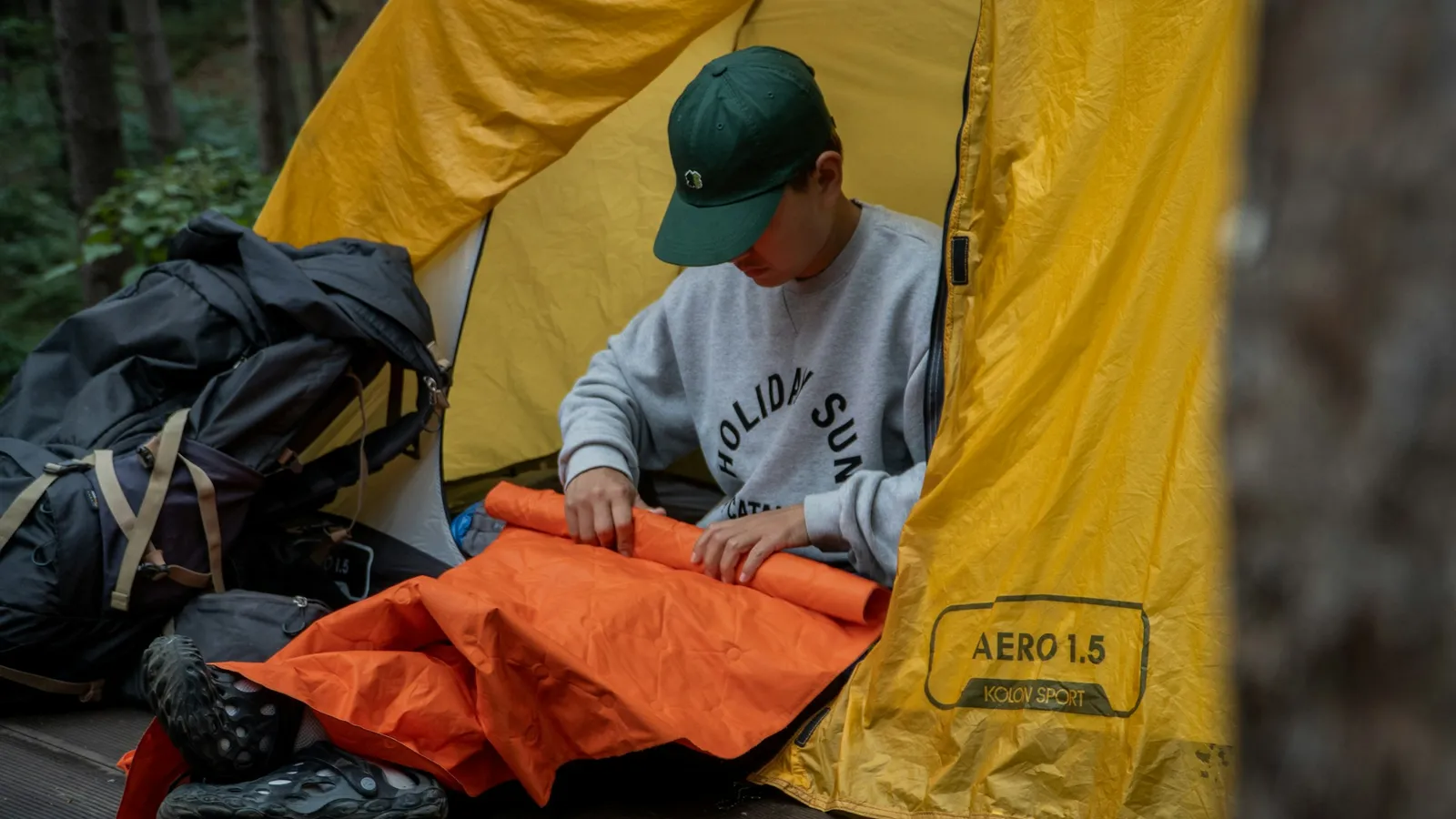
Camper sitting inside a tent next to an unrolled sleeping bag

At a glance

Our top picks

A sleeping pad does two jobs: it cushions you and it blocks heat loss into the ground. Under $100 for the trail, the real choice is between light closed-cell foam that cannot fail and inflatable pads that pack smaller and sleep softer.

These six cover the range, from one very warm air pad to bare-bones foam. The ranking weighs packed size, listed insulation and how each pad handles a night on rough ground.

RV Gear Lab field notes

The Campsite Fit Check

Start with the job
TREKOLOGY Sleeping Pad for Camping leads this shortlist for All-season backpackers. Use that fit as a reference point, then compare the alternatives against your own space and workload.
Specs that separate the picks
The first details to compare are 4 inch thick, 7.2 R-value, Closed-cell accordion foam, 2.3 inch air pad, 1.42 lb. Confirm the exact model and included components before ordering.
Trade-off to plan for
Top of the budget range

Before you buy

What Matters Before You Choose a Backpacking Sleeping Pad Under 100

Key buying criteria so you get the right fit the first time.

  1. 01

    R-value and what it means

    R-value measures resistance to heat flow, and a higher number means a warmer pad. Roughly under 2 suits summer, 2 to 4 suits three seasons, and 4 or more suits cold. Look for the number on the listing, since pads without one are usually warm-weather pads.

  2. 02

    Foam versus air

    Closed-cell foam cannot leak and weighs little but is thin and bulky. Air pads pack smaller and cushion more but can puncture. At this price, foam is the reliable choice and air is the comfort choice.

  3. 03

    Thickness for your sleep position

    Side sleepers need about 3 inches or more to keep the hip off the ground. Back sleepers can use 2 inches. Look for the thickness in inches, not just a comfort claim.

  4. 04

    Pad length and width

    A 72 inch pad fits most adults but leaves feet hanging for tall hikers. Width of 20 inches is narrow and 24 to 27 inches is roomier. Check both before you commit.

  5. 05

    Repairability and valves

    Cheap air pads fail at the valve, so look for a kit or a fabric rated 40D or higher. Foam has no moving parts. Check what repair items come in the box.

Our standards

Why You Can Trust RV Gear Lab

At RV Gear Lab, we compare products based on campsite fit, verified specifications, usability, setup requirements, weight, durability, and real-world trade-offs. We do not rank products purely on marketing claims or commission rates.

We have not personally tested every product listed. Where hands-on testing is not available, recommendations are based on verified manufacturer specifications, product documentation, use-case fit, and comparative research.

How we review camping gear →

Detailed reviews

The 6 best backpacking sleeping pad under 100, explained

01
TREKOLOGY Sleeping Pad for Camping
  • 4 inch thick, 7.2 R-value
  • 2 lb, water bottle size
  • 40D ripstop nylon, TPU
Check price on Amazon for TREKOLOGY Sleeping Pad for Camping (opens in a new tab)
Best for: All-season backpackers

Our take

The most insulated pad under the cap, so it works in cold weather.

Why it made the shortlist

The TREKOLOGY UL R7 is a 4 inch thick inflatable pad with a listed R-value of 7.2, which is the figure its all-season claim rests on. It weighs 2 lb, packs to water bottle size and inflates to 70.8 by 24 inches.

Next to the poimerk pad, it adds far more thickness and insulation. Against the Therm-a-Rest Z Lite, it replaces a stiff foam fold with a pad that cushions much more.

It suits backpackers who camp in all seasons and want a single pad for the year. The 40D ripstop nylon with a TPU coating handles rough ground.

What works

  • Thick enough for side sleepers
  • Packs to water bottle size
  • Tear-resistant ripstop nylon

Watch out for

  • Top of the budget range
  • Air pads can puncture
The catch
It uses up most of the $100 ceiling, so there is little room for extras.
02
Best for: Rugged, no-fail backpackers

Our take

The pad that cannot fail, and a good partner to an air pad.

Why it made the shortlist

The Therm-a-Rest Z Lite Original is a closed-cell foam pad with accordion folds, softer on top and denser on the bottom. Dimples in the foam capture and trap heat.

Compared with the TREKOLOGY UL R7, it never leaks and needs no inflating. Against the Wakeman, it has better insulation structure and a well-known fold design.

It fits hikers who want a rugged, no-fail pad. It also works as a seat and a backup for an air pad.

What works

  • Cannot be punctured or leak
  • Works as a seat or backup pad
  • Folds flat on the outside of a pack
  • Trusted classic design

Watch out for

  • Thin for side sleepers
  • Bulky strapped outside
The catch
It has little cushion, so side sleepers will feel the ground.
03

Best Budget Air · 3 of 6

Ultralight Camping Sleeping Pad Mat

Ultralight Camping Sleeping Pad Mat
  • 2.3 inch air pad, 1.42 lb
  • Built-in foot pump
  • 40D ripstop TPU
Check price on Amazon for Ultralight Camping Sleeping Pad Mat (opens in a new tab)
Best for: Budget ultralight hikers

Our take

A cheap, light air pad for warm trips.

Why it made the shortlist

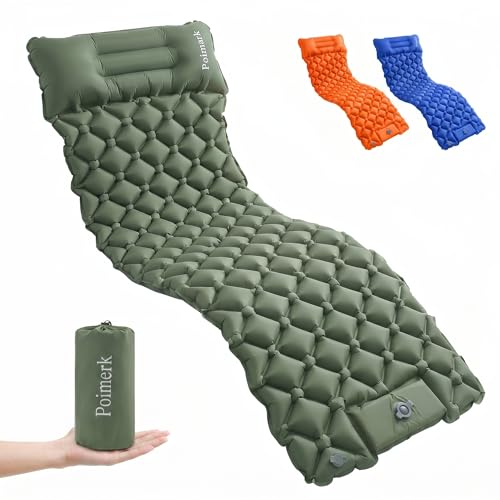
The poimerk pad is 2.3 inches thick with an air-cell design and a built-in foot pump. It weighs 1.42 lb and folds to 11 by 4.7 inches in 40D ripstop nylon with TPU coating.

Against the TREKOLOGY UL R7, it is lighter and cheaper, with less thickness. Compared with the FUN PAC, it is thinner and lighter with no pillow.

It suits hikers who want an air pad for the lowest cost. The foot pump saves effort.

What works

  • Light at 1.42 lb
  • Foot pump inflates quickly
  • Folds small

Watch out for

  • No R-value listed
  • 2.3 inches is thin for side sleepers
The catch
Without an R-value on the listing, assume summer use.
04

Best With Pillow · 4 of 6

FUN PAC Camping Sleeping Pad

FUN PAC Camping Sleeping Pad
  • 78 x 27 inch, 3 inch thick
  • Built-in pillow and pump
  • 40D nylon with TPU
Check price on Amazon for FUN PAC Camping Sleeping Pad (opens in a new tab)
Best for: Wide sleepers on warm trips

Our take

A wide pad with a pillow already attached.

Why it made the shortlist

The FUN PAC pad is up to 78 by 27 inches with a 3 inch thickness and a built-in pillow. It uses a built-in foot pump with a 30 to 60 second inflation and 40D nylon with TPU.

Compared with the poimerk, it adds width and a pillow. Next to the TREKOLOGY UL R7, it is wider by a couple of inches.

It suits hikers who want a pad with a pillow in one piece. It sizes like a water bottle packed.

What works

  • Extra wide at 27 inches
  • Built-in pillow saves gear
  • Foot pump inflates fast
  • Easy to clean fabric

Watch out for

  • No R-value listed
  • Pillow position is fixed
The catch
The listing gives no insulation rating, so use it for warmer nights.
05

Best Lightweight Foam · 5 of 6

Foam Camping Pads for Hiking

Best for: Hikers who like foam

Our take

A low-cost foam pad with a shaped cut.

Why it made the shortlist

The FOCHIER foam pad is made of IXPE closed-cell foam with a peanut shape and an accordion design. It is moisture-proof and is sold for hiking, seating and hammock use.

Against the Therm-a-Rest Z Lite, it costs less and has a shaped peanut cut. Compared with the Wakeman, it is thicker and more structured.

It fits hikers who want a cheap foam pad that doubles as a seat. Peaks and valleys trap warmth.

What works

  • Cannot leak or deflate
  • Peanut shape cuts bulk
  • Doubles as a seat
  • Moisture-proof foam

Watch out for

  • No R-value listed
  • Bulky on the outside of a pack
The catch
The listing gives no thickness, so check it before relying on it.
06

Best Ultra-Budget · 6 of 6

Foam Sleeping Pad

Foam Sleeping Pad
  • 72 inch long, 0.5 inch thick
  • 0.6 lb weight
  • Non-slip waterproof surface
Check price on Amazon for Foam Sleeping Pad (opens in a new tab)
Best for: Ultralight hikers on a tight budget

Our take

A featherweight pad for hikers who accept firm ground.

Why it made the shortlist

The Wakeman foam pad is 72 inches long, 0.5 inch thick and weighs 0.6 lb, rolling to 7 inches tall. It has a non-slip texture and a waterproof surface.

Compared with the FOCHIER, it is lighter and thinner. Against the poimerk, it costs the least and has no valve to fail.

It suits hikers who want a barely-there pad or a topper for a cot. It is also useful as a sit pad.

What works

  • Very light at 0.6 lb
  • Non-slip surface
  • Works on cots

Watch out for

  • 0.5 inch gives little cushion
  • No stated insulation
The catch
It is very thin, so it is a short-trip or backup pad.

Methodology

How We Built This Shortlist

Each pick was assessed across 4 criteria weighted for real-world use.

01

Insulation

Compared listed R-values and foam structures, from the TREKOLOGY UL R7 at 7.2 to unrated pads.

02

Weight and packed size

Looked at stated weights and folded dimensions.

03

Comfort and thickness

Considered thickness from 0.5 inch foam to 4 inch air pads.

04

Durability

Checked shell fabric and foam type for rough ground.

Decision guide

Match a Backpacking Sleeping Pad Under 100 to Your Camp Setup

By Season

Your situationRecommended pickWhy
Cold nights, all-seasonTREKOLOGY UL R77.2 R-value and 4 inch thickness.
Rugged, no leaksTherm-a-Rest Z LiteClosed-cell foam that cannot puncture.
Warm trips, low weightpoimerk Ultralight1.42 lb air pad.
Wide sleeper, warm tripsFUN PAC Pillow Pad27 inches wide with a pillow.
Cheap foam with a seat useFOCHIER Foam PadPeanut cut that doubles as a seat.
Backup or topperWakeman Foam0.6 lb and 0.5 inch thick.

By Budget

BudgetRecommended pick
$20 to $30poimerk Ultralight or Wakeman Foam
$20 to $40FUN PAC Pillow Pad or FOCHIER Foam Pad
$40 to $70Therm-a-Rest Z Lite or TREKOLOGY UL R7

Foam vs Air

Foam

Closed-cell foam is bombproof and light but thin. The Therm-a-Rest Z Lite, FOCHIER Foam Pad and Wakeman Foam are foam.

Air

Air pads cushion more and pack smaller. The TREKOLOGY UL R7, poimerk Ultralight and FUN PAC Pillow Pad are air.

Choose the TREKOLOGY UL R7 for comfort and the Therm-a-Rest Z Lite as the reliable backup.

By Budget Within $100

PickRecommended pick
LowestWakeman Foam
Low, ultralight airpoimerk Ultralight
Low, with pillowFUN PAC Pillow Pad
Mid, foamTherm-a-Rest Z Lite
Top of range, warmestTREKOLOGY UL R7

For Cold Backpacking Specifically

Look for

An R-value of 4 or more and enough thickness to stop ground chill

In this comparison

The TREKOLOGY UL R7 lists a 7.2 R-value, and the Therm-a-Rest Z Lite adds a foam layer you can stack on it.

When to Spend More

Spend more if

Spend more on the TREKOLOGY UL R7 for all-season warmth and thick cushioning.

Save if

Save with the Wakeman Foam or poimerk Ultralight when trips are short and warm.

FAQ

Before You Bring One Home

Is a $100 pad enough for backpacking?

Yes for 3 seasons. The TREKOLOGY UL R7 lists a 7.2 R-value, enough for cold. Cheaper pads suit summer.

What mistake do hikers make with pads?

Buying only for comfort and skipping insulation. A cold pad drains heat even in a good bag. Check the R-value.

Is an air pad worth it over foam?

For side sleepers yes, since the poimerk Ultralight and TREKOLOGY UL R7 give real cushion. For toughness the Therm-a-Rest Z Lite wins. Many hikers carry both.

How do I inflate a foot pump pad?

Open the valve, step on the pump 30 to 60 seconds, then close the valve. Top it up by mouth if needed. Check that it holds air before the trip.

How do I fix a leak?

Inflate the pad and submerge it to find bubbles. Dry it and apply a patch. Carry a small patch kit.

Bottom line

The short version

Browse more backpacking sleeping pad under 100 on Amazon →
Danny Walker, Camping Editor at RV Gear Lab

About the author

Danny Walker

Camping Editor at RV Gear Lab

Danny covers camping gear, campsite setup, outdoor power, sleep systems and practical camping advice, with a focus on helping campers make better gear decisions.

More from Danny →Editorial standards

Keep reading

Related guides