

We research everything we recommend. When you buy through our links, we may earn a commission. Learn more

Buying guide · 10 min read · Updated October 2, 2026

4 Best Budget Backpacking Sleeping Bags in 2026: A Practical Camping Guide

Best budget backpacking sleeping bags compared on weight, packed size and temperature range, for hikers who want a trail bag without a big spend.

Danny WalkerBy Danny WalkerCamping Editor at RV Gear Lab4 products comparedSpec-sheet researched
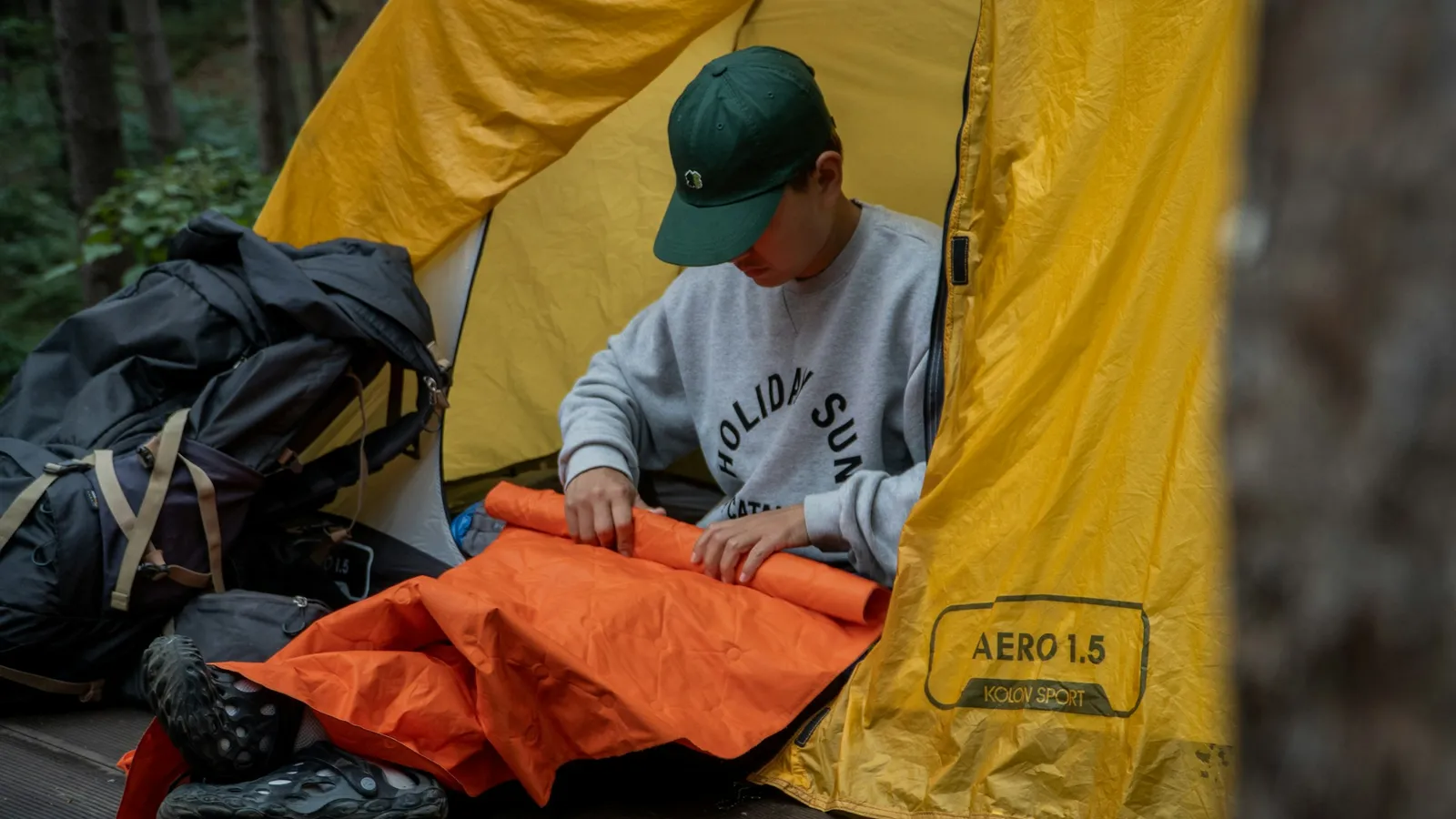
Camper sitting inside a tent next to an unrolled sleeping bag

At a glance

Our top picks

A budget backpacking bag has to be small and light first, because a cheap bag that weighs 5 lb is just a car-camping bag in disguise. The four picks here stay around the 1.5 to 3 lb range or give you a choice of temperature option.

Most budget bags are honest about being warm-weather bags, and one pick lets you choose a colder rating. Read the range on each listing, since a bargain bag can still be a poor match for a cold night.

RV Gear Lab field notes

The Campsite Fit Check

Start with the job
Teton LEEF Lightweight Mummy Sleeping Bag Perfect for Camping leads this shortlist for Hikers wanting cold options. Use that fit as a reference point, then compare the alternatives against your own space and workload.
Specs that separate the picks
The first details to compare are 0, 20 or 30 degree options, 1.5 lb, packs to 7.9 inches, 83 by 30 in envelope. Confirm the exact model and included components before ordering.
Trade-off to plan for
No weight appears on the listing

Before you buy

What Matters Before You Choose a Budget Backpacking Sleeping Bag

Key buying criteria so you get the right fit the first time.

  1. 01

    Weight is the budget trap

    Budget bags can weigh 4 lb or more, which defeats the point of backpacking. Look for a printed weight under 3 lb and a stated packed size. If neither is printed, treat the bag as car-camping gear.

  2. 02

    Temperature ranges

    Most cheap bags start at 50F or 55F for comfort. Only the TETON LEEF lists colder options, in 0, 20 and 30 degree ratings. Pick the rating for your coldest night, and remember a warmer pad lifts the effective range.

  3. 03

    Cut and size

    Budget bags often come in one size, and 30 inches wide is narrow for broad sleepers. The BORULL lists 79 by 30 inches. Check length and width against your height and shoulder width.

  4. 04

    Waterproof claims

    Waterproof shell is a common claim, and it usually means water-resistant. It helps against condensation but does not rescue a soaked bag. Keep the bag in a dry sack.

  5. 05

    Washability

    Budget bags see a lot of use. The MalloMe lists a machine-washable build and a wipe-clean shell. Check the listing for washing instructions.

  6. 06

    Packed size and compression

    A compression sack makes a bag easier to pack but cannot shrink a bulky bag far. Look at the stated packed dimensions. The BORULL packs to 7.9 inches, and the ECOOPRO to 11 inches in height.

Our standards

Why You Can Trust RV Gear Lab

At RV Gear Lab, we compare products based on campsite fit, verified specifications, usability, setup requirements, weight, durability, and real-world trade-offs. We do not rank products purely on marketing claims or commission rates.

We have not personally tested every product listed. Where hands-on testing is not available, recommendations are based on verified manufacturer specifications, product documentation, use-case fit, and comparative research.

How we review camping gear →

Detailed reviews

The 4 best budget backpacking sleeping bags, explained

01
Best for: Hikers wanting cold options

Our take

The most flexible budget bag, with a rating to match your trip.

Why it made the shortlist

Buyers of the TETON LEEF mummy choose among 0, 20 or 30 degree ratings and three sizes. The listing includes a compression sack and shapes the mummy cut roomier than most.

That makes it the most flexible pick across seasons.

It suits hikers who want one budget bag and may camp in cooler months. Choose the rating that matches your coldest night.

What works

  • Packs down for a hiking pack
  • Mummy cut keeps heat close
  • Three sizes to fit your height

Watch out for

  • No weight appears on the listing
The catch
The listing mixes three ratings, so check the exact option before you buy.
02
Best for: Tall summer hikers

Our take

A rare long cut in a light, cheap bag.

Why it made the shortlist

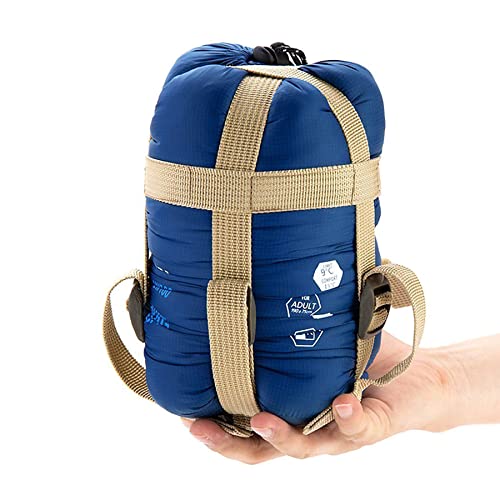
The BORULL bag weighs 1.5 lb and packs to 7.9 inches. It measures 79 by 30 inches and lists a comfort range of 50F to 77F.

It undercuts the MalloMe on weight by roughly half.

It suits summer hikers over six feet tall who watch pack weight. Continuous insulation is listed as washable.

What works

  • Longer than a standard bag
  • Fits sleepers up to 6 ft 7
  • Washable continuous insulation
  • Packs to roughly soccer ball size

Watch out for

  • Narrower cut feels snug
  • Warm range, 50F comfort
The catch
It is narrow at 30 inches, so broad sleepers may feel hemmed in.
03

Best Waterproof Shell · 3 of 4

ECOOPRO Warm Weather Sleeping Bag

ECOOPRO Warm Weather Sleeping Bag
  • 83 by 30 in envelope
  • 1.7 lb, 11 in compressed
  • 55 to 60F range
Check price on Amazon for ECOOPRO Warm Weather Sleeping Bag (opens in a new tab)
Best for: Summer rain protection

Our take

A light waterproof envelope for warm-weather trips.

Why it made the shortlist

The ECOOPRO has a waterproof nylon shell, a polyester lining and an 83 by 30 inch envelope cut. It weighs 1.7 lb and compresses to 11 inches in height, with a stated range of 55 to 60F.

It trades a little weight against the BORULL for a waterproof outer fabric. Compared with the MalloMe it weighs well under 3 lb, which matters for carrying.

It suits summer scouts and campers who may meet a shower. It rolls into its carry sack.

What works

  • 1.7 lb with a stated packed height
  • Waterproof nylon shell
  • Breathable polyester lining
  • Compression sack included

Watch out for

  • Range is only 55 to 60F
  • Narrow 30 inch width
The catch
The 55F-plus range makes it a summer-only bag.
04
Best for: Family backpackers

Our take

An easygoing, simple-to-wash bag for mixed use.

Why it made the shortlist

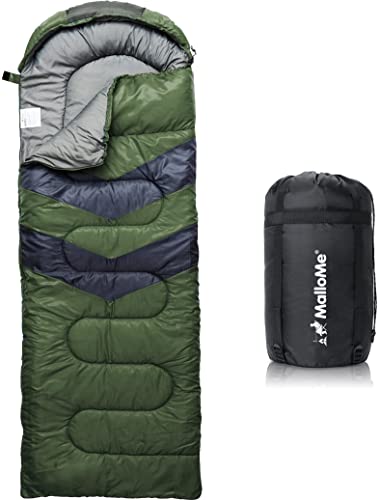
The MalloMe is rated for 50 to 77F and weighs around 3 lb.

Machine-washable construction makes it the easiest to keep clean.

It suits family backpackers and scouts who share one bag among kids and adults. The zippers resist snagging.

What works

  • Fits adults up to 6 feet
  • Wipe-clean outer shell
  • Machine washable
  • Works for kids and adults

Watch out for

  • Heaviest of the four
The catch
At about 3 lb a serious hiker will notice the weight.

Methodology

How We Built This Shortlist

Each pick was assessed across 5 criteria weighted for real-world use.

01

Carry weight

We compared listed weights, which range from 1.5 lb to about 3 lb.

02

Packed size

We noted packed dimensions where the listing gives them.

03

Temperature options

We compared the stated range, flagging bags with only a warm range.

04

Fit and cut

We compared length and width, since cheap bags often run narrow.

05

Price fit

We weighed each bag's price against what it delivers on the trail.

Decision guide

Match a Budget Backpacking Sleeping Bag to Your Camp Setup

By Trip Type

Your situationRecommended pickWhy
Cool nights, one bag all yearTETON LEEFChoose the 0, 20 or 30 degree option
Tall summer hikerBORULL Lightweight79 inch cut at 1.5 lb
Summer with possible showersECOOPRO Warm WeatherWaterproof nylon shell, 1.7 lb
Family trips, easy cleaningMalloMe Year RoundWipe-clean shell and machine-washable build

By Budget

BudgetRecommended pick
$20 to $30BORULL Lightweight or ECOOPRO Warm Weather
$20 to $80MalloMe Year Round or TETON LEEF

Mummy vs Envelope at a Budget

Mummy

The TETON LEEF is the mummy here. It holds heat better and offers colder ratings, and it costs the most of the four.

Envelope

The BORULL Lightweight, ECOOPRO Warm Weather and MalloMe Year Round are envelope-style bags with warm ranges. They cost less and give more room, though they leak heat in the cold.

Pick the TETON LEEF if you will see temperatures below 50F, or the BORULL Lightweight if you hike in summer.

By Price Within the Budget

PreferenceRecommended pick
Lowest priceBORULL Lightweight
Low price, waterproof shellECOOPRO Warm Weather
Low price, easy to washMalloMe Year Round
Highest price with rating choiceTETON LEEF

Tall Summer Hikers Specifically

Look for

Look for a length of 79 inches or more and a printed weight.

In this comparison

The BORULL Lightweight lists a 79 by 30 inch cut at 1.5 lb and fits sleepers up to 6 ft 7.

When to Spend More

Spend more if

Spend more on the TETON LEEF if you want a colder rating option and a mummy cut for shoulder-season hikes.

Save if

Save with the BORULL Lightweight or ECOOPRO Warm Weather if your trips stay in warm weather and you want the lowest carry weight.

FAQ

Before You Bring One Home

Can a cheap bag work for backpacking?

Yes, if the weight and packed size suit the trip and the range suits the weather. The BORULL lists 1.5 lb and packs to 7.9 inches.

What is the most common budget mistake?

Trusting a title that says cold weather when the bullet lists 50F. Read the range on each listing.

Is the TETON LEEF worth it over the ECOOPRO?

If you will camp below 50F, yes, because it offers 0, 20 and 30 degree options. For summer trips the ECOOPRO Warm Weather weighs less and costs less.

How do I choose the TETON LEEF option?

Pick the rating at least 10 degrees colder than your coldest expected night. Then choose the size closest to your height.

How do I extend a budget bag's range?

Add a liner and a warm pad and wear dry base layers. These steps add a few degrees, and they do not turn a summer bag into a winter bag.

Bottom line

The short version

Browse more budget backpacking sleeping bags on Amazon →
Danny Walker, Camping Editor at RV Gear Lab

About the author

Danny Walker

Camping Editor at RV Gear Lab

Danny covers camping gear, campsite setup, outdoor power, sleep systems and practical camping advice, with a focus on helping campers make better gear decisions.

More from Danny →Editorial standards

Keep reading

Related guides