

We research everything we recommend. When you buy through our links, we may earn a commission. Learn more

Buying guide · 10 min read · Updated October 2, 2026

5 Best Down Sleeping Bags For Backpacking in 2026: A Practical Camping Guide

Best down sleeping bags for backpacking compared on fill power, listed weight and temperature figures, for hikers choosing warmth per ounce.

Danny WalkerBy Danny WalkerCamping Editor at RV Gear Lab5 products comparedSpec-sheet researched
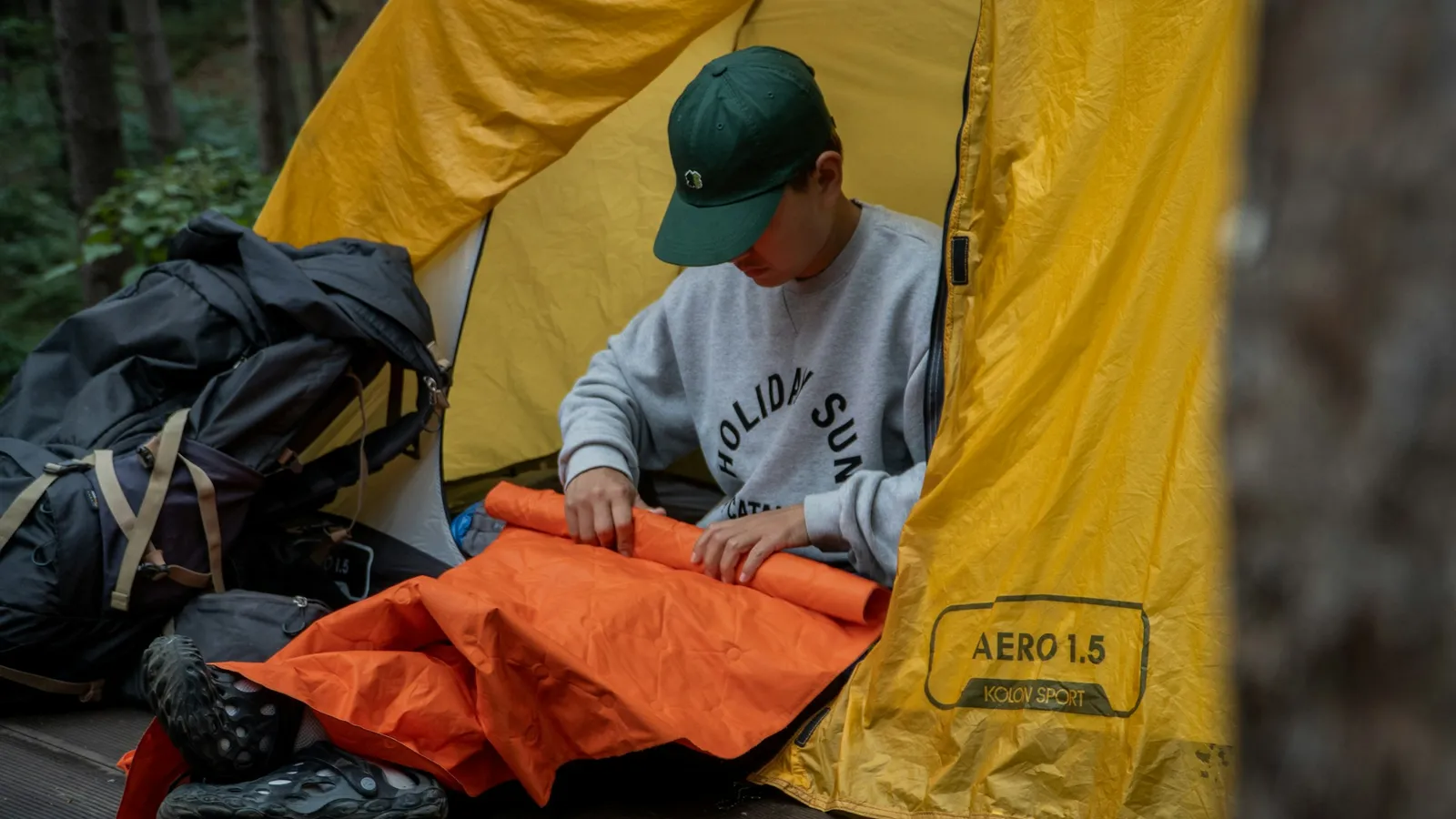
Camper sitting inside a tent next to an unrolled sleeping bag

At a glance

Our top picks

Down earns its place on the trail by giving the most warmth for the least weight and packing smaller than any synthetic bag. The trade is that down loses loft when wet, so a down bag asks for a dry sack and a bit of care.

Five down bags are compared here, from a short 1.3 lb ultralight to a 550 fill power bag with ISO ratings. Duplicate SYWSKW listings were counted as one pick, and several bags print no temperature figure, which is noted wherever it applies.

RV Gear Lab field notes

The Campsite Fit Check

Start with the job
Kelty Cosmic 20 Down Mummy Sleeping Bag for Backpacking leads this shortlist for buyers comparing capacity, compatibility, included components and storage needs. Use that fit as a reference point, then compare the alternatives against your own space and workload.
Specs that separate the picks
The first details to compare are 550FP RDS down, 295 g duck down, 1.3 lb, 680 FP RDS duck down. Confirm the exact model and included components before ordering.
Trade-off to plan for
Lowest fill power here

Before you buy

What Matters Before You Choose a Down Sleeping Bag For Backpacking

Key buying criteria so you get the right fit the first time.

  1. 01

    Fill power explained

    Fill power measures how much space an ounce of down fills, so 680 loft packs more warmth per ounce than 550. Higher fill power can mean less weight for the same warmth. Check the number on the listing and remember it is only half of the equation, with the amount of down being the other half.

  2. 02

    Fill weight matters too

    A bag with 295 g of down will be cooler than one with 500 g, whatever the fill power. Listings often print fill weight, as the SYWSKW does for its three tiers. Compare tiers against your coldest night.

  3. 03

    Ratings vs missing ratings

    Only the Kelty Cosmic 20 prints an ISO limit and extreme figure. Several others print none. A bag without a number is harder to compare, so ask whether a missing rating is acceptable for your trips.

  4. 04

    Wet down warning

    Down loses loft when wet, and loft is what keeps you warm. A water-repellent shell helps against dew but not rain. Carry the bag in a dry sack and keep it away from condensation in the tent.

  5. 05

    Short, medium and long

    A bag that is too long wastes insulation, and one that is too short compresses down at the feet. The Naturehike CW295 is a short at 74.8 inches and the Kelty offers three lengths. Match the size chart to your height.

  6. 06

    RDS certification

    RDS stands for Responsible Down Standard, a sourcing standard for the birds' welfare. Several listings state it. It says nothing about warmth, so use it as a sourcing check and not a performance claim.

Our standards

Why You Can Trust RV Gear Lab

At RV Gear Lab, we compare products based on campsite fit, verified specifications, usability, setup requirements, weight, durability, and real-world trade-offs. We do not rank products purely on marketing claims or commission rates.

We have not personally tested every product listed. Where hands-on testing is not available, recommendations are based on verified manufacturer specifications, product documentation, use-case fit, and comparative research.

How we review camping gear →

Detailed reviews

The 5 best down sleeping bags for backpacking, explained

01
Best for: Buyers comparing capacity, compatibility, included components and storage needs

Our take

The one down bag here with verified limits, in three lengths.

Why it made the shortlist

Kelty fills the Cosmic 20 with traceable 550 fill power down and wraps it in recycled fabrics treated with a PFAS-free water repellent. It prints an ISO limit rating of 21F and an extreme of minus 11F, in Short, Regular and Long sizes for sleepers up to 5 ft 6, 6 ft and 6 ft 6.

The lower fill power means more down by weight than the 680 fill picks, in exchange for a trusted rating.

It suits backpackers who want a down bag they can compare against ratings from other makers. Three lengths make fit easier.

What works

  • ISO limit and extreme printed
  • Three length options
  • PFAS-free recycled fabrics
  • Dual-direction zippers

Watch out for

  • Lowest fill power here
The catch
The lower fill power means more weight for the same loft.
02
Best for: Short ultralight hikers

Our take

The lightest, smallest down pack here, for shorter hikers.

Why it made the shortlist

The Naturehike CW295 packs 295 g of duck down into individual channels, inside a 20D 400T water-repellent nylon shell. The CW295 is a short size at 74.8 by 28.3 inches and weighs 1.3 lb, and it stows to 4.7 by 10.2 inches.

It is the lightest and smallest bag in this list and costs the least. Individual down channels keep the fill from migrating, and the pack size beats the 2 lb Naturehike 40 Degree by a wide margin.

What works

  • Ultralight at 1.3 lb
  • Channels hold the down in place
  • Water-repellent nylon shell
  • Stows to 4.7 by 10.2 inches

Watch out for

  • CW295 is a short size
The catch
The short CW295 may not fit taller sleepers, so check the size chart.
03
Best for: Value-minded down hikers

Our take

High fill power and a pillow at a moderate price.

Why it made the shortlist

Inside a 400T 40D nylon shell, the HLITMOUT carries 680 fill power white duck down certified to RDS, with a choice of 0.88 lb or 1.1 lb of fill. The 0.88 lb version weighs 2.16 lb including a pillow.

It lists the highest fill power in the group and a low stated weight, at a price below the Kelty Cosmic 20. A compression sack, an inner zipper loop and side pockets come with it.

It suits budget-minded hikers who want high-fill down and a pillow. Choose the 1.1 lb version for colder nights.

What works

  • Highest fill power at 680FP
  • Weighs 2.16 lb with pillow
  • Inner zipper loop and side pockets
  • Compression sack included

Watch out for

  • Down weight depends on the version
The catch
The listing prints no temperature figure, so choose the 1.1 lb version for colder nights.
04
Best for: Broad and restless sleepers

Our take

A high-fill, wide-cut down bag with three warmth tiers.

Why it made the shortlist

The SYWSKW is a 680 fill power RDS-certified duck down bag measuring 86.6 by 33.5 inches, with widened shoulders, a YKK zipper, reflective drawcords and an 80 g detachable pillow. It compresses to 7.08 by 11.8 inches and comes in 1.1 lb, 1.76 lb and 2.65 lb fill versions.

Of the five, it gives the widest shoulders and three warmth tiers, so you can buy the amount of down that matches your trips. Next to the HLITMOUT it trades a little weight for room to roll.

It suits broad or restless sleepers who hate mummy cuts. The pillow detaches when not needed.

What works

  • 680 fill power down
  • Wide 33.5 inch shoulders
  • Three fill tiers
  • Detachable 80 g pillow

Watch out for

  • Weight depends on the tier
The catch
The listing prints no temperature figure, so choose a tier by your coldest night.
05
Naturehike Ultralight Down Sleeping Bag
  • 2 lb, 650 fill RDS down
  • Mummy top, rectangular bottom
  • YKK zippers, compression sack
Check price on Amazon for Naturehike Ultralight Down Sleeping Bag (opens in a new tab)
Best for: Warm-night down hikers

Our take

A light down bag for mild nights, with extra room at the knees.

Why it made the shortlist

The Naturehike 40 Degree bag weighs 2 lb and is filled with 650 fill power RDS down in a 400T 20D ripstop shell. It uses a mummy upper body with a rectangular lower body, YKK zippers and a compression sack.

It gives more room at the knees than the other mummies and sits between the CW295 and the Kelty on price. A 40.4F figure in the title tells you what to expect.

It suits hikers who want a down bag for warm nights without a snug cut. The compression sack keeps it small.

What works

  • Rectangular lower body gives knee room
  • Down packs small
  • YKK zippers run smoothly
  • Compression sack included

Watch out for

  • Heavier than the CW295
The catch
Its 40F rating makes it a mild-weather bag.

Methodology

How We Built This Shortlist

Each pick was assessed across 5 criteria weighted for real-world use.

01

Fill power and fill weight

We compared the listed fill power and, where given, the amount of down.

02

Weight and pack size

We compared listed weights and stuffed dimensions.

03

Temperature figures

We noted which bags print ISO or comfort figures and which print none.

04

Responsible sourcing

We checked for RDS certification where the listing names it.

05

Fit options

We compared sizes, lengths and cuts for different body types.

Decision guide

Match a Down Sleeping Bag For Backpacking to Your Camp Setup

By Trip Weight Goal

Your situationRecommended pickWhy
Lowest pack weight and volumeNaturehike CW2951.3 lb and stows to 4.7 by 10.2 inches
High fill power at a fair priceHLITMOUT 680FP680 fill power and 2.16 lb with a pillow
Wide cut with choice of warmthSYWSKW 680FP33.5 inch shoulders and three fill tiers
Verified cold-night limitsKelty Cosmic 20ISO limit 21F, extreme minus 11F
Mild nights with knee roomNaturehike 40 DegreeRectangular lower body at 2 lb

By Budget

BudgetRecommended pick
$70 to $100Naturehike CW295 or HLITMOUT 680FP
$90 to $120SYWSKW 680FP or Naturehike 40 Degree
$180 to $190Kelty Cosmic 20

Mummy vs Wide Cut

Mummy

The Kelty Cosmic 20, Naturehike CW295 and HLITMOUT 680FP taper to hold heat and save weight. They fit best if you sleep on your back.

Wide cut

The SYWSKW 680FP has 33.5 inch shoulders and the Naturehike 40 Degree has a rectangular lower body. They give more room at the cost of a little extra weight.

Choose a mummy such as the HLITMOUT 680FP unless you roll a lot, where the SYWSKW 680FP is the better answer.

By Budget

PreferenceRecommended pick
Lowest priceNaturehike CW295
Low price with a pillowHLITMOUT 680FP
Mid price wide cutSYWSKW 680FP
Mid price warm-night bagNaturehike 40 Degree
Premium verified ratingsKelty Cosmic 20

Cold-Night Hiking Specifically

Look for

Look for an ISO or comfort figure and a stated fill weight.

In this comparison

The Kelty Cosmic 20 prints an ISO limit of 21F and extreme of minus 11F, and the SYWSKW 680FP lists 1.76 and 2.65 lb tiers for colder trips.

When to Spend More

Spend more if

Spend more on the Kelty Cosmic 20 if you hike in cold nights and want ISO figures and a choice of three lengths.

Save if

Save with the Naturehike CW295 or HLITMOUT 680FP if you hike in mild weather and want to cut weight.

FAQ

Before You Bring One Home

Is down better than synthetic for backpacking?

Down gives more warmth per ounce and packs smaller, which is why hikers prefer it. Synthetic wins when it is wet and costs less. Choose down for dry, cold trips.

What mistake do down buyers make?

Assuming fill power alone sets the warmth. The amount of down matters as much, so compare fill weights or tiers.

Is the Kelty Cosmic 20 worth it over the HLITMOUT?

If you value printed ISO ratings and three lengths, yes. The HLITMOUT lists higher fill power and a pillow at a lower price but prints no temperature figure.

How do I store a down bag?

Hang it or store it loose in a large cotton sack. Never leave it compressed, and dry it fully before storage.

Can I wash a down bag?

Yes, with a down-specific wash and a gentle cycle, then a long low-heat dry with clean tennis balls. Check the label on the bag first.

Bottom line

The short version

Browse more down sleeping bags for backpacking on Amazon →
Danny Walker, Camping Editor at RV Gear Lab

About the author

Danny Walker

Camping Editor at RV Gear Lab

Danny covers camping gear, campsite setup, outdoor power, sleep systems and practical camping advice, with a focus on helping campers make better gear decisions.

More from Danny →Editorial standards

Keep reading

Related guides