

We research everything we recommend. When you buy through our links, we may earn a commission. Learn more

Buying guide · 10 min read · Updated October 2, 2026

5 Best Wheel Chocks For Single Axle Trailer in 2026: A Practical RV Guide

Five wheel chocks for single-axle RV trailers, including a locking BAL chock and rubber pairs, compared for fit, rope and storage.

Bowen HigginsBy Bowen HigginsRV Editor at RV Gear Lab5 products comparedSpec-sheet researched

At a glance

Our top picks

A single-axle trailer rests on just two tires, and every pound of its rolling resistance sits on that one axle. There is no second axle to share the work, so when you unhitch and the tongue comes down on a jack, the whole trailer relies on the chocks you set against those two tires. A chock that slips, sinks or gets pushed aside leaves nothing else holding the weight.

Single-axle chocking comes in two families. A locking chock, like the BAL, sits against the tire and pins it against a fixed point so the wheel cannot rotate in either direction. A wedge chock, like the rubber pairs and four-packs here, simply sits against one side of the tire and relies on its weight, its grip and the shape of the tire to hold. Both work, but they suit different habits and different campsites.

This shortlist is organized by how you will actually use the chocks. We compared the one locking design, the one coated metal design, and three rubber sets, looking at tire fit, whether a rope lets you pull them out without crawling under the trailer, how many chocks you get, and how easy they are to store. Prices run from about $16 to about $73, so the right pick depends on whether you value a locked tire or spare chocks more.

RV Gear Lab field notes

The Rig Fit Check

Start with the job
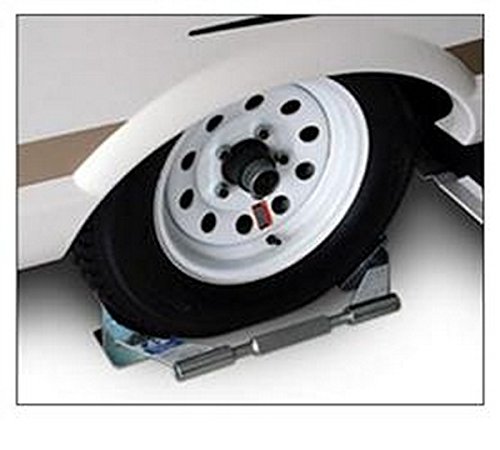
BAL 28020 Single Axle Tire Chock leads this shortlist for Single-axle owners wanting a locked tire. Use that fit as a reference point, then compare the alternatives against your own space and workload.
Specs that separate the picks
The first details to compare are Single axle locking, Single axle design, 4 rubber chocks. Confirm the exact model and included components before ordering.
Trade-off to plan for
Fewer included accessories than rubber sets

Before you buy

What Matters Before You Choose a Wheel Chock For Single Axle Trailer

Key buying criteria so you get the right fit the first time.

  1. 01

    Locking or wedge style

    A locking chock grips the tire from both sides, while a wedge sits on one side and relies on friction. On a single axle this matters more because there are only two tires to hold the trailer. Check the product title and description for words like locking, adjustable or single axle, and look for clear photos showing how the chock contacts the tire.

  2. 02

    Adjustable length range

    Trailer tires come in many diameters, and an adjustable chock fits more of them. The BAL extends from 16.5 to 23 inches, a spread of 6.5 inches. A chock that is too short will not seat against the tire. Look for the minimum and maximum length in the specifications, then measure your tire gap before you order, because an adjustable range that is too narrow will not help at all.

  3. 03

    Rubber or coated metal

    Rubber grips pavement and does not scratch it, but it can crack in strong sun and smell when new. Coated metal resists crushing and lasts longer in storage, but the coating can chip and the metal can scuff asphalt. Read the material line and the coating description, and think about how hot and wet your storage spot gets, then choose the material that matches.

  4. 04

    Rope or handle for removal

    A trailer that rolls onto a chock can wedge it tightly, and getting it out by hand means crawling under the fender. A rope, strap or handle lets you pull from a standing position. Check the rope length on the product page, since 36 to 39 inches is common, and look for a carabiner or loop that keeps it attached.

  5. 05

    Number of chocks per pack

    A single-axle trailer needs at least two chocks, one on each side of a tire, and four if you want both tires covered. Four-packs give you coverage on both sides and spare pieces for the tow vehicle. Check the quantity and whether the price is per chock or per set so you can compare value fairly across different pack sizes.

Our standards

Why You Can Trust RV Gear Lab

At RV Gear Lab, we compare products based on rig fit and power or hookup compatibility, verified specifications, usability, setup requirements, weight, durability, and real-world trade-offs. We do not rank products purely on marketing claims or commission rates.

We have not personally tested every product listed. Where hands-on testing is not available, recommendations are based on verified manufacturer specifications, product documentation, use-case fit, and comparative research.

How we review RV gear →

Detailed reviews

The 5 best wheel chocks for single axle trailer, explained

01

Best Single-Axle Design · 1 of 5

BAL 28020 Single Axle Tire Chock

BAL 28020 Single Axle Tire Chock
  • Single axle locking
  • 16.5 to 23 inch length
  • 6.5 inch extension
Check price on Amazon for BAL 28020 Single Axle Tire Chock (opens in a new tab)
Best for: Single-axle owners wanting a locked tire

Our take

This is the pick for an owner who wants the tire locked rather than merely blocked, such as someone who parks on a slight slope or keeps the trailer in one spot for a full season.

Why it made the shortlist

The BAL 28020 is a locking chock made specifically for single-axle tires. It measures 23 inches long when extended and 16.5 inches retracted, and the adjustable body stretches up to 6.5 inches so it can be set to the tire in front of it. Once it is cranked into place, the chock holds the tire from both sides instead of just leaning against it.

The ADNIK is also a single-axle metal chock, yet it is a simpler design without the adjustable length range. The rubber pairs from MaxxHaul and the four-packs from WECARLLE and Profasion depend on friction alone.

If you tow a single-axle camper and want one chock you can adjust to different tire sizes, this is the one to buy.

What works

  • Adjustable length fits different tire sizes
  • Locks the tire from both sides
  • Built for single-axle trailers
  • Extends 6.5 inches

Watch out for

  • Fewer included accessories than rubber sets
02
Best for: Owners wanting a coated metal single-axle chock

Our take

It is a good fit for a buyer who wants the strength of metal and the single-axle shape without paying the BAL price.

Why it made the shortlist

ADNIK makes a silver single-axle wheel chock with a rust-inhibitive coating over a metal body. The coating matters because a chock lives outdoors, sits on wet ground and gets tossed in a storage bay, which is exactly the treatment that rusts bare steel.

Against the BAL, the ADNIK is the simpler metal option, without a long extension range, and it costs a few dollars less. The WECARLLE and Profasion packs give you more pieces, while this one gives you a single durable metal unit sized for a single-axle tire.

Trailer owners who store their gear in a damp bin or park near the coast will appreciate the protective coating.

What works

  • Rust-inhibitive coating protects the body
  • Made for single-axle tires
  • Metal build holds up outdoors
  • Slightly cheaper than the BAL

Watch out for

  • Little detail on sizing
03
Best for: Owners wanting spare chocks for both tires

Our take

Pick this set if you want a front and a back chock on each of the two tires, or if you want a spare pair to leave in the tow vehicle.

Why it made the shortlist

The WECARLLE set gives you two pairs, four rubber chocks in total, each measuring about 6.21 by 4.71 by 4.31 inches, with rope attached. They are sold for trucks, trailers, campers and cars, so the rubber compound is aimed at gripping asphalt, concrete and packed gravel.

Compared with the Profasion four-pack, the WECARLLE blocks are a bit more compact, which makes them easy to slip into a bumper compartment. The BAL and ADNIK are single metal units, so neither gives you spares.

The attached rope helps you pull each chock free when it is time to leave.

What works

  • Four chocks in one pack
  • Rubber grips most surfaces
  • Rope helps with removal
  • Compact blocks store easily

Watch out for

  • Smaller blocks than some rivals
  • Better for light to mid-size trailers
04
Best for: Night arrivals and easy handling

Our take

This is the set for people who set up in the dark, share a campsite with kids or pets, or simply want chocks that are easy to see and easy to carry.

Why it made the shortlist

This heavy-duty four-pack comes with a 39 inch rope, a carabiner, handles and dual reflective strips. The non-slip texture is made to bite into grass, concrete and uneven ground, and the handles let you pick up each chock without bending too far.

The carabiner also lets you clip the chocks together or to a bumper so they do not get left behind.

It is also a smart pick for anyone who wants both sides of a single-axle tire covered with room to spare.

What works

  • Carabiner clips the rope fast
  • Reflective strips for visibility
  • Grips grass and concrete
  • Handles make carrying easy

Watch out for

  • Rubber can smell when new
  • Exact block size not given in the title
The catch
Against the WECARLLE set, the Profasion pack is the better one for evening arrivals and dim campsites, because the reflective strips catch headlights and a flashlight beam.
05
Best for: Light single-axle trailers on firm pads

Our take

This is the pick for a small pop-up, teardrop or light travel trailer on a firm, mostly level pad.

Why it made the shortlist

MaxxHaul's solid rubber pair measures 8 by 4 by 6 inches and has non-slip traction pads on the base. The solid rubber body resists cracking and weathering, and the size is compact enough to stack inside a trailer tongue box or a truck bed.

It is the lowest-priced option here at about $16, and it is solid rubber from end to end instead of the hollow or molded styles some budget chocks use. Compared with the WECARLLE and Profasion four-packs, you get half the pieces, which is plenty for a light single-axle trailer when you chock one tire front and back or both tires on the downhill side. The BAL and ADNIK cost four to five times more.

Buyers who want a no-fuss rubber pair and do not need a locking mechanism or a rope will find it hard to beat for the money.

What works

  • Solid rubber resists cracking
  • Compact size is easy to store
  • Non-slip traction pads

Watch out for

  • Compact size suits smaller tires
  • No rope included

Methodology

How We Built This Shortlist

Each pick was assessed across 5 criteria weighted for real-world use.

01

Single-axle fit

A single-axle trailer needs chocks that hold one tire securely from the front and rear. We gave more credit to designs made for a single-axle layout and to sizes that match typical trailer tires, based on published dimensions and product descriptions.

02

Locking versus wedge

We compared how each chock holds the tire. A locking design captures the tire on both sides, while a wedge relies on friction and weight. This difference is the biggest factor in how much confidence a single-axle owner can have on a slope.

03

Material and weather

Rubber, coated metal and plastic age differently outdoors. We looked at whether the material resists cracking, rust and UV, and whether the base texture is designed to grip pavement, gravel and grass, since that texture is what keeps a chock in place.

04

Handling and retrieval

Ropes, carabiners, handles and reflective strips all change how easy the chocks are to place and remove. We rewarded designs that save you from crawling under the trailer or hunting for a dark chock at night, which is a common frustration.

05

Value and quantity

Price per chock varies widely, from a locking unit near $73 to a rubber pair near $16. We weighed what you get for the money, including whether the pack gives you spares for both sides of the tire.

Decision guide

Match a Wheel Chock For Single Axle Trailer to Your RV

By Trailer Setup

How you park a single-axle trailer decides which chock makes sense. A trailer left on a pad for months needs something different from a camper you hitch up every weekend, so start with your own routine.

Your situationRecommended pickWhy
Parked for a full season on one padBAL 28020 Single Axle Tire ChockLocks the tire in place so nothing shifts over months of sitting.
Coastal or damp storage binADNIK Single Axle Silver Wheel ChockRust-inhibitive coating protects the metal body from moisture and salt air.
Want a front and rear chock on both tiresWECARLLE 4-Pack with RopeFour rubber blocks cover both sides of both tires with spares to spare.
Frequent night arrivals at campgroundsProfasion 4-Pack with Reflective StripsReflective strips and a carabiner make the chocks easy to spot and carry.

By Budget

Prices in this group run from about $16 to $73, and the gap reflects design more than size. Here is what each spending level buys for a single-axle trailer.

BudgetRecommended pick
Under $20 for a basic pairMaxxHaul Solid Rubber 2-Pack at $15.99 gives you two solid rubber wedges for a light trailer.
$30 to $35 for four chocksProfasion 4-Pack at $31.99 or WECARLLE 4-Pack at $34.19 covers both sides of both tires.
$65 to $75 for metal or lockingADNIK at $69.26 or BAL 28020 at $72.57 gives you a single-axle metal chock with or without locking.

Locking vs Wedge

The central choice on a single axle is whether the chock grips the tire between two points or simply blocks one side. Each approach has a clear strength.

Locking

The BAL 28020 extends from 16.5 to 23 inches and pins the tire from both sides, so the wheel cannot roll either way. It is the strongest approach for a single axle trailer that stays parked for long periods or sits on a slight grade.

Wedge

The MaxxHaul pair, WECARLLE set and Profasion set sit against one side of the tire and rely on weight and tread grip. They are lighter, cheaper and quicker to place, and they come in pairs or fours so you can block both directions.

Most owners of light single-axle trailers should start with the MaxxHaul pair or a four-pack, and move up to the BAL only when a locked tire matters.

By Storage and Carry Style

Chocks live in a compartment, a bumper box or a truck bed, and how they stack matters. This second axis looks at where you plan to keep them and how you will carry them to the wheel.

PriorityRecommended pick
Stacks flat in a small tongue boxMaxxHaul Solid Rubber 2-Pack at 8 by 4 by 6 inches is compact and fits most small bins.
Clips to the bumper or a hookProfasion 4-Pack includes a carabiner and 39 inch rope so the set stays together.
Single metal unit, no loose piecesBAL 28020 is one adjustable chock that collapses to 16.5 inches when not in use.

For Gravel Campsite Pads Specifically

Gravel pads are common at state parks and private RV parks, and loose stone changes how a chock grips. A single-axle trailer is especially sensitive to this because only two tires hold it.

Look for

Choose a chock with a textured or ribbed base, a rope for removal and enough height to catch the tire above the gravel. Rubber with deep traction pads digs into stone better than smooth plastic or bare metal.

In this comparison

The Profasion 4-Pack has a non-slip texture made for grass, concrete and uneven ground and a 39 inch rope for easy retrieval, which makes it the most practical choice for gravel pads in this shortlist.

When to Spend More

The jump from $16 to $73 is real money, so it helps to know when the extra spend earns its place. These two cards separate the owners who need to pay from those who can save.

Spend more if

Spend on the BAL 28020 if your trailer sits for weeks at a time, you park on any slope, or you want the tire locked rather than blocked. It adjusts from 16.5 to 23 inches, so it also adapts if you change tires.

Save if

Save with the MaxxHaul Solid Rubber 2-Pack if your trailer is light, your pad is level and firm, and you only need a quick, reliable pair. It costs about $16 and stores almost anywhere.

FAQ

Before You Bring One Home

How many chocks do I need for a single-axle trailer?

At minimum, use two chocks on one tire, one at the front and one at the rear, so the trailer cannot roll either direction. For extra security or on a slope, chock both tires. A four-pack such as the WECARLLE or Profasion sets lets you cover both sides of both tires without borrowing chocks from another vehicle.

Is a locking chock better than a wedge for one axle?

A locking chock like the BAL 28020 holds the tire from both sides, so it is stronger than a wedge that only blocks one side. That said, wedges work well on level ground when used in front and behind the tire. If your pad is flat and your trailer is light, a wedge pair is usually enough.

Where exactly should I place the chocks?

Set one chock against the front of a tire and one against the rear, pressed snugly against the tread, then lower the tongue onto the jack or hitch. Avoid placing a chock on only one side. Remove the chocks only after the trailer is hitched to the tow vehicle and the parking brake is set.

Will rubber chocks slip on wet grass?

Textured rubber bases bite into grass and gravel better than smooth plastic, and solid rubber chocks such as the MaxxHaul pair resist sliding. On very soft or muddy ground, choose a chock with a wide footprint and a rope so you can retrieve it. Test the chock by pushing it before you rely on it.

Is the BAL worth the extra money over a rubber pair?

If your trailer stays in place for long periods, or the pad has any slope, the locking design is worth it because the tire cannot roll in either direction. For a light trailer parked on a level pad for a weekend, a rubber pair like the MaxxHaul at about $16 does the job.

How should I store and clean my chocks?

Keep rubber chocks out of direct sun when you can, since long UV exposure can dry and crack the rubber. Rinse off mud and gravel, let them dry, and store them in a bin or compartment. Coated metal chocks like the ADNIK should be wiped dry and kept away from standing water to protect the coating.

Bottom line

The short version

The BAL 28020 is the best single-axle chock in this group for owners who want the tire locked in place, thanks to its adjustable 16.5 to 23 inch body. If you park for long stretches or on any grade, it is the most secure choice and the one that matches a single axle best.

For most weekend campers, a rubber set is the smarter buy. The Profasion 4-Pack covers both tires with visible, easy-to-pull chocks, and the MaxxHaul 2-Pack is a solid, inexpensive pair for light trailers. Whichever you choose, place a chock on both sides of the tire before you unhitch.

Browse more wheel chocks for single axle trailer on Amazon →
Bowen Higgins, RV Editor at RV Gear Lab

About the author

Bowen Higgins

RV Editor at RV Gear Lab

Bowen covers RV power, water systems, towing and leveling, upkeep and interior comfort, with a focus on matching gear to the rig, the hookups and the way you actually travel.

More from Bowen →Editorial standards

Keep reading

Related guides