

We research everything we recommend. When you buy through our links, we may earn a commission. Learn more

Buying guide · 10 min read · Updated October 2, 2026

6 Best RV Water Filter For Sulfur Smell in 2026: A Practical RV Guide

Best RV water filters for sulfur smell, comparing catalytic carbon, a well aeration system and general carbon options for rotten-egg water.

Bowen HigginsBy Bowen HigginsRV Editor at RV Gear Lab6 products comparedSpec-sheet researched

At a glance

Our top picks

A rotten-egg smell is hydrogen sulfide gas, which is common in well water and sometimes shows up at campgrounds on private wells. Ordinary carbon only handles small amounts, so what separates these picks is whether the media is built for sulfur at all.

The ranking starts with the products whose listings name hydrogen sulfide or rotten egg smell, then moves to general carbon systems that help with taste but make no sulfur promise.

RV Gear Lab field notes

The Rig Fit Check

Start with the job
Envig Puretaste Catalytic Carbon KDF Inline RV Filter leads this shortlist for Occasional rotten-egg smell. Use that fit as a reference point, then compare the alternatives against your own space and workload.
Specs that separate the picks
The first details to compare are Catalytic carbon formula, Aerated mist design, 5-micron sediment stage. Confirm the exact model and included components before ordering.
Trade-off to plan for
Strong sulfur may overwhelm a hose filter

Before you buy

What Matters Before You Choose an RV Water Filter For Sulfur Smell

Key buying criteria so you get the right fit the first time.

  1. 01

    Sulfur must be named

    Hydrogen sulfide needs catalytic carbon, KDF-85 or aeration, and ordinary carbon has limited capacity for it. If the listing never says hydrogen sulfide or rotten egg, assume it is a taste filter. Look for those words.

  2. 02

    Strength of the smell

    Smell strength is how intense the rotten-egg odor is from your water. A faint smell can be handled by catalytic carbon, but strong well water may need aeration or a bigger system than a portable filter. Judge your source by smelling a glass of cold water, then match the listing's claims to that level.

  3. 03

    Capacity and flow

    Capacity and flow describe how much water the media can treat and how fast it can pass. Catalytic carbon performs at a given flow, such as 4.5 GPM on the Envig listing, and running above that can reduce results. Check the stated flow and gallons on the listing against how you use water.

  4. 04

    Source type

    Campground spigots and private wells differ. A well system like The Sulfur Eliminator fits only your own well. Match the product to where you fill.

  5. 05

    Source of the smell

    The source is where the odor actually starts, which is not always the incoming supply. Sometimes the smell comes from your water heater anode, not the hose water, and a filter will not fix that. Test by smelling cold water straight from the hose before you buy anything.

Our standards

Why You Can Trust RV Gear Lab

At RV Gear Lab, we compare products based on rig fit and power or hookup compatibility, verified specifications, usability, setup requirements, weight, durability, and real-world trade-offs. We do not rank products purely on marketing claims or commission rates.

We have not personally tested every product listed. Where hands-on testing is not available, recommendations are based on verified manufacturer specifications, product documentation, use-case fit, and comparative research.

How we review RV gear →

Detailed reviews

The 6 best rv water filter for sulfur smell, explained

01
Best for: Occasional rotten-egg smell

Our take

It is the practical choice for campers meeting occasional sulfur smell.

Why it made the shortlist

Envig is an inline hose filter with catalytic carbon and KDF behind a sediment pre-layer. Its listing names chloramine and hydrogen sulfide, and states an 8,500-gallon capacity at 4.5 GPM, with 3/4 inch hose threads and a hose protector.

Against The Sulfur Eliminator below, it is a small, cheap, portable filter instead of a whole-system install. Compared with RVGUARD 4-Pack, it uses catalytic carbon rather than plain GAC, which is the difference that matters for sulfur.

Very strong rotten-egg water may exceed what an inline filter can handle, and the listing mentions an operating pressure window to respect.

What works

  • Names hydrogen sulfide and chloramine on the listing
  • Stated 8,500 gallon capacity
  • 4.5 GPM stated flow rate
  • Hose protector included

Watch out for

  • Strong sulfur may overwhelm a hose filter
  • Works only within a stated pressure range
02
Best for: Private well at home

Our take

It makes sense for someone who has their own well and RV at one property.

Why it made the shortlist

The Sulfur Eliminator is built for well water and is described as eliminating rotten egg and sulfur smell, and addressing iron, rust and sediment. It installs on a well spigot with a garden hose thread, using aerated mist, and is called maintenance-free.

Compared with Envig Catalytic above, it treats the water source rather than your RV hookup, at a very high price.

What works

  • Aimed directly at rotten egg and sulfur smell
  • Installs with a standard garden hose thread
  • Also addresses iron and sediment
  • Listed as maintenance-free

Watch out for

  • Very expensive compared with hose filters
  • Designed for wells, not for campground hookups
03

Best Heavy Metals System · 3 of 6

PUREPLUS RV Dual Stage Water Filter System

PUREPLUS RV Dual Stage Water Filter System
  • 5-micron sediment stage
  • Heavy metals reduction
  • 13,000 gallon cartridge set
Check price on Amazon for PUREPLUS RV Dual Stage Water Filter System (opens in a new tab)
Best for: Sediment and metals stage

Our take

It works as an upstream sediment and metals stage ahead of a sulfur-aware filter.

Why it made the shortlist

PUREPLUS is a dual-stage system with a 5-micron PP10 sediment cartridge and a second stage, in stainless steel 3/4 inch ports on a bracket for ground or wall. The listing says one cartridge set handles 13,000 gallons in about 3 to 6 months.

Compared with Envig Catalytic above, it has no hydrogen sulfide claim, so it is a metals and sediment system rather than a sulfur one.

What works

  • Stainless steel 3/4 inch ports
  • Bracket works on the ground or a wall
  • Tool-free installation

Watch out for

  • No hydrogen sulfide claim on the listing
  • Less capable on smell than catalytic carbon
The catch
Against H&G GAC Canister below, it is smaller and pairs sediment with a metals stage.
04
Best for: Taste and chlorine at scale

Our take

It suits RVers who want a big, refillable-feeling carbon unit for taste and chlorine.

Why it made the shortlist

H&G's portable system uses 2 kg of GAC and 1 kg of KDF with a 3/4 inch GHT brass adapter and a carry handle. The listing claims up to 300,000 gallons of capacity and reduction of fluoride.

Against PUREPLUS Dual-Stage above, it focuses on a big carbon bed rather than a sediment cartridge. Compared with Envig Catalytic, the carbon here is plain GAC and KDF, not catalytic.

What works

  • Large GAC and KDF media bed
  • Carry handle for portability
  • Brass hose-thread adapter
  • Very high stated capacity

Watch out for

  • No sulfur claim on the listing
  • Bulky compared with inline filters
05
Best for: Pathogen concerns first

Our take

Buy it if pathogens are your main worry and smell is secondary.

Why it made the shortlist

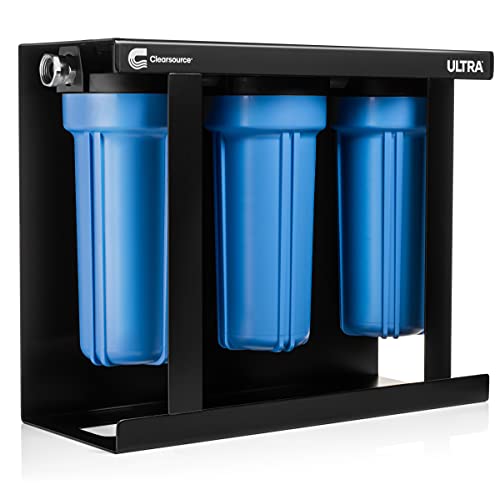
Clearsource Ultra is a three-stage system with a 5-micron sediment filter, a 0.5-micron coconut shell carbon stage and VirusGuard filtering aimed at viruses, bacteria and cysts. It comes in a powder-coated metal chassis with stainless steel fittings.

Compared with Envig Catalytic above, it focuses on microbial protection and sediment rather than sulfur.

What works

  • Targets viruses, bacteria and cysts
  • Coconut shell carbon stage
  • Powder-coated metal chassis
  • Stainless steel fittings

Watch out for

  • No sulfur claim on the listing
06

Best Low-Cost Spares · 6 of 6

RVGUARD Inline RV Water Filter

RVGUARD Inline RV Water Filter
  • NSF/ANSI 42 listing
  • 0.5 gpm flow
  • 15,000 gallon capacity
Check price on Amazon for RVGUARD Inline RV Water Filter (opens in a new tab)
Best for: General taste filtering

Our take

A fine spare-filter set for general taste work.

Why it made the shortlist

RVGUARD sells four inline filters certified by IAPMO R&T against NSF/ANSI 42 for material safety and aesthetic chlorine reduction. It uses KDF and GAC, with a stated 0.5 gpm flow, 15,000 gallon capacity, 60 psi working pressure and three-month life per filter.

Compared with the larger systems, it is cheap per filter.

Do not count on it for rotten egg smell.

What works

  • Four filters in the pack
  • Listed against NSF/ANSI 42
  • Stated 60 psi working pressure
  • Clear capacity and life figures

Watch out for

  • No hydrogen sulfide claim
  • Rinse carbon dust on first use

Methodology

How We Built This Shortlist

Each pick was assessed across 5 criteria weighted for real-world use.

01

Sulfur claim

We checked which listings name hydrogen sulfide or rotten egg smell and treated the rest as general filters.

02

Media type

We compared catalytic carbon, aeration and ordinary GAC and KDF.

03

Capacity and flow

We compared stated gallons and gpm where given.

04

Source fit

We separated campground hose filters from well-water installs.

05

Cost per fix

We weighed price against how directly each product targets sulfur.

Decision guide

Match an RV Water Filter For Sulfur Smell to Your RV

By Smell Strength

Your situationRecommended pickWhy
Mild smell at campgroundsEnvig CatalyticNames hydrogen sulfide on a portable hose filter.
Strong smell at your own wellSulfur Eliminator DeluxeBuilt to eliminate rotten egg smell from wells.
Smell plus sedimentPUREPLUS Dual-StageSediment stage plus heavy metals reduction.
Taste issues onlyRVGUARD 4-PackFour general GAC and KDF filters.
Pathogen worryClearsource UltraVirusGuard stage plus carbon.

By Budget

BudgetRecommended pick
$20 to $40RVGUARD 4-Pack or Envig Catalytic
$80 to $160PUREPLUS Dual-Stage or H&G GAC Canister
$590 to $600Sulfur Eliminator Deluxe or Clearsource Ultra

Catalytic Carbon vs Aeration

Catalytic carbon

Breaks down hydrogen sulfide inside a filter. Envig Catalytic is the example, and it is portable and cheap.

Aeration

Releases gas from the water using air. Sulfur Eliminator Deluxe does this at a well, with no cartridge to change.

Most RVers should default to Envig Catalytic unless Sulfur Eliminator Deluxe suits a private well.

By Where You Fill

SituationRecommended pick
Campground spigotsEnvig Catalytic
Home wellSulfur Eliminator Deluxe
Mounted bracket systemPUREPLUS Dual-Stage
Big carbon bedH&G GAC Canister

For Well-Water Campgrounds Specifically

Look for

A listing that names hydrogen sulfide plus a stated flow rate and pressure range (as on Envig Catalytic).

In this comparison

Envig Catalytic names hydrogen sulfide with 4.5 GPM flow, so it fits a campground well.

When to Spend More

Spend more if

Spend more on Sulfur Eliminator Deluxe if you have your own well and want the smell treated at the source.

Save if

Save with Envig Catalytic for occasional smell, and RVGUARD 4-Pack if your issue is only taste.

FAQ

Before You Bring One Home

Will an ordinary carbon filter remove rotten egg smell?

Only slightly. Plain carbon has limited capacity for hydrogen sulfide, so use catalytic carbon or an aeration system.

What is the common mistake with sulfur smell?

Blaming the filter when the smell comes from the water heater. Smell cold water straight from the hose first.

Is the Sulfur Eliminator worth it over Envig Catalytic?

Only if you have your own well. For campground use, Envig Catalytic is far cheaper and portable.

How should I hook up a hose filter?

Spigot, regulator, filter, then hose, with the flow arrow pointing forward. Flush carbon dust on first use.

How often should I replace it?

On the stated schedule, such as the Envig 8,500 gallons or a season. Carbon exhausts silently.

Bottom line

The short version

Browse more rv water filter for sulfur smell on Amazon →
Bowen Higgins, RV Editor at RV Gear Lab

About the author

Bowen Higgins

RV Editor at RV Gear Lab

Bowen covers RV power, water systems, towing and leveling, upkeep and interior comfort, with a focus on matching gear to the rig, the hookups and the way you actually travel.

More from Bowen →Editorial standards

Keep reading

Related guides