

We research everything we recommend. When you buy through our links, we may earn a commission. Learn more

Buying guide · 10 min read · Updated October 2, 2026

6 Best Power Station in 2026: A Practical Camping Guide

Portable power stations compared for camping: 128Wh to 1,024Wh LiFePO4 and lithium models for phones, lights, fridges and CPAP at the campsite.

Danny WalkerBy Danny WalkerCamping Editor at RV Gear Lab6 products comparedSpec-sheet researched
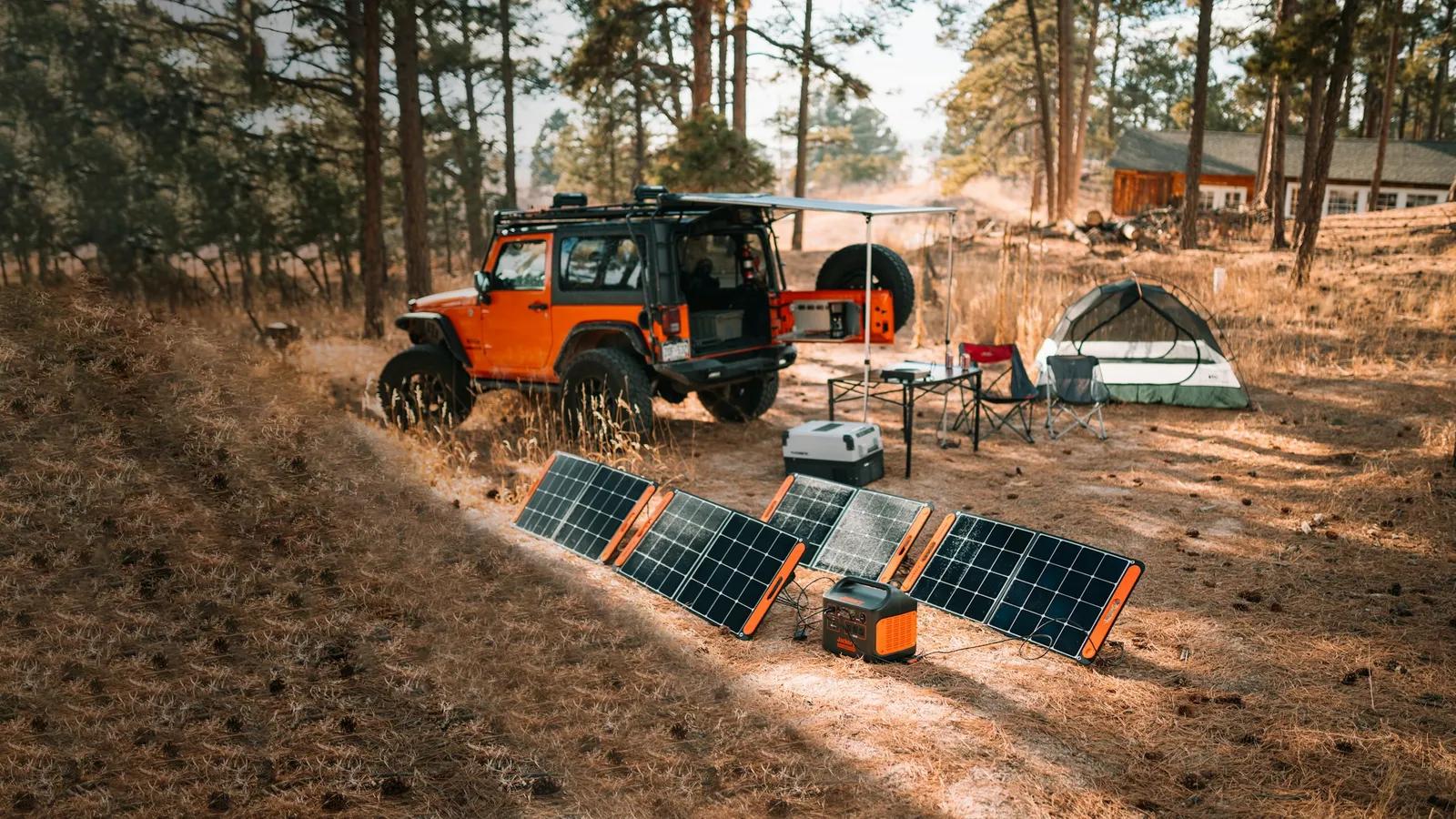
Jeep camp with a tent, solar panels and a portable power station at a pine forest campsite

At a glance

Our top picks

A portable power station is a big battery with outlets, and it runs everything from phone chargers to a small fridge or CPAP at camp. Capacity in watt-hours tells you how long it lasts, and output in watts tells you what it can run.

At RV Gear Lab, we compared six stations from 128Wh to 1,024Wh by capacity, output, weight and battery chemistry. Pick by the devices you plan to run, not the biggest number on the box.

RV Gear Lab field notes

The Campsite Fit Check

Start with the job
Anker SOLIX C1000 Gen 2 Portable Power Station leads this shortlist for Fridges and CPAP. Use that fit as a reference point, then compare the alternatives against your own space and workload.

Specs that separate the picks
The first details to compare are 1,024Wh, 2,000W output, 292Wh LiFePO4 battery, 288Wh LFP, 600W output. Confirm the exact model and included components before ordering.
Trade-off to plan for
Heavy to carry far

Before you buy

What Matters Before You Choose a Power Station

Key buying criteria so you get the right fit the first time.

  1. 01

    Capacity in watt-hours

    Watt-hours tell you how much energy the battery holds, so 128Wh runs phones for days while 1,024Wh can run a small fridge overnight. Divide the Wh by your device's watts for a rough runtime. Check the Wh figure on the listing and expect somewhat less in real use.

  2. 02

    Output in watts

    Output is the most a station can supply at once, and a 300W station cannot run a 1,000W heater. Add up the devices you will use together before choosing. Check both continuous and surge watts on the listing.

  3. 03

    Battery chemistry

    LiFePO4 batteries often list 3,500 to 4,000 charge cycles, far more than older lithium types. That matters if you plan to use the station for many seasons. Look for LiFePO4 or LFP in the product title.

  4. 04

    Weight and carrying

    A 4 pound station fits a daypack, while a 1,000Wh station needs a firm grip and a trunk. Heavier stations usually hold more power. Check the listed weight and handle design.

  5. 05

    Charging options

    Wall, car and solar input all help, and a faster AC recharge shortens downtime. Solar input watts limit how fast panels can refill it. Check the input watts and the charge methods named on the product page.

Our standards

Why You Can Trust RV Gear Lab

At RV Gear Lab, we compare products based on campsite fit, verified specifications, usability, setup requirements, weight, durability, and real-world trade-offs. We do not rank products purely on marketing claims or commission rates.

We have not personally tested every product listed. Where hands-on testing is not available, recommendations are based on verified manufacturer specifications, product documentation, use-case fit, and comparative research.

How we review camping gear →

Detailed reviews

The 6 best power station, explained

01
Best for: Fridges and CPAP

Our take

The one to buy if you want a real power source at camp.

Why it made the shortlist

Anker SOLIX C1000 Gen 2 has 1,024Wh of capacity and delivers 2,000W (3,000W peak) through 10 ports. HyperFlash recharging reaches a full charge in 49 minutes at 1,600W.

It has more than three times the capacity of the 288Wh and 292Wh stations here, so it can run a small fridge or a heater overnight. The fast recharge turns a short stop at home into a full battery.

Car campers and RV travelers who want real power will like the capacity and 10 ports. It also sits quietly at home as an outage backup.

What works

  • Big 1,024Wh capacity
  • 2,000W output
  • 49 minute full recharge
  • Ten ports for many devices

Watch out for

  • Heavy to carry far
The catch
Not a station to carry on a hike.
02

Best Lightweight Classic · 2 of 6

Jackery Explorer 300 Portable Power Station

Best for: Weekend camping

Our take

A light, long-lived station for small devices.

Why it made the shortlist

Jackery Explorer 300 has 292Wh of capacity, weighs 7.5 lbs and has two AC outlets, a 100W USB-C PD port, two USB-A ports and a 120W car port. It uses LiFePO4 chemistry rated for over 4,000 charge cycles.

The LiFePO4 cells give it a long lifespan, which the cheaper 192Wh DaranEner also offers at lower capacity. It powers six devices at once.

Weekend campers who run phones, lights and a laptop will like the size and the cycle life. It slips into a trunk next to the cooler.

What works

  • Over 4,000 cycle life
  • Light at 7.5 pounds
  • Two AC outlets
  • 100W USB-C port

Watch out for

  • Too small for appliances
The catch
Costs more per watt-hour.
03
Best for: Higher-draw gadgets

Our take

A portable station with real output.

Why it made the shortlist

BLUETTI Elite 30 V2 has 288Wh of LFP capacity, 600W continuous output and 1,500W surge power in a 9.4 lb body. UltraCell technology and smart cooling cut power consumption by 50%.

Campers who need to run a few higher-draw gadgets will like the output. The surge rating helps with devices that kick on hard.

What works

  • 600W continuous output
  • 1,500W surge power
  • LFP battery chemistry
  • Smart cooling

Watch out for

  • Costs about the same as Jackery 300
  • Slightly heavier
The catch
Capacity is small for the watts.
04

Best Mid-Capacity Value · 4 of 6

Portable Power Station 500W

Portable Power Station 500W
  • 519.48Wh, 500W pure sine
  • 10 simultaneous devices
  • 60W USB-C PD
Check price on Amazon for Portable Power Station 500W (opens in a new tab)
Best for: Budget capacity

Our take

The most watt-hours for the money.

Why it made the shortlist

GRECELL is a 500W pure sine wave station with 519.48Wh capacity and up to 10 simultaneous devices. It offers USB-C PD 60W and USB-A QC 18W fast charging.

It is the best amount of storage per dollar here.

Campers on a budget who want more hours of power will like it. Charge it before the trip and run lights and fans all weekend.

What works

  • Large 519Wh capacity
  • Pure sine wave output
  • 10 device outputs

Watch out for

  • Heavier than small stations
  • Lower output than Bluetti
The catch
Battery chemistry is not named on the listing.
05

Best Budget LiFePO4 · 5 of 6

DaranEner Portable Power Station

DaranEner Portable Power Station
  • 192Wh LiFePO4, 300W
  • 600W surge, pure sine
  • 3,500+ cycles
Check price on Amazon for DaranEner Portable Power Station (opens in a new tab)
Best for: Phones and lights

Our take

A cheap, long-lived mini station.

Why it made the shortlist

DaranEner is a 192Wh LiFePO4 station with 300W output (600W surge) and pure sine wave AC. It lists over 3,500 cycles and recharges by AC wall (up to 100W), car charger or solar.

LiFePO4 at this price is unusual, and it costs less than the Jackery and Bluetti with a similar cycle life. It is small enough to carry anywhere.

Budget buyers who want a long-lived battery will like it. It handles lights and chargers without drama.

What works

  • LiFePO4 for long life
  • Pure sine wave AC
  • Recharges by wall, car or solar

Watch out for

  • Small capacity
  • Slow 100W wall charging
The catch
Not for fridges.
06

Best Airline-Friendly Mini · 6 of 6

BLUETTI Elite 10 Mini Portable Power Station

Best for: Hikers and travelers

Our take

The smallest, lightest station here.

Why it made the shortlist

BLUETTI Elite 10 Mini is a 128Wh station that weighs 4.0 lbs and is palm-sized with an ergonomic handle. It has a built-in 10ms UPS and 350W bypass output.

It is the smallest and lightest here, and the listing calls it airline friendly. It replaces about four standard power banks.

Hikers and flyers who want a bigger bank for phones and cameras will like it. It rides in a backpack without a second thought.

What works

  • Only 4.0 pounds
  • Airline-friendly size
  • UPS backup function
  • Cheapest here

Watch out for

  • Smallest capacity
  • 200W output limit
The catch
Runs only small gear.

Methodology

How We Built This Shortlist

Each pick was assessed across 5 criteria weighted for real-world use.

01

Capacity in watt-hours

Compared Wh across stations.

02

Output in watts

Looked at continuous and surge output.

03

Battery chemistry

Considered LiFePO4 versus standard lithium.

04

Weight

Compared carry weight.

05

Ports and charging

Looked at ports and recharge speeds.

Decision guide

Match a Power Station to Your Camp Setup

By Power Need

Your situationRecommended pickWhy
Fridge or CPAPAnker SOLIX C1000 Gen 21,024Wh.
Phones and laptopJackery Explorer 300Light, 292Wh.
Higher-draw gadgetsBLUETTI Elite 30 V2600W.
Best capacity per dollarGRECELL 500W519Wh.
Phones onlyBLUETTI Elite 10 Mini4.0 lbs.

By Budget

BudgetRecommended pick
$100 to $120DaranEner 192Wh or BLUETTI Elite 10 Mini
$170 to $250GRECELL 500W or BLUETTI Elite 30 V2
$250 to $500Jackery Explorer 300 or Anker SOLIX C1000 Gen 2

Big Station vs Mini Station

Big station

Runs fridges and heaters but weighs more. Anker SOLIX C1000 Gen 2 and GRECELL 500W are the larger picks.

Mini station

Carries anywhere and runs small gear. Jackery Explorer 300, BLUETTI Elite 30 V2, DaranEner 192Wh and BLUETTI Elite 10 Mini are the smaller picks.

Most campers should default to Jackery Explorer 300 unless they need a fridge.

By Priority

If you wantRecommended pick
Fast rechargeAnker SOLIX C1000 Gen 2
Lowest priceBLUETTI Elite 10 Mini
LiFePO4 on a budgetDaranEner 192Wh

For Car Camping Specifically

Look for

At least 300Wh and AC outlets.

In this comparison

Jackery Explorer 300 lists two AC outlets and a car port.

When to Spend More

Spend more if

Spend more on Anker SOLIX C1000 Gen 2 for fridges.

Save if

Save with DaranEner 192Wh.

FAQ

Before You Bring One Home

How many watt-hours do I need for camping?

About 200 to 300Wh covers phones, lights and a laptop for a weekend. A small fridge or CPAP wants closer to 1,000Wh. Add up your devices before choosing.

What does LiFePO4 mean?

It is a lithium iron phosphate battery chemistry known for long life, often 3,500 or more cycles. Jackery Explorer 300 and DaranEner 192Wh list it. It tends to be safer and heavier.

Can I run a fridge on a power station?

A small 12V or compact fridge can run on a larger station like Anker SOLIX C1000 Gen 2 for many hours. Smaller stations will drain quickly. Check the fridge's watts first.

How do I recharge a power station at camp?

Use a car charger while driving, a wall outlet before you leave or solar panels at camp. Panels recharge slowly in clouds. Plan extra time.

Can I take a power station on a plane?

Airlines limit lithium batteries, often to around 100Wh in carry-on bags. A 128Wh station may exceed that. Check airline rules before you fly.

Bottom line

The short version

Browse more power station on Amazon →
Danny Walker, Camping Editor at RV Gear Lab

About the author

Danny Walker

Camping Editor at RV Gear Lab

Danny covers camping gear, campsite setup, outdoor power, sleep systems and practical camping advice, with a focus on helping campers make better gear decisions.

More from Danny →Editorial standards

Keep reading

Related guides