

We research everything we recommend. When you buy through our links, we may earn a commission. Learn more

Buying guide · 11 min read · Updated October 2, 2026

6 Best Budget RV Routers in 2026: A Practical RV Guide

Six budget RV routers compared on band support, carrier lock and power input, so you pick a unit that actually gets online at a rural campsite.

Bowen HigginsBy Bowen HigginsRV Editor at RV Gear Lab6 products comparedSpec-sheet researched

At a glance

Our top picks

An RV router has one job, which is to turn whatever internet you can find into a private network for every device in the rig. At the budget end that source might be a SIM card, a phone hotspot or a campground password, and the six picks here cover all three. The cheapest way into the category is a pocket router that borrows its connection from somewhere else, while the units with a SIM slot of their own cost noticeably more.

Most buyers fixate on the modem category, the Cat 4 or Cat 18 label on the box. That number sets a speed ceiling, but the bands a router supports decide whether it connects at all. Low bands in the 600 and 700 MHz range travel farthest and penetrate best, which is exactly what a site on the edge of a national forest depends on. Any router that omits them can post a bigger speed claim and still sit offline where a simpler unit holds a signal.

Being unlocked is a separate question from being approved. An unlocked router accepts any SIM physically, yet a carrier can still throttle or refuse a device it has never certified, so the manufacturer's certified list is the document worth reading. Power matters just as much in a coach: a unit that arrives with only a 120V brick forces the inverter to run all night. The picks below are ordered with those three facts in mind.

RV Gear Lab field notes

The Rig Fit Check

Start with the job
Tracfone 5G LTE Home Internet Router leads this shortlist for Buyers who already want a Tracfone prepaid home internet plan.. Use that fit as a reference point, then compare the alternatives against your own space and workload.
Specs that separate the picks
The first details to compare are 5G and 4G LTE prepaid router, Dual-band WiFi 6, 1500 Mbps, AX3000 dual-band, up to 80 devices. Confirm the exact model and included components before ordering.
Trade-off to plan for
Locked to the Tracfone network

Before you buy

What Matters Before You Choose a Budget RV Router

Key buying criteria so you get the right fit the first time.

  1. 01

    Band support over category number

    A modem category, such as Cat 4 or Cat 18, sets a theoretical speed ceiling mostly through carrier aggregation, which combines bands for more bandwidth. That ceiling means little when the router cannot hear your tower. Low bands around 600 and 700 MHz reach farthest into rural areas, which is where RVs park. A Cat 4 router with the right low bands often beats a Cat 18 without them. Look for B12, B13 and B71 named in the specs, not a vague claim of all carriers.

  2. 02

    Locked, unlocked and certified

    A locked router only accepts SIMs from one carrier, which suits you only if that is the plan you want. An unlocked router physically accepts any SIM, yet a carrier can still refuse or throttle an IMEI it has never certified. That means two routers with the same bands can behave differently on the same plan. Read the manufacturer's certified device list for your carrier, and treat unlocked as necessary but not sufficient.

  3. 03

    Where the connection comes from

    Some picks hold a SIM, some tether to a phone, and some rely on campground WiFi. A tether-only router is cheap and tiny, but it needs a phone with signal and a data plan that allows hotspot use. Because the modem is built in, it keeps working when the phone is in your pocket. Decide your primary source first, then buy the router that matches it instead of the one with the biggest speed claim.

  4. 04

    Power input in a coach

    An RV runs off 12V DC, and an inverter wastes energy every hour it idles. Anything that runs from USB-C, a 5V adapter or a 12V input can sit on the house battery without the inverter running overnight. Shipping with a lone 120V brick forces a trade: leave the inverter on or lose connectivity. Check the input in the listing for the phrase DC input or USB-C power.

  5. 05

    Ports and client count

    A client count tells you how many devices can connect at once, but real use is lower than the label. Eight phones, a tablet and a work laptop call for a number well above the actual device count. Wired ports matter for a laptop on a video call, which is steadier than WiFi through a metal wall. Count the devices you own and buy the next tier up.

  6. 06

    Software and VPN control

    Firmware such as OpenWrt, or a bundled VPN client, lets you encrypt campground traffic and block unwanted devices. Convenience matters too: a mobile app, a clear admin screen and regular firmware updates save headaches. Check whether the listing names VPN protocols and a warranty period, since a seller who offers them states them plainly.

Our standards

Why You Can Trust RV Gear Lab

At RV Gear Lab, we compare products based on rig fit and power or hookup compatibility, verified specifications, usability, setup requirements, weight, durability, and real-world trade-offs. We do not rank products purely on marketing claims or commission rates.

We have not personally tested every product listed. Where hands-on testing is not available, recommendations are based on verified manufacturer specifications, product documentation, use-case fit, and comparative research.

How we review RV gear →

Detailed reviews

The 6 best budget rv routers, explained

01

Best Prepaid Route · 1 of 6

Tracfone 5G LTE Home Internet Router

Tracfone 5G LTE Home Internet Router
  • 5G and 4G LTE prepaid router
  • Signal indicator lights
  • Ethernet ports for wired gear
Check price on Amazon for Tracfone 5G LTE Home Internet Router (opens in a new tab)
Best for: Buyers who already want a Tracfone prepaid home internet plan.

Our take

Consider it when Tracfone coverage is strong where you camp and you want a simple box with lights that show signal quality.

Why it made the shortlist

The Tracfone router is a prepaid 5G and 4G LTE unit with built-in signal indicators and Ethernet ports for wired devices. Activation runs through a Tracfone Home Internet plan, and the listing describes plug-and-play setup with no contract.

At the top of the price range here, the extra spend goes to 5G support and a ready-made prepaid plan rather than a general-purpose modem. Beside the Bloepum SIM, it swaps the open SIM slot for a managed experience that needs no band research.

Multiple phones, laptops and smart TVs can share the connection at once.

What works

  • No contract, prepaid plan
  • Signal lights make placement easy
  • Plug-and-play setup
  • Ethernet for a work laptop

Watch out for

  • Locked to the Tracfone network
  • Plan required to activate
  • Built as a home unit
02
ASUS RT-AX50 Go Dual-Band WiFi 6 Portable Travel Router
  • Dual-band WiFi 6, 1500 Mbps
  • USB-C power delivery input
  • 3-year manufacturer warranty
Check price on Amazon for ASUS RT-AX50 Go Dual-Band WiFi 6 Portable Travel Router (opens in a new tab)
Best for: Owners who tether a phone or lean on campground WiFi every night.

Our take

Pick it when your connection is a phone plan or a park network and you want one secure bubble for laptops, tablets and a streaming stick.

Why it made the shortlist

The ASUS RT-AX50 Go is a pocket-size dual-band WiFi 6 router rated at 1500 Mbps. It runs three modes: router mode, a private hotspot over public WiFi called WISP mode, and tethering to a 4G or 5G phone. Among these six, the ASUS holds the polished mid-band travel slot, built for the phone-and-campground setup most weekend campers already use.

That warranty is the longest on this page by a wide margin. Power arrives over USB-C power delivery, so a USB-C adapter in a 12V outlet or a power bank can run it without a separate brick.

The WISP mode turns a shared campground login into a private network your own devices join once and remember.

What works

  • Three modes: tether, public WiFi, router
  • Powers from USB-C, no big brick
  • Three-year warranty is rare here
  • Pocket size fits any cabinet

Watch out for

  • No SIM slot of its own
  • Needs a phone or WiFi source
03

Best for Many Devices · 3 of 6

Roam 6 AX3000 Portable Wi-Fi 6 Travel Router

Roam 6 AX3000 Portable Wi-Fi 6 Travel Router
  • AX3000 dual-band, up to 80 devices
  • USB-C 3.0 port, USB tethering
  • Router, AP, extender, client modes
Check price on Amazon for Roam 6 AX3000 Portable Wi-Fi 6 Travel Router (opens in a new tab)
Best for: Full-timers with a crowd of phones, tablets and smart TVs on board.

Our take

A family rig or a remote-work setup where eight or ten devices compete for one uplink is the natural home for it.

Why it made the shortlist

The Roam 6 is a TP-Link travel router rated AX3000, with figures of 2,402 Mbps on 5 GHz and 574 Mbps on 2.4 GHz across up to 80 devices at once. It adds a USB-C 3.0 port and runs in router, access point, range extender and client modes. No other unit here flexes across as many roles for a rig that already has a wired connection somewhere.

Priced a small step below the ASUS RT-AX50 Go, the Roam 6 quotes a higher headline Wi-Fi rate and a far larger device count. Public WiFi sharing and phone USB tethering are both built in, so the same box works at a campground, a hotel or beside a tethered phone.

The multi-mode design means it can also add WiFi to a wired park connection or stretch an existing signal across the site.

What works

  • Handles a large crowd of devices
  • Works in four distinct modes
  • Phone USB tethering built in

Watch out for

  • No SIM slot for cellular
  • Shorter warranty note than ASUS
04
Bloepum WiFi Router with SIM Slot, 4G/5G LTE, 32-Device Wireless Hub Pro
  • SIM slot, 1 WAN plus 3 LAN ports
  • Two detachable 4G antennas
  • Lists up to 32 devices
Check price on Amazon for Bloepum WiFi Router with SIM Slot, 4G/5G LTE, 32-Device Wireless Hub Pro (opens in a new tab)
Best for: Rigs parked for weeks that want a SIM and a wired port in one unit.

Our take

Campers who stay put for a season, keep the unit on a shelf near a window and want a wired port for a work laptop will get the most from it.

Why it made the shortlist

The Bloepum is a SIM-slot router with one WAN port and three LAN ports, so it can take a cellular connection, a wired park hookup or an Ethernet feed from another device. It lists support for 32 devices and ships with two detachable 4G antennas, which is the feature that matters most here.

Of the pocket routers above it, the Bloepum is the first pick that brings its own modem, and it costs noticeably less than the Tracfone. Detachable antennas mean you can swap in a larger external pair later, which is a real route to better reception without replacing the router.

Insert a nano or standard SIM, set the password and the rig has WiFi.

What works

  • Brings its own cellular modem
  • Antennas detach for easy upgrades
  • Wired ports for a work laptop

Watch out for

  • Band list is not clearly stated
  • Brand has little track record
05
Best for: Day trips and short stays where a battery hotspot beats a fixed box.

Our take

A hiker, a tent camper or a van owner after hotspot WiFi at a trailhead and a charger at night will like it.

Why it made the shortlist

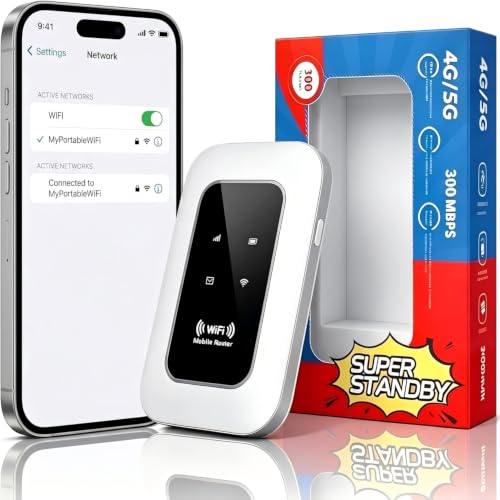
This unlocked pocket hotspot takes a SIM and shares an LTE Cat 4 connection at up to 300 Mbps. A built-in 2100 mAh battery is listed at over 10 hours of use, and USB-C handles charging. It connects 16 devices by one count and up to 20 by another, so plan on a handful of phones and laptops rather than a whole rig.

The Bloepum is a shelf unit with ports, while this one rides in a jacket pocket and runs unplugged. Undercutting it is the GL.iNet Mango, which has no modem at all.

Stated LTE bands run B1, B3, B5 and B40, so read that set against your carrier before you commit.

What works

  • Runs on its own battery all day
  • Cheap way to get a SIM hotspot
  • USB-C charging from any source
  • Fits a pocket or glovebox

Watch out for

  • Band set skips B12, B13, B66, B71
  • Small client count for a rig
06
GL.iNet GL-MT300N-V2 (Mango) Portable Mini Travel Wireless Pocket VPN WiFi Router
  • OpenWrt, 128 MB RAM, 16 MB flash
  • 2 Ethernet ports, USB 2.0
  • 5V USB power, 2-year warranty
Check price on Amazon for GL.iNet GL-MT300N-V2 (Mango) Portable Mini Travel Wireless Pocket VPN WiFi Router (opens in a new tab)
Best for: Tinkerers who want OpenWrt and a VPN on campground WiFi for the least spend.

Our take

Reach for it if you already have a connection to share, such as a wired park hookup or a phone on USB, and want to wrap everything in a VPN for a very small outlay.

Why it made the shortlist

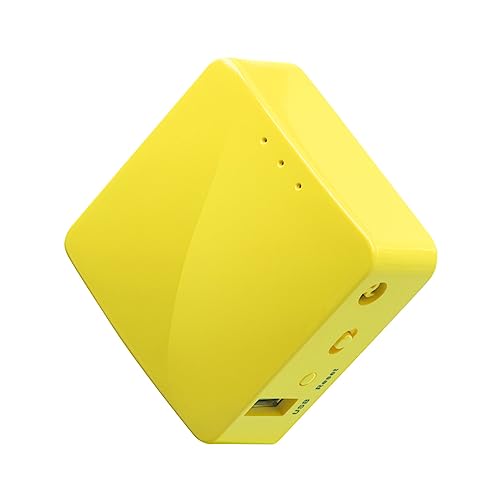
The GL.iNet Mango is a mini travel router running OpenWrt with an OpenVPN client pre-installed, compatible with more than 30 VPN providers. It has two Ethernet ports, a USB 2.0 port, 128 MB of RAM and 16 MB of flash, and it runs from a laptop USB port, a power bank or a 5V adapter.

Entry-level on price, the Mango also carries the deepest software control. The ASUS RT-AX50 Go adds WiFi 6 and a long warranty, whereas the Mango adds an open platform that lets you build firewall rules, use WireGuard and attach a USB disk.

What works

  • OpenVPN and WireGuard supported
  • Runs off a power bank
  • Open platform for tinkering

Watch out for

  • Older, slower Wi-Fi standard
  • No cellular modem inside

Methodology

How We Built This Shortlist

Each pick was assessed across 5 criteria weighted for real-world use.

01

Modem and source type

We sorted each router by where its internet comes from: a built-in SIM modem, a phone tether or a campground network. A pocket travel router and a SIM router solve different problems, so we compared them against the same RV scenarios. Listings that state a modem category got that number recorded, though we weighted it below band support.

02

Band support

We read each listing for the cellular bands it names and compared them with the low and mid bands US carriers use in rural areas. A router that lists B12, B13, B66 or B71 scored above one that lists a set closer to international bands. Where a listing names no bands at all, we treated that as an open question for the buyer.

03

Lock status and certification

We separated three things: locked to one carrier, unlocked, and approved by a carrier. A locked router is fine if you want that carrier. An unlocked one still needs the carrier to accept the device, so we favored listings that mention carrier approval.

04

Power input

We looked at how each unit is powered, since an RV runs on 12V and an inverter draws energy all night. USB-C and 5V USB inputs work from a 12V outlet adapter or a power bank. We noted any unit that appears to rely on a wall brick.

05

Value on this shortlist

We ranked the six by relative price and tied each step up to a real mechanism: a modem, a battery, a warranty or a bigger device count. Every pick here sits in the budget tier. The step between picks is described as a band, never as a quoted figure.

Decision guide

Match a Budget RV Router to Your RV

By Connection Source

Start with where the internet comes from, since that narrows six picks to two.

Your sourceRecommended pickWhy
Phone tether and campground WiFiASUS RT-AX50 GoThree modes and a long warranty cover both
Large family on one uplinkRoam 6Highest device count and a multi-mode design
Own SIM, parked for weeksBloepum SIMModem, wired ports and swappable antennas
SIM on the move or a day tripUnlocked HotspotBattery hotspot with USB-C charging
Tracfone prepaid planTracfone 5GBuilt for that plan with signal lights

By Budget

Bands show how the spend climbs across this shortlist and what each step adds.

Price bandRecommended pickWhat the step buys
Entry of this shortlistGL.iNet MangoOpenWrt and a VPN client for the least spent
Low band, a small step upUnlocked HotspotA SIM slot and a battery in one pocket unit
Low band, near the hotspotBloepum SIMA WAN port, three LAN ports and detachable antennas
Mid of this shortlistRoam 6WiFi 6 and room for dozens of devices
Top of this shortlistTracfone 5G5G with a ready prepaid plan and signal lights

SIM Router vs Travel Router

The core fork is whether the box carries its own cellular modem or borrows a connection.

SIM router

Bloepum SIM, Unlocked Hotspot and Tracfone 5G hold their own modem. The mechanism is a cellular radio inside the box, so they work without a phone. Band support and carrier approval decide how well they work.

Travel router

ASUS RT-AX50 Go, Roam 6 and GL.iNet Mango share a connection they get from a phone or a campground. The mechanism is a WiFi bridge, so they cost less and add VPN control, yet they need a source to share.

Pick a SIM router such as Bloepum SIM if you want one box that works alone, or a travel router such as ASUS RT-AX50 Go if a phone already does the cellular work.

By Power Source

In a coach, how a router is powered decides how much battery it quietly costs you.

Power situationRecommended pickWhy
12V outlet with a USB-C adapterASUS RT-AX50 GoUSB-C power delivery runs it without an inverter
Power bank for boondockingGL.iNet MangoRuns from a 5V adapter or any USB power bank
No power at all while movingUnlocked HotspotInternal battery lists over 10 hours of use
Shore power and a shelfBloepum SIMA fixed unit that suits a permanent spot

For Remote Work Specifically

A work call needs a steady link more than a fast one.

Look for

A wired Ethernet port, a VPN client and enough bands to hold a connection. Bloepum SIM adds wired ports and Roam 6 adds a big client count for family devices.

In this comparison

GL.iNet Mango is the budget VPN route, ASUS RT-AX50 Go is the polished one, and Bloepum SIM is the self-contained cellular route for a laptop on a cable.

When to Spend More

On this list the extra money buys a modem, a warranty or 5G, not raw speed.

Spend more if

You want one box that works without a phone. Bloepum SIM is the practical step up, and Tracfone 5G is the top-end option when that carrier covers your camps.

Save if

A phone already provides the signal. GL.iNet Mango and Roam 6 add private WiFi and a VPN for much less, and Unlocked Hotspot is the cheapest cellular route.

FAQ

Before You Bring One Home

Does a higher modem category always mean a better RV router?

No. A modem category sets a speed ceiling, mostly through carrier aggregation, but band support decides whether you get a connection at all. A Cat 4 router with the right low bands can outperform a Cat 18 on a poor signal. Read the band list first and the category second.

If a router is unlocked, will any carrier accept it?

Not automatically. Unlocked means the router physically accepts any SIM, but a carrier can still throttle or refuse a device it has not certified. Look up the manufacturer's certified device list for your carrier before you buy. Locked units such as Tracfone 5G only work on their own network, which is fine if that is the plan you want.

Do I need a router with a SIM slot, or is a travel router enough?

The right answer follows your source. A travel router such as ASUS RT-AX50 Go shares a phone tether or campground WiFi and costs less. Bloepum SIM carries its own modem and keeps working without a phone nearby. Choose by how often you camp where a phone alone is enough.

Can I run a router off the house battery overnight?

Yes, if it takes 12V, USB-C or 5V input. ASUS RT-AX50 Go runs on USB-C power delivery and GL.iNet Mango runs from a 5V adapter or power bank. Any router shipping with just a 120V brick needs the inverter running all night, which wastes battery.

Why does my router connect but still feel slow at a campground?

Connecting and performing are different. A campground network is shared among many sites, and cellular speed depends on tower distance and load. Try a SIM router with low bands, move the antenna near a window, or use a travel router to test which source is faster before you settle.

How many devices can a budget RV router really handle?

Listings quote counts from 16 to 80 devices, but real-world speed drops as clients pile on. Roam 6 lists the highest count, while Unlocked Hotspot suits a handful of phones and laptops. Take the number of devices you own and buy the next tier up for headroom.

Bottom line

The short version

Browse more budget rv routers on Amazon →
Bowen Higgins, RV Editor at RV Gear Lab

About the author

Bowen Higgins

RV Editor at RV Gear Lab

Bowen covers RV power, water systems, towing and leveling, upkeep and interior comfort, with a focus on matching gear to the rig, the hookups and the way you actually travel.

More from Bowen →Editorial standards

Keep reading

Related guides