
Practical Camping Guide · 12 min read
How to Choose a Camping Knife or Multitool
Choose a camping knife or multitool by blade steel, shape, lock and handle, with safety, sharpening and travel tips for campers and backpackers.

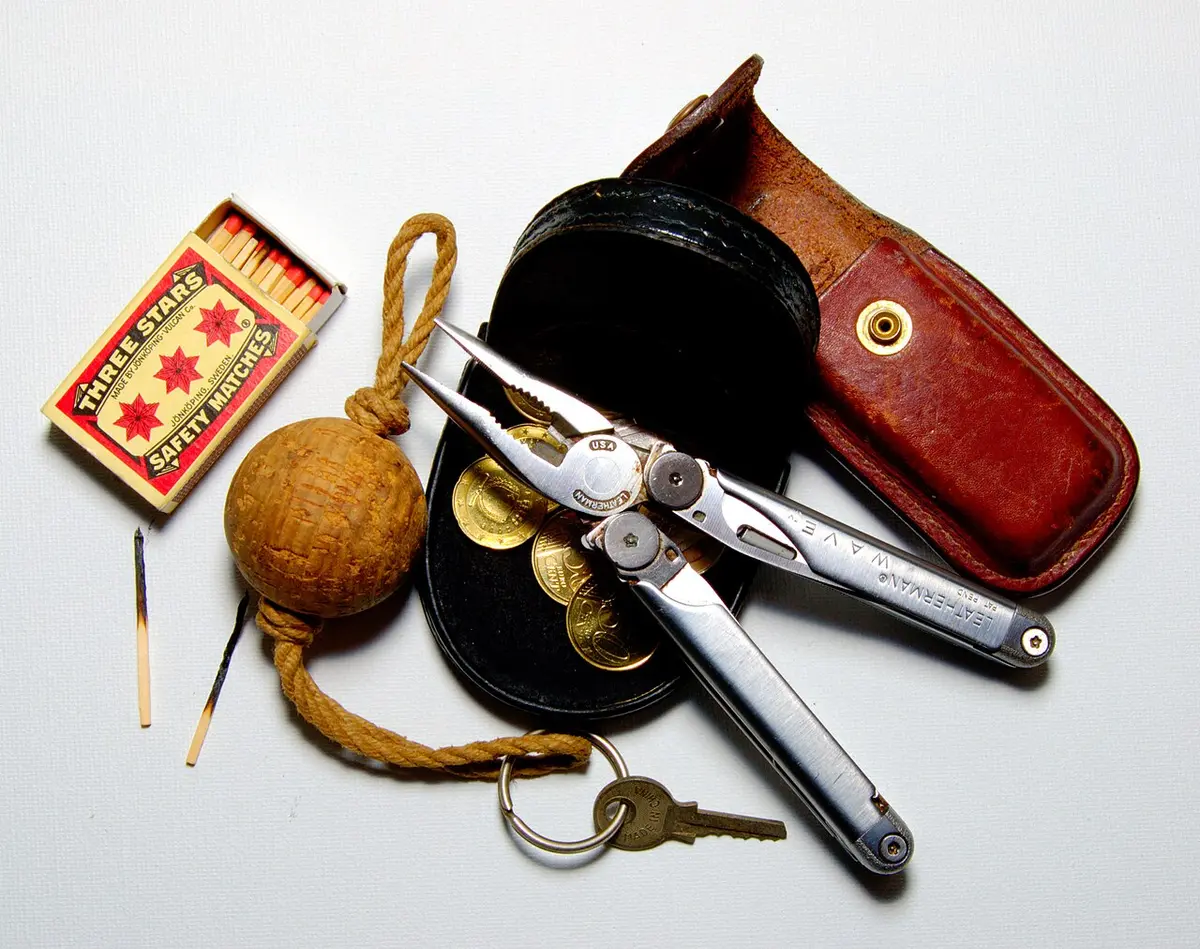
For most campers, one good fixed-blade knife with a 3.5 to 4.5 inch blade handles food prep, kindling and general chores, and a pocket multitool (pliers, a small blade, scissors, screwdrivers) covers repairs. Choose a knife for its blade steel and handle comfort, and a multitool for the quality of its pliers and locks. If you carry only one item, a locking folding knife or a compact multitool with a locking blade is the most versatile compromise, while a bike or bikepacking trip calls for a dedicated bike multitool.
Knives and multitools are bought on looks and brand more than any other camping gear, and then used for a handful of simple jobs. Matching the tool to those jobs saves money and avoids dangerous mistakes, such as using a thin folding blade for splitting wood or a heavy fixed blade to open a can of beans. Below is what each type does well, how to read steel and blade shape, which features are worth paying for, how to use and maintain them safely and what to check for travel and local law.
Fixed blade, folding knife or multitool?
| Tool | Strengths | Weaknesses | Best for |
|---|---|---|---|
| Fixed-blade knife | Strongest, simplest, easy to clean, no moving parts | Bulkier, needs a sheath | Camp chores, food prep, bushcraft, kindling |
| Folding knife (locking) | Compact, pocketable, safe to carry | Pivot and lock are weak points, harder to clean | Everyday carry, light tasks |
| Multitool | Many tools in one, pliers, screwdrivers, scissors | Small blades, mediocre ergonomics | Repairs, gear fixes, light cutting |
| Folding saw (as a companion) | Cuts wood quickly and safely | Single purpose | Firewood, clearing |
| Axe or hatchet (as a companion) | Splitting and heavy cutting | Heavy | Large firewood |
A common kit for a car camper is a fixed-blade knife in the kitchen box, a multitool in the glove compartment and a small folding knife in the pocket. For a backpacker, one folding knife or a compact multitool covers most needs, since every ounce counts. For anything heavier than kindling, use a hatchet or a saw. A hatchet or saw is the better companion for anything beyond kindling.
Blade shape and length
Blade shape sets what a knife does well.
- Drop point. A convex spine curving to the tip, strong and versatile, the most common camp shape.
- Clip point. A concave cut near the tip creates a finer point, good for detail, but the tip is weaker.
- Straight or spear point. Symmetrical, simple and strong, common on utility and survival knives.
- Tanto. A chisel-like point with great tip strength, poor for slicing.
- Sheepsfoot or utility. A rounded tip with a straight edge, safe for cutting rope and food, with no point to snag.
- Serrated edges. Good for rope and fibrous material, but hard to sharpen.
Blade length depends on use. A 3 to 4 inch blade suits most camp tasks, such as preparing food, cutting cord and making feather sticks for fire. A 4.5 to 6 inch blade offers more reach and can handle light batoning, but is clumsy for fine work. Longer than 6 inches is more of a machete than a camp knife. A thick blade (about 3 to 5 mm) strengthens a fixed knife, and a thinner one slices better.
Blade steel in plain terms
Steel is a trade-off among hardness (edge retention), toughness (resistance to chipping), corrosion resistance and ease of sharpening.
| Steel type | Example grades | Strengths | Weaknesses |
|---|---|---|---|
| Carbon steel | 1095, 1075 | Tough, easy to sharpen, takes a keen edge | Rusts if neglected, needs oil |
| Entry-level stainless | 420HC, 440A | Corrosion resistant, easy to care for | Moderate edge retention |
| Mid-range stainless | 440C, 8Cr, AUS-8 | Good balance | Moderate toughness |
| Premium stainless | S30V, S35VN, VG-10 | Excellent edge retention and corrosion resistance | Harder to sharpen, more expensive |
| Tool steel | D2, CPM-3V | Very high wear resistance or toughness | Variable corrosion resistance, harder to sharpen |
For most campers, a good mid-range stainless is a sensible choice: it resists the moisture and acids of camp life, holds an edge through a weekend and sharpens with basic tools. Carbon steel is tough and cheap but needs oiling and drying. Premium steels are nice, but you will not notice the difference on a typical camping trip, and sharpening takes more effort. Water resistance matters for any metal tool, and the same principle behind IP ratings for outdoor gear applies to sealed electronics: know what the tool tolerates and dry it after use.
Handle and ergonomics
A good handle is comfortable for a long task, provides grip when wet, and does not create hot spots.
- Materials. Textured polymer (G10, FRN, Micarta) offers durable grip. Wood looks good and feels warm but needs care. Rubberized grips are secure in wet conditions. Metal handles are strong but cold and slippery.
- Shape. A handle with a gentle curve and a guard or finger choil protects your fingers. Look for a full tang on a fixed blade, which means the steel extends through the handle for strength.
- Size. The knife should fill your hand without being too large. A handle about four inches long suits most adults.
- Lanyard hole. Useful to prevent loss and to hang the knife.
Try the knife in your hand if you can, and mimic common movements: slicing, push cuts and hammer grip.
Locks, sheaths and safety features
For folding knives and multitools, the lock matters.
| Lock type | Notes |
|---|---|
| Liner lock | Common, simple, can be tricky to close with one hand |
| Frame lock | Strong, found on higher-end knives |
| Lockback | Classic and strong, requires two hands to close |
| Axis or compression lock | Smooth, ambidextrous, very strong |
| Slip joint | No lock, spring only, risky for hard work |
| Multitool tool locks | Look for locking blades and pliers' handles |
Always use a locking blade for anything beyond light cutting. For fixed blades, the sheath should hold the knife securely, cover the edge fully and allow comfortable carry on a belt or a pack. Leather, Kydex and nylon are common. A sheath with a retention strap or a snug fit prevents the knife from falling out.
What to look for in a multitool
A multitool is a pocket workshop, and its quality shows in the pliers and the hinges.
- Pliers. Needle-nose with a wire cutter section is standard. Check that the jaws align and close tightly.
- Blades. A locking knife blade of about 2.5 to 3 inches, with a straight edge. A serrated blade is a bonus.
- Screwdrivers and bit drivers. A few standard sizes, or a bit holder for flexibility.
- Scissors. Useful for first aid and cord.
- File, saw, can and bottle opener. Handy extras.
- Ergonomics. A tool that is painful to use is rarely used. Look for handles with rounded edges and, ideally, locks that you can release with one hand.
- Weight. A multitool weighs 4 to 10 ounces. Compact keychain tools weigh an ounce or two and have fewer features.
- Corrosion resistance. Stainless parts resist rust, and many tools are made for outdoor use.
For general multitool picks, see the best multi-tools under $20, under $50 and under $100. For specific uses, the best multi-tool for handymen covers repair-oriented tools, and for cyclists the best bike multi-tools and the best bike multi-tools for bikepacking focus on the wrenches, hex keys and chain tools that matter on the trail.
Pocket knives and everyday carry
A small folding knife in your pocket is useful at camp for opening packages, cutting cord and preparing food. For this role, a blade of about 2.5 to 3.5 inches with a one-handed opening mechanism and a pocket clip is typical. Pocket knife choices include traditional and modern designs. See the best pocket knives for everyday carry and the best pocket knives under $100 for the range. Before you buy, check local laws about carrying knives, which vary by state and city and sometimes limit blade length, opening mechanisms or concealment.
Using a knife safely
Knives cut people more often than they cut wood. A few simple habits prevent most injuries.
- Cut away from your body, and never toward your hand or leg. Keep your free hand behind the blade.
- Keep a safety zone around you, so that no one is within arm's reach plus the knife's length when you cut.
- Use a stable surface, such as a cutting board for food and a stump for wood.
- Keep the blade sharp. A dull blade slips and requires more force.
- Do not pry with a knife blade. It can snap. Use a screwdriver or a pry bar.
- Do not baton with a thin folding knife. Use a fixed blade designed for it, or a hatchet.
- Carry it properly, sheathed or closed, and hand it handle first with the edge turned away.
- Never use a knife when tired or in the dark without enough light. A headlamp helps, and the guide to choosing a headlamp explains how bright is enough.
- Wash and dry it after cutting food, and keep it away from children.
Have a first-aid kit nearby, and know how to treat a cut. Stock the kit with sterile dressings, tape and tweezers.
A worked example: three campers, three kits
The car camper who cooks. Dana prepares meals for four and splits kindling for the fire. She keeps a 4 inch fixed-blade knife with a full tang and a drop point in a sheath in the kitchen bin, and uses it for slicing onions, cutting rope and making feather sticks. She adds a small folding saw for logs and a compact multitool with pliers in the car, for loosening a stuck tent peg or fixing a camp chair. The blade is mid-range stainless, so rinsing it in camp and drying it is enough. Total weight is under a pound, and the fixed blade never gets a lock failure.
The weekend backpacker. Chris carries a total of 13 pounds of gear and wants the lightest tool that works. He picks a compact multitool weighing 3 ounces with a locking blade of about 2.5 inches, scissors and small pliers. He cuts cheese, trims a loose strap and repairs a trekking pole clip on the second day. He leaves the full knife at home. On a trip where he needs to prepare fish, he would add a small fixed blade.
The bikepacker. Maria rides gravel for three days and carries a bike multitool with hex keys, a chain tool, a spoke wrench and tire levers, plus a tiny folding knife for food. When her derailleur hanger loosens on a washboard road, she tightens it in a few minutes. A general-purpose multitool with pliers would have helped less, because the hex keys and the chain tool are what a bike needs.
The pattern is the same as with other camping gear: choose the tool for the job you will actually do, put the weight where it matters and do not buy a tool that has features you will never use. A first-time camper who wants one item can choose a mid-size locking folding knife or a standard multitool, and add a fixed blade after the first few trips show what is missing.
Knives, kids and campsite rules
Knife skills can be a good camping lesson for children, if taught carefully. Start with a small knife with a rounded tip under direct supervision, teach the three rules of cutting away, safety circle and sheath after use, and begin with simple tasks such as whittling soft wood or spreading peanut butter. Never leave knives lying around, and keep them where adults can see them. Some campgrounds have rules about weapons, and while a camping knife is a tool, large blades may draw attention, so keep them stowed when not in use. In some places, carrying a knife is restricted in public buildings, schools and on certain transport. Be sure that you understand the rules for your area and avoid carrying a knife where it is not allowed.
Sharpening and care
A sharp knife is a safe knife.
- Sharpen regularly with a sharpening stone, a fine file or a guided system. Hold a consistent angle, usually 15 to 20 degrees per side, and work along the edge until it feels uniform. A few passes on a ceramic rod or a strop keep an edge keen between sharpenings.
- Clean after use, especially after cutting food or sap. Wash with warm water and mild soap, and dry thoroughly.
- Oil the blade lightly on carbon steel, and oil pivots on folding knives and multitools.
- Check the lock and pivot for looseness. Replace or repair a worn lock.
- Store it dry, in a sheath that does not trap moisture, such as a ventilated one. Leather holds moisture and can rust a carbon blade over time.
Travel and legal notes
Rules about knives change by place. In the United States, the Transportation Security Administration does not allow knives in carry-on bags, and they must go in checked baggage, with small exceptions. Many states and cities restrict carrying certain blades in public, and national parks and other jurisdictions have their own rules. Check the rules for where you travel and where you camp, and carry a knife legally and responsibly. For specifics, the TSA's list of what can be brought is a good starting point.
Choosing by situation
| Your situation | Best choice |
|---|---|
| Car camping with a kitchen | Fixed-blade kitchen or utility knife, plus a multitool |
| Weekend backpacking | Small folding knife or compact multitool |
| Bikepacking or cycling | Bike multitool with the right hex keys and tire tools |
| Fishing | Fixed or folding knife with corrosion-resistant steel |
| Firewood and kindling | Fixed-blade knife plus a hatchet or saw |
| Family camp with kids | Rounded-tip knife for adults, supervise all use |
| Home and car repairs | Full-size multitool with locking pliers |
| Everyday carry | Compact folding knife |
For a first-time camper unsure what to buy, our overview of what you need for camping and the guide on how to go camping for the first time put the knife in context with the rest of the kit.
Common mistakes to avoid
- Buying a huge knife for small jobs. It is awkward and heavy.
- Using a folding knife as a pry bar or to baton wood. It can fail.
- Ignoring the lock. Always use a locking blade for real work.
- Letting the blade rust. Dry it, and oil carbon steel.
- Skipping sharpening. A dull knife is more dangerous.
- Ignoring local laws. Carry rules vary.
- Cutting toward yourself. Keep the blade pointed away.
- Storing a wet knife in a sealed sheath. Rust follows.
Frequently asked questions
What is the best knife for camping?
A fixed-blade knife with a 3.5 to 4.5 inch drop-point blade in good stainless steel covers most camp tasks. A multitool or a small folding knife complements it. The best one is the one that fits your hand and your tasks.
Is a multitool better than a pocket knife for camping?
They do different jobs. A multitool offers pliers, screwdrivers and scissors for repairs, while a pocket knife has a stronger, better blade for cutting. Many campers carry both.
Which blade steel should I choose?
A mid-range stainless such as 440C or a modern equivalent is a good balance of edge retention, corrosion resistance and ease of sharpening. Carbon steel is tough and easy to sharpen but needs oiling. Premium steels are not necessary for most trips.
Can I bring a knife on a plane to go camping?
Not in a carry-on bag. In the United States, the TSA requires knives to be in checked baggage, with very limited exceptions. Check current rules before you travel and any local rules at your destination.
How do I sharpen a camping knife?
Use a sharpening stone, a file or a guided sharpener at about 15 to 20 degrees per side, and work along the edge until it is uniform. Finish with a strop or a ceramic rod. Keep the edge sharp with light, regular touch-ups.
Is a fixed blade or a folding knife safer?
A fixed blade is stronger and has no lock to fail, but it must be carried in a sheath. A folding knife is safer to carry in a pocket but is only as safe as its lock. Choose a locking blade and use it as intended.
Sources & further reading
Image credits
- "Still-life Photo with multi tool knife" by Philip Serracino Inglott [ Inkwina (talk · contribs) ], CC BY-SA 4.0, via Wikimedia Commons.

Ready to buy?
Compare the gear: Campsite Gear
5 Best Bike Multi Tool in 2026
Bike multi-tools compared for trailside repairs: hex, spoke and chain tools from Crankbrothers and Vibrelli to compact 6-in-1 and 16-in-1 options.
3 Best Bike Multi Tool For Bikepacking in 2026
Best bike multi-tools for bikepacking: three 12 to 19 function tools with chain breakers, compared on tool count, weight and size for a frame bag.
6 Best Multi Tool For Handyman in 2026
Best multi-tools for handyman jobs: six tools with hammers, adjustable wrenches and wire cutters for home repairs and camp fixes, from $22 to a Leatherman.
5 Best Multi Tool Under 100 in 2026
Best multi-tools under $100: five plier multi-tools for camp repairs, with a name-brand 15-in-1 and four value kits ranked on locks, size and sheath.
5 Best Multi Tool Under 50 in 2026
Best multi-tools under $50: five plier and wrench multi-tools from about $10 to the high $20s, ranked on lock design, tool count and camp-ready sheaths.
6 Best Pocket Knife For Everyday Carry in 2026
Best pocket knives for everyday carry: six folders and slipjoints that ride well in a pocket, from a three-blade Buck to an assisted Kershaw.
6 Best Pocket Knife Under 100 in 2026
Best pocket knives under $100: six folders from about $15 to $30 that put premium-style steels and G10 handles well inside a $100 budget.
6 Best Multi Tools Under 20 in 2026
Best multi-tools under $20: six pliers, knife and bit-driver tools compared on locking design, blade steel, tool count and sheath for camping and car kits.
Keep reading