
Practical Camping Guide · 12 min read
Rechargeable vs Battery vs Solar Camping Lanterns
Compare rechargeable, battery-powered and solar camping lanterns on runtime, running cost, cold performance and reliability to choose the right one.

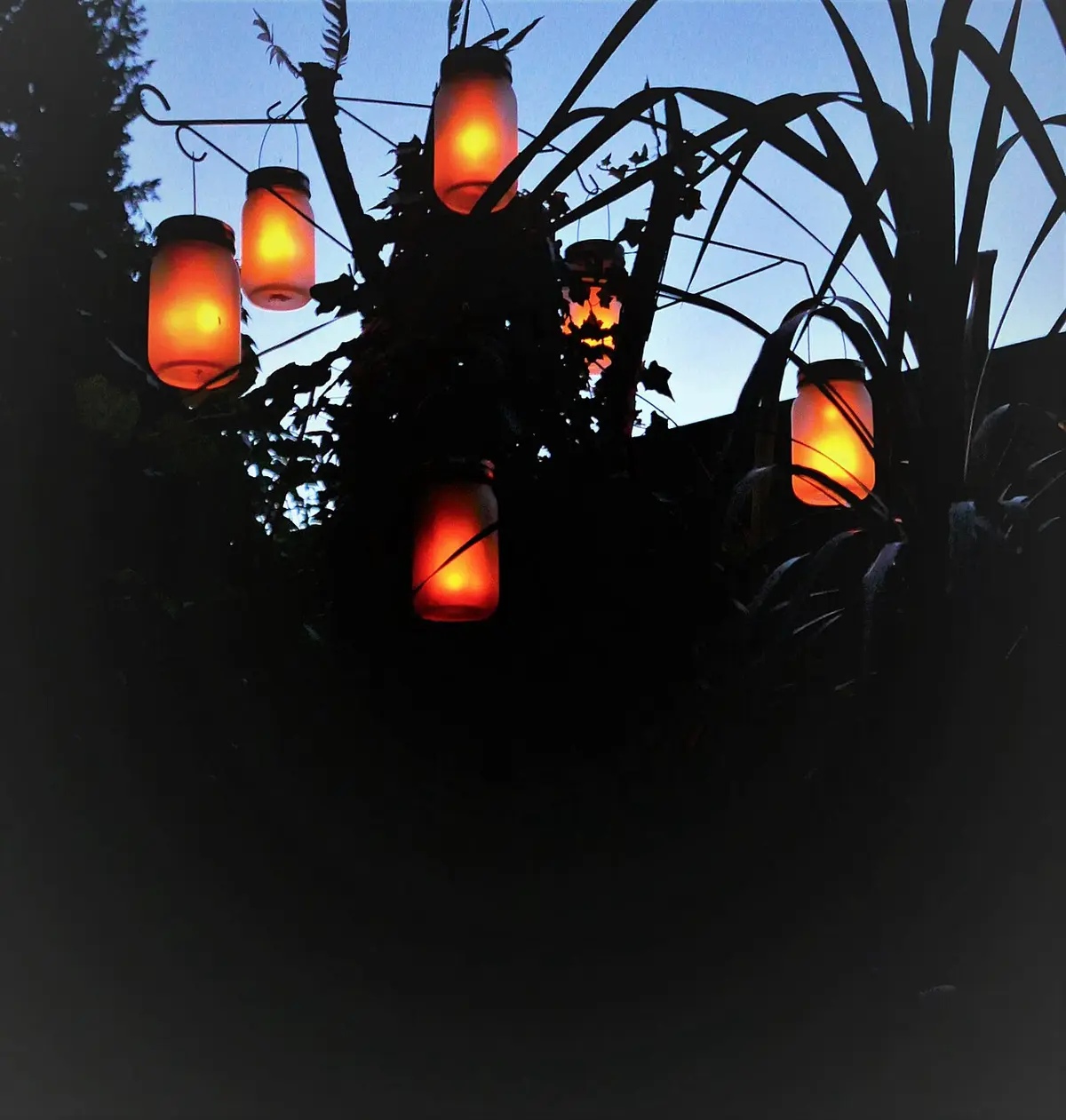
Rechargeable lanterns (USB, usually built-in lithium cells) are the best all-round choice for most campers: they are cheap to run, often double as a power bank, and run 5 to 40 hours depending on brightness. Disposable-battery lanterns win for emergency kits and long trips away from power, since you can carry spare AAs or D cells and swap them in seconds. Solar lanterns cost nothing to run but give dim, slow-charging light that depends on the weather, so they are best as a backup or a background light.
Which one fits depends less on the lantern than on how you camp: one night or two weeks, at a powered site or deep in the woods, with kids or alone. Below is a plain comparison of the three power types, the numbers behind runtime and cost, and a short decision guide.
The three power types in plain terms
Rechargeable. A built-in lithium-ion battery, charged through USB-C, micro-USB or a proprietary plug. Some models use removable rechargeable cells (such as 18650 cells) that you can swap. You recharge from a wall adapter, a car port, a power bank or a solar panel.
Disposable or replaceable batteries. The lantern takes AA, AAA, C or D cells, or a lantern battery. You can use alkaline cells, lithium primary cells, or rechargeable NiMH cells in many models. Older lanterns use fluorescent tubes or incandescent bulbs, and modern ones almost always use LEDs.
Solar. A small photovoltaic panel on the lantern or on a lead charges an internal battery during the day. Many solar lanterns are inflatable or collapsible and meant to hang from a tent loop.
The same LED technology produces the light in all three, so brightness is not what separates them. What separates them is where the energy comes from, how much you can store and how easy it is to replenish.
Side-by-side comparison
| Factor | Rechargeable | Disposable batteries | Solar |
|---|---|---|---|
| Running cost | Very low | Moderate to high | Near zero |
| Upfront cost | Low to medium | Low | Low to medium |
| Typical runtime (mid brightness) | 8 to 30 hours | 20 to 100+ hours (D cells) | 4 to 12 hours after a full charge |
| Ease of refuel in the field | Needs a power source | Swap batteries in seconds | Needs sun, slow |
| Brightness range | Often highest | Medium to high | Usually low to medium |
| Doubles as a power bank | Often | No | Rarely |
| Weather dependence | None | None | High |
| Weight | Light to medium | Heavier with batteries | Light |
| Long-term storage | Self-discharge, check every few months | Alkaline lasts years on shelf | Battery slowly degrades |
| Environmental footprint | Lower over life | Higher with disposables | Lowest operating impact |
The numbers are typical ranges, not guarantees. The runtime of any lantern depends on the brightness setting. If you want to compare brightness settings with battery draw, our explainer on lumens for camping lights shows how a lantern's lumen setting maps to power and runtime.
Running cost over time
A rechargeable lantern with a 5,000 mAh battery holds about 18 Wh. Charging it fully from a wall outlet costs a fraction of a cent. Even if you used it every day for years, the electricity cost is negligible. A lantern that takes four D cells uses about 4 times 18 Wh in alkaline energy per set, which is roughly 70 Wh per set of batteries, and a set of cells costs several dollars. If you run the lantern for 20 nights a season at 5 hours a night, you may go through a few sets of batteries a year.
Rechargeable cells inside a lantern last roughly 300 to 1,000 charge cycles before capacity fades noticeably, which equals years of weekend use. If you run NiMH rechargeable AAs or Ds in a battery lantern, you get a hybrid: swapping batteries is easy and the running cost is low, though the cells hold less charge than modern lithium and self-discharge in storage.
For budget shoppers, a basic lantern is surprisingly inexpensive. See the best camping lanterns under $20 and the best camping lanterns under $30 for lower-priced options, and keep in mind that cheap lanterns often use batteries as the cheapest way to deliver light.
Runtime and brightness in the real world
Runtime claims on the box usually refer to the lowest brightness setting. A lantern advertised for "up to 100 hours" may produce only a faint glow at that setting. A more useful question is how long it runs at the brightness you will actually use, usually 100 to 300 lumens.
| Lantern type | Battery energy | Approx. runtime at 150 lumens | Approx. runtime at 300 lumens |
|---|---|---|---|
| Small rechargeable (2,000 mAh, 3.7 V, 7.4 Wh) | 7.4 Wh | 3 to 5 hours | 1.5 to 2.5 hours |
| Medium rechargeable (5,000 mAh, 18 Wh) | 18 Wh | 8 to 12 hours | 3 to 6 hours |
| Large rechargeable (10,000 mAh, 37 Wh) | 37 Wh | 16 to 25 hours | 8 to 12 hours |
| 3 D cells alkaline | About 40 to 60 Wh usable at low draw | 20 to 40 hours | 8 to 15 hours |
| Solar lantern, 1,000 mAh | 3.7 Wh | 1 to 2 hours | Under 1 hour |
Alkaline cells lose capacity at high draw, so the D cell numbers fall off sharply at higher brightness. Lithium primary cells (non-rechargeable lithium) handle high draw and cold better, but they cost more.
Cold weather behavior
Cold affects all batteries, but not equally. Alkaline cells lose a large share of capacity near freezing, and lithium primary cells handle cold far better, which is why they are the usual choice for winter emergency kits. Rechargeable lithium-ion cells lose some capacity in the cold and should not be charged below freezing, so charge the lantern indoors and keep it in an inner pocket or inside the tent overnight. Solar lanterns lose twice: the battery is weaker, and winter sun is lower and shorter. If you camp in the cold, a lantern with replaceable batteries or a rechargeable one with a warm place to charge is more reliable than a solar one.
Using a rechargeable lantern as a power bank
Many rechargeable lanterns include a USB output so they can charge a phone. It is a handy trick that can save a trip, but it is not free: the energy comes out of the lantern's battery, and the conversion is not perfectly efficient. A 5,000 mAh lantern (18 Wh) holds about one phone charge. If you use the lantern as a power source, you cannot also expect it to run all night. Treat the power-bank feature as an emergency bonus. For heavier power needs, a dedicated power bank is a better source, since it is built to deliver that energy efficiently.
Solar lanterns: honest expectations
Solar lanterns are attractive in theory, since they never need batteries or outlets. In practice, a few things limit them:
- Panel size. A lantern-sized panel produces 0.5 to 2 W in full sun. After 6 hours of good sun, the lantern may store 3 to 8 Wh, enough for a few hours of dim light.
- Charge conditions. Panels need direct sun. Behind trees, in a tent or on a cloudy day, charge falls to a trickle.
- Output. Most solar lanterns produce 20 to 150 lumens, which is fine for ambiance and table light but not for cooking at night.
- Durability. Inflatable lanterns are light and packable, but they can puncture, and the sealed battery is often not replaceable.
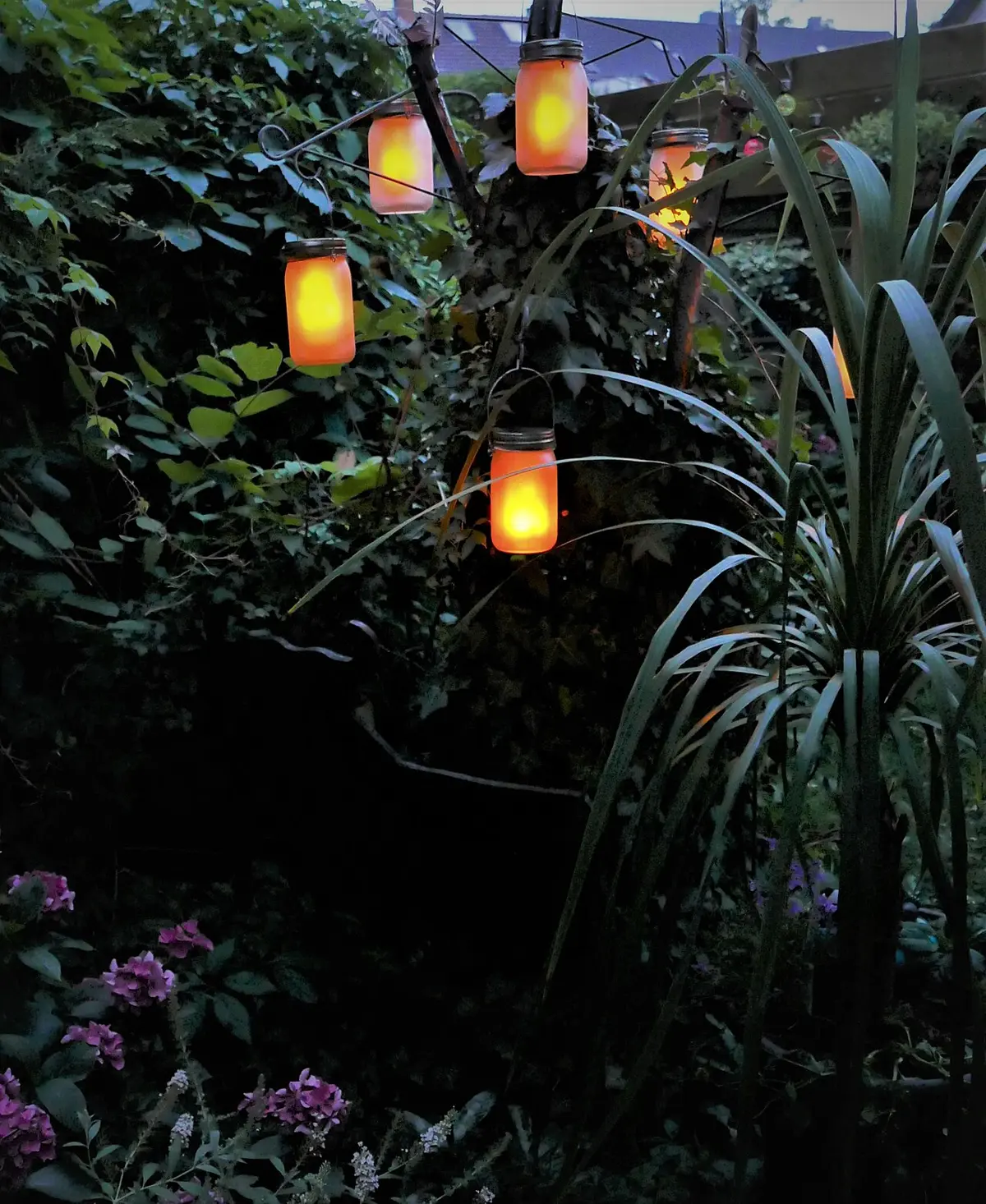
They work well for hanging in a tent or gazebo, and they are great for campsites without power or for people who like not worrying about charging. See the best hanging solar lanterns for camping to understand how they compare. A smart approach is to leave a solar lantern outside to charge during the day and bring it into the tent in the evening.
Weather and dust protection
Whatever the power source, a camping lantern should withstand a little rain. Look for an IPX4 or higher rating, and consider IPX6 or IP67 if you camp in wet climates or near water. Our guide on IP ratings for outdoor gear explains what the numbers mean. The charging port is the weak point, so look for a rubber cover that seals when closed. A lantern that is "waterproof" with the port open is not waterproof.
Matching the lantern to your camping style
| Your situation | Best power type | Why |
|---|---|---|
| Weekend car camping, powered or near a car | Rechargeable | Cheap to run, bright, charge in the car |
| Multi-day trip, no power, a few lanterns | Rechargeable plus a power bank, or battery | Swap or top up as needed |
| Backpacking | Small rechargeable or lightweight headlamp | Weight matters more than runtime |
| Emergency kit and home outages | Replaceable batteries with lithium primary cells, or a rechargeable with long storage life | Reliable after years in a drawer |
| Kids' tent | Solar or low-output rechargeable | Safe, soft light, no loose batteries |
| Large group at a basecamp | Several lanterns of mixed types | Redundancy and coverage |
| Winter camping | Replaceable lithium batteries | Cold tolerance |
Home use matters too. A lantern kept for power outages should be easy to find, lit within seconds and ready after months of storage. See the best rechargeable emergency lanterns and the best lanterns for power outages for options chosen with that role in mind. If you want features such as automatic shutoff, the best rechargeable lanterns with timers show how a timer helps at bedtime.
For a broad overview of what is on offer, the best camping lanterns and camping lights and the general best lantern lists cover the main styles.
A worked three-night comparison
Suppose you camp for three nights and want a table lantern running about five hours each evening at roughly 200 lumens, which draws about 2.5 W. That is 12.5 Wh per night, or about 37.5 Wh for the trip.
Rechargeable option. A lantern with a 10,000 mAh (37 Wh) battery covers the whole trip on one charge with almost no margin, and a 5,000 mAh lantern needs a recharge on the second night. A small power bank with 20,000 mAh (74 Wh) recharges either lantern for the entire trip, with enough left for phones. The cost of energy is negligible, and the only logistics are remembering the cable.
Disposable option. A lantern with three D alkaline cells has roughly 40 to 60 Wh usable at a low draw, so one set covers the trip with some room to spare. You pay for the set, and if the trip runs a few days longer, a spare set solves it instantly. For a family that camps twice a year, that is cheaper than buying a power bank. For someone who camps 20 times a year, the batteries add up, and rechargeable NiMH cells or a rechargeable lantern pay back quickly.
Solar option. A solar lantern with a 1,000 mAh battery stores 3.7 Wh, one third of a night at that brightness. Even with perfect sun, you would need roughly four lanterns, each charged in full sun all day, to cover one evening at 200 lumens. At 50 lumens and an hour or two of use, a single solar lantern is fine. So the solar lantern is a different tool: low output, short use and zero operating effort.
The comparison explains why many campers settle on a hybrid. A rechargeable table lantern covers the main task, one solar lantern or two supply gentle background light, and a headlamp on replaceable batteries provides backup. If you are choosing the headlamp, how to choose a headlamp compares the same power-source trade-offs on a smaller scale.
Features that make a lantern easier to live with
Beyond the power source, a handful of features make a lantern pleasant or annoying after a few nights.
- A real dimmer. A smooth, stepless dimmer lets you set the brightness for the task. Three fixed levels often leave you with one that is too bright and one that is too dim.
- A memory function. A lantern that resumes at its last setting saves you from blasting everyone's eyes at 100 percent each time you turn it on.
- A battery indicator. A simple set of lights or a percentage readout saves you from guessing, especially with a rechargeable unit.
- A stable base and a strong hook. The lantern should stand without tipping and hang from a loop without sliding off. Look for a metal hook or a sturdy carry handle.
- Diffused light. A frosted shell or a fabric cover spreads the light and reduces glare, which matters most in a small tent.
- Collapsible design. Collapsible or inflatable lanterns pack small, though the hinges and seams are weak points.
- A sleep timer. A timer shuts the light off after a set time, a useful feature in a tent where you fall asleep with the light on.
- Passthrough charging. A lantern that you can use while it charges is helpful on a power bank at night.
Storage and maintenance
- Rechargeable. Store at around half charge for long periods, and top up every three to six months. Do not leave it in a hot car.
- Disposable batteries. Remove the batteries before long storage to avoid leakage and corrosion, especially alkaline cells.
- Solar. Check that the panel is clean and that the battery still holds a charge at the start of the season. Replace the battery if it does not.
- All types. Wipe off dust and moisture, keep contacts clean, and test before each trip.
A packing strategy that covers the bases
Many experienced campers carry a mix. One rechargeable lantern for the main table, topped up each day from a power bank or the car. One small lantern or headlamp with replaceable lithium batteries as a backup. A solar stake light or two to mark tent corners without any effort. This layered approach covers dead batteries, a missing charger and a cloudy day without much weight. If you power your devices from a larger battery, size the panel to the total daily watt-hours of everything you recharge, lighting included.
Common mistakes to avoid
- Relying on a solar lantern as the only light. Cloudy days and shade will leave you in the dark.
- Forgetting to charge before leaving. A lantern with a dead battery is dead weight.
- Leaving alkaline batteries in storage. They can leak and ruin the lantern.
- Charging a lithium lantern in freezing weather. It can damage the cells.
- Buying by the biggest lumen number. Battery capacity and efficiency limit how long it lasts.
- Ignoring the water rating on the port. An open charging port lets water in.
- Skipping spare batteries on a long trip when you rely on disposables.
Frequently asked questions
Are rechargeable camping lanterns better than battery ones?
For most campers, yes, thanks to low running cost and USB charging. Battery lanterns are better when you cannot recharge, such as on long trips or in emergency kits, because you can swap cells instantly and store spares for years.
How long does a rechargeable lantern last on one charge?
It depends on battery size and brightness. A medium lantern with a 5,000 mAh battery runs about 8 to 12 hours at 150 lumens and 3 to 6 hours at 300 lumens. At low brightness, it can run 30 hours or more. Check the runtime for the setting you will use.
Do solar lanterns work in the shade or on cloudy days?
Poorly. Solar panels need direct sunlight, and in shade or cloud they produce a fraction of their rated output. If you camp under trees, put the lantern in a sunny spot during the day, or charge it from USB if it has a port.
Can I use rechargeable AA batteries in a battery lantern?
Usually yes, with NiMH rechargeable cells, which have a nominal 1.2 V instead of 1.5 V, so the lantern may be slightly dimmer. Check the manual, and use cells of the same brand and age in a set.
Is it safe to leave a lantern charging overnight?
Most modern lanterns have charge protection and are designed for it, but it is safest to charge them on a hard surface in a ventilated place, not in a bed or tent. Unplug when full if you can, and stop using any lantern that swells or gets hot.
What lantern is best for a power outage at home?
One that you can find in the dark, that lights instantly and that holds a charge for months. A rechargeable with a long standby time or a lantern with lithium primary batteries are common choices. Keep it where everyone knows, and test it every few months.
Sources & further reading
- Mechanical-engineering.com: IP ratings and IEC 60529 overview
- Battery University: How to prolong lithium-based batteries
- Anker: battery capacity and Wh basics
Image credits
- "Solarlaternen Juli 2020" by Gordito1869, CC BY-SA 4.0, via Wikimedia Commons.
- "Fünf leuchtende Solarlaternen nach Einbruch der Dunkelheit" by Gordito1869, CC BY-SA 4.0, via Wikimedia Commons.


Ready to buy?
Compare the gear: Campsite Gear
2 Best Rechargeable Emergency Lanterns in 2026
Best rechargeable emergency lanterns compared on power sources, lumens, battery size and weather rating, for camping trips and home outages alike.
2 Best Rechargeable Lanterns With Timers in 2026
Best rechargeable lanterns with timers compared on remote control, dusk-on schedules, flame effect and battery life, for campsites that light up without fuss.
6 Best Camping Lanterns Under 30 in 2026
Best camping lanterns under $30: six USB-C, AAA and rechargeable LED lanterns from 80 to 4000 lumens compared on battery, brightness and weather rating.
6 Best Camping Lanterns Under 20 in 2026
Best camping lanterns under $20: six solar, rechargeable and AA lanterns compared on lumens, runtime and the extras that $20 buys over $10.
6 Best Camping Lanterns And Camping Lights in 2026
Camping lanterns and lights compared: battery, rechargeable and solar lanterns from 300 to 2000 lumens for tents, campsites and power outages.
5 Best Lantern in 2026
Camping lanterns compared: rechargeable, battery and solar models from a 135-LED 5000mAh lantern to 4-packs and a pocket pull-up light.
6 Best Lantern For Power Outage in 2026
Best lanterns for a power outage: six battery LED lanterns from 154 to 1,000 lumens, compared on runtime, batteries and how they light a room.
5 Best Hanging Solar Lanterns For Camping in 2026
Best hanging solar lanterns for camping compared on hook design, solar and USB charging and weather rating, for campers lighting a site from awnings and trees.
Keep reading