

We research everything we recommend. When you buy through our links, we may earn a commission. Learn more

Buying guide · 11 min read · Updated October 2, 2026

6 Best RV Air Conditioners Under $800 in 2026: A Practical RV Guide

Six RV air conditioners from $329.99 to $799.99, covering 15,000 and 18,000 BTU rooftops, inverter units and a split, and what $300 more than entry level buys.

Bowen HigginsBy Bowen HigginsRV Editor at RV Gear Lab6 products comparedSpec-sheet researched

At a glance

Our top picks

Cross $500 and the market changes character. This guide runs from $329.99 to $799.99, and the three rooftop units priced at $773.10 to $799.99 introduce capacities the entry shelf never reaches: 15,000 and 18,000 BTU, set against the 13,500 BTU class that has long been the standard rooftop size. Stretching from $490 to $790 means paying roughly $300 for a step from bedroom cooling to whole-rig cooling, which is the real argument for this tier. The cheaper picks in the spread, a $329.99 portable and a $469.99 split, show what a smaller outlay still delivers.

That $300 also buys features that were scarce below $500. The 15,000 BTU 115V combo and the Gidrox 12V both use inverter technology that varies compressor speed. The Arsenda lists an operating range of 23 to 115 degrees F, a number that speaks to shoulder-season use. The Gidrox adds app, remote and panel control. What the budget does not buy is a famous name. Most units here come from newer brands, so the printed detail on each listing is the best evidence of quality, and the gap between a thorough listing and a sparse one is worth weighing carefully.

Stopping at $800 is right for owners of mid-size travel trailers, fifth wheels and compact motorhomes who want one rooftop unit that can carry the whole interior on shore power, where capacity is the main goal. Replacing a failed standard unit is another good reason to stop here, for a buyer who wants a like-for-like swap without spending $1,000. Buyers who want a heat pump from a recognized brand, a documented warranty and the lowest noise figures should look at the $1,000 guide linked below, because that shelf is where those features begin to appear.

RV Gear Lab field notes

The Rig Fit Check

Start with the job
Gidrox 10000 BTU 12V DC RV Air Conditioner leads this shortlist for Van and small-trailer owners with a big 12V bank and app control.. Use that fit as a reference point, then compare the alternatives against your own space and workload.
Specs that separate the picks
The first details to compare are 10,000 BTU, 12V DC inverter, 115V, 15,000 BTU, 18,000 BTU, 110-120V. Confirm the exact model and included components before ordering.
Trade-off to plan for
10,000 BTU is limited for large coaches

Before you buy

What Matters Before You Choose an RV Air Conditioner Under $800

Key buying criteria so you get the right fit the first time.

  1. 01

    Rated BTU against rig length

    The 13,500 BTU class has long been the default size for rooftop units, so a pick with a higher rating is a statement about capacity. At $773.10 the Arsenda delivers 18,000 BTU, and at $784.75 the 115V combo delivers 15,000. A longer trailer or a hot climate can use that extra capacity, while a van will waste it. Match the unit to the rig, and read the roof opening size printed on the product page.

  2. 02

    Two power feeds

    A few rooftop listings require both 115V AC and 12V DC connections. The Arsenda states this requirement outright. That is fine for a rig with shore power and a house battery, but it adds a wiring step in a conversion. Find the voltage line in the first bullet and plan the DC connection before ordering.

  3. 03

    Inverter compressor

    A fixed-speed compressor cycles fully on and off, which causes temperature swings and a spike in draw each time it starts. An inverter compressor ramps its speed up and down, which holds the temperature steadier and uses less energy. The Gidrox and the 115V combo both name inverter technology, and the Inverter 16000 portable does as well. The word inverter on a listing is a feature to pay for, particularly on battery power.

  4. 04

    Operating temperature range

    An air conditioner can only work within the ambient range it was designed for. The Arsenda states 23 to 115 degrees F, which gives a buyer a clear picture of how cold and hot it can run. Many listings print nothing, which leaves a question mark for spring and autumn trips. Seek a stated range if you camp outside the summer months.

  5. 05

    Refrigerant and compressor type

    The refrigerant and the compressor are the working parts of the cooling cycle. The 115V combo lists R-410A, a rotary compressor and 20cc displacement, and the Treeligo lists a scroll compressor. Scroll compressors are valued for steady operation, and rotary designs are common and compact. A listing that names these parts is easier to trust than one that offers only a BTU number.

  6. 06

    Control options

    A remote is the baseline. The Gidrox adds an app and a wall panel, and the Treeligo adds an LCD remote. These conveniences matter in a rig where the thermostat is far from the bed. Decide whether app control will genuinely be used, since a basic remote costs less and one more feature is one more thing to fail. Read the control list before choosing.

Our standards

Why You Can Trust RV Gear Lab

At RV Gear Lab, we compare products based on rig fit and power or hookup compatibility, verified specifications, usability, setup requirements, weight, durability, and real-world trade-offs. We do not rank products purely on marketing claims or commission rates.

We have not personally tested every product listed. Where hands-on testing is not available, recommendations are based on verified manufacturer specifications, product documentation, use-case fit, and comparative research.

How we review RV gear →

Detailed reviews

The 6 best rv air conditioners under $800, explained

01

Best Smart 12V Rooftop · 1 of 6

Gidrox 10000 BTU 12V DC RV Air Conditioner

Gidrox 10000 BTU 12V DC RV Air Conditioner
  • 10,000 BTU, 12V DC inverter
  • 40 dB sleep mode, 54 lbs
  • Hardware and 19.7 ft cable
Check price on Amazon for Gidrox 10000 BTU 12V DC RV Air Conditioner (opens in a new tab)
Best for: Van and small-trailer owners with a big 12V bank and app control.

Our take

Camper vans, skoolies and compact trailers that live on lithium and solar get the cleanest fit.

Why it made the shortlist

The Gidrox 10,000 BTU 12V DC unit lists at $799.99, the top of this price shelf, and it brings inverter technology to a battery-powered rooftop. Steady inverter cooling suits long overnight runs, and a 40 dB sleep mode is stated on the listing. Control comes three ways: an app, a remote and a panel, so the unit stays usable whichever device is handy.

Light at 54 pounds, it ships with mounting hardware and a 19.7 foot cable in the box. That kit shortens the install for a van builder compared with the cheaper rooftops, where hardware and wire are often separate purchases. Placed beside the 115V combo at $784.75, it swaps raw capacity for battery independence, which is the right swap for anyone who spends nights away from hookups.

A 40 dB sleep mode makes the unit sensible for bedroom-adjacent installs, and three control options help in a rig where the remote always wanders off. Off-grid owners who want rooftop cooling without a generator will find this the most polished DC option under $800, backed by a hardware kit that gets the install moving.

What works

  • Inverter technology for steady cooling
  • 40 dB sleep mode stated
  • Light at 54 pounds
  • App, remote and panel control

Watch out for

  • 10,000 BTU is limited for large coaches
  • Needs a sizable battery bank
02

Best Heat and Cool Combo · 2 of 6

115V RV Air Conditioner Heater Combo

115V RV Air Conditioner Heater Combo
  • 115V, 15,000 BTU
  • 20cc rotary compressor
  • Inverter cooling and heating
Check price on Amazon for 115V RV Air Conditioner Heater Combo (opens in a new tab)
Best for: Shore-power owners wanting 15,000 BTU of inverter cooling and heating.

Our take

Owners of mid-size travel trailers parked at campgrounds with full hookups gain the most, especially in spring and fall when a cold morning arrives after a hot afternoon.

Why it made the shortlist

Priced at $784.75, the 115V combo offers 15,000 BTU of inverter cooling and heating on standard 115V power, which makes it the most versatile rooftop in the guide. A 20cc rotary compressor does the work, and the inverter adjusts its frequency to match the load instead of cycling on and off. The listing promises quieter operation, and one unit covers both summer and winter, which saves buying and storing a separate heater.

Moving down from the Gidrox 12V, the rated capacity climbs by 5,000 BTU and the price drops by $15, which is the strongest value jump in the top three picks. The reward for plugging into shore power is heat as well as cold, a second job that makes one roof opening do the work of two appliances. That combination puts it at the center of this guide.

A fifth-wheel or motorhome with a standard roof vent can swap it in for a failed unit. Heat and cold from the same roof opening keeps the interior simple.

What works

  • Inverter adjusts frequency
  • Cooling and heating combo
  • Standard 115V power
  • Quieter operation claim

Watch out for

  • Uses R-410A refrigerant
  • Brand is new to RV
03

Best Capacity per Dollar · 3 of 6

Arsenda 18000 BTU Rooftop RV Air Conditioner

Arsenda 18000 BTU Rooftop RV Air Conditioner
  • 18,000 BTU, 110-120V
  • Non-ducted rooftop
  • 23 to 115 degrees F range
Check price on Amazon for Arsenda 18000 BTU Rooftop RV Air Conditioner (opens in a new tab)
Best for: Large trailers and fifth wheels that need maximum rated BTU.

Our take

Big travel trailers, fifth wheels and Class A coaches with large living areas benefit from 18,000 BTU, particularly in hot climates where a 13,500 BTU unit struggles.

Why it made the shortlist

Priced at $773.10, the Arsenda rates 18,000 BTU, the highest capacity in the guide and the best BTU-per-dollar figure among the rooftop picks. A non-ducted design bolts onto a standard roof opening, and the listing states an operating range of 23 to 115 degrees F with 50 dB noise. It runs on 110 to 120V.

Against the 115V combo, the price falls by $11.65 while the rated capacity rises by 3,000 BTU, so the extra cooling is nearly free. Heating information is brief, which tells a buyer that cooling is the headline and capacity is the selling point. At this price it is the plainest route to 18,000 BTU on a standard roof opening.

The stated 23 to 115 degree F range also makes it usable well into the shoulder seasons. Anyone running a generator or shore power gets the strongest cooling under $800.

What works

  • Non-ducted rooftop design
  • Works from 23 to 115 degrees F
  • Quiet at 50 dB

Watch out for

  • Needs both 115V AC and 12V DC
  • Heating details are thin on this listing
04

Best No-Roof Inverter · 4 of 6

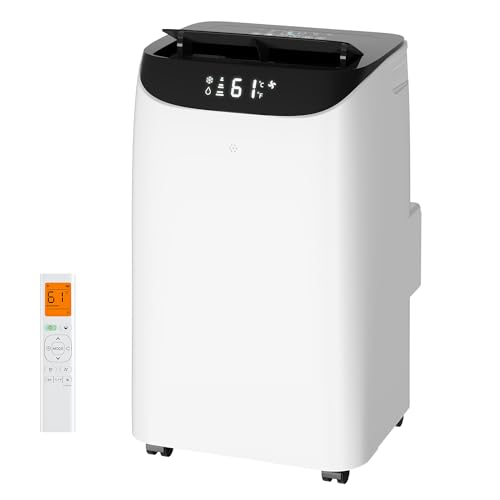
Inverter 16000 BTU Portable Air Conditioner

Best for: Owners who want strong cooling without opening the roof.

Our take

Fifth-wheel and motorhome owners who want a second cooling zone in the bedroom, or part-time RVers who refuse to modify the roof, are well served here.

Why it made the shortlist

At $589.99 this portable lists 16,000 BTU by ASHRAE and 12,000 BTU SACC, with an inverter compressor and a dual hose design that moves intake air separately from exhaust. Condensate evaporates automatically, four smart modes cover cooling, fan and dehumidifying, and nothing has to be bolted to the roof. Capability-wise, no other roofless option in this guide comes close.

Sliding about $183 under the Arsenda, it gives up the permanent installation and keeps a 12,000 BTU SACC rating that sits level with a small rooftop. The inverter helps hold temperature without constant cycling. Its dual hose layout keeps cooled room air inside the cabin instead of pulling it out through the exhaust. That mechanism is why 12,000 BTU SACC feels stronger in practice than the number alone suggests.

A window or vent opening is all the setup it requires, and the unit can come with the owner when the rig changes. It adds capacity wherever a rooftop unit falls short.

What works

  • No rooftop install
  • Inverter saves energy
  • Auto condensate evaporation
  • Four smart modes

Watch out for

  • Portable, not a rooftop unit
  • Needs a window or vent exit
05
Treeligo 24V Mini Split RV Air Conditioner
  • 12,000 BTU, 24V split
  • Scroll compressor, 350 CFM
  • 45 dB, LCD remote
Check price on Amazon for Treeligo 24V Mini Split RV Air Conditioner (opens in a new tab)
Best for: Van and compact RV builders who dislike large roof cutouts.

Our take

Skoolie and van builders who want permanent cooling without a rooftop box, and trailer owners with limited roof space, get the most from it.

Why it made the shortlist

The Treeligo 24V mini split costs $469.99 and rates 12,000 BTU with a scroll compressor, 350 CFM of airflow and 45 dB operation. An LCD remote handles control. The split design places the compressor outside and a slim head unit inside, so there is no large roof cutout, and the listing says it runs from a vehicle battery.

Falling $120 below the portable and $303 below the Arsenda, it posts 12,000 BTU of rated cooling at the lowest price of any permanent installation here. A scroll compressor adds efficient, steady running. The split layout also means the cut in the roof is small, which preserves the original structure and keeps the ceiling clean.

Its 45 dB rating suits sleeping areas, and a vehicle-battery supply suits rigs that drive as well as camp. Call it the budget route to a quiet, permanent system, and the LCD remote keeps controls simple for guests and family.

What works

  • Split design needs no large roof cutout
  • Quiet at 45 dB
  • Runs from a vehicle battery

Watch out for

  • Cooling only on the listing
  • Listing text also says 12V in places
06
Best for: Buyers who want portable cooling and a timer for the least money.

Our take

A second-bedroom unit, an easy backup for a failed rooftop or a seasonal setup in a trailer parked at one site are all good uses.

Why it made the shortlist

Listed at $329.99, the Garvee 3-in-1 pairs a 14,000 BTU headline with a 10,200 BTU SACC rating and a 24 hour timer. A remote controls cooling, fan and dehumidifier modes, and the listing states coverage up to 750 square feet, a generous figure for a bedroom or main living area. Lowest priced of the six, it is a real alternative to a rooftop swap.

Dropping $260 below the Inverter 16000 model, it keeps 10,200 BTU SACC against 12,000 for a far lower cost. That puts it within reach of the dearer portable on rated capacity, and the saved money can go toward cabling, a roof repair or a campground fee. The inverter is what the extra $260 pays for.

Owners can run it on a campground outlet and leave the roof alone. A timer that runs a full 24 hours handles pre-cooling before bedtime, and the fan mode stretches into mild weather.

What works

  • Remote and 24 hour timer
  • Covers up to 750 sq ft
  • No rooftop install
  • Dehumidifier and fan modes

Watch out for

  • Portable home unit, not RV-made
  • Needs a window exit

Methodology

How We Built This Shortlist

Each pick was assessed across 5 criteria weighted for real-world use.

01

Capacity against the standard rooftop size

We compared each unit's rated BTU with the common 13,500 BTU rooftop class. Picks above that line were judged on whether the extra capacity is usable. Picks below it were judged on whether their format or price justifies the gap.

02

Power architecture

A unit's supply decides its real cost. 115V rooftops lean on shore power or a generator, 12V and 24V units lean on batteries, and the Arsenda lists both 115V AC and 12V DC. We read each listing for the supply requirement and counted the wiring burden against the unit.

03

Compressor and inverter technology

Inverter compressors adjust speed to the load, which saves energy and steadies the temperature. We noted which listings name an inverter or scroll compressor. Those features are the clearest sign of what the extra $300 over the entry tier is buying.

04

Operating range and season

Some listings give a temperature range and some give a heating mode. We favored the Arsenda's stated 23 to 115 degrees F and the 115V combo's heating function for shoulder-season buyers. A cooling-only unit was marked as summer equipment.

05

Listing detail and brand risk

Based on product specs, we weighed how much each listing spells out and how established the brand looks. Several picks come from new brands, which shows up in the cons. The benefit of the doubt went to listings that print wattage, range and hardware lists.

Decision guide

Match an RV Air Conditioner Under $800 to Your RV

By Rig Size

Capacity should follow interior size. Start with the length and living space of your rig and read across to a pick.

Your rigPickWhy
Camper van or skoolieTreeligo 24V Split12,000 BTU split with no large roof cutout
Compact trailer on lithiumGidrox 12V10,000 BTU inverter with a 40 dB sleep mode
Mid-size trailer on shore power115V Combo15,000 BTU inverter cooling and heating
Large trailer or fifth wheelArsenda 1800018,000 BTU at the lowest rooftop price
Any rig that must keep the roof intactInverter 1600012,000 BTU SACC portable with dual hoses

By Budget

The spread covers $329.99 to $799.99, with a cluster of rooftops at the top. Read the row nearest your budget.

SpendPickWhat it buys
Around $330Garvee 14,000 BTUA 24 hour timer and 10,200 BTU SACC
Around $470Treeligo 24V Split12,000 BTU permanent split cooling
Around $590Inverter 16000The strongest roofless inverter portable
Around $773Arsenda 1800018,000 BTU and a 23 to 115 degrees F range
Around $785 to $800115V Combo or Gidrox 12VInverter heat and cool, or a smart 12V rooftop

Rooftop vs Split or Portable

The roof is still the best place for cooling in most rigs, though not the only place.

Non-ducted rooftop

Arsenda 18000, 115V Combo and Gidrox 12V bolt onto a standard roof opening and free the interior. They need roof access and a clear power plan, and in return they give the cleanest result.

Split or portable

Treeligo 24V Split, Inverter 16000 and Garvee 14,000 BTU avoid a big roof cutout or avoid the roof altogether. They suit builds and rigs where the roof is off limits.

If your roof is standard and you have shore power, buy Arsenda 18000; if the roof must stay intact, buy Inverter 16000.

By Season Range

Some units cool only, and some heat too. Season length should shape the choice.

SeasonPickWhat the listing says
Summer and winter115V ComboInverter cooling and heating
Spring to autumnArsenda 18000Operates from 23 to 115 degrees F
Summer in a vanGidrox 12VInverter cooling with a 40 dB sleep mode
Summer, permanent installTreeligo 24V SplitCooling only on the listing
Mild-weather second zoneGarvee 14,000 BTUFan and dehumidifier modes included

For Full-Time Travel Specifically

Full-time owners stay in one rig through every season, which raises the stakes on capacity and reliability.

Look for

A stated operating range, an inverter compressor and enough rated BTU for your length. Arsenda 18000 and 115V Combo both list these features.

In this comparison

115V Combo adds heating for shoulder seasons, Arsenda 18000 adds the highest rated capacity, and Inverter 16000 provides a backup cooling zone if the roof unit fails.

When to Spend More

The top of this guide is $799.99, and the next shelf starts near $860.

Spend more if

You want a heat pump with a published output and the lowest noise figures. Gidrox 12V and 115V Combo are the closest here, and the $1,000 guide covers units with documented heating.

Save if

You camp seasonally or cool a smaller rig. Treeligo 24V Split and Garvee 14,000 BTU give capable cooling for under $470.

FAQ

Before You Bring One Home

Is 18,000 BTU too much for a travel trailer?

Often not. The Arsenda 18000 suits large trailers, fifth wheels and hot climates, where a 13,500 BTU unit struggles. A short trailer in a mild climate will cycle on and off more than needed, which is why an inverter unit such as the 115V combo is a gentler match.

What does a non-ducted rooftop unit mean?

It means the cooled air leaves the unit directly into the cabin through the ceiling assembly, with no duct run in the roof. Arsenda lists this design. Ducted systems spread air through the ceiling and are common on larger coaches.

Why does the Arsenda need both 115V AC and 12V DC?

The listing requires both supplies, so plan for a household feed and a 12V connection. Many owners already have both in the rig. Conversions should add the DC line before the roof work begins.

Does the Treeligo run on 12V or 24V?

The product name says 24V, while the listing text mentions 12V in places. Ask the seller to confirm the exact supply before wiring, because the wrong voltage can damage the unit. A written answer is worth having on file.

Is a $590 portable worth it over a $773 rooftop?

For some rigs. The Inverter 16000 lists 12,000 BTU SACC, a dual hose and no roof work, which is attractive when the roof is off limits. The Arsenda gives 18,000 BTU on a permanent mount for $184 more.

What does the extra $300 over an entry unit actually buy?

Capacity, inverter technology and sometimes heat. The step from the $490 shelf to the $770 shelf is where 15,000 and 18,000 BTU rooftops and inverter compressors appear. Brand recognition does not usually come with it.

Bottom line

The short version

Browse more rv air conditioners under $800 on Amazon →
Bowen Higgins, RV Editor at RV Gear Lab

About the author

Bowen Higgins

RV Editor at RV Gear Lab

Bowen covers RV power, water systems, towing and leveling, upkeep and interior comfort, with a focus on matching gear to the rig, the hookups and the way you actually travel.

More from Bowen →Editorial standards

Keep reading

Related guides