

We research everything we recommend. When you buy through our links, we may earn a commission. Learn more

Buying guide · 12 min read · Updated October 2, 2026

6 Best Portable Power Stations for an RV Air Conditioner in 2026: A Practical RV Guide

Six portable power stations compared for running an RV air conditioner: capacity, AC output, TT-30 outlet, weight and runtime math, with honest limits.

Bowen HigginsBy Bowen HigginsRV Editor at RV Gear Lab6 products comparedSpec-sheet researched

At a glance

Our top picks

Running a rooftop air conditioner from a portable power station is possible, but it is a limited-hours job, and the honest answer is not the one most listings imply. The method is simple: runtime in hours is roughly battery watt-hours divided by the air conditioner's running watts, then reduced for inverter losses. As an illustration only, a 2,048Wh station feeding a 1,000 watt running load lasts about 2 hours before losses. Your own number comes from the unit's nameplate, which you should read before buying anything.

We compared six stations from $899.99 to $1,349 and sorted them by what matters for an air conditioner: usable capacity, AC output, whether there is a TT-30 outlet that takes an RV cord, surge handling, weight, and how quickly each recharges. Only one listing, Anker's, says its station runs most window and RV air conditioners. The others publish AC output and capacity, and you do the arithmetic against your own unit's start-up and running load.

RV Gear Lab field notes

The Rig Fit Check

Start with the job
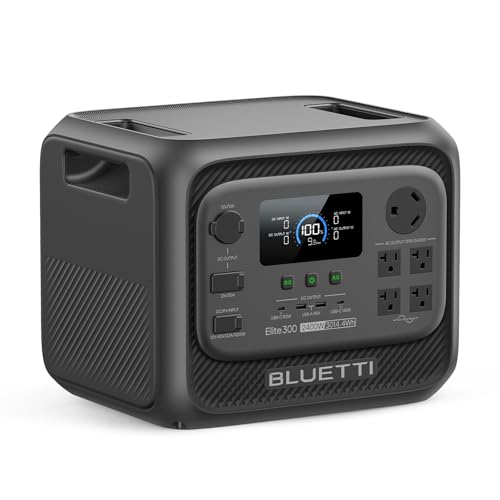
BLUETTI Elite 300 Portable Power Station for RV & Home Backup, 3014.4Wh leads this shortlist for TT-30 hookup with the most capacity per dollar. Use that fit as a reference point, then compare the alternatives against your own space and workload.
Specs that separate the picks
The first details to compare are 3,014.4Wh, 2,400W AC output, 3,072Wh, 3,000W AC output, 3,072Wh, 3,600W, 7,200W surge. Confirm the exact model and included components before ordering.
Trade-off to plan for
Feature text gives no weight or dimensions

Before you buy

What Matters Before You Choose a Portable Power Station for an RV Air Conditioner

Key buying criteria so you get the right fit the first time.

  1. 01

    Watt-hours and runtime math

    Watt-hours measure stored energy, and runtime is roughly watt-hours divided by the air conditioner's running watts, reduced by inverter losses. As an illustration, 3,014Wh feeding a 1,000 watt load gives about 3 hours before losses, so real time is shorter. Read your air conditioner's nameplate for running watts, then use this formula for every station you consider.

  2. 02

    Start-up surge versus rated output

    A compressor draws a short surge when it starts, often well above its running watts, and a station that cannot meet it will trip. Listings give rated watts and a peak or surge figure, such as 2,400W rated with 4,000W peak or 3,600W with 7,200W surge. Find your air conditioner's start-up draw, then pick a station whose surge number clearly exceeds it.

  3. 03

    TT-30 outlet

    An RV power cord ends in a TT-30 plug that needs a TT-30R receptacle, which several of these stations include. A station with only a different 30A outlet needs an adapter, and household outlets cannot take a 30 amp RV cord. Check the listing's outlet list for TT-30 or TT30 by name.

  4. 04

    Weight and liftability

    A 3kWh station is heavy, and you may need to lift it into a trunk or storage bay. Only the Anker listing states a weight, 41.7 pounds, and wheels appear on the ABOK. Look for pounds, a handle and wheels, and measure your storage space before buying.

  5. 05

    Recharge speed

    A station that takes a full day to refill limits how often you can run the air conditioner. Published figures range from 58 minutes on the Anker to 1.7 to 2.2 hours on the Jackery and 1,500W AC input on the ABOK. Compare the recharge time to how you will refill, whether by shore power, generator, solar or alternator.

  6. 06

    Expansion and honest limits

    Expansion batteries raise capacity at extra cost, but a power station is still a limited-hours air conditioner source, not an unlimited one. The Anker expands to 4kWh, the ABOK to 11,520Wh and the AC200PL to 8,448Wh. Calculate the total cost of the station plus expansion against a generator or shore power for the hours you actually need.

Our standards

Why You Can Trust RV Gear Lab

At RV Gear Lab, we compare products based on rig fit and power or hookup compatibility, verified specifications, usability, setup requirements, weight, durability, and real-world trade-offs. We do not rank products purely on marketing claims or commission rates.

We have not personally tested every product listed. Where hands-on testing is not available, recommendations are based on verified manufacturer specifications, product documentation, use-case fit, and comparative research.

How we review RV gear →

Detailed reviews

The 6 best portable power stations for an rv air conditioner, explained

01
Best for: TT-30 hookup with the most capacity per dollar

Our take

Pick this if you want the most stored energy per dollar in a station with an RV outlet and plan to run a rooftop air conditioner for a few hours at a time.

Why it made the shortlist

The Bluetti Elite 300 lists 3,014.4Wh and 2,400W of AC output, a TT-30 RV outlet and a 12V/30A DC output for items like fridges, water pumps and diesel heaters. The listing also claims a 10ms UPS switchover, app control, and recharging by AC, solar or car charger. It is priced at $1,098.99.

It ranks first because it combines the TT-30 outlet a standard RV cord plugs into with roughly 3kWh of storage at a price below the Jackery and ABOK. Against the Anker C2000 Gen 2, it holds about 960Wh more for $199 more, which is the difference between roughly 50 percent more runtime on the same load.

What works

  • Includes a TT-30 outlet that takes an RV cord
  • About 3kWh of stored energy for $1,098.99
  • 12V/30A DC output runs fridges and water pumps
  • App monitoring and 10ms UPS switchover are listed

Watch out for

  • Feature text gives no weight or dimensions
  • 2,400W output limits air conditioner start-up headroom
02
Best for: Air conditioner start-up headroom on a budget

Our take

Choose it if you want headroom for an air conditioner's start-up surge and the longest warranty here.

Why it made the shortlist

The Dabbsson 3000L lists 3,072Wh, 3,000W of rated AC output and a 3,600W Power Boost mode for compatible appliances, along with a built-in TT-30 outlet for RV hookups. The listing says to keep connected loads within the station's total and per-outlet output. It includes an AC cable, a car charging cable and a 5-year warranty, and costs $1,029.

It ranks second because it offers more rated output than the Bluetti Elite 300 (3,000W versus 2,400W) for $70 less, with about 58Wh more capacity.

What works

  • 3,000W rated output beats most stations here
  • Five-year warranty is the longest listed
  • TT-30 outlet is built in for RV hookups

Watch out for

  • No weight or recharge time is published
The catch
The tradeoff is that the 3,600W Power Boost is a short-term mode, not a sustained rating, so use the 3,000W number for planning.
03
Jackery HomePower 3000 Portable Power Station, 3072Wh, 3600W AC Output
  • 3,072Wh, 3,600W, 7,200W surge
  • Recharges in 2.2 hours by AC
  • Built-in TT-30 RV port
Check price on Amazon for Jackery HomePower 3000 Portable Power Station, 3072Wh, 3600W AC Output (opens in a new tab)
Best for: Fast recharging and the highest surge

Our take

Pick this if you plan to recharge quickly between uses, such as from a generator or campground outlet at lunch.

Why it made the shortlist

The Jackery HomePower 3000 lists 3,072Wh, 3,600W of AC output with 7,200W surge, a built-in TT-30 RV port, a UL-certified UPS that switches in 20ms or less, and LiFePO4 cells rated at 4,000 cycles. The listing says it recharges fully in 1.7 hours using AC and DC together or 2.2 hours by AC alone, and charges to 80 percent in 9 hours with two 200W SolarSaga panels. It costs $1,349.

It carries more surge than anything else in this guide at 7,200W. The extra money buys fast, documented recharging and a UL-certified UPS, not more stored energy.

What works

  • Recharge times are published in hours
  • UL-certified UPS switches in 20ms or less
  • LiFePO4 cells rated at 4,000 cycles

Watch out for

  • Costs $250 to $320 more than similar 3kWh units
  • Feature text gives no weight in pounds
04
ABOK Ark3600 Portable Power Station 3600W, 3840Wh LiFePO4 Battery
  • 3,840Wh, expandable to 11,520Wh
  • 3,600W rated, 4,500W peak
  • Telescoping handle and wheels
Check price on Amazon for ABOK Ark3600 Portable Power Station 3600W, 3840Wh LiFePO4 Battery (opens in a new tab)
Best for: Maximum runtime now with room to expand

Our take

Choose it if you want the most runtime now and room to add expansion batteries later.

Why it made the shortlist

The ABOK Ark3600 lists 3,840Wh, expandable to 11,520Wh, with 3,600W rated and 4,500W peak output. Its outputs include one 30A AC outlet, four 20A AC outlets and multiple USB ports, and it charges by AC at 1,500W, solar at 2,000W or car at 120W. It has a telescoping handle and wheels and sells for $1,139.05.

Against the Bluetti, it holds about 825Wh more for $40 more, which is about 27 percent more energy.

What works

  • Largest capacity of the six at 3,840Wh
  • Expands up to 11,520Wh with add-on batteries
  • Wheels and a telescoping handle ease moving it
  • Solar input accepts up to 2,000W

Watch out for

  • Listing does not name a TT-30 RV outlet
  • AC recharge is capped at 1,500W
05

Best Lightweight and Fast Charge · 5 of 6

Anker SOLIX C2000 Gen 2 Portable Power Station, 2,048Wh, 2,400W

Best for: Liftable weight and the fastest recharge

Our take

Pick this if you can lift 41.7 pounds, want fast recharging, and plan short air conditioner sessions or an expansion battery later.

Why it made the shortlist

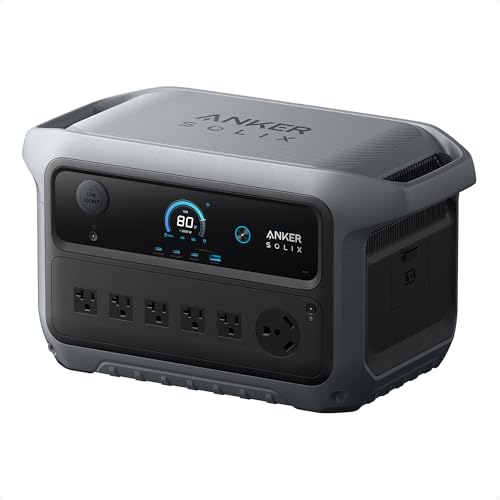
The Anker SOLIX C2000 Gen 2 lists 2,048Wh, 2,400W rated and 4,000W peak output, 41.7 pounds and 18.1 by 9.8 by 10.1 inches. The listing says it can run most window and RV air conditioners, charges from 0 to 100 percent in 58 minutes with AC and solar, and charges to 100 percent from a vehicle in 3 hours using 800W alternator charging. Capacity expands to 4kWh with an expansion battery. It costs $899.99.

It also publishes the strongest claim for air conditioners, and its 4,000W peak is higher than the Bluetti's rated output.

What works

  • Only listing with a weight, 41.7 pounds
  • Full recharge in 58 minutes by AC and solar
  • Expands to 4kWh with an expansion battery

Watch out for

  • Holds about 1,000Wh less than the 3kWh units
  • Listing does not name a TT-30 RV outlet
The catch
Against the Bluetti AC200PL, it weighs 41.7 pounds and costs $49.99 less, though the listing does not state a TT-30 outlet.
06
Best for: TT30 outlet with fast AC recharging

Our take

Choose it if you want a TT30 outlet at a lower price than the 3kWh units and plan to add batteries later.

Why it made the shortlist

The Bluetti AC200PL lists 2,304Wh, 2,400W AC output, a TT30 port, a 48V/8A DC port and 11 total ports. The listing says it recharges from 0 to 80 percent in 60 minutes with up to 2,400W AC input, takes up to 1,200W of solar, and uses LiFePO4 cells with 3,000 or more cycles. Capacity expands from 2kWh to as much as 8,448Wh with add-on batteries. It costs $949.98.

It ranks last because it holds about 710Wh less than the Elite 300 and costs less, and the Anker undercuts it by $49.99 with a published weight. Its AC input is the fastest published among the six at 2,400W, which narrows the recharge gap.

What works

  • Includes a TT30 port for an RV cord
  • AC input up to 2,400W, 0 to 80 percent in 60 minutes
  • Expands from 2kWh to as much as 8,448Wh

Watch out for

  • Base capacity is about 710Wh less than the Elite 300
  • Feature text gives no weight or dimensions

Methodology

How We Built This Shortlist

Each pick was assessed across 5 criteria weighted for real-world use.

01

Capacity versus runtime math

We compared stated watt-hours and applied runtime as Wh divided by the air conditioner's running watts, reduced for inverter losses, and treated the result as an estimate.

02

AC output and surge

We checked rated AC watts, listed peak or surge watts and any boost mode, because a compressor's start-up draw can exceed its running watts.

03

TT-30 outlet

We looked for a named TT-30 receptacle, since an RV power cord ends in a TT-30 plug and a different outlet type needs an adapter.

04

Weight and liftability

We noted published weight, handles and wheels, and treated missing weights as unknown rather than light.

05

Recharge speed and expansion

We compared stated recharge times, AC input watts and expansion options, since a station that takes a full day to refill limits repeat air conditioner use.

Decision guide

Match a Portable Power Station for an RV Air Conditioner to Your RV

By Air Conditioner Runtime Needed

Runtime in hours is roughly watt-hours divided by the air conditioner's running watts, then reduced for inverter losses. Read the nameplate on your unit for the real running and start-up figures.

Your situationRecommended pickWhy
Longest runtime in one chargeABOK Ark36003,840Wh is the most stored energy listed
Roughly 3kWh with an RV outlet at the best priceBluetti Elite 3003,014.4Wh and a TT-30 outlet for $1,098.99
Large start-up surgeJackery HomePower7,200W surge is the highest listed
Short sessions, mostly to cool down before bedAnker C20002,048Wh and listed for most RV air conditioners
Plan to add batteries laterBluetti AC200PLExpands from 2kWh to as much as 8,448Wh

By Budget

BudgetRecommended pick
Under $950Anker C2000 or Bluetti AC200PL
$1,000 to $1,100Dabbsson 3000L or Bluetti Elite 300
$1,100 to $1,200ABOK Ark3600
About $1,350Jackery HomePower

More Capacity vs Lighter Weight

Maximum capacity

The ABOK Ark3600, Jackery HomePower, Dabbsson 3000L and Bluetti Elite 300 hold 3kWh to 3.8kWh and run an air conditioner longer, but none of them publishes a weight. Plan on a heavy unit you roll or lift with help.

Lighter and smaller

The Anker C2000 holds 2,048Wh at a published 41.7 pounds. You get shorter runtime, but you can move it alone, store it more easily and recharge in 58 minutes.

Most air conditioner users should favor capacity, and choose the lighter Anker only if you will carry it often or run the air conditioner in short bursts.

By Outlet and Recharge Setup

Your setupRecommended pickWhy
Standard RV cord, TT-30 plugBluetti Elite 300TT-30 outlet is listed
Need to recharge fast at lunchAnker C2000100 percent in 58 minutes with AC and solar
Recharge by generator at the campsiteJackery HomePowerFull recharge in 1.7 hours, AC and DC together
Large solar array on the roofABOK Ark3600Accepts up to 2,000W of solar
Drive and recharge from the alternatorAnker C2000800W alternator charging in 3 hours

For Boondocking in Summer Specifically

Look for

Enough watt-hours to cover several hours of compressor time, a recharge method that matches your power source, and a TT-30 outlet or a clear adapter plan.

In this comparison

The Bluetti Elite 300 and Dabbsson 3000L offer about 3kWh with TT-30 outlets, and the ABOK Ark3600 pairs 3,840Wh with up to 2,000W solar input. Any of them gives limited air conditioner hours, so plan for a partial night, not all night.

When to Spend More

Spend more if

You need fast recharging or high surge; the Jackery HomePower publishes 7,200W surge and a 2.2 hour AC recharge, and the ABOK Ark3600 adds the most capacity.

Save if

You will cool for an hour or two at a time; the Anker C2000 at $899.99 or the Bluetti AC200PL at $949.98 covers short sessions.

FAQ

Before You Bring One Home

Can a portable power station really run an RV air conditioner?

Yes, for limited hours. Only the Anker listing says its station runs most window and RV air conditioners, and the others publish capacity and output without naming air conditioners. Check your unit's nameplate for running and start-up watts, then compare with the station's rated output and surge.

How long will it run?

Divide the station's watt-hours by the air conditioner's running watts and reduce for inverter losses. As an illustration, 2,048Wh at a 1,000 watt load is about 2 hours before losses. Your real load and the compressor's duty cycle decide the actual time.

Is the ABOK worth it over the Bluetti Elite 300?

It holds about 825Wh more for $40 more and expands to 11,520Wh, but its listing does not name a TT-30 outlet and AC charging is limited to 1,500W. The Bluetti has the named TT-30 outlet and a 10ms UPS.

How do I connect the station to my RV?

Use the TT-30 outlet with your RV's 30 amp cord, as on the Bluetti Elite 300, Dabbsson 3000L or Jackery HomePower. Turn off the RV's converter and large loads you do not need, then start the air conditioner last.

Will a soft-start kit help?

It lowers the compressor's start-up surge, which makes a station with a lower surge rating more likely to start the unit. Check the kit maker's specs and your air conditioner's compatibility.

How should I store and care for it?

Keep it indoors out of heat and recharge it periodically as the maker recommends. LiFePO4 cells such as the Jackery's are rated at 4,000 cycles, but extreme temperatures still shorten life.

Bottom line

The short version

Browse more portable power stations for an rv air conditioner on Amazon →
Bowen Higgins, RV Editor at RV Gear Lab

About the author

Bowen Higgins

RV Editor at RV Gear Lab

Bowen covers RV power, water systems, towing and leveling, upkeep and interior comfort, with a focus on matching gear to the rig, the hookups and the way you actually travel.

More from Bowen →Editorial standards

Keep reading

Related guides