

We research everything we recommend. When you buy through our links, we may earn a commission. Learn more

Buying guide · 11 min read · Updated October 2, 2026

6 Best Budget Reflective RV Roof Coatings in 2026: A Practical RV Guide

Six white reflective RV roof coatings sorted from the cheapest gallon to the biggest pail, with what each film gives up and which roof each one suits.

Bowen HigginsBy Bowen HigginsRV Editor at RV Gear Lab6 products comparedSpec-sheet researched

At a glance

Our top picks

A white reflective coating does two jobs at once. It seals the roof membrane against UV and ponding water, and it bounces a share of the sun's heat away so the ceiling above your bed stops acting like a radiator. That second job is the reason most owners buy one, and it is also where the marketing gets loose, because every can claims to cool the rig while only a few state a reflectivity figure. Heat is a spec like any other, and a coating that cannot show its number is asking you to take the cooling on faith.

This guide ranks six budget coatings on the reflectivity claim each listing makes, the chemistry that claim sits on, and how much roof a container actually covers. Acrylic, silicone and water-based rubber films age in different ways. Acrylics chalk and thin out, so they work as a recoat system, while silicones hold their film thickness longer on metal and TPO. Knowing which family you are buying matters more than the brand on the lid. The same logic applies to what goes over the film later, since a silicone skin blocks future recoats while an acrylic one welcomes them.

We evaluated the listings from the cheapest gallon up to the large pail, and each price step is linked to something concrete, such as a stated reflectivity number, a larger container or a named roof compatibility. That framing shows where a modest spend already gets the heat-shedding job done and where it simply buys more volume for a longer rig. The result is a ladder you can read in order, with the thrifty gallons at one end, the whole-roof pail at the other and a clear reason for each step in between, so you can stop at the rung your roof actually needs.

RV Gear Lab field notes

The Rig Fit Check

Start with the job
Tenee RV Roof Coating, 1 Gallon White Liquid Rubber, 88% Solar Reflectivity leads this shortlist for Buyers wanting a stated reflectivity figure on a TPO or prepped EPDM roof.. Use that fit as a reference point, then compare the alternatives against your own space and workload.
Specs that separate the picks
The first details to compare are 88% solar reflectivity, white, 100% silicone, white, Reflective flexible membrane, white. Confirm the exact model and included components before ordering.
Trade-off to plan for
Needs careful prep before going over EPDM

Before you buy

What Matters Before You Choose a Budget Reflective RV Roof Coating

Key buying criteria so you get the right fit the first time.

  1. 01

    Stated solar reflectivity

    Reflectivity is the share of sunlight a white film bounces back instead of absorbing. A page that prints a percentage, such as 88 percent or 87 percent, gives you something to compare, while a phrase like cooler roof tells you nothing. Heat that never enters the roof means less work for the air conditioner on a summer afternoon. Find the figure in the title or bullets and treat a missing number as a reason to ask.

  2. 02

    Coating chemistry

    Silicone, acrylic latex and water-based rubber behave differently over years. Acrylics are sacrificial and slowly wear away until they need a recoat, while silicones hold film thickness longer on TPO and metal. The catch is that almost nothing bonds to cured silicone afterward, so the roof stays silicone for good once you roll it on. Read the bullets for the word silicone or acrylic before you pay.

  3. 03

    Roof membrane match

    EPDM, TPO, PVC, fiberglass and aluminum are different surfaces, and a coating that grips one can bubble or peel on another. EPDM and TPO usually want a membrane-specific primer, which is the most common cause of delamination when it is skipped. Find your membrane type first, then confirm that the listing names it. A coating that lists your roof and states its primer rule is the safer buy.

  4. 04

    Dry film thickness and coverage

    The working target for dry film is about 20 to 30 mil, and cans that reach it in fewer coats cost you less labor. Coverage per gallon varies a lot between brands, so compare at equal thickness rather than per can. A single gallon in this group spreads across about 50 square feet at the recommended depth. Measure your roof, then divide by 50 to see how many gallons you really need.

  5. 05

    Surface preparation requirements

    Dirt, chalk and old wax stop a coating from bonding. Fiberglass must be de-waxed and scuffed, and chalky EPDM needs a cleaning pass before anything goes down. The kits that include gloves, a cloth or a matched cleaner make this step harder to skip. Plan on a full weekend and a dry forecast, because prep is where most coating jobs are won or lost.

  6. 06

    Container size and recoat plan

    A gallon suits a small trailer or a repair, while a 5 gallon pail suits a long fifth wheel or motorhome. Acrylic films need a refresh every few seasons, so a bigger pail also pays off by keeping leftover for touch-ups. Water-based coatings should be stored above freezing. Buy for the whole roof plus one extra coat so a second pass never stalls.

Our standards

Why You Can Trust RV Gear Lab

At RV Gear Lab, we compare products based on rig fit and power or hookup compatibility, verified specifications, usability, setup requirements, weight, durability, and real-world trade-offs. We do not rank products purely on marketing claims or commission rates.

We have not personally tested every product listed. Where hands-on testing is not available, recommendations are based on verified manufacturer specifications, product documentation, use-case fit, and comparative research.

How we review RV gear →

Detailed reviews

The 6 best budget reflective rv roof coatings, explained

01
Best for: Buyers wanting a stated reflectivity figure on a TPO or prepped EPDM roof.

Our take

It lands as the natural choice for a TPO roof, where the listing says it works without primer, and for a cleaned and prepped EPDM, fiberglass or aluminum roof.

Why it made the shortlist

The Tenee is the one listing in this group that puts a hard reflectivity figure on the can, 88 percent for the white finish, alongside a stated elongation of more than 1000 percent. That pairing describes a thick rubbery film that stretches with the roof while shedding a large share of the sun's heat, the very pairing of jobs a reflective coating is bought for.

Coverage runs up to 50 square feet a gallon, shifting with porosity and coat count, and gloves plus a cleaning cloth let surface prep start straight from the carton. The Tenee lands mid-pack on price, a small step above the cheapest gallons, and the extra spend buys a documented number rather than a general promise of a cooler roof. Compared to the Kohree silicone gallon, it trades silicone's longer film life for an easier recoat path and a higher printed reflectivity figure.

Travel trailer and camper owners who plan to coat the whole roof in two or three passes get a clear spec to compare against everything else here. A TPO-roofed travel trailer parked in a sunny state is the exact buyer, since the no-primer note on TPO removes a whole product from the shopping list.

What works

  • Reflectivity figure is printed right on the listing
  • Very stretchy film follows roof movement
  • Gloves and cleaning cloth come in the box
  • Works on TPO without a primer coat

Watch out for

  • Needs careful prep before going over EPDM
  • Not meant to fill deep gaps or holes
02
Best for: Buyers who want a silicone film that goes on without a primer step.

Our take

It fits owners of TPO and EPDM trailers who want a lasting white skin and plan to leave the roof alone for years.

Why it made the shortlist

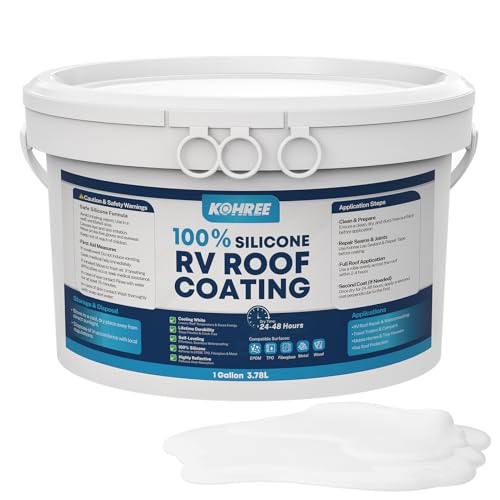
The Kohree is a 100 percent silicone coating, which puts it in the family that holds its film thickness better than acrylics on TPO and metal. The maker states no primer is needed, and it can be put down with a brush, roller or quality sprayer after a cleaning pass, which trims the number of products the job requires.

One gallon covers 50 square feet, and the pail ships with an inner aluminum bag so the coating stays fresh and the bucket stays clean while you work. Beside the acrylic rubber coatings in this group it sits a step higher on price, which pays for the silicone chemistry and the lower-odor, indoor-safe formula. Measured against the acrylic Tenee, it trades an easy recoat path for a silicone film that holds its thickness on TPO and metal, for a roof meant to be left untouched.

Silicone also tolerates ponding well, so a roof with a slight low spot near the vent gets a reflective layer that keeps working through wet weather. A TPO or metal-roofed rig in a high-sun state, where the owner wants one coating and no primer for years, is the buyer it fits best.

What works

  • Silicone film holds up well on TPO and metal
  • No primer step saves a product and a day
  • Inner foil bag keeps the pail clean
  • Low odor, fine for indoor and outdoor use

Watch out for

  • Little will bond to it once cured
  • Sits near the top for a gallon of coating
03
Liquid Rubber RV Roof Sealant, Camper and Trailer Coating, White, 1 Gallon
  • Reflective flexible membrane, white
  • EPDM, TPO, fiberglass, aluminum
  • 1 gallon per 50 sq ft
Check price on Amazon for Liquid Rubber RV Roof Sealant, Camper and Trailer Coating, White, 1 Gallon (opens in a new tab)
Best for: Buyers wanting a branded cleaner, primer and coating system for the whole roof.

Our take

The Liquid Rubber is the pick for an owner who wants every product matched, from the cleaning step to the final coat, on a rubber or TPO roof.

Why it made the shortlist

The Liquid Rubber gallon is sold as one part of a three-step system, with a matching RV Smart Cleaner and an EPDM and TPO Primer that complete the roof. The maker describes a professional-grade flexible membrane with solar reflective performance, rated for EPDM, TPO, fiberglass and aluminum roofs, plus skylights and vent covers. The coating rolls on like paint with an ordinary roller.

It rolls on like paint at one gallon for every 50 square feet, and a 5 gallon pail is described as enough for a 30 foot RV. Put alongside the Tenee it costs noticeably more for the same gallon, and the difference pays for a documented system with a cleaner and primer designed to work together on the weekend project. Judged next to the Kohree silicone gallon, it trades silicone permanence for a water-based rubber film that can be recoated later.

Following one maker's steps keeps adhesion predictable, which is the part of a coating job that decides whether the film lasts. An owner with an EPDM travel trailer who wants every step from one maker, finished in a single weekend, gets the clearest path here.

What works

  • Matching cleaner and primer built for the system
  • Rated for four common roof materials
  • Weekend project from start to finish
  • Rolls on like paint with standard tools

Watch out for

  • Primer and cleaner are separate purchases
04
SENVEN RV Roof Sealant and Coating, White, 1 Gallon, Solar Reflective
  • Water-based, zero VOC, white
  • 1 gallon per 50 sq ft
  • EPDM, TPO, fiberglass, aluminum
Check price on Amazon for SENVEN RV Roof Sealant and Coating, White, 1 Gallon, Solar Reflective (opens in a new tab)
Best for: Buyers wanting a zero-VOC water-based coating in a standard gallon.

Our take

It suits a weekend owner coating a small travel trailer or pop-up with a brush and roller.

Why it made the shortlist

The SENVEN gallon is a water-based, zero-VOC elastomeric coating with heat-reflective properties, written up for EPDM, TPO, fiberglass and aluminum roofs and around skylights, vent covers and awning parts. Water-based means no harsh solvents, so cleanup is simple and the roof can be worked on without a respirator in the driveway. Its water-based formula needs no harsh solvents, so cleanup stays simple.

One gallon is spec'd for 50 square feet at full thickness, and a 5 gallon pail is described as enough for a 30 foot RV. The SENVEN lands low on the price ladder, a hair above the cheapest option, which makes it a practical way to get a reflective coat down without moving up to the branded systems. By comparison the CUKWUYBY gallon, it adds a stated zero-VOC rating and a written storage tip.

A further tip on the page is that sealed containers should be stored above freezing, a handy tip for anyone who wants to keep leftovers for touch-ups next season. A weekend owner coating a pop-up or a small travel trailer in a driveway, who prefers cleanup without solvents, is the exact fit.

What works

  • Zero-VOC water-based formula, easy cleanup
  • Covers four common roof materials
  • Leftovers keep for touch-ups if stored warm

Watch out for

  • Maker is a little-known brand
  • Reflectivity percentage is not printed
05
Best for: The tightest budgets that still want a reflective, water-based roof coat.

Our take

The low outlay makes recoating every few seasons a routine chore, which is the honest way to treat any water-based reflective film.

Why it made the shortlist

The CUKWUYBY is the cheapest gallon here and still covers the basics: a white heat-reflective finish, a flexible high-elongation film and a water-based, solvent-free formula. The listing names EPDM, TPO, metal and fiberglass roofs and says no separate water-based primer is needed on most surfaces. Its white finish reflects the sun's heat and helps keep the interior comfortable.

The coating goes on with a roller, brush, squeegee or sprayer after dust and debris are cleared, and the maker lists roughly an hour of dry time, with heavy coats building the membrane. Against the Tenee it costs a little less and drops the stated reflectivity figure, which keeps the price at the very bottom. Read next to the SENVEN gallon, it names its dry time and its four application tools, so the schedule for stacking heavy coats is easier to plan.

A seasonal camper or a small trailer on a tight budget, recoated every few seasons as routine upkeep, is the buyer it serves well.

What works

  • Brush, roller or sprayer all work
  • Solvent-free and safe around pets
  • Quick one hour dry between passes

Watch out for

  • No reflectivity number on the listing
  • Brand has a short track record
06
Gardner Sta-Kool Elastomeric Roof Coating, White, 5 Gallon
  • 5 gallon pail, white acrylic latex
  • 87% reflective finish
  • Stretches up to 300x
Check price on Amazon for Gardner Sta-Kool Elastomeric Roof Coating, White, 5 Gallon (opens in a new tab)
Best for: Long rigs and motorhomes that need several coats across a large roof.

Our take

A 35 foot fifth wheel or a Class A motorhome that needs two or three coats gets more value here than from buying gallons one by one.

Why it made the shortlist

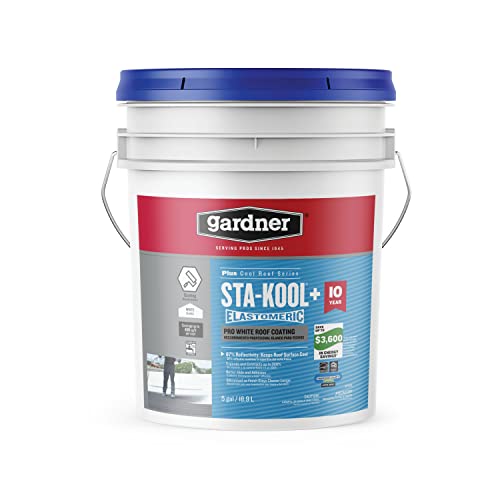
The Gardner Sta-Kool is a 5 gallon pail of white acrylic latex elastomeric coating with an 87 percent reflective finish and silicone enhancement for better water resistance. Gardner states it expands and contracts up to 300 times with the roof, which is the movement a rubber or metal roof needs from a film. The coating is described as resisting cracking and peeling.

Gardner-Gibson has made roof coatings since 1945, and this one is a 10 year PRO formulation applied with nothing more than a roller. Sticker price is the highest of the six, and the pail holds five times the volume of the single gallons, so the cost per square foot comes out competitive for a big roof. Beside the CUKWUYBY gallon, it trades the easy single-gallon size for five times the volume, which buys a full multi-coat job in one order.

Acrylic latex is a recoat system, so plan to refresh it after a few seasons and enjoy a simple roller application. A 35 foot fifth wheel or Class A motorhome that needs two or three coats across a big roof is the buyer it fits.

What works

  • Five gallons covers a full long roof
  • Reflectivity figure of 87 percent is stated
  • Brand has made roof coatings since 1945
  • Plain roller application, no special tools

Watch out for

  • Acrylic film chalks and needs recoating

Methodology

How We Built This Shortlist

Each pick was assessed across 5 criteria weighted for real-world use.

01

Reflectivity claims

We read each listing for a stated solar reflectivity figure and gave more weight to a printed number than to a general cooler-roof promise. The Tenee at 88 percent and the Gardner at 87 percent are the two that name a figure.

02

Chemistry and film life

We sorted the six into silicone, acrylic latex and water-based rubber families, since each ages differently. Acrylics chalk and thin out, so they are rated as a recoat system. Silicone earns credit because its film stays thick on TPO and metal.

03

Roof compatibility

Each listing was read for the membranes it names, such as EPDM, TPO, fiberglass and aluminum, and for any primer requirement. A coating that names your roof type scored higher than one with a loose all-surfaces promise. A named primer step is treated as part of the real job.

04

Coverage and container size

We compared how far one container goes at the stated thickness, since a single gallon is about 50 square feet and a 5 gallon pail goes much further. Value is judged per roof rather than per can. The comparison is based on product specs, not field measurement.

05

Price position inside the shortlist

The six are ordered from the cheapest gallon to the largest pail, and each step up is tied to a mechanism such as a named reflectivity, a system of matched primers or a bigger container. Our wider process is explained on the How We Review page.

Decision guide

Match a Budget Reflective RV Roof Coating to Your RV

By Roof Size

Roof area decides how much coating you need, so size the container to the rig.

Your rigRecommended pickWhy
Pop-up or small camperCUKWUYBYOne cheap gallon covers a small roof
Mid-size travel trailer, TPO roofTeneeStated 88 percent reflectivity, no primer on TPO
Trailer with a matched cleaner and primer planLiquid RubberSystem built around one maker's steps
Weekend repaint of a 20 foot rigSENVENWater-based gallon at a low entry price
Long fifth wheel or Class AGardner Sta-KoolFive gallons for several coats

By Budget

Positions within this shortlist, with the mechanism each step buys.

Price bandRecommended pickWhat the money buys
Entry of this shortlistCUKWUYBYA reflective water-based gallon at the lowest cost
Entry of this shortlistSENVENZero-VOC water-based gallon, a small step up
Mid of this shortlistTeneeA printed 88 percent reflectivity figure
Upper mid of this shortlistKohree100 percent silicone and no primer step
Top of this shortlistLiquid RubberA matched cleaner, primer and coating system
Top of this shortlistGardner Sta-KoolFive gallons for a big roof

Silicone vs Acrylic and Water-Based Rubber

The chemistry decides how the film ages and what can go over it later.

Silicone

The Kohree holds film thickness and tolerates ponding, but nothing sticks to it afterward, so the roof stays a silicone roof for good.

Acrylic and water-based rubber

The Tenee, Liquid Rubber, SENVEN, CUKWUYBY and Gardner Sta-Kool films chalk over time and need a recoat, which is easy and cheap to repeat.

Pick the Kohree for a long-term hands-off roof, or the Tenee when you want an easy recoat path.

By Roof Membrane

The membrane under the coating is the second gate after budget.

Your roofRecommended pickWhy
TPOTeneeListing states no primer needed on TPO
EPDM with a primer stepLiquid RubberMatching EPDM and TPO primer in the system
Metal or aluminumKohreeSilicone film holds up on metal
FiberglassSENVENFiberglass named, water-based and low odor
Mixed or unknown roofCUKWUYBYNames EPDM, TPO, metal and fiberglass

For Hot-Climate Camping Specifically

Heat is the reason to buy a reflective coat, so the figure matters more here.

Look for

A printed reflectivity percentage and a white finish, as the Tenee and Gardner Sta-Kool list on their pages.

In this comparison

The Tenee states 88 percent, the Gardner Sta-Kool states 87 percent, and the Kohree adds a heat-reflective silicone film for the long haul.

When to Spend More

A few step-ups earn their cost on a roof you plan to keep for years.

Spend more if

You want matched cleaner and primer with the Liquid Rubber, or a silicone film with the Kohree, or a whole-roof pail from Gardner Sta-Kool.

Save if

The rig is small or older and a recoat in a few seasons is fine, where the CUKWUYBY or SENVEN gallon does the job.

FAQ

Before You Bring One Home

Does a white reflective coating really cool the inside of an RV?

It helps by reflecting a large share of sunlight before the roof absorbs it. Listings that print a figure, such as 88 percent on the Tenee or 87 percent on the Gardner Sta-Kool, give a clear basis for comparison. The coat will not replace insulation or an air conditioner, but it narrows the temperature swing under the roof.

Which coating can I use on an EPDM or TPO roof?

Several name both membranes, including the Tenee, Liquid Rubber, SENVEN and CUKWUYBY. A membrane primer is standard on EPDM and TPO, and leaving it off is the usual reason a coat lifts. The Tenee states no primer on TPO, while the Liquid Rubber system sells a matching primer.

Is the Kohree silicone coat worth more than the acrylic gallons?

It costs more than the CUKWUYBY and SENVEN, and the step up buys silicone chemistry that holds its film thickness longer. Acrylics chalk and need a recoat. The trade is that little bonds to cured silicone, so choose it only if you are happy committing the roof to silicone.

How many gallons do I need for my roof?

Most gallons here cover about 50 square feet at the recommended thickness. Measure the roof in square feet, divide by 50 and add a margin for a second coat. A 5 gallon pail like the Gardner Sta-Kool suits long rigs that need several coats.

What prep does a roof need before coating?

Clean off dirt and chalk, let the roof dry fully and scuff or de-wax fiberglass so the coat can bond. Chalky EPDM needs a cleaning pass first. Rolling the coating on in dry weather with a standard roller gives the cleanest result.

How often will I need to recoat?

Acrylic and water-based rubber films wear thin, so schedule a touch-up after a handful of summers in strong sun. Silicone films last longer yet refuse most later topcoats. Keeping leftover coating above freezing makes touch-ups easy.

Bottom line

The short version

Browse more budget reflective rv roof coatings on Amazon →
Bowen Higgins, RV Editor at RV Gear Lab

About the author

Bowen Higgins

RV Editor at RV Gear Lab

Bowen covers RV power, water systems, towing and leveling, upkeep and interior comfort, with a focus on matching gear to the rig, the hookups and the way you actually travel.

More from Bowen →Editorial standards

Keep reading

Related guides