

We research everything we recommend. When you buy through our links, we may earn a commission. Learn more

Buying guide · 11 min read · Updated October 2, 2026

5 Best Budget RV Roof Coatings for Aluminum Roofs in 2026: A Practical RV Guide

Five budget coatings for aluminum RV roofs, from a classic silver fibered aluminum coat to white elastomerics, with what each does for metal and seams.

Bowen HigginsBy Bowen HigginsRV Editor at RV Gear Lab5 products comparedSpec-sheet researched

At a glance

Our top picks

Bare aluminum roofs behave nothing like rubber ones. They do not need a membrane primer, they do not hold a puddle of water the same way, and their enemies are oxidation, fastener leaks and seam movement. The coating that suits them is chosen around metal adhesion rather than around EPDM compatibility.

That changes the shopping list. A metal-friendly acrylic or a classic aluminum coating can be rolled straight onto a clean, dry panel, whereas the rubber-roof bestsellers with matching primers add cost that an aluminum roof never uses. Cleaning off chalky oxidation is the preparation that counts.

We evaluated five coatings on whether they name metal roofs, what sealing job they take on, and how the container size maps to a roof. Gardner's 5 gallon pail is the most expensive pick here, and the silver aluminum quart-to-gallon coat is the cheapest way in.

RV Gear Lab field notes

The Rig Fit Check

Start with the job
Gardner Sta-kool Elastomeric Roof Coating, White, RV Roof Coating 5 Gallon leads this shortlist for Large aluminum-roofed rigs needing a whole-roof reflective white coat.. Use that fit as a reference point, then compare the alternatives against your own space and workload.
Specs that separate the picks
The first details to compare are 5 gallon pail, 1 gallon, white, 1 gallon pail. Confirm the exact model and included components before ordering.
Trade-off to plan for
Most expensive pick in this guide

Before you buy

What Matters Before You Choose a Budget RV Roof Coating for Aluminum Roofs

Key buying criteria so you get the right fit the first time.

  1. 01

    Metal adhesion

    Aluminum is smooth and non-porous, so a coating needs to bond to a clean surface rather than soak in. Oxidation looks like white chalk and must be scrubbed off, or the new coating adheres to dust. Look for a listing that names aluminum or metal roofs on the product page, not just a general claim of working on every surface.

  2. 02

    Reflective finish

    A bare aluminum roof absorbs and radiates heat into the cabin on hot afternoons. White coatings reflect sunlight, and the listings quote figures like 87 and 88 percent, while classic silver aluminum coatings reflect through metallic pigment. A stated number is easier to compare than the word cool.

  3. 03

    Elongation and seam movement

    Panels expand and contract with temperature, and seam sealant fails first where movement concentrates. AMES quotes 650 percent elongation and Gardner quotes expansion up to 300 times. Treat the numbers as the maker's own claims and prefer a coating described as staying flexible rather than hardening with age.

  4. 04

    Fastener and seam coverage

    On aluminum roofs, leaks start at screws, vent flanges and end laps, not across the open field. Build thickness over fastener heads and brush it into seams, because that does more good than a coat that spreads thin. Look for guidance on coat thickness, such as one gallon per 50 square feet.

  5. 05

    Primer and prep

    Metal roofs rarely need the rubber primer that EPDM demands, which saves money, though oxidation and dirt must be removed. A simple wash, scrub and thorough dry is the preparation. Read each listing for a stated prep step instead of assuming none exists.

  6. 06

    White elastomeric versus silver aluminum

    Modern white elastomerics form a flexible membrane and reflect heat, while a classic silver fibered coating is a thinner, traditional finish with metallic pigment. The white option is the better sealant, and the silver one is the cheaper refresh. Decide which job you have before choosing.

Our standards

Why You Can Trust RV Gear Lab

At RV Gear Lab, we compare products based on rig fit and power or hookup compatibility, verified specifications, usability, setup requirements, weight, durability, and real-world trade-offs. We do not rank products purely on marketing claims or commission rates.

We have not personally tested every product listed. Where hands-on testing is not available, recommendations are based on verified manufacturer specifications, product documentation, use-case fit, and comparative research.

How we review RV gear →

Detailed reviews

The 5 best budget rv roof coatings for aluminum roofs, explained

01
Best for: Large aluminum-roofed rigs needing a whole-roof reflective white coat.

Our take

Applied with a roller into a uniform coat, it rewards a whole-roof job.

Why it made the shortlist

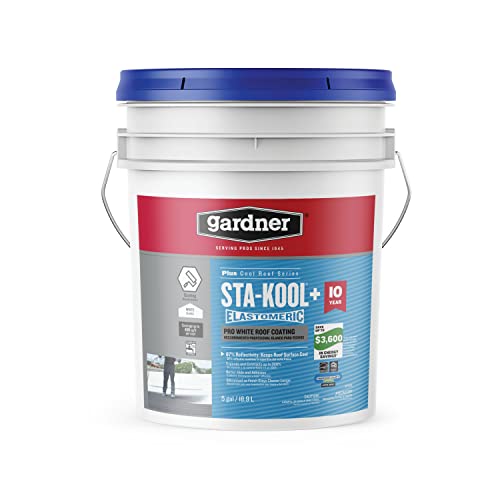
Gardner's Sta-Kool is a flexible white acrylic latex that the listing says expands and contracts up to 300 times with the roof and resists cracking and peeling. For a metal roof that heats and cools every day, that movement tolerance is the useful part.

The 87 percent reflective finish suits aluminum particularly well, since bare metal soaks heat from the sun and radiates it into the cabin. This is the most expensive pick by sticker, and the pail is where the saving per gallon lives.

What works

  • Reflective white lowers metal roof heat
  • Stretches with daily heat cycles
  • Large pail suits whole-roof coats
  • Roofing maker since 1945

Watch out for

  • Most expensive pick in this guide
  • Pail is too big for a small roof
02
Best for: Mixed-material campers with aluminum panels, plastic fittings and fiberglass trim.

Our take

The listing frames it for both professionals and DIY owners, indoors and outdoors, on RV roofs and metal buildings.

Why it made the shortlist

LUVBOATE says it bonds to metal, plastic and fiberglass found across RV construction, which fits the patchwork of a real aluminum-roofed rig with plastic vents and fiberglass caps. The flexible membrane adapts to expansion and contraction.

It sits high among the budget cans, above the STIKBOND and AMES gallons, because the listing describes a dependable waterproof barrier for leak repair as well as coating. The solar reflective white helps keep metal cooler.

What works

  • Bonds across mixed RV materials
  • Solar reflective white finish
  • Flexible through heat cycles
  • Works indoors and outdoors

Watch out for

  • Unfamiliar brand name
  • Sparse coverage detail in listing
03
Best for: Metal-roof owners wanting a stated stretch figure from a known coatings maker.

Our take

Designed for low-slope maintenance, it works as a sealant and as rubber roofing material over aluminum.

Why it made the shortlist

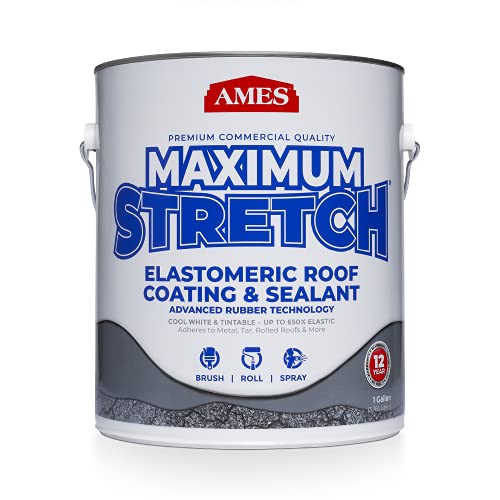
Maximum-Stretch is a white elastomeric acrylic rubberized coating with 650 percent elongation to resist cracking and peeling. The listing names metal roofing, tar, rolled roofs and built-up roofing as surfaces it adheres to.

With 88 percent light reflectivity it edges Gardner's stated figure, and it comes in a one gallon pail priced noticeably below the LUVBOATE gallon. It is non-toxic, low-VOC and made in the USA.

What works

  • Stated 650 percent elongation
  • 88 percent light reflectivity
  • Low-VOC, made in the USA
  • Adheres to metal and rolled roofs

Watch out for

  • Not RV-specific in its listing
  • One gallon covers a small roof
04
Best for: Cost-minded owners with an aluminum roof and a few leaking spots.

Our take

For an owner whose goal is to seal seams and screw heads on aluminum without buying a big pail, this is the efficient route.

Why it made the shortlist

STIKBOND quotes a minimum of one gallon per 50 square feet for a single coat, and names EPDM, TPO and aluminum among the surfaces it attaches to, including around vents and skylights. That list covers a typical aluminum-roofed rig.

It costs a little less than the AMES gallon and keeps the same brush, scraper or sprayer flexibility. Flexible and solar reflective, it adjusts to the expansion of the RV body.

What works

  • Names aluminum plus EPDM and TPO
  • Several application methods
  • Lower outlay than AMES
  • Seals around vents and skylights

Watch out for

  • Little brand history to lean on
  • Coverage means multiple cans for big roofs
05
Best for: Owners restoring an aging metal roof with a classic silver aluminum coat.

Our take

A one gallon can suits a small to mid-size metal roof.

Why it made the shortlist

Aluma-Kote is a gloss silver fibered aluminum roof coating, the traditional metal-roof finish that reflects heat with its metallic pigment and fibers that help bridge small cracks. The title identifies the product type directly.

As the entry pick it costs noticeably less than the white elastomerics above, so it is a way to refresh an old aluminum or galvanized roof without paying for a membrane-style product. The silver finish is a deliberate contrast to the white picks.

What works

  • Classic fibered aluminum formula
  • Metallic silver reflects sun heat
  • Lowest outlay in this guide
  • Same maker as the Sta-Kool pail

Watch out for

  • Listing carries almost no detail
  • Silver finish, not white, may suit fewer rigs

Methodology

How We Built This Shortlist

Each pick was assessed across 5 criteria weighted for real-world use.

01

Metal suitability

We read each listing for the roof materials it names and favored those that call out metal or aluminum directly. A coating written for rubber membranes carries primer costs an aluminum roof never needs. Metal adhesion was the lead criterion.

02

Heat reflectivity

We compared stated reflectivity figures, such as 87 percent for Sta-Kool and 88 percent for AMES, and noted where a listing only says reflective. Bare aluminum absorbs heat fast, so a reflective coat matters. These are manufacturer figures, not measurements.

03

Movement tolerance

We looked at elongation claims, including AMES at 650 percent, since a metal roof expands and contracts daily. A film that stretches protects seams and fastener heads. Claims were treated as the maker's, not ours.

04

Sealing scope

We asked whether the coating is aimed at leak repair around vents and screws, or whole-roof protection. Aluminum roofs usually leak at fasteners and seams. The better fit covers both.

05

Position on price

We placed each pick relative to the others instead of quoting numbers, since prices move. We then asked what the step up buys, whether that is volume, a stated stretch figure or a classic silver finish.

Decision guide

Match a Budget RV Roof Coating for Aluminum Roofs to Your RV

By Roof Condition

How worn the metal is decides which finish is right.

ConditionBest pickWhy
Sound roof, heat is the concernGardner Sta-KoolReflective white pail for the whole roof
Leaking seams and screwsSTIKBOND SealantOne gallon per 50 sq ft, names aluminum
Old chalky roof needing a refreshAluma-Kote SilverTraditional silver coating at the lowest outlay
Roof with plastic and fiberglass partsLUVBOATE SealantBonds metal, plastic and fiberglass
Roof with heavy movementAMES Max-Stretch650 percent stated elongation

By Budget

Bands are relative to this shortlist rather than printed figures.

BandPickWhat you get
Entry of this shortlistAluma-Kote SilverA classic silver gallon for a refresh
Low-midSTIKBOND SealantA budget white gallon naming aluminum
MidAMES Max-StretchA stated 650 percent stretch from a known maker
Upper-midLUVBOATE SealantMulti-material bonding for mixed roofs
TopGardner Sta-KoolA 5 gallon pail for a whole roof

White Elastomeric vs Silver Aluminum Coating

The finish tells you what the coating is for.

White elastomeric

Gardner Sta-Kool, AMES Max-Stretch, LUVBOATE Sealant and STIKBOND Sealant form a flexible, reflective white membrane. They seal seams and keep the roof cooler, at a moderate cost per gallon.

Silver fibered aluminum

Aluma-Kote Silver is the traditional metal-roof coat with metallic pigment and fibers. It refreshes an aging roof at the lowest outlay but is not the flexible membrane the white picks provide.

If leaks are the issue, go white with STIKBOND Sealant; if looks and a cheap refresh matter, go silver.

By Application Scale

Roof area and container size should line up before checkout.

ScaleBest pickWhy
Large roof, rolled onGardner Sta-KoolRoller-applied pail
Mid-size roof, a few gallonsSTIKBOND SealantStackable gallons at a low outlay
Small roof or patchAMES Max-StretchOne gallon with a stated stretch
Spot repairs on screwsLUVBOATE SealantLeak repair framing, mixed surfaces
Old roof, one refreshAluma-Kote SilverOne gallon of metal coating

For Hot Climates Specifically

Sun load is the reason many owners coat metal roofs at all.

Look for

A stated reflectivity number, a bright white or silver finish and enough film thickness to hold it through summer.

In this comparison

AMES Max-Stretch quotes 88 percent reflectivity, Gardner Sta-Kool quotes 87 percent, and Aluma-Kote Silver reflects through metallic pigment.

When to Spend More

Extra spend buys volume or a stronger stated stretch.

Spend more if

The roof is large, where Gardner Sta-Kool drops the cost per gallon, or movement is heavy and AMES Max-Stretch fits.

Save if

A patch or an old roof refresh is the goal, where Aluma-Kote Silver and STIKBOND Sealant do the work at the lowest outlay.

FAQ

Before You Bring One Home

Does an aluminum RV roof need a primer?

Metal roofs generally do not need the rubber-specific primer that EPDM requires, which is one place to save. They do need the oxidation scrubbed off and the surface dried. Read the listing's prep guidance since each maker differs.

Why do aluminum roofs leak at screws?

Fasteners and seams are where panels move against each other as the roof heats and cools. Old sealant hardens and cracks there. A flexible coating built up over the fastener heads restores the seal.

Is silver or white better on aluminum?

White elastomerics form a flexible membrane and reflect heat, so they seal and cool. Silver fibered aluminum is a traditional, thinner refresh. Choose white for leaks and silver for a cheap cosmetic and heat refresh.

How much coating does an aluminum roof need?

STIKBOND quotes one gallon per 50 square feet at minimum thickness, and AMES and others vary. Measure the roof and multiply, then add a margin for seams. A 200 square foot roof implies several gallons.

Can I coat over old chalky oxidation?

Scrub it off first, since the coating bonds to the surface and not to loose chalk. Wash, rinse and dry the roof before rolling. This preparation is what separates a lasting job from a peeling one.

Will a coating cool my aluminum-roofed RV?

Reflective coatings reduce surface heat, and the listings quote 87 and 88 percent reflectivity for Gardner and AMES. Those are maker claims. Expect a modest cabin benefit, mainly in direct summer sun.

Bottom line

The short version

Browse more budget rv roof coatings for aluminum roofs on Amazon →
Bowen Higgins, RV Editor at RV Gear Lab

About the author

Bowen Higgins

RV Editor at RV Gear Lab

Bowen covers RV power, water systems, towing and leveling, upkeep and interior comfort, with a focus on matching gear to the rig, the hookups and the way you actually travel.

More from Bowen →Editorial standards

Keep reading

Related guides