

We research everything we recommend. When you buy through our links, we may earn a commission. Learn more

Buying guide · 11 min read · Updated October 2, 2026

5 Best Budget RV Slide Out Roof Coatings in 2026: A Practical RV Guide

Five budget roof coatings that suit small, moving surfaces like slide-out tops and seams, with how fast each goes rain-safe and what it bonds to.

Bowen HigginsBy Bowen HigginsRV Editor at RV Gear Lab5 products comparedSpec-sheet researched

At a glance

Our top picks

At a glance · 5 picks

A slide-out roof is a small target that moves. It sees pooled water when retracted, flexing seals when extended, and an owner who wants a short, dry repair window rather than a weekend project. These facts favor flexible, fast-curing coatings in a small can.

That is why this shortlist leans toward quick rain-safe times and coatings that bond to rubber, TPO and metal without a primer. A product built for a whole roof in a 5 gallon pail would sit mostly unused, so container size matters as much as chemistry here.

Scoring looked at how each pick handles movement, how quickly the listing says it is rain-safe or recoatable, and what substrates it names. The most expensive picks are RV Roof Magic and the Gardner Turbo-Dri pail; the cheapest way in is the Tenee gallon.

RV Gear Lab field notes

The Rig Fit Check

Start with the job
Best RV Roof Coating for Your Roof Repair | The Only RV Roof Sealant Comes with One Coat Application- No Primer leads this shortlist for Owners wanting a one-coat, no-primer fix on a slide-out top or seam.. Use that fit as a reference point, then compare the alternatives against your own space and workload.
Specs that separate the picks
The first details to compare are One coat, no primer, 5 gallon pail, California VOC compliant. Confirm the exact model and included components before ordering.
Trade-off to plan for
Most expensive can on the page

Before you buy

What Matters Before You Choose a Budget RV Slide Out Roof Coating

Key buying criteria so you get the right fit the first time.

  1. 01

    Standing water resistance

    A retracted slide-out roof often holds a puddle where it cannot drain, and some coatings soften under sitting water. The California RV Roof Magic listing states that it resists standing water, while water-based acrylics generally need time to cure before they see it. Read the cure time and the standing-water line before you commit.

  2. 02

    Rain-safe and recoat time

    A slide-out cannot always be protected from weather for a full weekend. Turbo-Dri states rain-safe in 30 minutes and recoated in three hours, and RV Roof Magic quotes a few hours. A short window cuts the risk of a surprise shower ruining a half-cured coat.

  3. 03

    Elongation and seal movement

    Slide-out edges flex as the room moves in and out, so a brittle film fails there first. Tenee quotes over 1000 percent elongation and Heng's says it expands and contracts with the roof. Seek a stated figure, and treat it as the maker's claim rather than a measured result.

  4. 04

    Primer and substrate

    Slide-out tops can be rubber, TPO, aluminum or fiberglass, and each handles primer differently. No primer is needed on RV Roof Magic, which names six surfaces, while Heng's is written for rubber. Match the label to your surface and skip a primer purchase where the maker says so.

  5. 05

    Container size

    One slide-out top is a few dozen square feet, so a gallon is generous and a 5 gallon pail is wasteful unless you are coating the main roof too. Use the listing's coverage rate to estimate the area. A small can keeps the cost down and avoids stale leftover product.

  6. 06

    Regulatory compliance

    Some states regulate VOC content in coatings, and an out-of-compliance product may not be shippable to you. The California version of RV Roof Magic is formulated for strict states. If you live in one, choose the compliant listing rather than risk a cancelled order.

Our standards

Why You Can Trust RV Gear Lab

At RV Gear Lab, we compare products based on rig fit and power or hookup compatibility, verified specifications, usability, setup requirements, weight, durability, and real-world trade-offs. We do not rank products purely on marketing claims or commission rates.

We have not personally tested every product listed. Where hands-on testing is not available, recommendations are based on verified manufacturer specifications, product documentation, use-case fit, and comparative research.

How we review RV gear →

Detailed reviews

The 5 best budget rv slide out roof coatings, explained

01
Best for: Owners wanting a one-coat, no-primer fix on a slide-out top or seam.

Our take

A seamless waterproof barrier stops leaks before they spread, the listing says.

Why it made the shortlist

This RV Roof Magic sealant is described as a true one-coat, no-primer roof coating that bonds directly to EPDM, TPO, metal, fiberglass, wood and concrete roofs. For a slide-out top, one coat means one short repair window.

Dearest can in this guide, the money goes into butyl rubber technology that the listing credits with 20-plus years of protection, UV resistance and crack resistance. It outclasses the Tenee gallon on stated longevity.

What works

  • One-coat, no-primer application
  • Names six roof surfaces
  • Seamless waterproof barrier
  • Stated 20-plus year protection

Watch out for

  • Most expensive can on the page
  • Longevity figure is a maker claim
02
Best for: Owners coating several slide-out tops and the main roof in a single day.

Our take

Roller application is the path in the listing, and the 15-year designation is the maker's own claim.

Why it made the shortlist

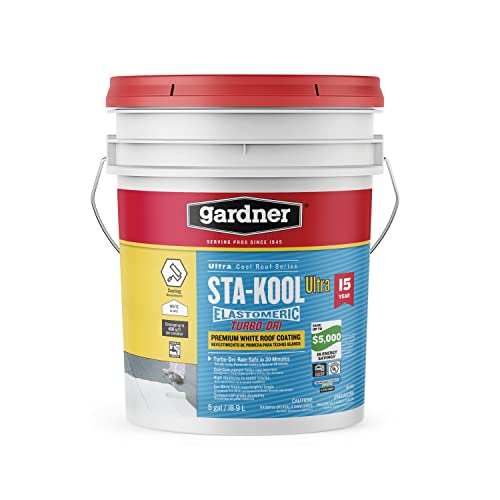
Turbo-Dri is a white acrylic engineered to be rain-safe in 30 minutes and recoated in three hours. That speed suits slide-outs, which can be left exposed to weather far less comfortably than a flat main roof.

Its cool-core pigments repel heat gain, and the single-day idea means a roof coat and a slide-out coat fit in the same afternoon. Turbo-Dri's 5 gallon pail sits high on price, just under the RV Roof Magic can, for a far larger volume.

What works

  • Rain-safe in 30 minutes
  • Recoats in three hours
  • Cool-core heat-repelling pigments
  • Pail covers many surfaces

Watch out for

  • Pail is excessive for one slide-out
  • Roller-only application guidance
03
Best for: Owners in strict-VOC states wanting a primer-free two-coat repair.

Our take

For a slide-out top that holds water when retracted, the stated standing-water resistance is the key feature.

Why it made the shortlist

This RV Roof Magic version is formulated to meet California VOC regulations, a real constraint for owners in strict states. It applies directly over TPO, fiberglass, metal and aged coatings with no primer and two coats.

A step below the one-coat can on price, it keeps the no-primer convenience and the seamless standing-water barrier, and is rain-safe in a few hours. Backed by 30-plus years of industry experience in the listing copy.

What works

  • Meets California VOC rules
  • No primer required
  • Resists standing water
  • Bonds to TPO, fiberglass, metal

Watch out for

  • Two coats rather than one
  • Cost sits above the cheaper gallons
04
Best for: Rubber-roof owners sealing tears, vents and air conditioner mounts.

Our take

Non-polluting and non-toxic, per the copy.

Why it made the shortlist

Heng's is designed for use over RV rubber roofs, at seams and tears, and to seal vents and air conditioners. That role description fits slide-out edges, where seams and small tears appear first.

It is UV resistant, expands and contracts with the roof and withstands impact, in a one gallon size. Heng's lands mid-pack on price, noticeably above the Tenee gallon and below the Magic cans.

What works

  • Built for rubber roof repairs
  • Expands and contracts with the roof
  • Resists impact and cracking
  • Non-toxic, non-polluting formula

Watch out for

  • Sparse specs in the listing
  • Aimed at EPDM rather than every roof
05
Best for: Budget buyers sealing a small slide-out top with a flexible, reflective coat.

Our take

The kit includes gloves and a cleaning cloth for surface preparation.

Why it made the shortlist

Tenee is the entry pick, with a stated 1000-plus percent elongation membrane for roofs that expand and contract through hot days and cold nights. That stretch figure is the strongest in this guide.

It offers 88 percent solar reflectivity and UV resistance, and covers up to 50 square feet per gallon, more than enough for slide-out tops. Tenee costs noticeably less than Heng's while naming TPO and, with proper prep, EPDM and fiberglass.

What works

  • Highest stated stretch in the guide
  • 88 percent solar reflectivity
  • Gloves and cleaning cloth included
  • Lowest outlay among these picks

Watch out for

  • EPDM and fiberglass need extra prep
  • Newer brand with little history

Methodology

How We Built This Shortlist

Each pick was assessed across 5 criteria weighted for real-world use.

01

Small-surface fit

We asked whether each listing suits small, moving surfaces such as slide-out tops, rather than only whole roofs. A 5 gallon pail is a poor fit for one slide-out. Container size and repair framing were weighted.

02

Cure and recoat time

We read each listing for rain-safe and recoat timing. A slide-out is awkward to leave exposed, so a short window helps. Turbo-Dri's 30 minute and three hour figures stood out as stated.

03

Flexibility claims

We compared stated elongation, from Tenee at over 1000 percent to the butyl rubber claim on RV Roof Magic. These are maker figures. Movement tolerance matters because slide-out seals flex constantly.

04

Substrate and primer

We checked which surfaces each coating names and whether a primer is needed. Primer-free coatings shorten a repair. Rubber-only coatings narrow the audience.

05

Position on price

We placed each pick relative to the others without printing numbers. We then asked what the step up buys, whether that is one-coat convenience, VOC compliance or pail volume.

Decision guide

Match a Budget RV Slide Out Roof Coating to Your RV

By Repair Window

How long the surface can stay exposed picks the coating.

WindowBest pickWhy
Same-day, several surfacesTurbo-Dri PailRain-safe in 30 minutes, recoat in three hours
One short windowRV Roof Magic One-CoatSingle coat, no primer
A few hours, strict-VOC stateRV Roof Magic CACompliant formula, rain-safe in hours
Weekend job on rubberHeng's Rubber CoatSeam and tear repair on EPDM
Relaxed schedule, tight budgetTenee GallonLowest outlay, flexible film

By Budget

Bands are relative to this shortlist, not printed figures.

BandPickWhat you get
Entry of this shortlistTenee GallonA flexible, reflective gallon at the lowest outlay
Low-midHeng's Rubber CoatA rubber-roof repair gallon
MidRV Roof Magic CAA no-primer, VOC-compliant gallon
UpperTurbo-Dri PailA 5 gallon pail with fast recoat
TopRV Roof Magic One-CoatA one-coat, butyl rubber sealant

One-Coat vs Two-Coat Convenience

Coat count changes how long the slide-out stays open.

One-coat systems

RV Roof Magic One-Coat is sold as a single application with no primer, so the repair is done in one pass. It sits at the top of the price range for that convenience.

Two-coat systems

RV Roof Magic CA, Heng's Rubber Coat, Tenee Gallon and Turbo-Dri Pail build thickness over two coats, which costs time but less money per can.

For a slide-out you will only fix once, pay for RV Roof Magic One-Coat; otherwise two coats of Tenee Gallon will do.

By Surface Type

Substrate decides whether primer enters the picture.

SurfaceBest pickWhy
EPDM rubber topHeng's Rubber CoatWritten for rubber roofs
TPO or fiberglass topRV Roof Magic CANames TPO and fiberglass, no primer
Mixed or unknownRV Roof Magic One-CoatSix surfaces named
Aluminum or metal topTurbo-Dri PailAcrylic suited to metal
Aged rubber with prepTenee GallonEPDM works with proper preparation

For Moving Slide-Out Seals Specifically

The edge of a slide-out is the stress point.

Look for

A stated elongation figure, a flexible rubber or butyl film and a short cure time.

In this comparison

Tenee Gallon quotes over 1000 percent elongation, Heng's Rubber Coat expands with the roof, and RV Roof Magic One-Coat uses butyl rubber.

When to Spend More

Spending more buys fewer repeat jobs.

Spend more if

You want the job finished once, where RV Roof Magic One-Coat is the pick, or you have several surfaces and Turbo-Dri Pail covers them.

Save if

The task is one small top or seam, where Tenee Gallon and Heng's Rubber Coat cost the least.

FAQ

Before You Bring One Home

Can I coat a slide-out roof without a primer?

The Magic can says no primer is needed and bonds directly to named roof types, and Tenee works on TPO and, with preparation, EPDM and fiberglass. On bare rubber a primer is still safer. Read your coating maker's directions for your surface.

How fast can a slide-out go back in the weather?

Turbo-Dri states rain-safe in 30 minutes and recoat in three hours. A few hours is the figure on RV Roof Magic. Always wait for the listing's stated time before retracting onto a wet coat.

Will a coating stop a slide-out top pooling water?

Sealing the surface does not fix the shape that causes pooling. The California RV Roof Magic listing says it resists standing water. Tilt or tarp where you can to keep puddles off.

How much coating does one slide-out need?

Tenee covers up to 50 square feet per gallon, which is plenty for one slide-out top. Measure the area and divide. A gallon often leaves leftovers for seams elsewhere.

Is the 5 gallon pail overkill?

For one slide-out, yes. It makes sense when you are also coating the main roof or several tops in a day. A single top is better served by a one gallon can.

Do I need the California version?

Only if you live in a state with strict VOC rules, where the compliant formula is the one that can ship to you. Elsewhere the standard no-primer can is the simpler choice.

Bottom line

The short version

Browse more budget rv slide out roof coatings on Amazon →
Bowen Higgins, RV Editor at RV Gear Lab

About the author

Bowen Higgins

RV Editor at RV Gear Lab

Bowen covers RV power, water systems, towing and leveling, upkeep and interior comfort, with a focus on matching gear to the rig, the hookups and the way you actually travel.

More from Bowen →Editorial standards

Keep reading

Related guides