

We research everything we recommend. When you buy through our links, we may earn a commission. Learn more

Buying guide · 11 min read · Updated October 2, 2026

6 Best Budget RV Roof Coatings for Rubber Roofs in 2026: A Practical RV Guide

Six picks for EPDM rubber RV roofs, from full repair kits to single quarts, with the primer and cleaner rules that decide whether a coating sticks.

Bowen HigginsBy Bowen HigginsRV Editor at RV Gear Lab6 products comparedSpec-sheet researched

At a glance

Our top picks

At a glance · 6 picks

Rubber RV roofs mean EPDM, and EPDM is the membrane that punishes shortcuts. It is slick, it chalks as it ages, and a coating laid on without the right cleaner and primer can peel in sheets. The shopping question is therefore a system question, not a single-can question.

That is why the picks here include kits and companion products alongside plain coatings. A kit that bundles the roof coating, an EPDM primer, a cleaner and lap sealant costs more up front and removes every compatibility guess from the job.

Each pick was judged on whether it names EPDM, what primer or activator it expects and how the size fits a roof. The Liquid Rubber 30 foot kit is the most expensive pick, the BEEST kit sits just below it, and the Liquid Rubber quart is the cheapest way in.

RV Gear Lab field notes

The Rig Fit Check

Start with the job
Liquid Rubber RV Roof Coating - Camper & Trailer, 30 Ft Leak Repair Kit leads this shortlist for Owners of a 30 foot rubber-roof rig who want the whole system in one box.. Use that fit as a reference point, then compare the alternatives against your own space and workload.
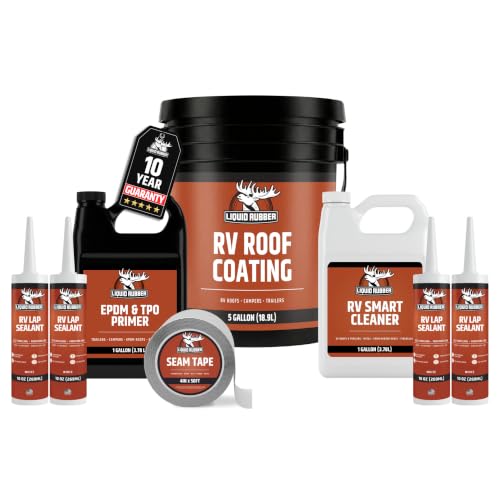
Specs that separate the picks
The first details to compare are 30 ft roof repair kit, 5 gallon coating plus primer, 3.5 gallon pail. Confirm the exact model and included components before ordering.
Trade-off to plan for
Most expensive pick in this guide

Before you buy

What Matters Before You Choose a Budget RV Roof Coating for Rubber Roofs

Key buying criteria so you get the right fit the first time.

  1. 01

    Confirm it is EPDM

    A rubber roof is usually EPDM, but some rigs have TPO, which looks similar and is a different material. Coating makers handle them differently, so a wrong guess can fail a whole job. Check the roof underside from an access hatch, the manual or the manufacturer, and do not rely on appearance.

  2. 02

    EPDM primer

    Liquid Rubber's guidance requires its EPDM and TPO primer on EPDM, and BEEST bundles a primer for adhesion. EPDM is slick and chalky, and a coating without primer can peel. Budget for the primer up front, since it is far cheaper than redoing the roof.

  3. 03

    Cleaner and activator

    Dicor's coating expects its rubber roof cleaner and activator for proper adhesion, and BEEST bundles a concentrated cleaner. Chalky oxidation has to come off before any coating goes on. Skipping the cleaner is the most common reason a coating peels.

  4. 04

    Acrylic versus liquid rubber

    Dicor RP-CRC-1 is an acrylic written for EPDM and PVC, with coverage per coat of 125 square feet. The liquid rubbers are thicker films that quote a total thickness rate. Acrylics are easier to recoat, and thicker liquid rubbers build more waterproofing.

  5. 05

    Kit versus parts

    A kit costs more up front and ensures every piece matches, while buying parts can save money if you already own a cleaner. The BEEST kit bundles four lap sealants for seams. Decide based on what you already have.

  6. 06

    Roof length and quantity

    Sized for a 30 foot roof, the Liquid Rubber kit fits that length, and a pail or can scales with area. One gallon per 50 square feet means a 25 foot roof needs several gallons. Measure first and buy a buffer.

Our standards

Why You Can Trust RV Gear Lab

At RV Gear Lab, we compare products based on rig fit and power or hookup compatibility, verified specifications, usability, setup requirements, weight, durability, and real-world trade-offs. We do not rank products purely on marketing claims or commission rates.

We have not personally tested every product listed. Where hands-on testing is not available, recommendations are based on verified manufacturer specifications, product documentation, use-case fit, and comparative research.

How we review RV gear →

Detailed reviews

The 6 best budget rv roof coatings for rubber roofs, explained

01
Best for: Owners of a 30 foot rubber-roof rig who want the whole system in one box.

Our take

The sealant rolls on like paint at one gallon per 50 square feet at final thickness.

Why it made the shortlist

This Liquid Rubber kit is sized for a 30 foot RV and carries the three-step system of cleaner, primer and coating. EPDM, TPO, fiberglass and aluminum roofs, skylights and vent covers all appear in its listing.

Most expensive on the page, the extra money buys a matched kit at a roof-sized quantity, so no step is guessed. Against the BEEST kit it positions itself on the maker's own three-step weekend method.

What works

  • Complete system in one purchase
  • Sized for a 30 foot rig
  • Names EPDM and TPO roofs
  • Heat-reflective white finish

Watch out for

  • Most expensive pick in this guide
  • More product than a small roof needs
02
Best for: Rubber-roof owners wanting coating, primer, cleaner and lap sealants bundled.

Our take

The super concentrated cleaner blasts dirt and grime.

Why it made the shortlist

The BEEST repair kit bundles a 5 gallon roof coating, a gallon of EPDM and TPO primer, a 32 ounce cleaner and four lap sealants, two non-leveling and two self-leveling. Its copy ranks it the number one way to repair EPDM roofing.

Priced just below the Liquid Rubber 30 foot kit, the bundle gets you every layer from cleaner to sealant at once. The multipurpose primer is formulated for adhesion to EPDM and TPO.

What works

  • Primer, cleaner and sealants included
  • Primer built for EPDM and TPO
  • Temperature-reducing white coating
  • Self-leveling and non-sag sealants

Watch out for

  • Second most expensive pick here
  • Large kit for a small roof
03
Best for: Owners who already own a primer and need coating volume.

Our take

Brush, roller or quality sprayer application follows a clean-down.

Why it made the shortlist

This 3.5 gallon pail is the coating without the kit, covering up to 175 square feet in two coats. The formula is a water-based, solvent-free, solar reflective liquid rubber.

It states one gallon per 50 square feet at finished thickness.

What works

  • Pail volume at lower cost than the kit
  • Solar reflective white coat
  • Brush, roller or sprayer ready
  • Soap-and-water cleanup

Watch out for

  • Primer not included
  • Heavy pail to carry
04
Best for: EPDM and PVC roof owners following Dicor's cleaner and activator system.

Our take

The white acrylic finish protects the membrane.

Why it made the shortlist

Dicor's RP-CRC-1 is an acrylic coating for EPDM and PVC, sold as part two of a system that starts with Dicor's rubber roof cleaner and activator. The coverage rate is one gallon per 125 square feet per coat.

Placed just above the Heng's can on price, the listing says the system saves over 25 percent in labor versus similar systems. It is written for retrofit installations to extend the life of the EPDM membrane.

What works

  • Written for EPDM retrofits
  • Generous coverage per coat
  • Established RV roof brand
  • Labor savings stated in listing

Watch out for

  • Limited to EPDM and PVC roofs
  • Needs the cleaner and activator
05
Best for: Rubber-roof owners sealing tears, seams, vents and air conditioner mounts.

Our take

It resists cracking and is non-polluting.

Why it made the shortlist

Heng's is designed for use over RV rubber roofs, at seams and tears, and to seal vents and air conditioners. It expands and contracts with the roof and withstands impact, in a one gallon size.

Below the Dicor can on price, it is UV resistant and non-toxic. The tear-and-seam focus makes it a repair coating more than a whole-roof system.

What works

  • Targets tears, seams and fixtures
  • Flexes with the rubber roof
  • UV resistant and impact tolerant
  • Non-toxic, non-polluting formula

Watch out for

  • Sparse specs in the listing
  • Aimed at repairs more than whole roofs
06
Best for: Owners patching a vent or seam on a rubber roof with a small amount.

Our take

The sealant rolls on like paint and reflects heat.

Why it made the shortlist

The Liquid Rubber quart is the entry pick, a small container of the same professional-grade sealant that names EPDM, TPO, fiberglass and aluminum. Nothing else here costs less.

Dropping from the 30 foot kit to a quart buys a patch-sized amount at a fraction of the outlay. It fits the three-step cleaner, primer and coating method on a small area.

What works

  • Lowest outlay in this guide
  • Names four roof materials
  • Rolls on like paint
  • Right size for a patch

Watch out for

  • Covers only a tiny area
  • Primer and cleaner sold separately

Methodology

How We Built This Shortlist

Each pick was assessed across 5 criteria weighted for real-world use.

01

System versus single product

We separated complete kits from single coatings, because EPDM needs a cleaner and primer as well as a topcoat. A kit removes compatibility guesses. We judged what each purchase actually includes.

02

EPDM naming

We checked which listings name EPDM and which only say rubber. Dicor is specific to EPDM and PVC, while Liquid Rubber names several roof types. A named match is the first filter.

03

Primer and activator

We noted whether each pick bundles a primer or expects the maker's cleaner and activator. This is the step most often skipped. Listing wording was the source.

04

Coverage and sizing

We compared coverage rates, from Dicor's 125 square feet per coat to the one gallon per 50 square feet of the liquid rubbers. A roof measured against the right rate avoids a short order.

05

Position on price

We placed each pick relative to the others without printing numbers. We then asked what the step up buys, here a bundled primer and cleaner or simply volume.

Decision guide

Match a Budget RV Roof Coating for Rubber Roofs to Your RV

By Roof Length

Roof length sizes the purchase.

RigBest pickWhy
30 foot travel trailerLR 30 Ft KitSized kit with cleaner and primer
Large rig, bundle wantedBEEST Repair Kit5 gallons plus primer, cleaner, lap sealants
Mid-size roof, own primerBEEST 3.5 GallonCoating pail without the kit
Known EPDM, acrylic routeDicor RP-CRC-1125 sq ft per gallon, per coat
Patch or ventLR QuartSmall amount at the lowest outlay

By Budget

Bands are relative to this shortlist, never printed figures.

BandPickWhat you get
Entry of this shortlistLR QuartA patch-size liquid rubber
Low-midHeng's Rubber CoatA tear and seam repair gallon
MidDicor RP-CRC-1An EPDM and PVC acrylic gallon
Upper-midBEEST 3.5 GallonA whole-roof coating pail
TopLR 30 Ft KitA complete roof-sized system

Complete Kit vs Parts

The kit trades money for certainty.

Complete kit

LR 30 Ft Kit and BEEST Repair Kit bundle the cleaner, primer and coating. They cost more up front and take every compatibility guess out of the job.

Buy parts

BEEST 3.5 Gallon, Dicor RP-CRC-1 and Heng's Rubber Coat are coatings only, so you add cleaner and primer yourself. This saves money if you already own supplies.

If this is your first rubber roof job, buy the LR 30 Ft Kit and skip the guesswork.

By Job Type

A repair and a restoration need different products.

JobBest pickWhy
Full roof restorationBEEST Repair KitPrimer, cleaner and lap sealants included
Chalky, aged EPDM refreshDicor RP-CRC-1Retrofit coating with activator
Tear and seam repairHeng's Rubber CoatBuilt for tears and seams
Matched three-step systemLR 30 Ft KitCleaner, primer and coating
Vent patchLR QuartSmall, cheap, same formula

For Chalky Old EPDM Specifically

Chalk is the main enemy of adhesion.

Look for

A concentrated cleaner, an EPDM primer and a coating that expects both.

In this comparison

BEEST Repair Kit bundles a concentrated cleaner and an EPDM primer, and Dicor RP-CRC-1 expects Dicor's cleaner and activator.

When to Spend More

Extra spend buys completeness.

Spend more if

You want a matched system once, where LR 30 Ft Kit or BEEST Repair Kit saves compatibility headaches.

Save if

You already own cleaner and primer, where BEEST 3.5 Gallon or Heng's Rubber Coat does the topcoat for less.

FAQ

Before You Bring One Home

How do I know my RV roof is EPDM?

Most rubber roofs are EPDM, but TPO looks similar and is treated differently by coating makers. Check your manual, the manufacturer or a look at the membrane edge. Do not guess, since primers and coatings differ.

Does EPDM need a primer before liquid rubber?

Liquid Rubber's guidance requires its EPDM and TPO primer on EPDM, and BEEST bundles one in its kit. Some budget cans say no primer, but a primer is the safer reading on rubber. It is far cheaper than redoing a peeled roof.

What does Dicor RP-CRC-1 need to stick?

Dicor's rubber roof cleaner and activator go on first for proper adhesion, per the listing. It is written for EPDM and PVC only. Follow the two-step directions.

Is the kit worth it over buying a pail?

For a first rubber roof job, a kit removes compatibility guesses by including cleaner, primer and coating. If you already own the cleaner and primer, a pail is the cheaper route. Decide on what you have.

How much coating does a 25 foot roof take?

At one gallon per 50 square feet, a 25 by 8 foot roof is about 200 square feet and needs around four gallons. Dicor's acrylic is quoted at 125 square feet per gallon per coat. Always buy a margin.

Can a coating fix a torn rubber roof?

A coating can seal small tears and seams, and Heng's is built for them. A large tear or a delaminated membrane needs a patch or replacement first. Inspect the damage before choosing.

Bottom line

The short version

Browse more budget rv roof coatings for rubber roofs on Amazon →
Bowen Higgins, RV Editor at RV Gear Lab

About the author

Bowen Higgins

RV Editor at RV Gear Lab

Bowen covers RV power, water systems, towing and leveling, upkeep and interior comfort, with a focus on matching gear to the rig, the hookups and the way you actually travel.

More from Bowen →Editorial standards

Keep reading

Related guides