
Practical Camping Guide · 12 min read
What Is Down Fill Power?
Fill power measures how many cubic inches an ounce of down fills. Learn how it differs from fill weight, what 600 to 900 mean and how to compare bags.

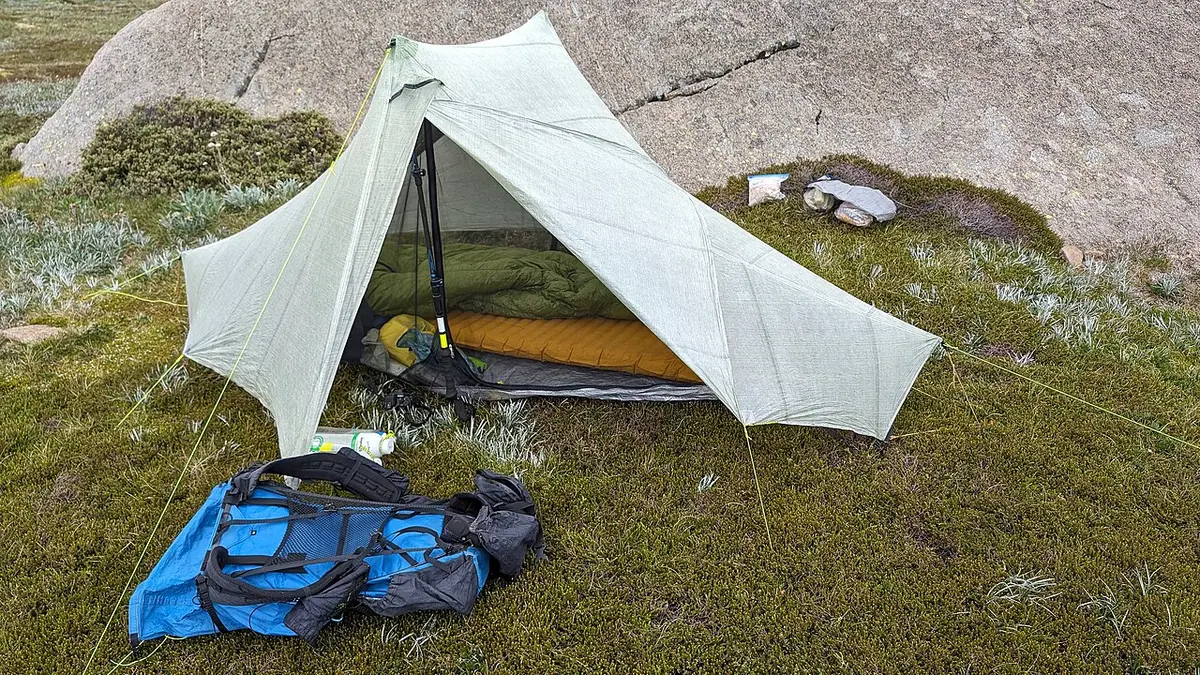
Fill power is the volume, in cubic inches, that one ounce of down occupies after it is fluffed and compressed under standard lab conditions. An ounce of 800 fill power down lofts to 800 cubic inches, while an ounce of 600 fill power occupies 600. Higher fill power means larger, more efficient down clusters that trap more air per ounce, so you need less down by weight to reach the same warmth. It measures quality, not quantity.
That distinction trips up many shoppers. A 900 fill bag is not automatically warmer than a 650 fill bag, because warmth depends on how much down is inside and how thick the bag lofts. Fill power tells you how efficient each ounce is. This guide explains how the number is measured, how it connects to fill weight and warmth, how to compare bags, what the usual ranges mean and why some labels deserve skepticism.
How fill power is measured
Labs measure fill power with a standard test, such as the IDFB (International Down and Feather Bureau) method or the EN 12130 or IDFL protocols used in various regions. A sample of down is conditioned for a set period in a controlled-humidity room, placed in a transparent cylinder, and fluffed. A weighted plate is set on top of the sample, which compresses it for a short time, and the height of the settled down is read from the cylinder. The measured volume, divided by the weight of the sample, gives cubic inches per ounce. Different test methods can give slightly different numbers, which is why brands often state which method they use.
The number reflects the lofting ability of the down. Large, mature clusters from older birds in cold climates tend to have longer filaments and higher fill power. Lower fill power down comes from younger birds or from mixed feather content. Some makers test above their labeled number and label conservatively, so the actual figure in a bag may be higher than stated. For a deeper look at test approaches used for bags, see the maker explanation in Cumulus: how down sleeping bags are tested.
Fill power versus fill weight
Fill weight is the total weight of down in the bag, in ounces or grams. Warmth comes from the combination of both numbers. Think of fill power as the efficiency of the insulation and fill weight as the amount.
| Example | Fill power | Fill weight | Approximate loft volume |
|---|---|---|---|
| Bag A | 650 | 20 oz | 13,000 cubic inches |
| Bag B | 800 | 16 oz | 12,800 cubic inches |
| Bag C | 900 | 14 oz | 12,600 cubic inches |
| Bag D | 900 | 20 oz | 18,000 cubic inches |
Bags A, B and C hold about the same volume of loft, so they should have similar warmth, though the higher fill power ones weigh 4 to 6 ounces less. Bag D has far more loft and is meant for much colder weather. A rule of thumb is that fill power times fill weight gives the potential loft volume of the down, and the bag's design determines how effectively that volume turns into insulation thickness.
A jacket example makes this tangible. A 900 fill jacket with 3 ounces of down can be about as warm as a 450 fill jacket with 6 ounces, but it will compress to half the size and weigh several ounces less. That is the premium you pay for high fill power: weight and packed size, not warmth per se.
What the ranges mean
| Fill power | Common description | Typical use |
|---|---|---|
| 300 to 500 | Low quality, often mixed with feathers | Cheap comforters, bulky budget jackets |
| 550 to 650 | Good | Everyday jackets, car-camping bags |
| 700 to 750 | Very good | Quality backpacking bags and jackets |
| 800 to 850 | Excellent | Lightweight technical gear |
| 900 and up | Premium | Ultralight and expedition gear |
These are broad categories and brands vary. A 650 fill bag with generous fill weight can be perfectly warm and cheaper, and its extra weight is a non-issue for car camping. At the top, 900 fill is costly and fragile to compress and wash, and the benefit is mainly weight savings. For most campers, 700 to 850 is the sweet spot.
Duck versus goose
Down comes from ducks and geese. Goose down generally has larger clusters than duck down, so goose reaches higher fill powers, though a high-quality duck down can match mid-range goose. The label "goose down" does not guarantee a high fill power, and "duck down" does not guarantee a low one. Always check the fill power number. Shop lists such as best duck down sleeping bags and best goose down sleeping bags show the range in practice.
Another label to understand is down percentage. A bag marked "90/10" has 90 percent down clusters and 10 percent small feathers. Feathers do not insulate as well as clusters, so a higher down percentage is better, with 90/10 or 95/5 common in good gear. A product that says "down" with no percentage may contain a mix of feathers and down.
How fill power connects to warmth
Warmth is determined by loft, the thickness of the insulation layer between you and the cold, and by how well the shell and baffles hold that loft. For a given bag design, doubling the amount of down roughly increases loft, and loft drives insulation. Fill power affects how much loft you get from each ounce.
A common mistake is to compare fill power between bags with very different designs. A 3-season bag with 650 fill and 24 ounces of down can be warmer than an ultralight bag with 900 fill and 12 ounces. The ISO 23537 temperature rating, explained in sleeping bag temperature ratings, combines everything and is a better guide than fill power alone.
Reading a spec: three questions
When you look at a down product, ask three questions.
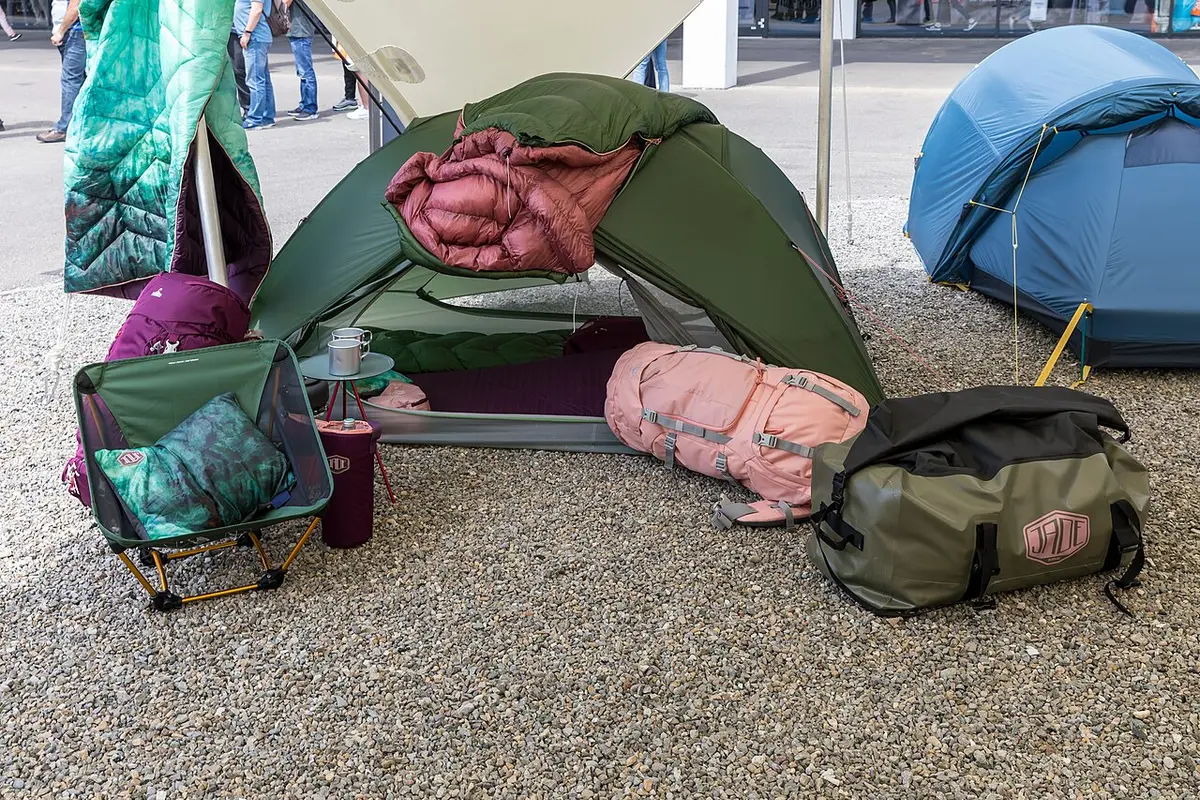
- What is the fill power, and how is it tested? Look for a number with a standard, not just "premium down."
- How many ounces of down are in this size? Fill weight appears in the specs of reputable brands.
- What is the down percentage and the source? Ask for 90/10 or better, and certification such as the Responsible Down Standard if that matters.
A listing that provides fill power but no fill weight is a warning sign. A listing with an extremely high fill power but a tiny fill weight probably achieves its weight by being less warm. Compare bags by rating, not just by their down specs.
Wet down and treated down
Fill power is measured on dry down, and the number says nothing about wet performance. When untreated down gets wet, the clusters lose loft quickly, no matter how high the fill power. Treated or hydrophobic down is coated with a durable water repellent so it resists moisture longer and dries faster. This treatment helps with condensation and light dampness, but it does not make a bag waterproof. Our guide to down vs synthetic sleeping bags compares how each insulation handles damp conditions.
Treatment also adds a small cost and is not permanent. Washing with the wrong detergent can remove some of it, and the treatment wears off over years. Follow the care label.
Shopping by use
For three-season backpacking, 750 to 850 fill with a modest fill weight gives a light, packable bag. See the best 3 season rectangular sleeping bags and best 3 season synthetic sleeping bags to compare shapes and insulation types. For winter, a bag rated to 0 degrees or colder needs much more fill weight, and high fill power keeps that weight manageable; check the best 4 season backpacking sleeping bags and best 4 season down sleeping bags. For car camping, 550 to 650 fill is fine, with weight a non-issue, and rectangular designs such as the best 3-4 season rectangular sleeping bags are comfortable. On a budget, the best affordable backpacking sleeping bags show how much you can save with lower fill power or synthetic fill.
Caring for high fill power down
Premium down is delicate. Store it loose in a large cotton or mesh sack, not compressed in a stuff sack. Wash it only when needed with a down cleaner, and dry it thoroughly on low heat. A bag that loses loft due to dirt or compression often recovers with a careful wash and dry. For the steps, read how to wash a sleeping bag, and for storage see how to store a sleeping bag. Compression for long periods reduces loft over time, and high fill power down does not make a bag immune to this.
Worked examples: comparing three real-looking spec sheets
Suppose you are choosing between three bags that all claim to be rated for 20 degrees.
Bag one lists 650 fill power duck down, 90/10, with 22 ounces of fill, and weighs 3 pounds 6 ounces. The fill is modest in efficiency but generous in amount. The bag is a good fit for a car camper or a hiker who does not mind a heavier pack. Loft volume is roughly 650 times 22, or 14,300 cubic inches, spread across a bag that is likely cut full to give room.
Bag two lists 850 fill power goose down, 95/5, with 17 ounces of fill, and weighs 2 pounds 4 ounces. The potential loft volume is about 14,450 cubic inches, nearly the same as bag one, with a pound less weight and a much smaller packed size. The extra cost buys that pound and the small pack.
Bag three lists 900 fill power with 11 ounces of fill, at 1 pound 14 ounces. The volume is about 9,900 cubic inches, which is far less loft. Either the bag is cut very slim, or its 20 degree label is generous. A slim ultralight bag in a mild climate can reach 20 degrees for warm sleepers, but a cold sleeper will need a lot more.
The arithmetic does not replace a temperature rating, but it shows when a claim is too good to be true. If a bag's potential loft volume is far lower than similar bags with the same rating, ask why, and look for the Comfort and Limit numbers.
Why high fill power matters more in jackets than in bags
A jacket is worn all day and carried on your body or in your pack, so weight and compressibility matter a lot, and a sleeping bag is used on a pad in a tent with weight as the main concern. Down jackets use fill power in the same way: higher fill power allows thinner, lighter garments. Because a jacket's warmth also depends on fit, layering and wind, the effect of fill power is less critical to comfort than the thickness of the loft and how well it is held. A parallel guide, down jacket fill power vs fill weight, applies the same ideas to clothing.
For bags, the advantage of high fill power builds with temperature rating. A summer bag with 3 to 6 ounces of down saves little weight from a fill power upgrade, whereas a winter bag with 30 ounces of down saves nearly half a pound by moving from 650 to 850. If your trips are in the cold, high fill power pays off more.
Marketing claims worth a second look
A few phrases appear on product pages that deserve scrutiny. "Premium down" with no number tells you nothing. "Up to 900 fill" may refer to the best batch the maker has, not the bag. "Hydrophobic down" says the treatment exists but not how long it lasts. "Ethically sourced" without a certification is hard to verify. "Ultralight" compared with what? Compare the weight to bags with similar ratings, using claimed weights from the maker's own spec sheet.
Look for specifics: a test method, a fill power for the actual bag, the fill weight for your size and a standard for the temperature rating. The more detail a maker gives, the more likely the numbers are real. Where details are missing, a few minutes comparing similar bags in the shop lists will show you how far a claim is from the norm.
Quality factors that fill power does not show
Fill power captures loft, but two batches of the same fill power can differ in cleanliness, odor, and cluster size distribution. Good processing washes the down repeatedly to remove oils and dust, which leaves it fluffier and nearly odorless. Poorly processed down can smell musty when warm or wet, and it may contain more small feather fragments that poke through shell fabric. Cluster size also varies: a batch with uniform large clusters feels smooth and lofts evenly, while a mixed batch with many small clusters can clump and settle.
You cannot check these in an online listing, but you can read them from the brand's reputation, the down percentage and the presence of third-party certifications. In person, a good down product lofts quickly after being squeezed, feels light and springy, and does not smell strongly. If a new bag has a persistent odor, wash it according to the care label before the first trip. A few quality indicators on the shell also matter: down-proof fabric with a tight weave and bar-tacked seams keeps the fill inside and reduces leakage over years of use.
A short buying plan
If you are shopping now, work through a plan. First, decide your temperature rating using the guidance in our temperature ratings article. Second, decide how you will carry the bag, which sets the weight target. Third, pick a fill power band: 550 to 650 for car camping, 700 to 800 for general backpacking and 850 or more for ultralight or expedition. Fourth, check that the fill weight is stated and that the temperature rating cites a standard. Fifth, check the shell and baffle design, zipper, draft tube and hood. Finally, compare the final candidates against the lists above and choose the one that matches your budget and use. This process takes less time than reading a dozen reviews and is more reliable.
Fill power on a tag versus fill power in your hands
When you hold a down product in a shop, you can check what the label claims. Squeeze the bag or jacket flat, release and watch how quickly it lofts: high-quality down springs back in a second or two and feels light and dry. Lower-quality down recovers slowly and may feel heavy or slightly damp. Smell it, since good down is nearly odorless, and look at the baffles to see whether the fill looks even. These simple checks do not replace a lab test, but they help you spot a product that does not live up to its label and give you a feel for what real loft looks like.
Related reading
Fill power is easier to judge once you see how down bags fit into the wider choice of sleep systems. Sleeping bag vs quilt and how to sleep comfortably while camping show where a well-filled down bag does its best work.
Common mistakes to avoid
- Assuming a higher fill power always means a warmer bag.
- Comparing bags without looking at fill weight.
- Ignoring the down percentage and feather content.
- Treating hydrophobic treatment as waterproofing.
- Paying for 900 fill when the bag will not be carried.
- Storing premium down compressed for months.
- Washing down with ordinary detergent.
Frequently asked questions
Is 800 fill power good?
Yes, it is excellent quality for backpacking and technical gear, giving a good balance of weight, packed size and cost. For most campers, 700 to 850 is the sweet spot. Higher numbers cost more and save only a few ounces.
Does higher fill power mean warmer?
Not by itself. It means each ounce of down traps more air, so you need less down for the same warmth. A bag with lower fill power but more down can be warmer than one with higher fill power and less down. Compare temperature ratings.
What is a good fill power for a sleeping bag?
For car camping 550 to 650 is fine. For backpacking, 700 to 850 is common. For ultralight and expedition gear, 850 to 900 and up. Pair the number with the fill weight and the bag's design.
What does 90/10 mean on down?
It means 90 percent down clusters and 10 percent small feathers. Higher down percentages generally insulate better. Many quality products use 90/10 or 95/5 mixes.
Does fill power degrade over time?
Down itself is durable, but dirt, oils, moisture and long-term compression reduce its loft. Proper washing and loose storage restore much of it. After many years, the fill power of the down in a bag can decline.
Is goose down always better than duck down?
Goose clusters tend to be larger, which helps reach high fill powers, but a quality duck down can match mid-range goose. Check the number and the test method rather than the bird.
Sources & further reading
- Switchback Travel: Down Fill Insulation Explained
- Field Mag: Down Fill Power Guide
- Outdoor Research: Demystifying Down Fill Power
Image credits
- "Tent, sleeping bag, and backpack" by Steve Bittinger, CC BY 2.0, via Wikimedia Commons.
- "Nomad, OutDoor 2018, Friedrichshafen (1X7A0319)" by Matti Blume, CC BY-SA 4.0, via Wikimedia Commons.


Ready to buy?
Compare the gear: Sleep Gear
5 Best 3 Season Rectangular Sleeping Bags in 2026
Best 3 season rectangular sleeping bags compared on size, stated temperature ratings, fill and price for car camping and cabin stays.
4 Best 3 Season Synthetic Sleeping Bags in 2026
Best 3 season synthetic sleeping bags compared on named fill, stated ranges, size and weight for budget spring to fall camping.
5 Best 4 Season Backpacking Sleeping Bags in 2026
Best 4 season backpacking sleeping bags under about $40 compared on stated comfort and limit ratings, weight and size for budget hikers.
6 Best 4 Season Down Sleeping Bags in 2026
Best 4 season down sleeping bags compared on down weight, fill power, printed temperature figures and packed size for cold-season trips.
4 Best 3-4 Season Rectangular Sleeping Bags in 2026
Rectangular sleeping bags rated for 3-4 season use under $120, compared on size, stated temperature range, fill type and packed bulk.
5 Best Affordable Backpacking Sleeping Bags in 2026
Best affordable backpacking sleeping bags under $60 compared on listed weight, packed size, temperature figures and fit for budget hikers.
3 Best Budget Down Sleeping Bags in 2026
Best budget down sleeping bags under about $90 compared on down amount, listed weight, size and an important label mix-up on one popular listing.
5 Best Budget Mummy Sleeping Bags in 2026
Best budget mummy sleeping bags under $75 compared on stated temperature ratings, weight, fill and fit for cool-weather camping.
Keep reading