
Practical Camping Guide · 12 min read
Sleeping Bag Temperature Ratings (ISO 23537) Explained
How ISO 23537 Comfort, Limit and Extreme ratings work, why they vary by sleeper, and how to pick a bag rating for the coldest night you expect.

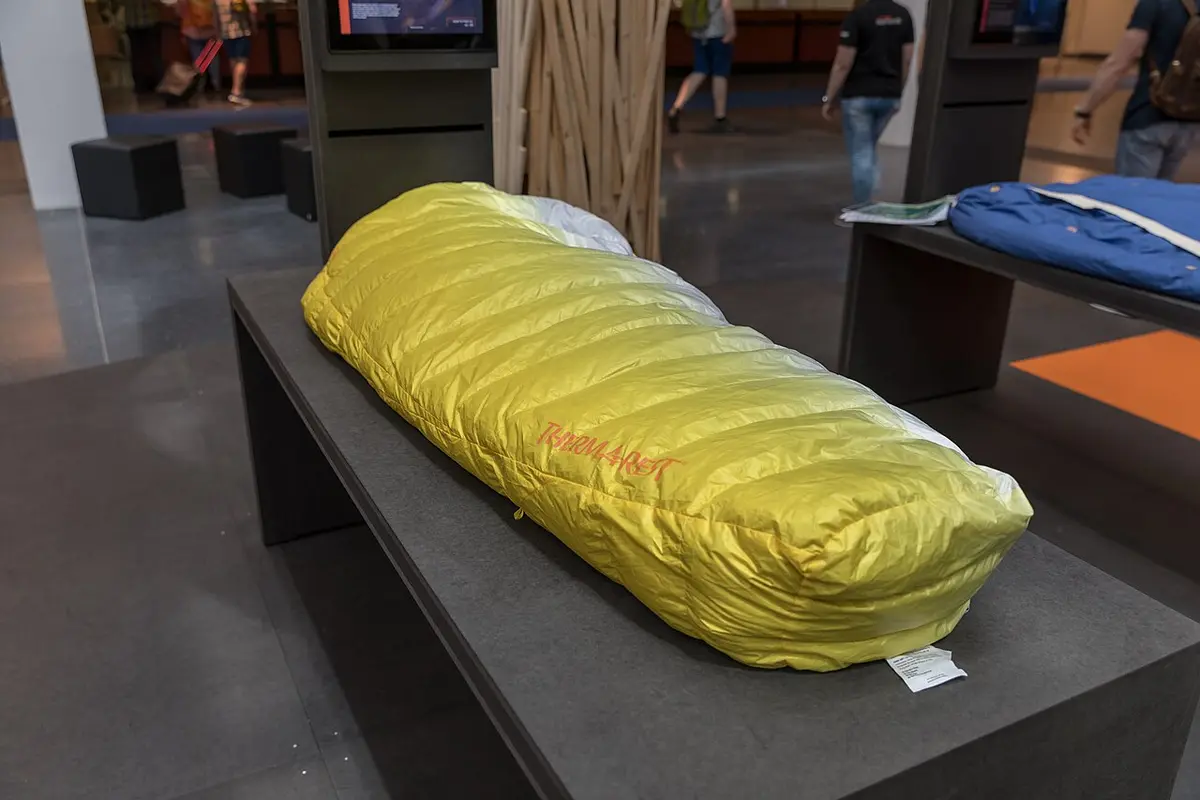
A sleeping bag's temperature rating is a lab-derived number, not a promise. Under ISO 23537, the standard behind most EU and many US ratings, a bag gets three figures: a Comfort temperature (the lowest at which a relaxed cold sleeper stays comfortable), a Limit temperature (the lowest at which a curled-up warm sleeper stays comfortable) and an Extreme temperature (a survival figure). For most people, plan around the Comfort rating, or a few degrees above it, not the number on the front of the bag.
Marketing can blur this. A bag labeled "20 degrees" may mean 20 as its Limit, which equals roughly 30 as its Comfort for a typical cold sleeper. Unrated bags sold at discount stores may use no standard at all. This guide explains how the test works, what each number means, why individual warmth varies so much, and how to turn a rating into a bag choice for the nights you actually plan to spend outdoors.
The standard: ISO 23537 and what it replaced
ISO 23537 (the successor to the European EN 13537) defines a laboratory procedure for rating the thermal performance of sleeping bags. The test uses a heated mannequin with temperature sensors placed on an insulated mat inside a climate chamber, in conditions with no wind and a controlled ambient temperature. The bag's insulation is measured in terms of the heat the mannequin loses over time, and a computational model converts the data into temperature thresholds for a standard man and a standard woman.
The standard also fixes the sleeping mat, a standard sleeping position and some clothing assumptions, which is why ratings from different brands that follow it are comparable. A bag that carries ISO 23537 or EN 13537 testing shows its Comfort, Limit and Extreme figures, usually on a label or hangtag. Many American brands now follow the standard for their main lines, while others use their own methods, and some budget bags carry loose "season" ratings.
The three numbers
| Rating | Who it is for | Assumed posture | What it means |
|---|---|---|---|
| Comfort | A standard woman (a colder sleeper) | Relaxed, lying on the back | Lowest temperature at which she is expected to sleep comfortably |
| Limit | A standard man (a warmer sleeper) | Curled in a ball | Lowest temperature at which he can sleep for eight hours without waking cold |
| Extreme | A standard woman | Curled | Survival temperature; risk of hypothermia, not a planning figure |
Between Comfort and Limit lies the transition range, where a cold sleeper is likely to feel cold but a warm sleeper is still comfortable. Between Limit and Extreme lies the risk range, where hypothermia becomes possible. The Extreme number is not for planning. It describes a bag at the edge of safety and tells you nothing about a night you would enjoy.
Notice that Comfort and Limit use different mannequins and postures. The gap between them is often 8 to 15 degrees Fahrenheit, which is why a bag with a Limit of 20 degrees may have a Comfort of 30 or 32. Because the standard puts Comfort and Limit on different people, you cannot simply say "Comfort is for women, Limit is for men," although that shorthand often works. It is closer to say the Comfort rating suits cold sleepers and the Limit rating suits warm sleepers.
What the test does not capture
The mannequin test is a controlled measure, and real nights are different. The test assumes a sleeper wearing a base layer, lying on an insulated mat, in still air, with the bag zipped and hood closed, and a dry bag. In practice you may be damp, hungry, tired, windy, sleeping on a thin pad or on cold ground. Any of these can cost you the equivalent of 10 to 20 degrees of warmth.
Human variability is the largest factor. Metabolism, body size, age, fitness, how much you ate, hydration and sleep habits vary widely. Some people run warm and sleep comfortably at the Limit rating, while others are cold at the Comfort number. The only way to know where you fall is to test your own bag on a few nights, ideally close to home. Starting with a few nights in the backyard at temperatures near the rating teaches you more than any chart.
Gender-specific and unisex bags
Many brands make men's and women's versions of a bag. Women's bags usually come with extra insulation in the torso and foot box, a shorter length and a shape that fits narrower shoulders and wider hips. Because women are typically colder sleepers, the women's version of a bag often has a Comfort rating a few degrees lower than the men's version at the same weight. This is why ratings are tied to sleeper type, and not because of an assumption about preference.
Both types are acceptable for any sleeper, and the best approach is to try the bag in a store or check the cut. A bag that is too big wastes warmth because your body has to heat extra air, and one that is too tight compresses the insulation and loses loft. See our guide to mummy vs rectangular sleeping bags for how shape influences warmth. Shop lists like best men's mummy sleeping bags and best men's rectangular sleeping bags show how designs differ between shapes.
Insulation, fill and construction
The rating comes from how much loft the bag retains, which depends on the insulation, its quantity and how it is held in place. Down insulation traps heat efficiently for its weight and compresses well, but it loses insulating power when wet. Synthetic insulation holds warmth when damp and is cheaper, but it is heavier and bulkier for a given rating. Our guide to down vs synthetic sleeping bags explains the trade-offs, and what down fill power means covers the quality number on down bags.
Construction details matter. Baffles stop insulation from shifting. A draft tube along the zipper and a draft collar around the neck seal in warm air. A well-shaped hood that cinches around your face prevents heat loss from the head. A box foot gives room for your toes without compressing the insulation. Look at the best duck down sleeping bags to see how fill and construction vary at various price points.
Pad and ground: half your warmth comes from below
A sleeping bag's insulation under your body is compressed by your weight and provides almost no warmth. Your pad provides that insulation, which is why a bag with a 20 degree rating on a thin foam pad can feel like a 40 degree bag. Sleeping pads are rated by R-value, a measure of resistance to heat flow, where a higher number means more warmth. For temperatures near freezing, R-values of 3 to 4 are common guidance, and for deep cold, 5 or more. See what is R-value in a sleeping pad and camping cot vs sleeping pad for choosing the base layer.
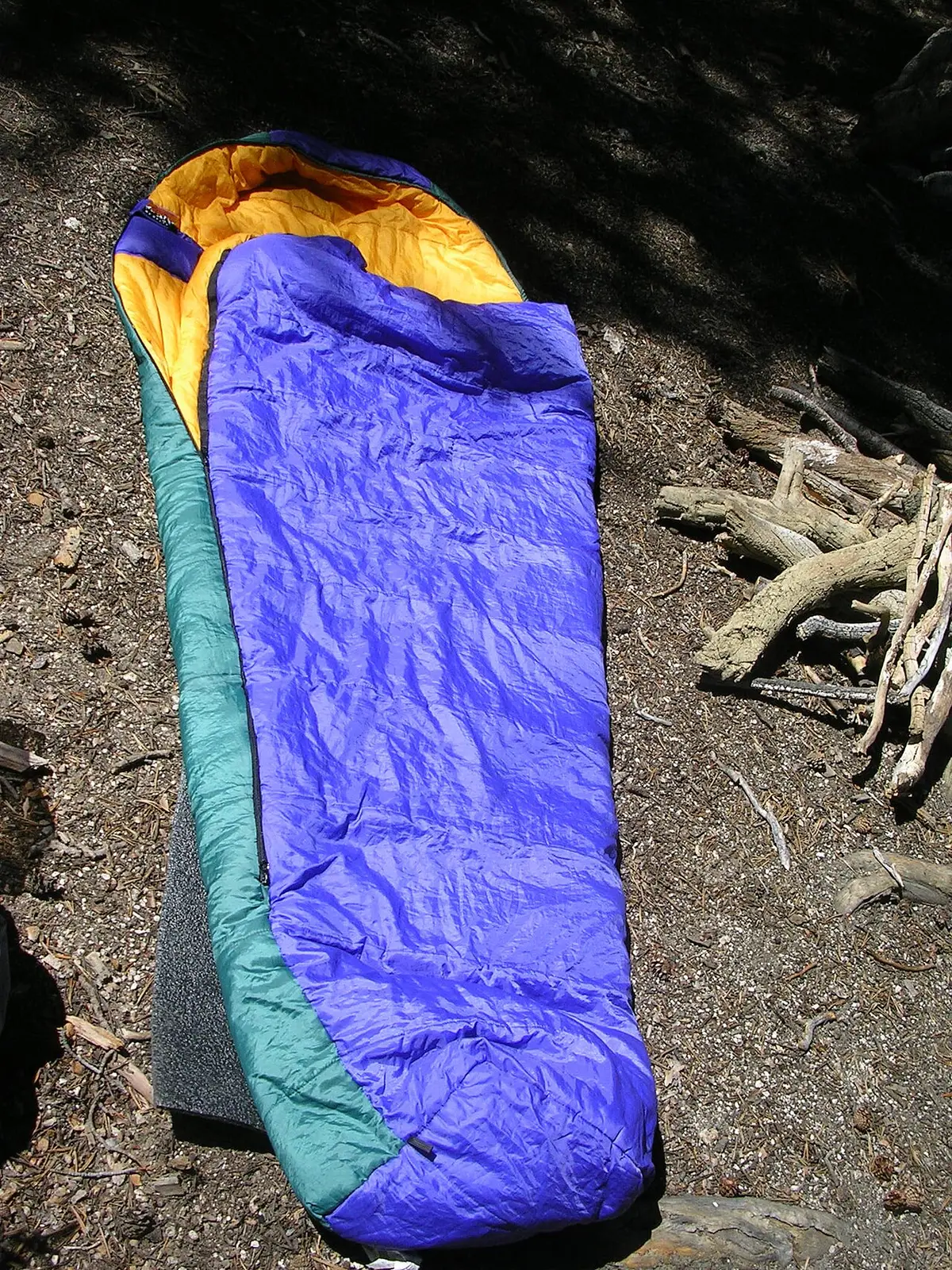
Always consider the sleep system as a whole: bag, pad, tent, clothing and your own habits. Upgrading the pad often costs less and yields a larger improvement than buying a warmer bag.
Translating a rating into a bag choice
Use this framework.
- Estimate the coldest night you will face, not the average, using the forecast and the elevation.
- Decide whether you sleep cold or warm. If you often wear a jacket indoors, you are a cold sleeper.
- Choose the rating that matches. Cold sleepers should pick a bag whose Comfort rating is at or below the night's low. Warm sleepers can go by the Limit rating, accepting a slightly chilly night.
- Add margin: 5 to 10 degrees colder than your expected low if you value comfort, if you are camping at altitude or in damp conditions, or if you will be tired or underfed.
- Check the pad and clothing and adjust. If your pad has an R-value below 3 and the temperature is near freezing, fix the pad first.
Here is an example. The forecast low is 32 degrees. You are a cold sleeper on a pad with R-value 3.5. A bag with a Comfort rating of 32 or below matches. If the bag lists only "Limit 20," its Comfort rating is likely to be near 30, so it fits. A bag marked "30 degrees" with no standard cited is a risk, and you should read the details before relying on it.
Kids, couples and special cases
Children lose heat faster, because they have more surface area compared with their mass, and they move around. Choose a bag rated 10 degrees colder than the expected low and use a good pad. Many kids' bags use simplified ratings. Shop with care; the best kids synthetic sleeping bags and best kids double sleeping bags lists show common options. For a deeper look, see how to choose a sleeping bag for kids.
Side sleepers need extra width at the shoulders and hips, and compressed insulation under a side sleeper is thinner. A bag with extra girth reduces dead spots, and shop lists like best mummy sleeping bags for side sleepers focus on this. Couples can share a double bag, with a rating that holds for the cold sleeper.
Adding warmth without buying a new bag
If a bag is borderline for the night, there are quick fixes. Wear a dry base layer and a warm hat. Add a liner, which can add several degrees; see do sleeping bag liners add warmth. Put a second pad under the first, since an extra closed-cell foam pad adds insulation and a backup. Eat a snack before bed and keep a bottle of warm water in the foot area. Choose a sheltered site away from wind and cold air pockets in hollows.
Avoid breathing into the bag, because moisture dampens insulation. Keep the hood open at the nose and mouth. Do not wear damp clothes inside, and dry your gear whenever the sun appears.
How to read a label in the store or online
Labels fall into three groups, and telling them apart takes a few seconds. The first group shows all three ISO 23537 or EN 13537 figures, often as a small graphic with a thermometer and three marked values. These are the most trustworthy, because the bag was tested and the maker is willing to publish the less flattering Comfort number. The second group lists a single number, such as "20F," with no standard. That number may be a Limit rating, a lower figure chosen for marketing, or a rough category. The third group uses season labels like "3-season" or words like "all-weather," which have no technical definition.
When a bag gives one number, look for the footnote. Many brands state "rated to 20F per ISO 23537 (lower limit)" in small type. If you cannot find any statement, assume the number is closer to the bag's Limit or Extreme than its Comfort, and add 10 to 15 degrees when you plan a trip. Compare weight and insulation amount too: a 20 degree bag that weighs two pounds with 600 fill power down is unlikely to be truly comfortable at 20 for most people, while a 3 pound bag with a generous fill weight probably is.
Rating bands and what they suit
| Rating band (Comfort) | Typical use | Insulation notes | Pad R-value to pair |
|---|---|---|---|
| 40F and up | Summer car camping, warm nights | Light synthetic or thin down | 1.5 to 2 |
| 30F to 39F | Three-season general use | Moderate insulation | 2 to 3 |
| 15F to 29F | Shoulder season, light winter | Substantial down or synthetic | 3 to 4 |
| 0F to 14F | Winter camping | Heavy insulation, draft collar | 4.5 to 5.5 |
| Below 0F | Expedition, deep cold | Very heavy insulation | 5.5 and up |
These bands are guides, and your own sleeping style shifts you up or down a band. Use them with the shop lists linked above and adjust for pad and tent.
How ratings drift over time
A rating describes a new bag. With use, insulation loses loft. Down clusters break down and clump when compressed for long periods or when they get dirty, and synthetic fibers lose their spring after hundreds of compressions. A bag that was comfortable at 20 degrees when new may feel closer to 30 after several years of use and poor storage. Body oils and dirt reduce loft as well, which is why periodic washing helps. Keep the bag lofty by storing it loose, as described in how to store a sleeping bag, and by washing it as directed in how to wash a sleeping bag.
Moisture is the other time-dependent factor. A bag that spent a rainy trip damp loses insulating value until it is dried, and some of that value may never fully return. After wet trips, dry the bag thoroughly in the sun or in a large dryer on low heat, as the care label allows.
A testing routine you can do at home
You can calibrate any bag without spending a night in a storm. On a cold night in your yard or on a balcony, set up your pad and bag the way you would in the field, wear the clothes you would wear camping and sleep for a few hours. Note when you first feel cold and where: the feet, the shoulders, the hips. Repeat on a colder night. After two or three nights you will know whether the Comfort rating matches your experience and which accessories fix the weak spots. Keep notes with the temperature, the clothing and the pad, because patterns appear fast.
This small effort prevents the most common trip failure, a bag that turns out colder than expected, far from home and a warm bed. It also helps you decide between two bags. If your current bag is comfortable to 35 and you want to camp at 25, you know the gap to close and can choose a liner, a pad or a new bag with the right amount of extra insulation.
Common mistakes to avoid
- Buying a bag by its Extreme rating.
- Ignoring that a marketing "20 degree" rating may be a Limit rating.
- Using the bag rating without considering pad R-value.
- Assuming a rating from a brand that does not follow ISO 23537 is comparable.
- Choosing a bag that is too large and wasting body heat.
- Storing a bag compressed, which reduces loft and warmth over time.
- Believing that you will feel the same on every night at the same temperature.
Frequently asked questions
What is the difference between Comfort and Limit?
Comfort is the lowest temperature at which a relaxed cold sleeper should sleep comfortably, while Limit is the lowest at which a warmer sleeper curled up can sleep without waking cold. The Limit is usually 8 to 15 degrees Fahrenheit lower. Cold sleepers should plan with Comfort.
Is the Extreme rating useful?
No for planning. It is a survival figure with a risk of hypothermia, and it describes a night you would not want. It shows a bag's absolute edge and little else.
Are all temperature ratings comparable between brands?
Only if they follow the same standard. ISO 23537 and EN 13537 ratings are comparable. Proprietary ratings and loose "season" or "20 degree" labels with no cited standard are not reliable. Check the label for the standard and for all three numbers.
Does a warmer bag mean a heavier bag?
Usually, because warmth comes from insulation, which has weight. High-quality down gives more warmth per ounce than synthetic. A good pad and clothing can substitute for part of a bag's warmth with less weight.
How much margin should I add?
Many experienced campers add 5 to 10 degrees Fahrenheit to the expected low, more for cold sleepers, high altitude, wet weather or a thin pad. It is cheaper to carry a slightly warmer bag than to spend a miserable night.
Can I use a summer bag in cold weather with layers?
In a pinch, yes, with a liner, dry clothes and a good pad. It is less efficient and can be uncomfortable because clothing compresses insulation. A properly rated bag is safer for planned cold nights.
Sources & further reading
- Bushbuck: Sleeping Bag Temperature Ratings Explained
- Great Outdoors Ireland: Sleeping Bag Temperature Ratings Explained
Image credits
- "OutDoor 2018, Friedrichshafen (1X7A0298)" by Matti Blume, CC BY-SA 4.0, via Wikimedia Commons.
- "Mummy bag" by Smack (talk), Public domain, via Wikimedia Commons.


Ready to buy?
Compare the gear: Sleep Gear
6 Best Duck Down Sleeping Bags in 2026
Six duck down sleeping bags compared on fill power, printed temperature ranges, weight and fit, from a budget QEZER to a roomy 680FP rectangular bag.
2 Best Kids Double Sleeping Bags in 2026
Two affordable double sleeping bags that suit kids sharing a bed or a parent and child, with honest notes on weight, fill and what listings leave out.
4 Best Kids Synthetic Sleeping Bags in 2026
Four kid-friendly synthetic sleeping bags, from a 30F Kelty Callisto to a 45F Coleman and budget MalloMe and oaskys bags for warm nights.
5 Best Mens Mummy Sleeping Bags in 2026
Five mummy-style sleeping bags that suit men, from a 0F Coleman North Rim to NEMO's men's Forte, a Kelty Cosmic 40F and a down SYWSKW with wide shoulders.
2 Best Mens Rectangular Sleeping Bags in 2026
Two flannel-lined rectangular sleeping bags for men: a 91 inch REDCAMP for tall campers and a MEREZA rated 32 to 50F with a pillow included.
5 Best Mummy Sleeping Bags For Side Sleepers in 2026
Five mummy sleeping bags with extra room for side sleepers, led by a peanut-shaped AZITREK XXL and a stretchy-footbox BISINNA.
4 Best Mummy Sleeping Bags For Summer in 2026
Four mummy sleeping bags for summer and shoulder-season camping, from an ISO-rated 1TG Tactical to budget Wakeman and Nature Link bags.
4 Best Mummy Sleeping Bags For Winter in 2026
Four mummy sleeping bags for winter, from a 0F Coleman North Rim and a 5 to 10F SereneLife to a down SYWSKW and a 20F TETON Trailhead.
Keep reading