

We research everything we recommend. When you buy through our links, we may earn a commission. Learn more

Buying guide · 10 min read · Updated October 2, 2026

4 Best 10 Person Cabin Tents in 2026: A Practical Camping Guide

Best 10-person cabin tents compared on floor size, center height, room dividers and porch design for big family and group car camping.

Danny WalkerBy Danny WalkerCamping Editor at RV Gear Lab4 products comparedSpec-sheet researched
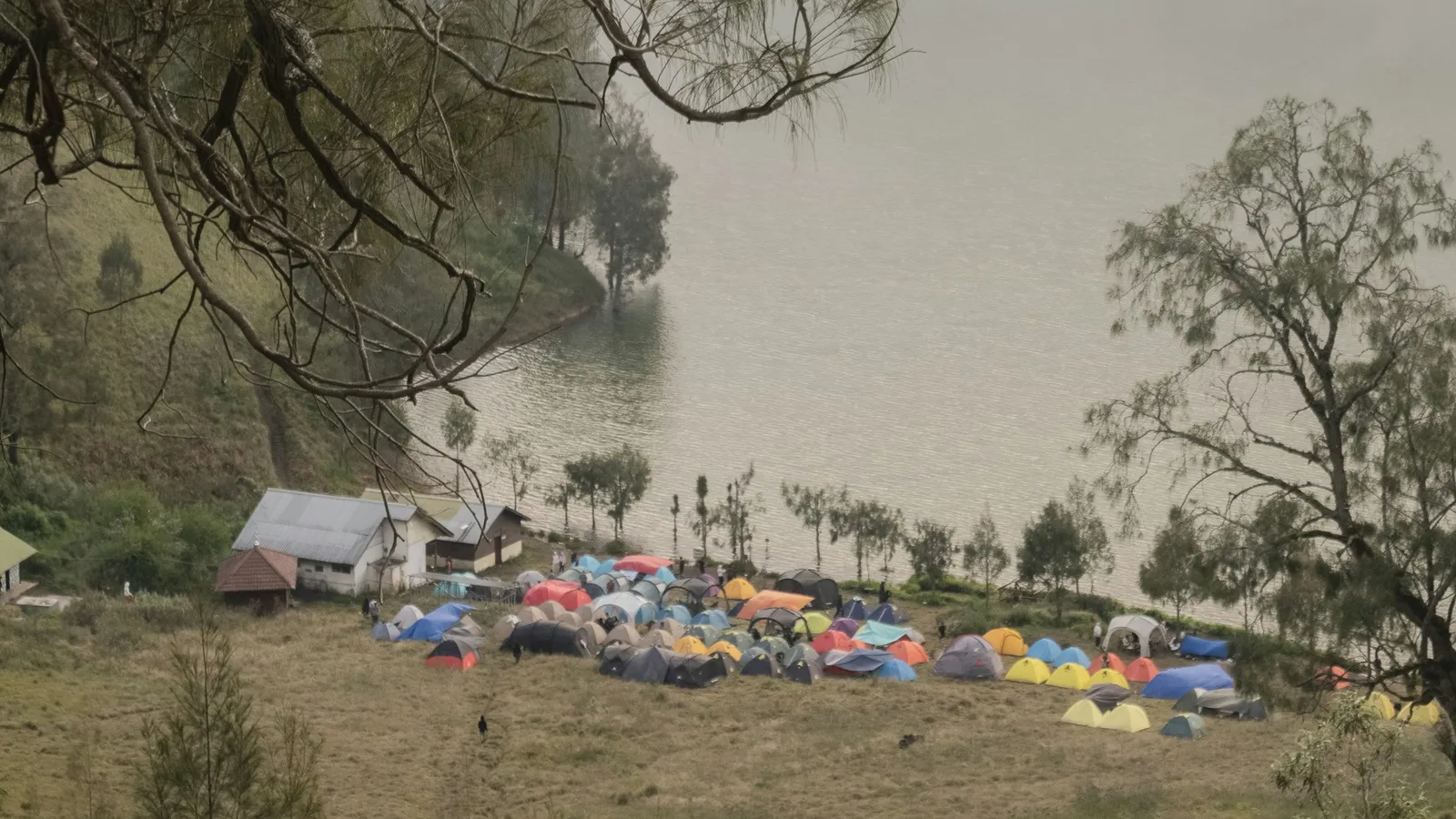
Colorful tents pitched beside a misty mountain lake

At a glance

Our top picks

A 10-person cabin tent is rarely a ten-sleeper in practice. The label counts bodies packed shoulder to shoulder, so the useful numbers are the floor in feet, the queen air mattresses it fits and how many rooms you can carve out.

Four tents were kept because each one states a 10-person rating on its own listing and backs it with a footprint and center height. Everything here is a straight-wall or near-straight-wall cabin, the shape that makes the most of vertical space.

RV Gear Lab field notes

The Campsite Fit Check

Start with the job
PORTAL 10 Person Camping Tent leads this shortlist for Two-room family trips. Use that fit as a reference point, then compare the alternatives against your own space and workload.
Specs that separate the picks
The first details to compare are 14 x 10 ft, 84 in peak, 14 x 10 ft, 86 in peak, (10+7) x 14 ft floor. Confirm the exact model and included components before ordering.
Trade-off to plan for
PU1000mm coating is entry level

Before you buy

What Matters Before You Choose a 10 Person Cabin Tent

Key buying criteria so you get the right fit the first time.

  1. 01

    What 10-person really fits

    A 10-person rating counts sleeping bags laid side by side. A 14 x 10 ft floor holds four queen air beds or about ten bags with no gear. Check whether the listing names a with-gear figure, and plan on half the label for real comfort.

  2. 02

    Center height and wall shape

    Center height is the tallest point of the roof, and a near-straight wall keeps that height across more floor. An 86 inch peak lets most adults stand without ducking. Look for the height in inches and a straight-wall note on the listing.

  3. 03

    Waterproof rating in mm

    Water column in millimeters measures how much water pressure a fabric resists. A 1200mm or 1500mm figure beats 1000mm for sustained rain. Compare the number on the listing and look for taped seams, which stop leaks at stitching.

  4. 04

    Room dividers and doors

    A divider curtain splits one big room into two spaces. It only helps privacy if each space has its own door. Check the listing for the divider and the door count per room.

  5. 05

    Porch and screen options

    A front porch is covered vestibule space for boots and gear, while a screened porch also keeps bugs out. Both add floor area that does not count for sleeping. Look for dimensions of the porch itself and mesh on every side if bugs are a concern.

  6. 06

    Setup time and crew size

    A 10-person cabin has long poles and heavy fabric. Instant frames cut pitch time to about a minute but add pole weight. Decide whether you camp with helpers and read the stated setup time.

Our standards

Why You Can Trust RV Gear Lab

At RV Gear Lab, we compare products based on campsite fit, verified specifications, usability, setup requirements, weight, durability, and real-world trade-offs. We do not rank products purely on marketing claims or commission rates.

We have not personally tested every product listed. Where hands-on testing is not available, recommendations are based on verified manufacturer specifications, product documentation, use-case fit, and comparative research.

How we review camping gear →

Detailed reviews

The 4 best 10 person cabin tents, explained

01

Best Overall · 1 of 4

PORTAL 10 Person Camping Tent

PORTAL 10 Person Camping Tent
  • 14 x 10 ft, 84 in peak
  • 110 in front porch
  • Divider curtain, two doors
Check price on Amazon for PORTAL 10 Person Camping Tent (opens in a new tab)
Best for: Two-room family trips

Our take

A porch, two rooms and big ventilation in one 10-person tent at a fair price.

Why it made the shortlist

The Portal measures 14 ft by 10 ft with an 84 inch center height and fits 10 sleeping bags or 4 queen air mattresses. It adds a 110 inch by 110 inch front porch, six mesh windows, two large doors and two ground vents.

Against the CORE 10 it swaps a gear loft for a porch and a cheaper price tag. Compared with the DMH, it covers a similar footprint while pairing a divider curtain with a separate door for each room.

It suits families who want two private rooms and a covered entry. The mid-range cost keeps it easy to justify.

What works

  • Porch shelters gear and lounging
  • Divider makes two private rooms
  • Six windows and a mesh ceiling
  • Taped seams and detachable rainfly

Watch out for

  • PU1000mm coating is entry level
  • 68D polyester is lighter weight
The catch
The 1000mm waterproof rating is modest, so seal the seams and pitch the fly tight in heavy rain.
02

Best Weather Protection · 2 of 4

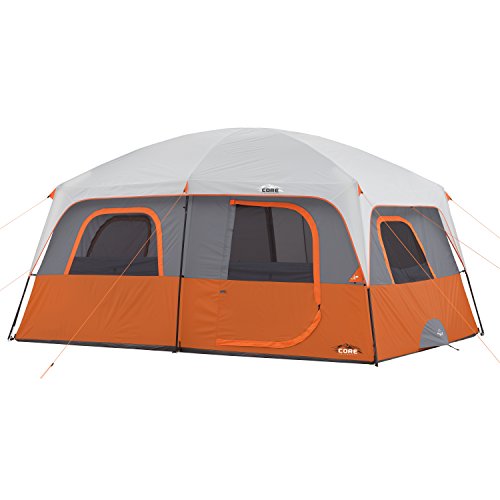
CORE 10 Person Tent

CORE 10 Person Tent
  • 14 x 10 ft, 86 in peak
  • 1200mm H2O Block fabric
  • Gear loft and room divider
Check price on Amazon for CORE 10 Person Tent (opens in a new tab)
Best for: Rainy-season campers

Our take

The weather-focused 10-person tent, with a loft and divider already included.

Why it made the shortlist

The CORE 10 is a 14 ft by 10 ft cabin with an 86 inch center height and a nearly straight wall. H2O Block fabric rated at 1200mm, a fully taped rainfly, sealed seams and zipped windows form the weather shell.

Against the Tangkula, it trades the instant-pop frame for stronger rain specs.

It suits campers who face real rain and want a brand-name build. The room divider comes already in the box.

What works

  • Fully taped rainfly and seams
  • Straight walls give standing room
  • Included gear loft keeps floor clear
  • Fits four queen air beds

Watch out for

  • Priciest tent in this group
  • Listed as 5 people with gear
The catch
Real comfort is closer to five people with gear, as the listing itself says.
03
Best for: Buggy campsites, long stays

Our take

A screened living room attached to a 10-person tent, at the same price tier as the Portal.

Why it made the shortlist

The DMH counts a (10+7) by 14 ft floor area, which includes a screened-in porch, under an 84 inch center height. Mesh covers one door, three windows and the roof, and the listing names a rain-resistant E-Port for power cords.

Compared with the Portal, the porch here is a true screened room, so bugs stay out while you sit. Against the Tangkula it sets up by hand, which costs minutes yet adds the screened living space.

It fits campers in buggy regions who want a screen room attached to the sleeping tent. Evenings outside the bags become far more pleasant.

What works

  • Screened porch keeps bugs out
  • E-Port routes an extension cord
  • Tent skirt and taped seams
  • Mesh pockets and overhead loft

Watch out for

  • Manual pole setup takes longer
  • Porch floor space is not sleeping space
The catch
The porch counts toward the floor figure but is not sleeping space.
04
Best for: Fast pitch, mild weather

Our take

The quick-setup 10-person option for groups that hate pole sleeves.

Why it made the shortlist

The Tangkula is a 13 ft by 9 ft instant cabin with a 79 inch center height and a 60-second setup. It carries 1500mm water-resistant fabric, a removable rainfly with taped seams and UPF30 sun protection.

It is the lowest-priced and quickest to pitch here.

It works for groups that arrive late at the campsite. A tent standing in minutes keeps the evening relaxed.

What works

  • Pitches in about a minute
  • Three doors, three mesh windows
  • Roof skylight for stargazing

Watch out for

  • Fits three queen mattresses only
  • Lowest roof of the four
The catch
Three queen mattresses fill the floor, so ten adults need sleeping bags and no cots.

Methodology

How We Built This Shortlist

Each pick was assessed across 5 criteria weighted for real-world use.

01

Floor size in feet

Footprints from 13 x 9 ft to 14 x 10 ft were compared against queen-mattress counts.

02

Honest capacity

Where a listing states people with gear versus without gear, the lower figure was treated as real comfort.

03

Weather build

Fabric rating, taped seams and rainfly coverage decided rain protection.

04

Rooms and porch

Divider curtains, doors per room and porch designs were compared for privacy and gear space.

05

Setup effort

Instant frames and standard pole sleeves were weighed against how large a crew each needs.

Decision guide

Match a 10 Person Cabin Tent to Your Camp Setup

By Group Style

Your situationRecommended pickWhy
Two couples wanting separate roomsPortal 10-Person Porch CabinDivider curtain with its own door for each room.
Heavy rain on the forecastCORE 10-Person Cabin Tent1200mm fabric with taped fly and seams.
Buggy lake or woods campsiteDMH 10-Person Screen Porch TentScreened porch and mesh door, windows and roof.
Late arrival, quick pitchTangkula 10-Person Instant Cabin60 second instant setup.
Kids who need floor space and storageCORE 10-Person Cabin TentGear loft and pockets free up the floor.

By Budget

BudgetRecommended pick
$130 to $170Tangkula 10-Person Instant Cabin or Portal 10-Person Porch Cabin
$160 to $280DMH 10-Person Screen Porch Tent or CORE 10-Person Cabin Tent

Instant Frame vs Pole Sleeves

Instant frame

Tangkula 10-Person Instant Cabin has pre-attached poles that lift the tent in about 60 seconds. You give up some footprint and roof height.

Pole sleeves

Portal 10-Person Porch Cabin, CORE 10-Person Cabin Tent and DMH 10-Person Screen Porch Tent use standard poles. Setup takes longer and lets the makers add a porch or taller wall.

Choose Portal 10-Person Porch Cabin for most families, and Tangkula 10-Person Instant Cabin only if setup speed outranks space.

By Weather Priority

ConditionRecommended pick
Sustained rainCORE 10-Person Cabin Tent
Heat and airflowPortal 10-Person Porch Cabin
Bugs and mosquitoesDMH 10-Person Screen Porch Tent
Sun and UV exposureTangkula 10-Person Instant Cabin

For Large Family Reunions Specifically

Look for

a floor large enough for multiple queen beds plus a covered spot for gear

In this comparison

Portal 10-Person Porch Cabin pairs four queen beds with a 110 inch porch, while DMH 10-Person Screen Porch Tent adds a screened room for meals.

When to Spend More

Spend more if

Spend more if rain is likely, because CORE 10-Person Cabin Tent adds a 1200mm fabric and a gear loft. Add DMH 10-Person Screen Porch Tent when a bug-free sitting area matters as much as the sleeping space.

Save if

Save with Tangkula 10-Person Instant Cabin or Portal 10-Person Porch Cabin if your camping is fair-weather. Both cost the least here and still give a 10-person floor.

FAQ

Before You Bring One Home

Can ten adults really sleep in a 10-person cabin tent?

Only in sleeping bags with no gear and no cots. A 14 x 10 ft floor fits four queen air beds, which sleeps about eight comfortably. Count real mattresses to decide.

What is the common mistake with large cabin tents?

Pitching them without staking the guylines. Tall straight walls catch wind like sails. Stake every corner and use the guylines.

Is the CORE 10 worth it over the Portal?

It costs far more and drops the porch, yet gives higher-rated 1200mm fabric and a gear loft. Choose it if rain is the main risk. Otherwise Portal 10-Person Porch Cabin is the better value.

How do I set up a divider curtain?

Clip the divider to the loops across the roof and pull it to the floor tabs. Each room needs its own door for real privacy. The Portal listing names two doors for its two rooms.

How do I keep a big cabin tent from leaking at the seams?

Check that the rainfly fully covers the tent and that seams are taped. Re-tension the fly after dusk when fabric relaxes. A seam sealer on stitching helps older tents.

Bottom line

The short version

Browse more 10 person cabin tents on Amazon →
Danny Walker, Camping Editor at RV Gear Lab

About the author

Danny Walker

Camping Editor at RV Gear Lab

Danny covers camping gear, campsite setup, outdoor power, sleep systems and practical camping advice, with a focus on helping campers make better gear decisions.

More from Danny →Editorial standards

Keep reading

Related guides