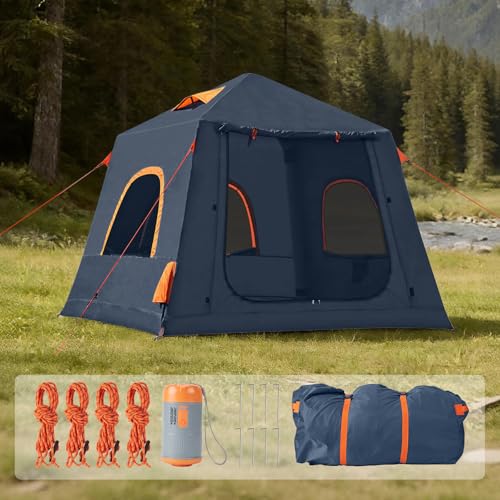
Threading poles through sleeves is the least loved part of camping. It is fiddly at dusk, it is miserable in rain and it is the step that most often ends in a bent pole or a pinched finger. An air tent replaces those rigid poles with inflatable beams. You unroll the tent, attach a pump, and the structure rises into shape as the beams fill. For a couple pulling into a campground late, or for an RV owner who wants a quiet backup shelter beside the coach, that shortcut is a real convenience. The same ease helps in the cold, when numb fingers struggle with clips and sleeves, and it helps first-time campers who would otherwise spend the first evening decoding a pole diagram.
The trade is that an air tent depends on air pressure and a pump. A hand pump means a few minutes of steady work, an electric pump means a power source, and a leak in a beam means a repair kit instead of a spare pole. Air tents are also heavier and bulkier than the lightest backpacking tents, so they suit car camping, RV sites and truck beds far better than long trail miles. The options sized for two people are few, which is why the shortlist here has three picks instead of ten.
The three picks cover different situations. The catnaoa is a 2 to 3 person hand-pump tent that stands 77 inches tall at the center. The OUTZATA uses the same 87 by 87 by 77 inch shape with an electric pump and a stated 3000mm PU coating. The JOYTUTUS is an inflatable truck-bed tent for short 5.0 to 5.2 foot beds that also works on the ground and inflates in about 30 seconds. Ordering them is less about which is best and more about where you sleep.
We evaluated each tent on pump type, size, headroom, fabric, stated water rating and extras, from the specs sellers publish and the feedback buyers post. This comparison is built from published specifications and owner feedback, not hands-on use. Because an air beam can leak, practice inflating any new tent at home before the first trip, and keep the repair patch that comes with it in the same bag as the pump. Also pitch the tent in the yard once to check the stakes, guy lines and window zippers, because finding a missing part at the campsite is far harder than finding it on the lawn.
Our standards
Why You Can Trust RV Gear Lab
At RV Gear Lab, we compare products based on campsite fit, verified specifications, usability, setup requirements, weight, durability, and real-world trade-offs. We do not rank products purely on marketing claims or commission rates.
We have not personally tested every product listed. Where hands-on testing is not available, recommendations are based on verified manufacturer specifications, product documentation, use-case fit, and comparative research.
How we review camping gear →