

We research everything we recommend. When you buy through our links, we may earn a commission. Learn more

Buying guide · 10 min read · Updated October 2, 2026

5 Best Backpacking Tents Under 50 in 2026: A Practical Camping Guide

Best backpacking tents under $50 compared on trail weight, pole type and weather protection, for hikers who want a first shelter without a big spend.

Danny WalkerBy Danny WalkerCamping Editor at RV Gear Lab5 products comparedSpec-sheet researched
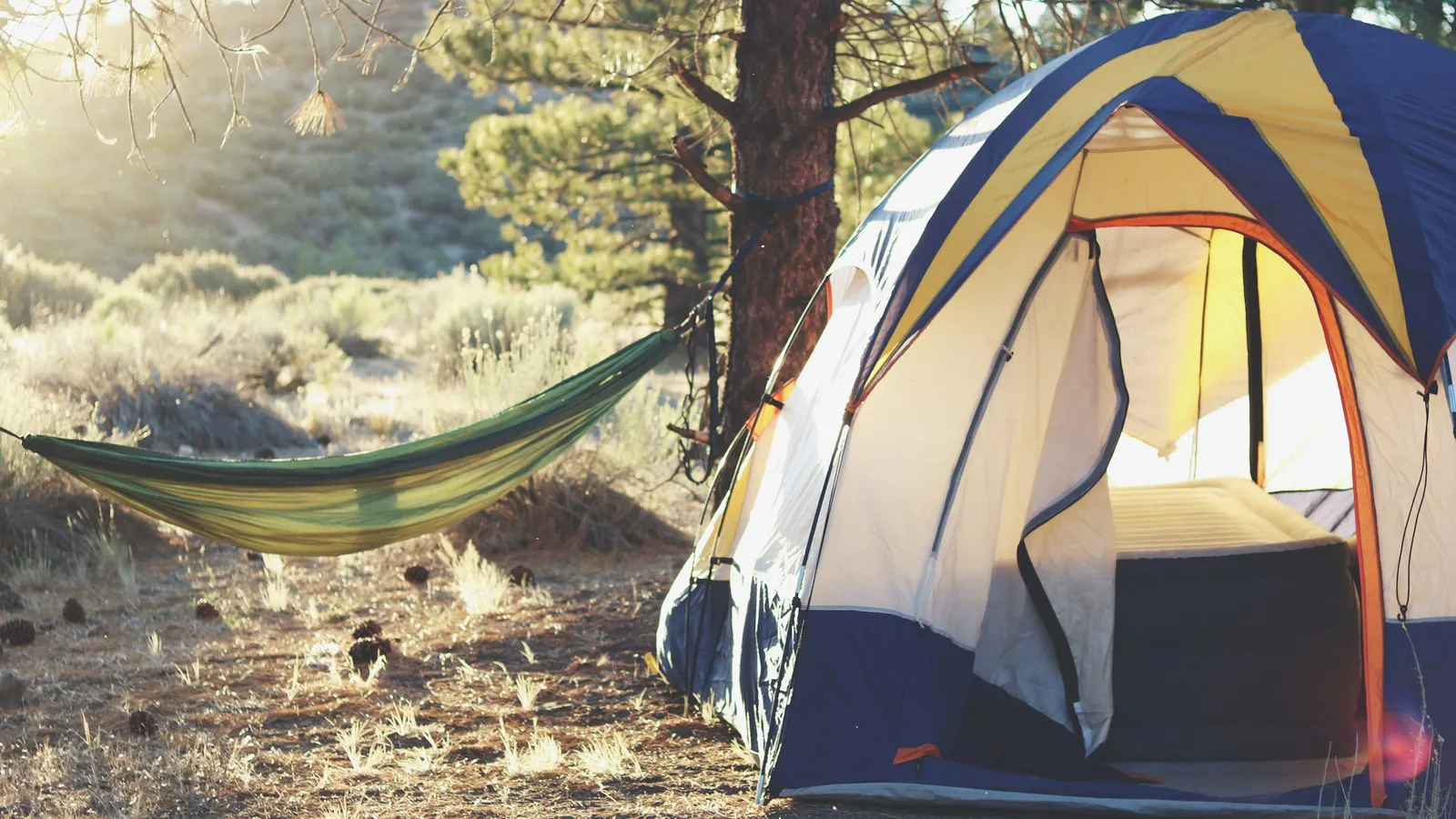
Dome tent and hammock at a forest campsite at golden hour

At a glance

Our top picks

True ultralight shelters cost far more than fifty dollars, so this budget is about picking the lightest tent that still keeps you dry. The five tents here range from a 3 lb solo camo shelter to a two-person freestanding tent that drops to about 4.4 lb on the trail.

They are ranked by overall value for hikers, weighing stated trail weight, pole material, rain protection and how easily one person can pitch each one. A tent that saves a pound is worth more than a tent that adds a window.

RV Gear Lab field notes

The Campsite Fit Check

Start with the job
Clostnature 2 Person Lightweight Backpacking Tent leads this shortlist for Hiking pairs. Use that fit as a reference point, then compare the alternatives against your own space and workload.
Specs that separate the picks
The first details to compare are 4.38 lb minimum trail weight, 3 lb, 180D Oxford, 4.4 lb, PU3000 polyester. Confirm the exact model and included components before ordering.
Trade-off to plan for
Full weight is over 5 lb with stakes

Before you buy

What Matters Before You Choose a Backpacking Tent Under 50

Key buying criteria so you get the right fit the first time.

  1. 01

    Trail weight versus full weight

    Trail weight counts the fly, inner tent and poles but leaves out stakes, guy lines and the bag. A 4.4 lb minimum weight may become 5.3 lb in a real pack. Add about 12 ounces for stakes and the sack, and compare the final total across tents.

  2. 02

    Freestanding versus staked frames

    A freestanding frame holds its shape without stakes, so it pitches on rock, sand or platforms. A trekking-pole tent needs stakes and soft ground but saves the weight of poles. Choose freestanding if your routes include hard or uncertain campsites, so test the pitch in your yard before relying on it deep in the backcountry.

  3. 03

    Aluminum or fiberglass poles

    Aluminum poles bend and spring back, and fiberglass poles may splinter after repeated flexing. A pole repair sleeve or spare pole section fixes a break in the field. Check the title for the material, because many cheap tents hide it, and remember that a pole snap far from the trailhead can end a trip entirely.

  4. 04

    Waterproof rating and seams

    A PU rating of 3000mm or higher suits steady rain, and taped seams stop leaks along stitching. A floor rating matters as much as the fly. Look for both numbers and for the word taped before you buy, and ask whether the number covers the floor as well as the fly.

  5. 05

    Sleeper count and gear space

    One-person tents typically have a floor around 3.5 ft wide, which leaves little room for a pack. A two-person tent about 5 ft wide fits two pads side by side. If you carry bulky gear, choose a tent a size up or use the vestibule, which keeps your sleeping bag from touching wet walls.

Our standards

Why You Can Trust RV Gear Lab

At RV Gear Lab, we compare products based on campsite fit, verified specifications, usability, setup requirements, weight, durability, and real-world trade-offs. We do not rank products purely on marketing claims or commission rates.

We have not personally tested every product listed. Where hands-on testing is not available, recommendations are based on verified manufacturer specifications, product documentation, use-case fit, and comparative research.

How we review camping gear →

Detailed reviews

The 5 best backpacking tents under 50, explained

01
Clostnature 2 Person Lightweight Backpacking Tent
  • 4.38 lb minimum trail weight
  • Two aluminum poles, freestanding
  • Bathtub floor, PU5000 coating
Check price on Amazon for Clostnature 2 Person Lightweight Backpacking Tent (opens in a new tab)
Best for: Hiking pairs

Our take

A real backpacking tent for two hikers, sized and built far beyond its price.

Why it made the shortlist

Two aluminum poles, a polyester fly, a bathtub-style floor and a PU5000 coating make up the shell.

Pairs of hikers who want a real backpacking tent without a gear-store budget will like it.

What works

  • Aluminum poles survive wind better
  • Carries two sleepers at about 4.4 lb
  • Freestanding so it pitches on hard ground
  • Fly comes off for open-sky nights

Watch out for

  • Full weight is over 5 lb with stakes
  • Narrow floor for two big pads
The catch
Pack weight counts the stakes and bag, so the trail number is a minimum.
02
Best for: Solo hunters and anglers

Our take

The lightest solo shelter in the group, finished in camo for hunters.

Why it made the shortlist

The Sutekus is a one-person tent that weighs 3 lb, built from 180D Oxford in a camouflage print. It comes with a pair of poles, four pegs and a stuff sack, and has a single entrance.

At 3 lb it is the lightest shelter here by a full pound against the Clostnature 2P Ultralight. Its single-person design and basic frame are what make that weight possible.

Solo hikers, hunters and fishermen who want to disappear into the brush will value the print. It is also a handy emergency shelter to keep in a vehicle.

What works

  • Lightest pick here at 3 lb
  • Camo print blends into woods
  • 180D Oxford fabric is tough
  • Compact for small packs

Watch out for

  • Only one person fits
  • Small and low inside
The catch
It is low and narrow, so there is little room to sit up or store gear.
03
Best for: Solo rainy hikes

Our take

A 4.4 lb dome with taped seams and a rain rating, ideal for wet trips.

Why it made the shortlist

The Night Cat is a 4.4 lb dome with a PU3000 polyester shell and fully taped seams. Its fiberglass poles wear protective cases, and the packed bag is about 16.5 inches long.

Compared with the Clostnature it uses fiberglass instead of aluminum, which lowers the price.

It suits one hiker with a little extra space or two small sleepers on short trips. The pole cases protect hands and fabric when you set it up.

What works

  • Taped seams keep rain out
  • Pole cases protect hands and fabric
  • Light 4.4 lb package
  • Roomy for one with gear

Watch out for

  • Fiberglass poles flex in strong wind
  • Tight for two adults
The catch
Two adults will find it very tight, so it works best as a solo tent.
04
Best for: Three-season solo hikers

Our take

A two-door solo shelter with a temperature-regulating roof.

Why it made the shortlist

The ShinHye is a one-person backpacking tent at 3.9 lb with a D-shaped door that has breathing holes. A TC cotton roof helps regulate temperature, and metal stakes and cables secure it against wind.

It is one of the few tents here with two doors, giving a way out on either side. Against the Night Cat 1-2 Person it adds a cotton-blend roof and loses the taped seams.

It suits hikers who sleep in warm and cool conditions and want better airflow than a plain polyester shell. The metal stakes and cables help in gusty campsites.

What works

  • Two doors for easy entry and exit
  • TC cotton roof regulates temperature
  • Metal stakes hold in wind
  • 3.9 lb pack weight

Watch out for

  • Single person only
  • Cotton blend is slower to dry
The catch
Cotton-blend fabric holds moisture longer, so dry it fully after rain.
05

Lightest-Concept Tent · 5 of 5

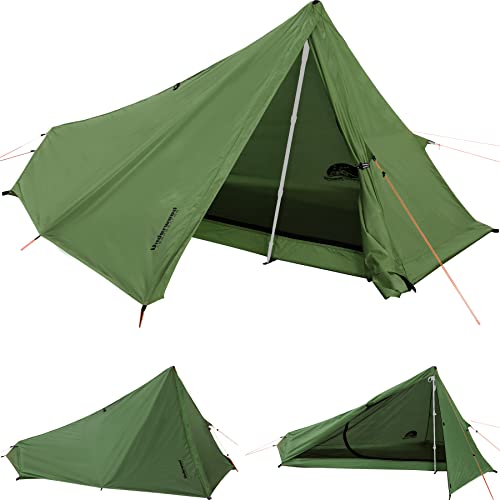
1 Person Trekking Pole Tent

1 Person Trekking Pole Tent
  • Trekking pole design, 1 person
  • Net and fabric double door
  • Side mesh vent window
Check price on Amazon for 1 Person Trekking Pole Tent (opens in a new tab)
Best for: Trekking-pole hikers

Our take

A pole-free shelter concept for hikers who already carry trekking poles.

Why it made the shortlist

The Underwood Aggregator is a one-person trekking pole tent that stands on hiking poles or a branch measuring at least 46 inches.

It drops the weight of dedicated poles, which no other tent here can do.

Hikers who already carry trekking poles will get the most from it.

What works

  • No dedicated poles to carry
  • Net and fabric door layers
  • Side mesh vent for airflow
  • Waterproof fabric for wet trips

Watch out for

  • Poles are not included
  • Needs stakes and firm ground
The catch
You must bring your own poles of at least 46 inches, and soft ground can be a problem.

Methodology

How We Built This Shortlist

Each pick was assessed across 5 criteria weighted for real-world use.

01

Trail weight

Compared stated pack weights and minimum trail weights, since carry weight decides how far a tent can go.

02

Pole design

Looked at aluminum, fiberglass and trekking-pole frames, and how each affects wind and packing.

03

Rain protection

Checked PU ratings, taped seams and rainfly coverage for trips that include wet weather.

04

Sleepers and space

Matched person count to floor dimensions so a one-person rating means one hiker plus a pack.

05

Setup and ventilation

Judged how quickly one hiker can pitch the tent and how well mesh and vents keep condensation down.

Decision guide

Match a Backpacking Tent Under 50 to Your Camp Setup

By Hiking Style

Your situationRecommended pickWhy
Two hikers sharing a tentClostnature 2P UltralightAluminum poles and 4.38 lb minimum weight.
Lowest pack weight, soloSutekus Single Camo3 lb total weight.
Rainy trips, soloNight Cat 1-2 PersonPU3000 fabric and taped seams.
Warm and cool nightsShinHye 1-Person UltralightTwo doors and a temperature-regulating roof.
Trekking poles already packedUnderwood Aggregator Trekking PoleNo dedicated poles to carry.

By Budget

BudgetRecommended pick
$20 to $40Sutekus Single Camo or Night Cat 1-2 Person
$40 to $50ShinHye 1-Person Ultralight or Clostnature 2P Ultralight
$40 to $50Underwood Aggregator Trekking Pole

Freestanding vs Trekking-Pole Tent

Freestanding

A freestanding tent stands without stakes and works on rock or sand. The Clostnature 2P Ultralight is the only freestanding pick, and the Night Cat 1-2 Person and Sutekus Single Camo use traditional poles.

Trekking-pole tent

A trekking-pole tent drops pole weight but needs stakes, soft ground and your own poles. The Underwood Aggregator Trekking Pole is the pick here.

Most hikers should choose the Clostnature 2P Ultralight unless they already carry trekking poles.

By Budget Within $50

PriorityRecommended pick
Lowest weight, minimal spendSutekus Single Camo
Best all-around under $45Clostnature 2P Ultralight
Best rain protection per dollarNight Cat 1-2 Person
Warm-weather soloShinHye 1-Person Ultralight

For First Backpacking Trips Specifically

Look for

A freestanding frame, taped seams and an easy single-pitch setup.

In this comparison

The Clostnature 2P Ultralight is freestanding and easy to pitch, while the Night Cat 1-2 Person adds taped seams for first-time wet weather.

When to Spend More

Spend more if

Spend more if you carry heavy gear or camp in wind, because the Clostnature 2P Ultralight and its aluminum poles are the best frame in this group.

Save if

Save with the Sutekus Single Camo if you only need a light solo shelter for a few dry trips.

FAQ

Before You Bring One Home

Can a tent under $50 be a good backpacking tent?

Yes, if you accept trade-offs. The Clostnature 2P Ultralight weighs about 4.4 lb at minimum and has aluminum poles, which is rare for the price. Expect fewer vents and thinner fabric than premium tents, and the biggest compromise is usually the lack of a vestibule.

Do I need a footprint for a cheap backpacking tent?

A footprint protects the floor from rocks and moisture, and a cheap one costs less than a tent repair. A groundsheet cut slightly smaller than the floor works well. Use one under the Night Cat 1-2 Person if you camp on rough ground.

Is a trekking-pole tent worth it for a beginner?

It is worth it if you already own trekking poles and want a lighter pack. The Underwood Aggregator Trekking Pole requires poles over 46 inches and good staking skill. Beginners may prefer the freestanding Clostnature 2P Ultralight.

How do I pitch a one-person tent in wind?

Face the narrow end into the wind, stake the windward corners first and use guy lines. The ShinHye 1-Person Ultralight includes metal stakes and cables for this purpose. Re-tension the lines after the fabric settles, and avoid pitching beneath dead branches in a strong gust.

How should I dry and store a budget backpacking tent?

Hang it in the shade after each trip and wipe the floor dry. Store it loosely in a breathable bag rather than tightly packed in its stuff sack. This helps protect the PU coating from cracking, and wipe off pine sap or dirt before it hardens on the fabric.

Bottom line

The short version

Browse more backpacking tents under 50 on Amazon →
Danny Walker, Camping Editor at RV Gear Lab

About the author

Danny Walker

Camping Editor at RV Gear Lab

Danny covers camping gear, campsite setup, outdoor power, sleep systems and practical camping advice, with a focus on helping campers make better gear decisions.

More from Danny →Editorial standards

Keep reading

Related guides