

We research everything we recommend. When you buy through our links, we may earn a commission. Learn more

Buying guide · 10 min read · Updated October 2, 2026

5 Best Budget Backpacking Tents in 2026: A Practical Camping Guide

Best budget backpacking tents compared on listed weight, floor size and pole material, for hikers who want a cheap shelter that still packs small.

Danny WalkerBy Danny WalkerCamping Editor at RV Gear Lab5 products comparedSpec-sheet researched
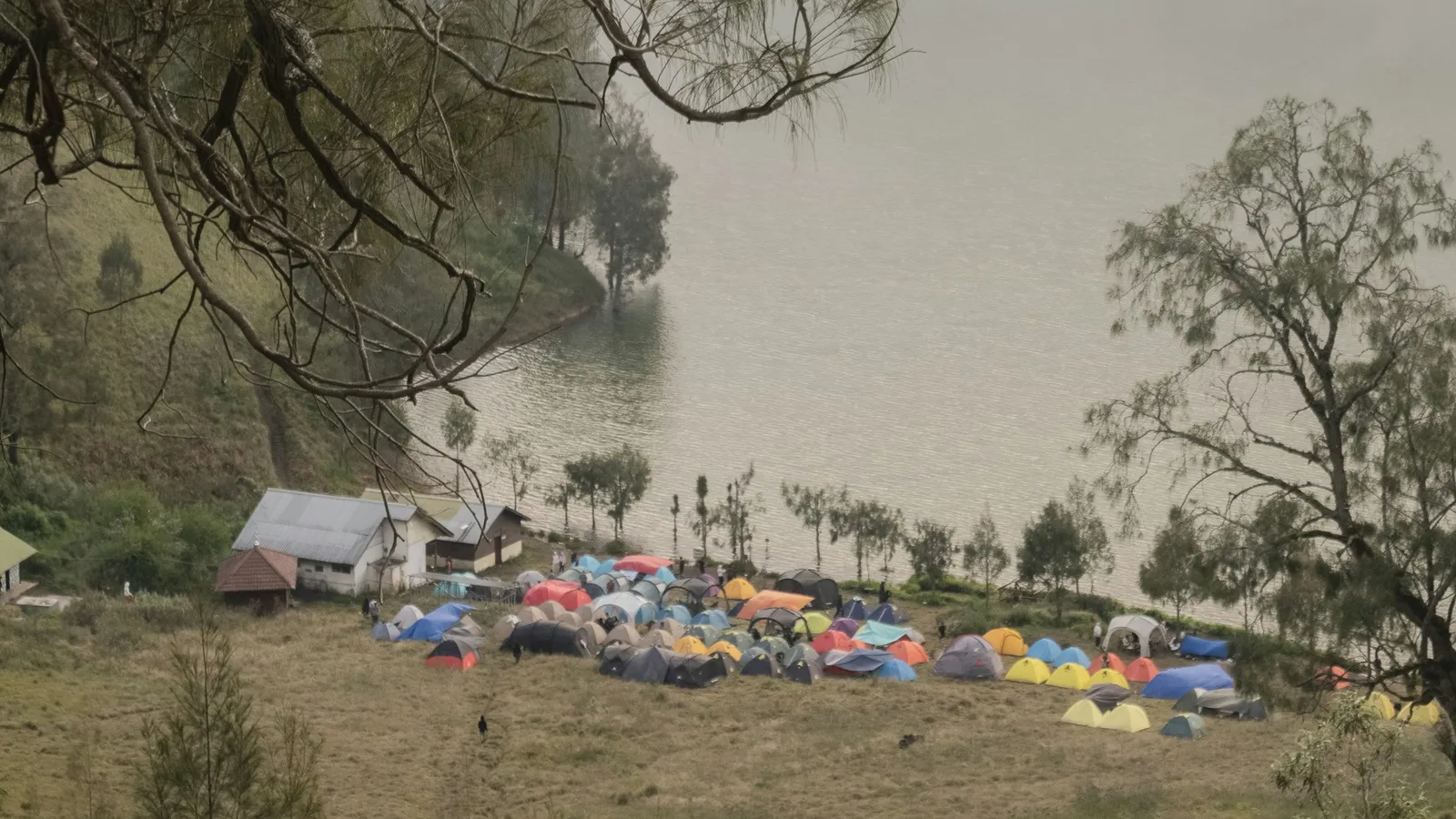
Colorful tents pitched beside a misty mountain lake

At a glance

Our top picks

A budget backpacking tent trades fabric weight, pole quality and seam finish for a low price, so the useful question is which trade-offs hurt least on a trail. Weight, floor size and pole material show up on every listing and sort these tents faster than adjectives do.

Five budget tents are ranked here, running from an entry-level two-person with fiberglass poles to a freestanding four-person with aluminum poles and a one-person pop-up with taped seams. The ranking weights stated weight and waterproof rating first, then included stakes and ease of pitching.

RV Gear Lab field notes

The Campsite Fit Check

Start with the job
JELUCAMP 1/2/4/6 Person Dome Tents for Camping Lightweight Backpacking Tent leads this shortlist for Light solo or couple trips. Use that fit as a reference point, then compare the alternatives against your own space and workload.
Specs that separate the picks
The first details to compare are 4.3 lb listed weight, 7001 aluminum poles, 92.5 x 86.6 x 51.1 inches. Confirm the exact model and included components before ordering.
Trade-off to plan for
Fiberglass poles flex in strong wind

Before you buy

What Matters Before You Choose a Budget Backpacking Tent

Key buying criteria so you get the right fit the first time.

  1. 01

    Weight vs price

    Budget tents often skip carry weight on the listing, but a 4 lb tent and an 8 lb tent feel very different after ten miles. Weight matters most when you carry the tent yourself rather than park beside it. Look for a figure in the title, bullets or details and treat a missing figure as a reason to ask before buying.

  2. 02

    Pole material

    Fiberglass poles are cheap and heavy and flex or splinter under wind load, while aluminum poles survive harsher weather. Poles are the part of a budget tent that most often fail in the field. The bullets usually name the pole material, so look for 7001, aluminum alloy or fiberglass.

  3. 03

    Waterproof rating

    A rating such as PU3000 or 3000mm HH describes how much water pressure the fabric resists. Under about 1500mm, a rain fly leaks in steady rain, while 3000mm is a common budget target. Check the listing for the number and for taped seams, since stitching can leak even on a good fabric.

  4. 04

    Seam and floor quality

    Sewn seams without tape allow water in through the needle holes. A bathtub floor, which turns up the sides, blocks splashes. Look for words such as taped seams or bathtub floor in the listing and treat silence as a sign to seam-seal at home.

  5. 05

    Real capacity

    A tent labelled for two people usually fits two sleeping pads with little room for gear. Check the interior footprint in inches, since a 57 inch width is snug for two pads. If you carry packs inside, go up one size or choose a model with vestibules.

  6. 06

    Ventilation and bugs

    Double-layer doors and mesh panels reduce condensation, which soaks sleeping bags in humid weather. A single door and no vents are an easy way for a cheap tent to feel damp. Look for the number of doors and vents in the listing before buying.

Our standards

Why You Can Trust RV Gear Lab

At RV Gear Lab, we compare products based on campsite fit, verified specifications, usability, setup requirements, weight, durability, and real-world trade-offs. We do not rank products purely on marketing claims or commission rates.

We have not personally tested every product listed. Where hands-on testing is not available, recommendations are based on verified manufacturer specifications, product documentation, use-case fit, and comparative research.

How we review camping gear →

Detailed reviews

The 5 best budget backpacking tents, explained

01
Best for: Light solo or couple trips

Our take

A low-cost dome with a stated 4.3 lb weight, good for short trails.

Why it made the shortlist

The JELUCAMP is a 1 to 2 person dome that weighs 4.3 lb on its listing and is 86.6 inches long, 59.1 wide and 43.3 tall.

It suits a solo hiker or couple on short trips who care about price and a sub 5 lb carry. Setup takes just a few minutes on its listing.

What works

  • Light enough for a short backpacking trip
  • Double-layer door for bugs and airflow
  • Stated PU3000 waterproof coating

Watch out for

  • Fiberglass poles flex in strong wind
  • Narrow 59 inch width for two
The catch
Fiberglass poles are the weak point if the wind picks up.
02

Best Poles and Vestibules · 2 of 5

Forceatt Camping Tent

Forceatt Camping Tent
  • 7001 aluminum poles
  • Two doors and two vestibules
  • PU3000 to PU5000 coating
Check price on Amazon for Forceatt Camping Tent (opens in a new tab)
Best for: Two hikers with packs

Our take

Aluminum poles and two vestibules at a budget price.

Why it made the shortlist

The Forceatt is a two-person tent with 7001 aluminum poles, a PU3000 to PU5000 coated polyester rainfly and bathtub floor, and two D-shaped doors with side vestibules. Inside it measures 86.6 x 51.1 x 43.3 inches.

It improves on the JELUCAMP with aluminum poles and two vestibules for packs, and it undercuts the BISINNA on price. The listing mentions a package size rather than a weight, so the JELUCAMP stays the lighter documented pick.

It fits two hikers who want gear storage at each door and sturdier poles for the money. A claimed 3 minute setup suits quick camps.

What works

  • Aluminum poles are stronger than fiberglass
  • Two vestibules for packs and boots
  • Bathtub floor with taped coating
  • Quick claimed 3 minute pitch

Watch out for

  • Weight is not stated in the listing
  • Iron stakes are heavier than alloy
The catch
The listing gives pack dimensions rather than a total weight, so ask the seller.
03
BISINNA 2/4 Person Camping Tent Lightweight Waterproof Backpacking Tent
  • 92.5 x 86.6 x 51.1 inches
  • Freestanding, aluminum poles
  • 3-season, 2 D-shaped doors
Check price on Amazon for BISINNA 2/4 Person Camping Tent Lightweight Waterproof Backpacking Tent (opens in a new tab)
Best for: Shared loads and more space

Our take

The roomiest freestanding budget tent in this list.

Why it made the shortlist

The BISINNA is listed as a 2/4 person freestanding backpacking tent with aluminum poles. It uses 190T polyester taffeta for the inner and fly, B3 no-see-um mesh, 2 D-shaped doors, 13 aluminum stakes and 4 wind ropes.

It offers the most room here at 92.5 x 86.6 x 51.1 inches, well above the Forceatt, and it is freestanding so it pitches in under 10 minutes. The Reactive Outdoor tent is the one that pitches faster, while the BISINNA wins on floor area.

What works

  • Roomy enough for four people on paper
  • Freestanding frame pitches quickly
  • Aluminum alloy stakes included
  • Large mesh panels and two doors

Watch out for

  • Weight is not listed in the listing
  • Rated for three seasons only
The catch
A larger tent usually weighs more, so check the weight before a long hike.
04

Best Fast Pitch · 4 of 5

Reactive Outdoor Tent

Reactive Outdoor Tent
  • 3000mm HH, taped seams
  • Self-locking pop-up frame
  • One-person double layer
Check price on Amazon for Reactive Outdoor Tent (opens in a new tab)
Best for: Solo fast pitching

Our take

An instant shelter that spends its budget on speed and sealed seams.

Why it made the shortlist

The listing notes fully taped seams and a wide-mouth bag with buckle straps.

It suits solo hikers, festival goers and car campers who want an instant shelter more than a low weight. The easy-pack bag helps with repacking in the rain.

What works

  • Pitch in seconds by one person
  • Taped seams on a 3000mm fly
  • Wide opening bag packs easily
  • Double layer for condensation control

Watch out for

  • Weight is not stated in the listing
The catch
Spend is highest here, and solo-only sizing limits sharing.
05
Best for: Occasional low-spend trips

Our take

The cheapest and lightest listed tent, best for fair-weather trips.

Why it made the shortlist

The Wakeman is a two-person tent listed at 77 x 57 x 40 inches and 2.75 lb with 190T polyester and fiberglass poles. Extras on the listing are a detachable fly, a vent window and a screen-and-fabric door.

It carries the lowest weight figure and lowest price of the five, ahead of the JELUCAMP on both.

It suits occasional campers, festival trips and day-hike bivouacs where price is the first filter. A 23 inch carry bag keeps the pack small.

What works

  • Lowest listed weight at 2.75 lb
  • Dual-layer door and vent window
  • Compact 23 inch carry bag

Watch out for

  • Tight fit for two adults
The catch
The listing gives no waterproof rating or seam detail.

Methodology

How We Built This Shortlist

Each pick was assessed across 5 criteria weighted for real-world use.

01

Listed weight

Weight is the first filter for backpacking, so stated figures outrank vague claims.

02

Waterproof rating

Hydrostatic head and seam notes were checked, with sealed seams ranked ahead of silent ones.

03

Frame material

Aluminum and fiberglass poles were compared for wind and break risk.

04

Floor size

Footprint and peak height were compared against how many people each tent really fits.

05

Setup and included kit

Stakes, bags and pitch speed were noted since cheap tents often skip them.

Decision guide

Match a Budget Backpacking Tent to Your Camp Setup

By Trip Type

Your situationRecommended pickWhy
Short solo trail tripJELUCAMP DomeLowest weight with a stated waterproof rating.
Two hikers with packsForceatt 2PTwo doors, two vestibules and aluminum poles.
Shared load, extra spaceBISINNA 4PLargest freestanding floor area.
Festival or occasional tripWakeman 2PCheapest and lightest by the listing.
Solo with a tight scheduleReactive 3 SecondPop-up frame with taped seams.

By Budget

BudgetRecommended pick
$10 to $30Wakeman 2P or JELUCAMP Dome
$60 to $80Forceatt 2P or BISINNA 4P
$110 to $120Reactive 3 Second

Pop-Up vs Poled Dome

Pop-up

The Reactive 3 Second uses a self-locking frame that opens in seconds, which saves time but locks you into one shape and one size.

Poled dome

Poled domes such as the Forceatt 2P, BISINNA 4P and JELUCAMP Dome pitch by hand but give you replaceable poles and more flexibility in size.

Most budget buyers should choose a poled dome such as the JELUCAMP Dome unless pitching speed is the whole point of the purchase.

By Budget

PickRecommended pick
Lowest spendWakeman 2P
Low spend with a stated ratingJELUCAMP Dome
Mid spend, aluminum polesForceatt 2P
Top of the budget rangeReactive 3 Second
Mid spend, more roomBISINNA 4P

For First-Time Backpackers Specifically

Look for

A listed total weight, a stated waterproof rating and aluminum or fiberglass poles you can replace.

In this comparison

The JELUCAMP Dome gives a 4.3 lb figure and PU3000 coating, which is the clearest data in this list.

When to Spend More

Spend more if

Spend more on the Forceatt 2P for stronger poles and vestibules, or the Reactive 3 Second if you hate pitching.

Save if

Save with the Wakeman 2P or the JELUCAMP Dome when you hike in fair weather and want the lightest carry.

FAQ

Before You Bring One Home

Is a budget backpacking tent safe in rain?

Most are fine in light to moderate rain if the fly is tight and the seams are sealed. The Reactive 3 Second lists taped seams. For others, seam-seal the stitching yourself.

What is the common mistake with cheap tents?

Buying by person count. A 2 person label often fits two thin pads only, so the Wakeman 2P suits one person with gear. Check the inches.

Is the BISINNA worth it over the JELUCAMP?

Choose the BISINNA for room and freestanding aluminum poles, and choose the JELUCAMP for a lower listed weight. The extra space matters most for shared trips. Solo hikers will rarely need it.

How do I pitch a poled dome tent?

Lay the footprint, thread poles through the sleeves or clips, raise the frame and stake the corners before adding the fly. Guy out the fly in wind. Practice at home first.

How do I extend the life of a cheap tent?

Dry it fully before storing, avoid packing it wet and brush off dirt. Use a footprint to protect the floor. Replace lost stakes with sturdier ones and seam-seal the fly if the listing does not mention taped seams.

Bottom line

The short version

Browse more budget backpacking tents on Amazon →
Danny Walker, Camping Editor at RV Gear Lab

About the author

Danny Walker

Camping Editor at RV Gear Lab

Danny covers camping gear, campsite setup, outdoor power, sleep systems and practical camping advice, with a focus on helping campers make better gear decisions.

More from Danny →Editorial standards

Keep reading

Related guides