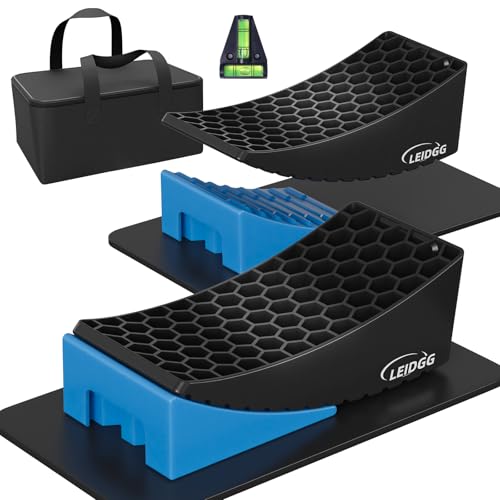
A level camper is more than a comfort item. A trailer that sits nose high or tilted sideways makes doors swing, drawers creep open, and the fridge struggle, because absorption units depend on being close to level to circulate coolant properly. Sleeping on a slope is miserable, and water pools in the shower. Leveling is one of the first jobs at every campsite, so the tool you use should be quick, repeatable and easy to store.
A manual leveling system is the simplest answer. Instead of motorized jacks that can fail or need power, you place curved ramps or interlocking blocks under the tires on the low side, drive up until the bubble level reads right, and chock the wheels. There is nothing to wire, nothing to program and little that can break. The tradeoff is that you do the work yourself and the lift is limited by the height of the ramps, so the right kit depends on how far out of level your usual campsites run.
This guide compares five manual kits that cover very different situations. We evaluated them on stated lift range, load rating, what is included in the box, how they handle dual axles and how easy they are to carry, evaluated against published specifications and owner reports. Two are curved leveler kits with chocks, mats and a bag, one is a tall-lift gear-mesh system that rises to 6.3 inches, and two are budget block systems that top out around 4 inches.
Prices run from $26.99 to $85.40, and that gap reflects real differences. The premium kits solve the dual-axle problem with shorter designs or trimmable ramps and include mats and carry bags. The budget kits give the same basic idea in solid polypropylene at a third of the price. The sections below show which situations justify each, using named picks and the actual numbers from each listing, with plain recommendations for slope, axle layout, budget and storage habits.
A quick word on safety before you buy anything. Leveling blocks and ramps hold a heavy vehicle on a small contact patch, so a flat, firm approach matters, and wheel chocks are not optional once the rig is level. A kit that includes chocks and mats solves two of those problems in one purchase, which is one reason the premium kits cost more. Whatever you choose, practice at home on level ground before your first campsite.
Think, too, about how you tow. A weekend owner who rolls into a state park pad once a month has different needs from a full-timer who moves every few days. Frequent movers value handles, a bag and a system that goes on and off the tire in under a minute. Occasional campers can happily use the cheapest block set and spend the savings on a good pair of chocks, a bubble level and a tongue jack pad. The next sections turn those habits into concrete picks.
Our standards
Why You Can Trust RV Gear Lab
At RV Gear Lab, we compare products based on rig fit and power or hookup compatibility, verified specifications, usability, setup requirements, weight, durability, and real-world trade-offs. We do not rank products purely on marketing claims or commission rates.
We have not personally tested every product listed. Where hands-on testing is not available, recommendations are based on verified manufacturer specifications, product documentation, use-case fit, and comparative research.
How we review RV gear →