
Practical Camping Guide · 12 min read
How to Choose a Camping Table
Choose a camping table by size, height, top material, weight capacity and folding style for dining, cooking and backpacking, with sizing tables.

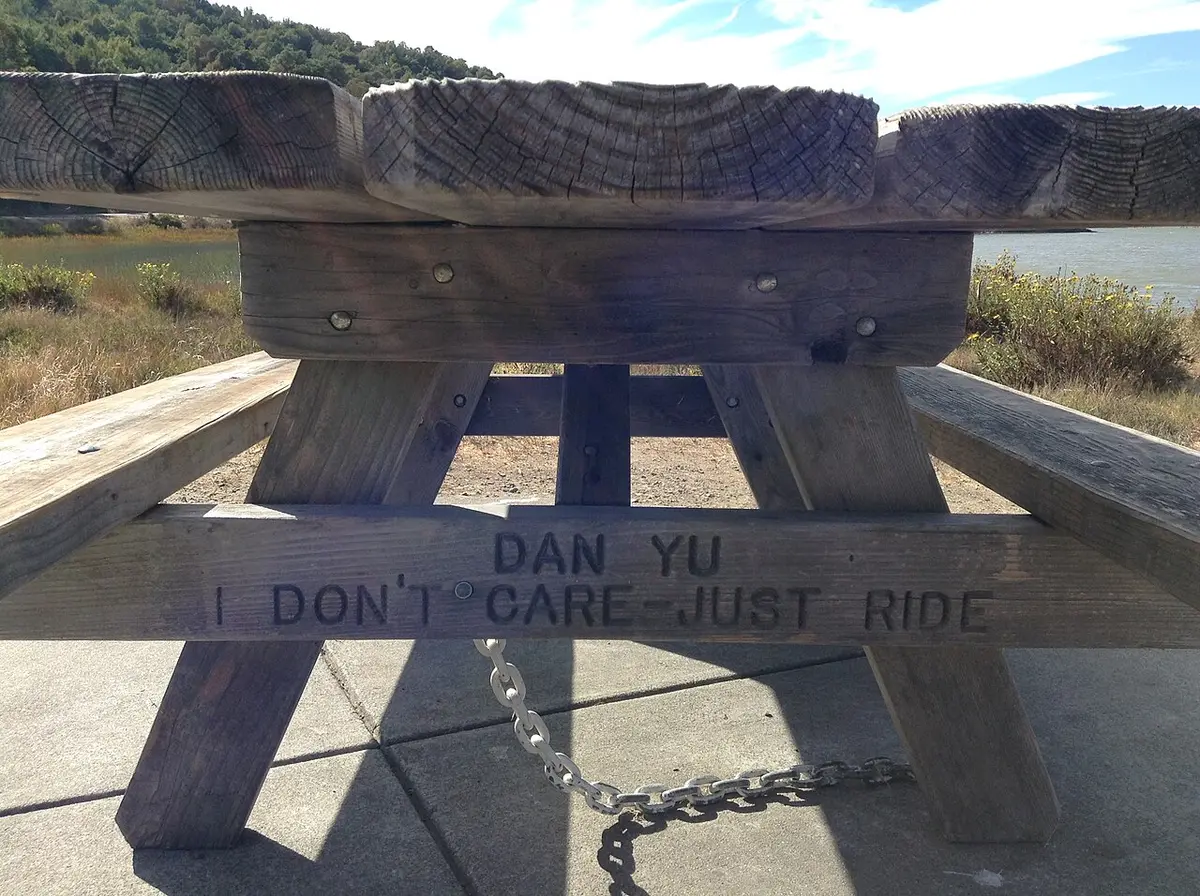
Choose a camping table by what it must do: for eating and games, a folding table about 24 by 48 inches (seats four) with a flat, washable top and adjustable legs; for cooking, a taller table (30 to 36 inches) with an aluminum or metal top that resists heat and holds at least 50 to 100 pounds; for backpacking or tailgating, a roll-up slat table that packs small. Weight capacity, leg stability on uneven ground, packed size and top material matter more than the number of gadgets. A table that wobbles or sags is worse than no table.
Campsite picnic tables are fixed, heavy and rarely where you want them, so a portable table earns its space. The details that separate a table you use every trip from one that stays in the garage are height, stability, top material, folding mechanism and weight. Below is how to match those to your trips, with numbers and a decision table.
Start with the job
Different uses need different tables.
| Use | Best table type | Key needs |
|---|---|---|
| Family meals and games | Folding table, 24 x 48 in or larger | Flat top, wipeable, stable legs |
| Camp kitchen and cooking | Tall kitchen table with shelves or a metal top | Heat tolerance, 30 to 36 in height, strong legs |
| Stove or grill stand | Metal-topped table with high capacity | Fire-safe top, 50 to 100 lb capacity |
| Solo or couple's meals | Small folding or roll-up table | Light, small packed size |
| Backpacking or bike trips | Ultralight roll-up or small side table | Weight under a couple of pounds |
| Tailgating and beach days | Compact folding table | Light, easy to carry |
| Work or laptop use | Adjustable-height table | Sturdy, level surface |
| Kids' activities | Low table | 20 to 24 in height, safe edges |
Be honest about the main use. A table sized for eight people is awkward for a couple, and a small table is frustrating when you cook for a family. If you cook a lot, a dedicated cooking table is worth having in addition to a dining table.
Size and height
A table's footprint should match the number of people and the activities.
| Table size | Seats | Typical use |
|---|---|---|
| 16 x 24 in | 1 to 2 | Side table, solo meals |
| 24 x 36 in | 2 to 3 | Couples, small stove stand |
| 24 x 48 in | 4 | Family meals, games |
| 30 x 60 in | 6 | Larger families, groups |
| 30 x 72 in or longer | 6 to 8 | Groups, communal cooking |
Height matters for comfort. A standard dining table is about 28 to 30 inches high. A camp kitchen or standing-height table is 30 to 36 inches, similar to a kitchen counter, which reduces back strain when you cook and chop. Low tables, from 14 to 20 inches, suit sitting on the ground or in low chairs and for kids, but are hard on the back for tasks. Adjustable legs, which let you set height and level the table on uneven ground, are one of the most useful features. Pairing a table with the right chairs matters too, and the guide to camping chair weight capacity helps with the other half of that decision.
Table top materials
| Material | Strengths | Weaknesses |
|---|---|---|
| Aluminum | Light, heat-tolerant, easy to wipe, rust-resistant | Can dent, conducts heat to the surface |
| Steel | Very strong, heat-tolerant | Heavy, can rust if coating fails |
| Plastic (HDPE) | Light, wipeable, inexpensive | Can warp or melt under a hot pan, may crack in cold |
| Wood or bamboo | Attractive, sturdy | Heavier, can swell with moisture, needs care |
| Fabric or roll-up slats | Packs small | Less stable, lower capacity |
| Composite or laminate | Smooth, wipeable | Can delaminate in moisture |
If you will put a hot pan or a stove on the table, a metal top is the safe choice. Plastic tops can warp, discolor or melt from a stove, a hot pot or a grill. Even aluminum conducts heat, so use a trivet or a heat-resistant mat for hot items. A table for a grill or a stove should be rated for the weight and the heat, and some are designed with a built-in stove position or a wind guard. For grill setups, see the best camping tables for grill use, and for a kitchen, the best camping tables for cooking.
Weight capacity and stability
Capacity numbers on tables are as loosely standardized as on chairs, and the usual caveats apply: the rating is a static figure, and a table that is rated for 100 pounds may feel unsteady with 50 pounds of unevenly loaded stuff. Typical ranges:
| Table type | Typical capacity |
|---|---|
| Small folding side table | 20 to 50 lb |
| Standard folding table | 50 to 100 lb |
| Heavy-duty aluminum or steel table | 100 to 200 lb |
| Roll-up slat table | 30 to 80 lb |
| Stove or grill table | 50 to 100 lb or more |
Stability depends on leg design as much as on capacity. A table with a cross-brace or an X-frame resists racking, which is sideways wobble. Wide leg spread resists tipping. Leg locks should hold firmly, and adjustable legs should have positive locks, not only friction. Check that rubber feet are present and that they do not slip on smooth surfaces, and that the legs have wide feet for soft ground. On uneven ground, adjustable legs let you level the table, which is critical for a stove with a pot of boiling water.
Folding mechanisms and packed size
How a table folds affects how you carry and store it.
- Bi-fold (folds in half). The top folds in the middle, and legs fold under. It is simple and sturdy, and carries like a briefcase with a handle. Packed size is fairly large, but the table is strong.
- Tri-fold or four-fold. The top folds in thirds or quarters for a more compact package, but each fold is a potential weak point.
- Roll-up slat. Slats of aluminum, bamboo or plastic roll up into a tube with a separate frame. It packs very small and is light, but it is less stable and has a lower capacity.
- Accordion or X-frame. The legs scissor open, and the top lies on them. It can be very light.
- Telescoping legs. Legs slide to adjust height and fold for storage.
- Collapsible with hardware. Some tables use pins and bolts and are more durable but slower to set up.
Consider where it will live. A table that does not fit in your car trunk stays home. For packed size, check the dimensions and the weight. A 24 x 48 inch bi-fold table typically weighs 12 to 20 pounds, and a roll-up table 3 to 8 pounds. A small ultralight side table can weigh a pound or less.
Cooking tables and camp kitchens
A table for cooking has additional requirements.
- Height around 30 to 36 inches to match the cook's elbows and reduce stooping.
- Heat-resistant top, or a surface that you can protect with a mat.
- High weight capacity to hold a two-burner stove with pots and a cooler.
- Stability against wind and sway, since a tipped pot of boiling water is dangerous.
- Shelves or hooks for utensils, a paper towel holder and a trash bag.
- Wind screens or a place to attach one.
- Easy cleaning, since food prep leaves spills.
Many campers build a kitchen from two tables: one for the stove and one for prep and serving. The stove table sits downwind with a wind guard, and the prep table sits closer to the cooler and the sink. If you also use a grill, a tabletop grill needs a heat-resistant surface, and a separate table or a stand designed for the grill is safest. For general family needs, see the best camping tables for families, and for overall picks, the best camping tables. Budget buyers can check the best camping tables under $50 and the best camping tables under $75.
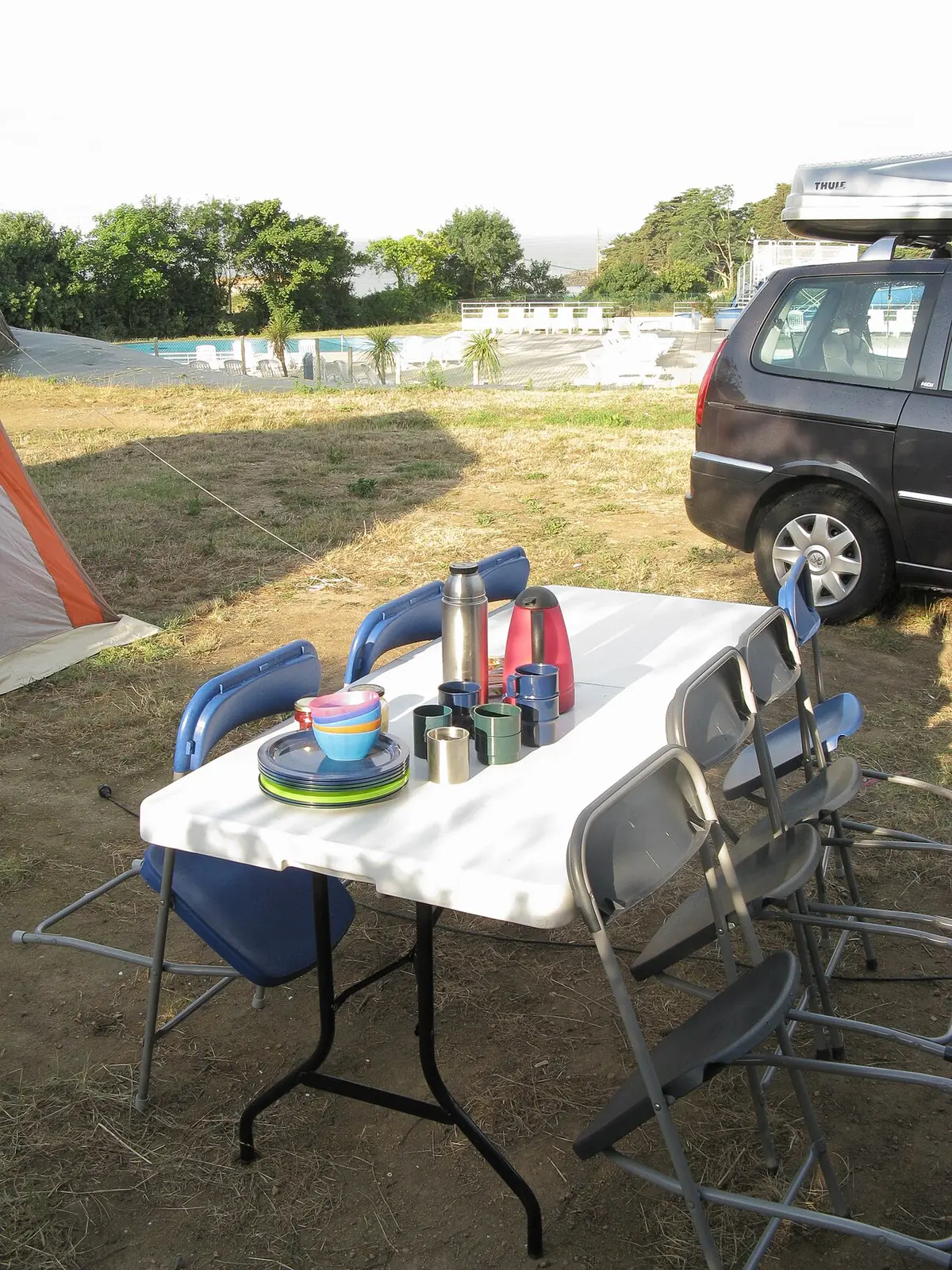
Extra features worth having
- Adjustable height legs for different uses and uneven ground.
- Carry handle or bag for transport.
- Cup holders and cutouts for kettles or basins on some models.
- Side tables and shelves for extra storage.
- Mesh storage nets under the table for cooking tools.
- Wind clips or tie-downs to secure a tablecloth and to anchor the table.
- Raised edges that stop items from rolling off.
- Table covers to protect the top.
- Foldable legs with locking levers that are easy to operate with gloves.
Features add weight and cost, so choose those that fit how you camp.
Stability on uneven ground and in the wind
A camp table is only useful if it stays level. A few techniques help.
- Choose the flattest spot you can find, and clear stones and sticks.
- Adjust the legs until a bubble level or a ball on the table stays put. Many campers use a small level.
- Use leveling shims such as a flat stone or a folded piece of cardboard under a short leg.
- Weigh down the table with gear or a bag of water on the stretcher.
- Face the table's narrow side into the wind and use a wind screen for the stove.
- Do not overload one end of the table.
- Use tablecloth clips so that the wind does not blow it away.
Rocking tables spill drinks and burn people. If a table wobbles on level ground, tighten the hardware or replace it.
Building a whole camp layout around the table
Furniture works best when it is planned as a set. A table, chairs, a cooler stand and a wash station form a loop, and the order you place them changes how smoothly the site works.
Place the kitchen first. Put the stove table on level ground, downwind of the tent and out of the main walkway, with a wind guard. The cooler sits within one step, on the shady side, so that you never carry a hot pan across the site.
Place the dining table next. It should be close to the kitchen table but not in the cook's path. Chairs around it need elbow room, so leave about three feet behind each seat. If you plan to relax after dinner, the choice between a standard chair and a recliner shapes the whole evening, and the comparison of zero gravity chairs and standard camping chairs lays out the trade-offs in size, weight and comfort.
Add a wash station. A small side table holds a basin, soap and a towel, at a convenient height. For hygiene at the end of the day, the guide to solar versus propane camp showers explains how to set up hot water, and the same side table can hold the shower's accessories.
Keep traffic lanes clear. Walking paths should not cross the stove area, the fire pit or the tent guy lines. Kids and pets tend to move in straight lines, so give them one.
Plan for evening light. Place a lantern above the table, not on it, so that it lights the surface without glare. A table that works at noon may be hard to use in the dark.
Think about the weather. In rain, a canopy over the kitchen table lets you cook and eat dry, and in sun, shade keeps the top from burning hands. A canopy needs a wind plan too, because a lightweight canopy over a lightweight table can lift both.
Matching the table to your vehicle
Packed size is a real constraint, and it helps to measure the space before you shop. A compact car trunk might hold a table up to 36 inches long when folded, while an SUV with a flat cargo floor can take a 48 inch table plus a cooler and chairs. A truck bed handles long tables easily but exposes them to rain. A roof box takes narrow, long items such as roll-up tables. If you pack the car completely full, a roll-up table that fits in a duffel often wins over a better rigid table that does not fit. Check the folded dimensions, not the open ones, and note the thickness, since a bi-fold table that is 4 inches thick stacks easily while one that is 8 inches does not.
Care and storage
Wipe the table clean after use, especially after meals, since food residue attracts insects and animals. Dry it before folding to avoid mildew and rust. Check hinges, locks and leg joints for wear, and lubricate metal joints sparingly if they stick. Avoid leaving a plastic top in the sun for long periods, which can warp it. Store the table dry and flat, and avoid stacking heavy items on it. For roll-up tables, roll them loosely and keep the frame with the top so that you do not lose parts.
A worked example: choosing for a family of four who cook
A family of four car camps six weekends a year. They cook breakfast and dinner on a two-burner stove, use a 45 quart cooler, and eat at a campground picnic table when there is one. They want a table for the stove and a second for prep and meals.
They decide on a 30 x 48 inch aluminum bi-fold table at about 30 inches high for the stove, with a capacity of 100 pounds. The stove weighs 12 pounds, the cooler is separate, and the table holds pots, a cutting board and a few supplies. They pick a second table, 24 x 48 inches with adjustable legs, to hold prep, plates and drinks, set a bit lower than the stove table so that rinsing and chopping feel comfortable. Both fold into the trunk beside the cooler.
They check that the aluminum top will not warp from the stove and use a silicone mat under the burner as a precaution, and they bring a small level and four flat stones for uneven sites. They store both tables in a bag, dry and clean, between trips. Total weight is about 30 pounds, and setup takes five minutes. The family finds that having a dedicated cooking surface at the right height makes the cooks happier and the meals faster, which is exactly the point.
Common mistakes to avoid
- Buying a plastic table for a stove. Heat can warp or melt it.
- Ignoring height. A low table strains the back for cooking.
- Choosing by looks rather than stability. A wobbly table is a hazard.
- Overlooking packed size. A table that does not fit stays home.
- Overloading. Respect the rating and keep the load centered.
- Setting up on slopes without leveling. Pots can spill.
- Leaving the table dirty or damp when stored. Mildew and rust follow.
- Forgetting a wind plan. Wind can tip lightweight tables.
Frequently asked questions
What size camping table do I need for four people?
A table about 24 x 48 inches seats four for meals. If you also use it for cooking or games, a 30 x 60 inch table gives more room. Choose a size that fits your car, since packed size is often the limit.
What height should a camping table be?
For eating, 28 to 30 inches is standard. For cooking and prep, 30 to 36 inches reduces back strain. Low tables of 14 to 20 inches suit sitting on the ground or children. Adjustable legs let you change the height.
Can I put a camping stove on any camping table?
Not on every table. Check the weight rating and the top material. Metal tops handle heat best, and plastic tops can warp. Use a heat-resistant mat under the stove and keep it stable and level.
Are roll-up tables any good?
They are excellent for backpacking, bike trips and tailgating because they pack small and weigh little. They are less stable and have lower capacity than rigid tables, so they suit light loads and not heavy stoves.
How do I keep a table from wobbling?
Level it with adjustable legs, place it on flat ground, use shims under a short leg, avoid overloading one end and tighten the hardware. If it still wobbles, the frame may be bent or poorly designed.
What is the best material for a camping table top?
Aluminum is the common choice for a balance of light weight, durability and heat tolerance. Steel is stronger but heavier. Plastic is cheap and light but weaker under heat. Choose based on whether you cook on it.
Sources & further reading
- Core Equipment: Camping chair weight capacity guide (static versus dynamic load)
- USDA FSIS: Food safety basics
- Wikipedia: Factor of safety
Image credits
- "Dan Yu picnic table at China Camp in San Rafael" by Kiddo27, CC BY-SA 4.0, via Wikimedia Commons.
- "Camping breakfast table" by Demeester, CC BY-SA 3.0, via Wikimedia Commons.


Ready to buy?
Compare the gear: Camp Furniture
6 Best Camping Tables in 2026
Folding camping tables compared by size, height range and weight, from a roll-top family table to ultralight beach tables for solo campers.
6 Best Camping Table For Grill in 2026
Best camping tables for a grill: six iron-mesh and aluminum folding tables compared on top size, adjustable height, heat tolerance and weight.
5 Best Camping Tables For Cooking in 2026
Best camping tables for cooking: five folding cook stations and prep tables with heat-resistant tops, storage and sturdy frames for stoves and grills.
4 Best Camping Tables For Families in 2026
Best camping tables for families: four folding tables compared on tabletop size, weight, load capacity and ease of setup for car camping with kids.
5 Best Camping Tables Under 50 in 2026
Best camping tables under $50: five compact folding tables and two-packs compared on tabletop size, weight, height and storage for small campsites.
5 Best Camping Tables Under 75 in 2026
Best camping tables under $75: five folding, kitchen and roll-top tables from 2 to 4 feet compared on size, height options and storage for family camps.
Keep reading