
Practical Camping Guide · 12 min read
Solar vs Propane Camp Showers
Compare solar and propane camp showers on heat-up time, fuel use, weather, safety and cost to pick the right portable shower for your camping style.

Choose a solar camp shower if you want the cheapest, lightest, fuel-free option and you camp where there is reliable midday sun; it heats 2.5 to 5 gallons slowly and gives you one lukewarm shower per bag per day. Choose a propane camp shower (a portable tankless heater with a pump) if you want hot water on demand, in any weather, for several people in a row, at the cost of a heavier kit and a small amount of fuel. A single 1 pound propane cylinder heats enough water for roughly 15 to 20 short showers.
Both approaches work, and both are cheaper and simpler than they look. The deciding factors are climate, group size, setup effort and safety. Below are the mechanics of each, the numbers that matter (water volume, temperature rise, fuel use), how to set up a private, safe and polite shower, and a decision table.
How a solar camp shower works
A solar shower is a dark, insulated bag or tank that you fill with water and leave in the sun. The black surface absorbs sunlight and warms the water inside, which you then release through a hose and a showerhead, either by hanging the bag above you or by squeezing or pumping.
Typical bag volumes are 2.5 to 5 gallons, enough for a short, water-saving shower. Heating depends on sun intensity, air temperature, bag color and how long you leave it out. A rough rule from users and makers: in strong summer sun, a filled bag can gain 20 to 40 degrees F in two to four hours, and in cool, cloudy or windy weather, it may gain only a few. Water that starts at 65 degrees F in clear sun may reach 90 to 110 degrees F. In partial shade, it stays cool. Time is the main variable: more sun hours mean more heat.
Variants include hanging bags with a built-in thermometer, pressurized sprayers charged with a foot or hand pump, and rigid tanks that heat on a vehicle roof. The principles are the same: sunlight in, warm water out, no fuel, no electricity.
How a propane camp shower works
A propane shower uses a small tankless water heater fed by a small propane cylinder, with a pump or a pressure source to move water. You place a bucket or a jug of cold water, connect the pump and the heater, light the burner, and the water heats as it flows through a coil. The result is hot water for as long as you have water and fuel.
The typical setup includes:
- A portable tankless heater that connects to a 1 pound propane cylinder or a larger tank through a hose.
- A pump, usually a battery-powered or 12 V submersible pump, or a hand pump, that draws water from a bucket or a bladder.
- A showerhead and hose.
- An igniter or a pilot, depending on the model.
- A privacy shelter (not included in most kits).
Some models integrate everything into one box, and others are components you assemble. Heater output ranges widely, and a heater delivering 20,000 to 40,000 BTU per hour can raise water temperature by 40 to 60 degrees F at flow rates of 0.5 to 1 gallon per minute, producing comfortable warm water. See camp stove BTU ratings explained for how burner output relates to heat.
Side-by-side comparison
| Factor | Solar shower | Propane shower |
|---|---|---|
| Cost to buy | Low | Moderate to high |
| Cost to run | None | A little propane per shower |
| Water temperature | Lukewarm to warm, depends on sun | Reliably warm to hot |
| Time to heat | 2 to 4 hours of sun | A minute or two |
| Weather dependence | High | Low (wind affects the flame) |
| Showers in a row | One per bag, then wait | Several, limited by water and fuel |
| Weight and bulk | Very light, packs flat | Heavier and bulkier |
| Setup effort | Fill, hang, wait | Connect fuel, pump and water, light |
| Safety concerns | Scalding if the water gets hot, hanging height | Combustion, CO if used enclosed, fire risk |
| Noise | Silent | Pump hum, burner hiss |
| Best for | Warm climates, solo use, backpacking | Families, cool weather, repeated use |
Fuel and water math
A little arithmetic shows how little energy a camp shower needs.
Water. A water-saving camp shower uses about 2 to 3 gallons. At 8.3 pounds per gallon, 2.5 gallons weighs about 21 pounds.
Heat needed. Raising 2.5 gallons of water from 60 to 105 degrees F, a rise of 45 degrees, takes about 21 pounds times 45 BTU per pound, which is roughly 940 BTU.
Propane. A 1 pound cylinder holds about 21,500 BTU. A heater at 70 percent efficiency delivers about 15,000 BTU to the water, so one pound of propane can heat roughly 16 such showers. With a larger shower of 4 gallons at a higher temperature, it may heat 8 to 10.
| Shower | Water | Temperature rise | BTU delivered | Showers per 1 lb cylinder (70% efficient) |
|---|---|---|---|---|
| Quick rinse | 1.5 gal | 40 F | 500 | About 30 |
| Short shower | 2.5 gal | 45 F | 940 | About 16 |
| Comfortable shower | 4 gal | 50 F | 1,670 | About 9 |
| Family wash, hot | 5 gal | 60 F | 2,500 | About 6 |
In practice, the pump runs at a flow rate near 0.5 to 1 gallon per minute, so a 2.5 gallon shower lasts three to five minutes of running water. Heat loss in the hose and from wind reduces efficiency, so treat the table as an estimate. The same cylinder arithmetic scales up to bigger propane appliances.
Temperature and safety
Hot water can scald. Skin burns happen at 120 degrees F within minutes, and much faster at higher temperatures, and children and older adults are more vulnerable. Aim for 100 to 110 degrees F for showering. With a solar bag, check the temperature with a thermometer before use, because a black bag in full desert sun can exceed 130 degrees F. Mix with cold water if needed. With a propane heater, adjust the flow or the flame, and test the water on your hand before stepping in.
Propane safety applies:
- Use the heater outdoors only, in the open, and never inside a tent or a closed shelter.
- Keep it away from flammable materials, and from the tent fabric of the shower enclosure.
- Check connections for leaks with soapy water.
- Do not leave a lit heater unattended.
- Keep the cylinder upright, and shut off the valve when you finish.
If you use a shower tent or enclosure, keep the heater outside of it with the hose passing through, or choose a heater designed for use near the enclosure, following the maker's guidance. Carbon monoxide builds quickly in closed spaces.
Water source and pumps
A propane shower needs water in a container, and a pump to move it. The pump uses battery power, usually 2 to 5 W for a small submersible pump. A set of AA or D batteries or a USB rechargeable cell lasts for many showers. Some pumps use a 12 V connection to a vehicle or a power station. If you are building a power plan for a trip, a shower pump is a minor load. The method for budgeting battery use is in how long a power station runs a 12V fridge, and the same arithmetic of watts times hours applies, though a shower pump runs for only minutes a day.
For solar showers, the bag itself provides gravity-fed or pressurized flow, and you need a way to hang it above head height, from a tree branch, a pole or a vehicle roof rack. A pump or a hand-pressurized model avoids the need for height.
Features worth looking for
- For solar showers: a bag with an insulated or dual-layer construction, a built-in thermometer, a flexible hose with an on-off valve, a sturdy hanging strap, a clear side so the sun reaches the water and a dark side that absorbs heat, and a size that fits your needs.
- For propane showers: a heater with a reliable igniter, a shutoff valve, an included hose and regulator, a stable base, a pump of adequate flow and a design that works with 1 pound cylinders and larger tanks.
- For both: a showerhead with a flow control, which saves water and lets you pause while lathering.
- Price tiers: you can find solar bags and basic units at low cost, and propane kits at higher cost. See the best camping showers under $20, under $30, under $50, under $75 and under $100. For heater features, see the best camping showers with a heater, and for general hot water, the best camping showers with hot water. If you prefer a pump, check the best camping showers with a pump.
Privacy, setup and etiquette
A shower is only pleasant if you have privacy and a clear place to stand. Set up away from the tent and the main camp, downwind of cooking areas and at least 200 feet from streams and lakes, or follow local guidance. Use a privacy tent or a tarp wall, and a pallet, mat or flat stones as a floor, since mud turns the experience unpleasant. Wash with biodegradable soap in small amounts, and let the water drain on the ground at a distance from water sources, following Leave No Trace guidance for dispersing wastewater. A shower tent also holds in warmth, and a dry shelf or hook keeps clothes clean.
Check the campground rules. Some prohibit camp showers or require grey water to be collected. Others have showers on site, in which case you may not need a portable one.
Setting up a complete wash-up area
A shower works best as one part of a small, comfortable wash zone. Think about what you need within arm's reach and what should stay dry. A sturdy hook or a rack holds the towel and clothes, and a small table holds soap, shampoo and the heater controls. The guide to choosing a camping table covers the height and material choices, and a table with a metal top is a good place for a propane heater and its pump, provided it is stable and the heat is kept away from fabric. A folding stool or a chair lets you dry off and put on socks without standing on wet ground, and the explanation in camping chair weight capacity helps you choose one that is safe on wet, soft soil. After a long day outside, a reclining seat is the reward, and the trade-offs between a standard chair and a recliner are in zero gravity chair versus standard camping chair.
For the floor, interlocking mats, wooden pallets or flat stones keep feet out of the mud. Position the area so that water drains away from the tent and the kitchen, and do not let it pool. A bucket under the drain, or a shallow trench filled with stones where permitted, helps with greywater. If you camp in a group, set a schedule so that each person gets a turn with warm water, because a solar bag or a limited cylinder can only go so far, and agree on how long the water runs for each shower.
A worked example: a family weekend with both options
A family of four camps for two nights in late September, with daytime highs near 72 degrees F and nighttime lows near 45. They bring a 5 gallon solar bag and a propane heater with a pump, and compare what happens.
Solar on Saturday. They fill the bag at 10 a.m. with water at 58 degrees F and hang it on a dark picnic table in full sun. At 2 p.m., the water reads 88 degrees F, and the first shower feels pleasantly warm. By the third shower, the bag is empty and the rest of the family rinses with cool water. With a light breeze and thin high clouds, the bag never gets above 90, so the second and third showers are only barely comfortable.
Propane on Saturday evening. At 6 p.m., the air is cooling quickly. Using the heater, a 5 gallon bucket of cold water and the pump, they shower four people in about 40 minutes, using about 10 gallons total (some water is reused for a rinse), and roughly 15 percent of a 1 pound cylinder. The water is warm throughout, the showers are short, and everyone is comfortable in the cooling air. The solar bag is not usable at that time of day.
Sunday morning. The family uses the heater again for quick rinses, which takes only a few minutes of pump time, and they preheat a bucket in the sun while they have breakfast so that the heater has less to do.
The lesson is that solar showers shine when the sun is strong and the shower time lines up with the afternoon, and propane takes over when the sun is weak or the group is large. For a family in shoulder season, the propane unit turned a chore into a pleasant ritual, while the solar bag served as a free preheater. If the trip had been in July in a hot climate, the solar bag alone would have been enough, and the heater would have stayed in the trunk.
A decision guide
| Your situation | Best choice | Why |
|---|---|---|
| Weekend in a warm, sunny area, solo or couple | Solar | Cheap, simple, no fuel |
| Backpacking or a long trek | Solar bag (small) or none | Light weight |
| Family of four in mixed weather | Propane | Hot water for several people |
| Cool or shoulder-season camping | Propane | Solar will not heat enough |
| Van life or overlanding | Propane or a vehicle-mounted solar system | Reliable and repeatable |
| Camp with a very small budget | Solar | Lowest cost |
| Sites with strict fire restrictions | Solar | No flame |
| Rainy climate | Propane | Sun is unreliable |
A hybrid works too: use a solar bag to preheat water in the sun, and a propane heater only for the last few degrees. That cuts fuel use and speeds the shower.
Common mistakes to avoid
- Filling the solar bag and forgetting it in full sun. Water can get dangerously hot.
- Hanging it too low or too high. Low gives a weak flow, high makes it hard to reach.
- Using the propane heater inside a tent or shelter. Carbon monoxide and fire are real hazards.
- Skipping the leak test. Check hoses and connections.
- Showering near a stream. Keep soap and water away from water sources.
- Overlooking privacy. A good screen makes the shower enjoyable.
- Using too much water. Camp showers are short by design, so turn off the flow while lathering.
Frequently asked questions
How long does it take a solar shower to heat up?
In strong sun, two to four hours is typical to gain 20 to 40 degrees F. In cool, cloudy or windy weather, much less. Place the bag in direct sun, on a dark surface, and check the temperature before using it.
How much propane does a camp shower use?
Very little. A 1 pound cylinder can heat enough water for about 15 showers of 2.5 gallons each at a 45 degree F rise. Colder water, larger showers and wind reduce that, but a single cylinder lasts a long weekend for a family.
Is a propane camp shower safe to use?
Yes, if you use it outdoors, away from flammable materials, with checked connections, and attended. Never use it inside a tent or a closed shelter, and keep the water temperature below scalding.
Can I use a solar shower in cold weather?
Poorly. Low sun and cool air limit heating, and the water may stay cold. A propane heater or a stove-heated pot of water is more reliable in cold conditions.
How do I make a camp shower more private?
Use a pop-up shower tent, a tarp or a privacy screen, and choose a spot away from the main camp and paths. A floor mat or boards keep your feet clean.
Do I need a pump for a camp shower?
Not for gravity-fed solar bags, which work if hung high enough. Propane heaters need a pump or pressurized water to move water through the coil, and most kits include a small battery or 12 V pump.
Sources & further reading
- Wikipedia: Solar water heating
- Leave No Trace: Dispose of waste properly
- MSR: The ins and outs of canister fuels
Image credits
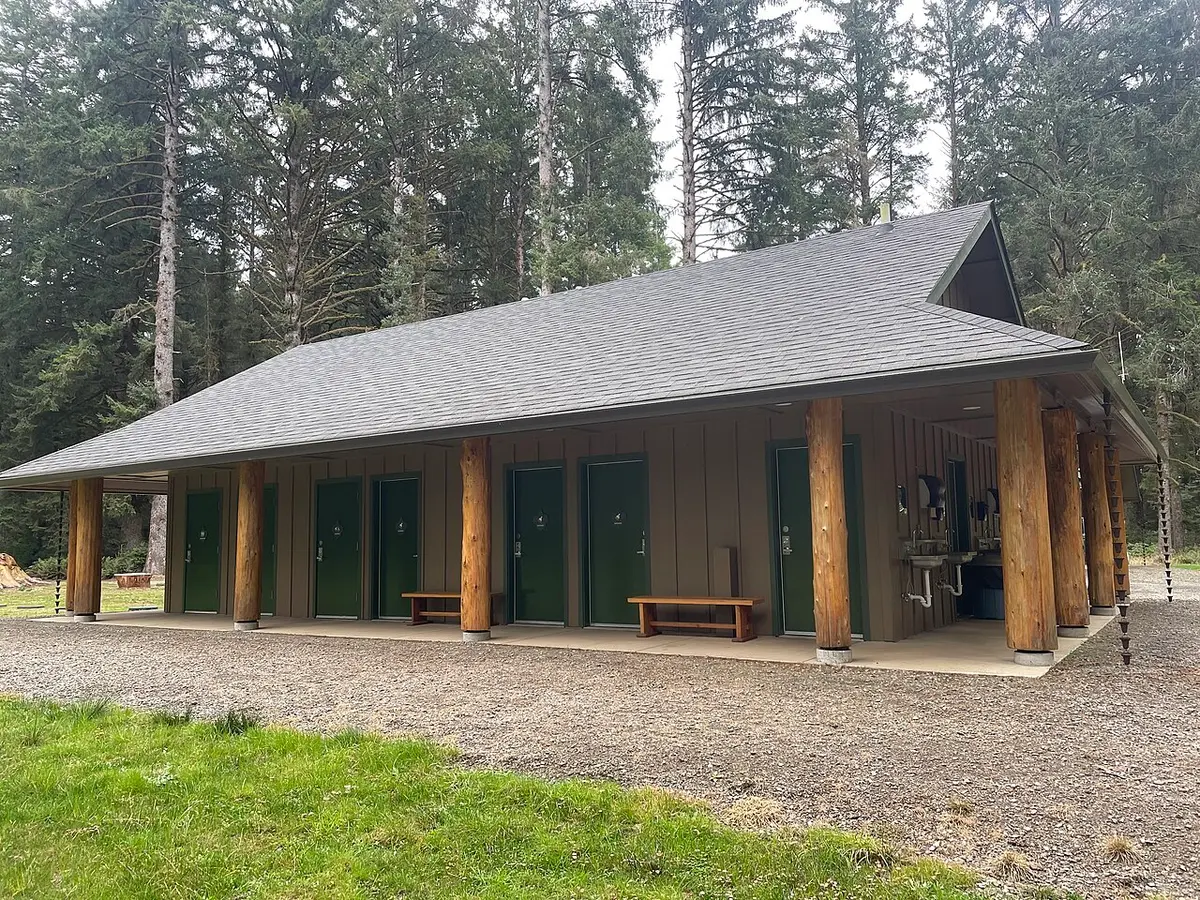
- "Camp Baker Shower House" by GoingtheEditor, CC0, via Wikimedia Commons.
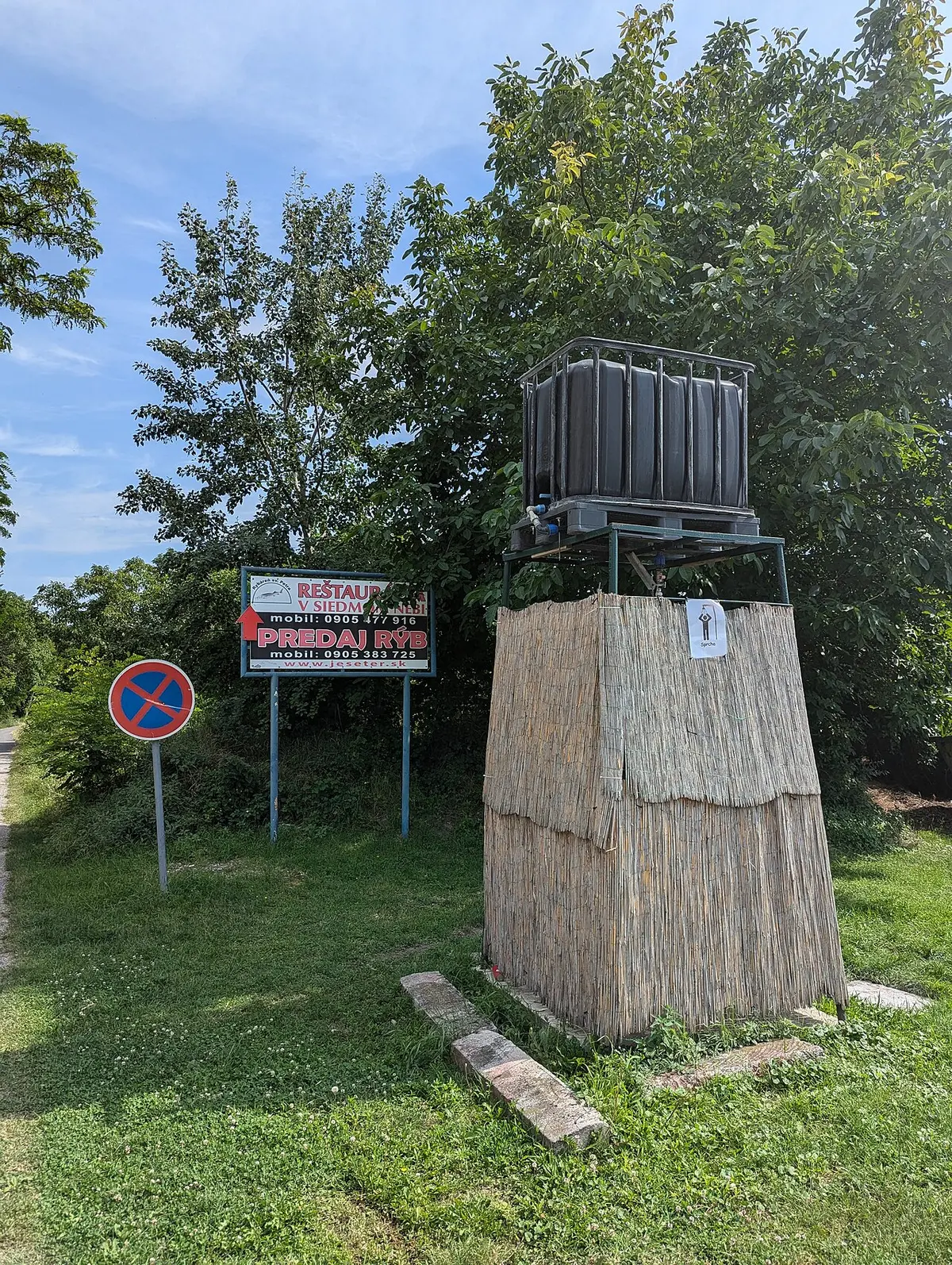
- "Vodný mlyn camp in Jelka - A shower" by Андрей Романенко, CC BY-SA 4.0, via Wikimedia Commons.


Ready to buy?
Compare the gear: Camp Furniture
5 Best Camping Shower With Heater in 2026
Best camping showers with a built-in water heater: five heated kits for car campers who want a warm rinse at camp, with what the heaters need to run.
6 Best Camping Shower With Hot Water in 2026
Best camping showers that deliver hot water: six kits with immersion heaters, compared on heat-up speed, safety shut-off, pump runtime and weight.
6 Best Camping Shower With Pump in 2026
Best camping showers with a rechargeable pump: six pump-and-bucket kits compared on battery size, flow control, waterproofing and what is included.
5 Best Camping Showers Under 100 in 2026
Best camping showers under $100: heated kits, a tent kit and two pump showers compared to show what the extra $25 over $75 does and does not buy.
4 Best Camping Showers Under 20 in 2026
Best camping showers under $20: four 5-gallon solar shower bags compared on heating, temperature indicators, hoses and value for off-grid rinsing.
5 Best Camping Showers Under 30 in 2026
Best camping showers under $30: three rechargeable bucket-pump kits and two solar bags compared on runtime, spray modes and pressure for camp rinsing.
5 Best Camping Showers Under 50 in 2026
Best camping showers under $50: bucket-pump kits, a 1500W heated kit and a pop-up tent set compared on runtime, spray heads and warm-water options.
5 Best Camping Showers Under 75 in 2026
Best camping showers under $75: a heated bucket kit, pump showers and pop-up tent kits compared on hot water, runtime and privacy for camp bathing.
Keep reading