
Practical Camping Guide · 12 min read
How to Use a Propane Fire Pit Safely
Use a propane fire pit safely at camp with 10-foot clearances, leak tests, correct lighting and shutdown steps, fuel run times and campground fire rules.

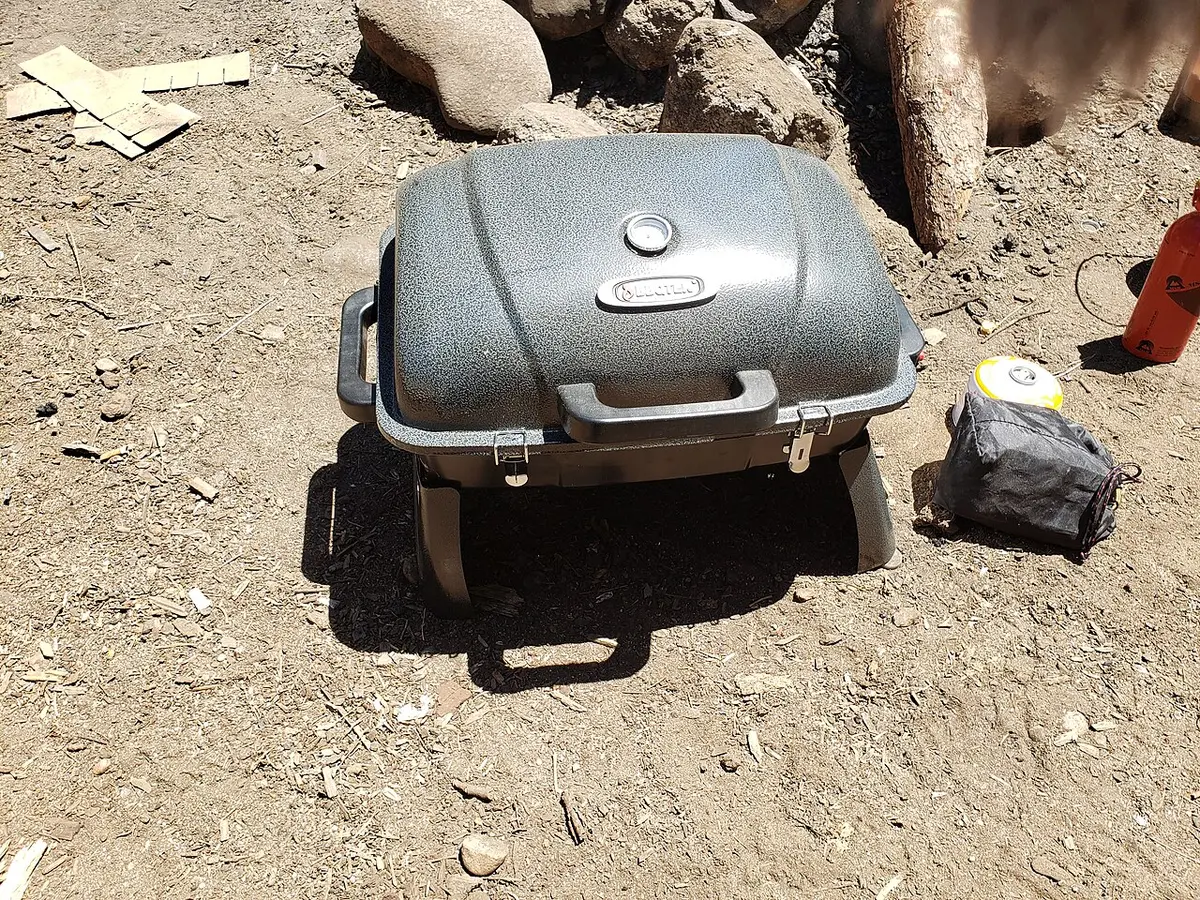
Set a propane fire pit on a stable, level, non-combustible surface, at least 10 feet from tents, RVs, awnings, trees and anything flammable (and well clear of overhead branches), run it only outdoors in open air, check every hose and connection for leaks with soapy water before lighting, and never leave it burning unattended. Keep the propane cylinder upright and at the distance the manufacturer specifies, follow the maker's clearance numbers over any general rule, and shut off the cylinder valve first when you finish. Propane fire pits are safer than wood fires in dry conditions, but they are still open flames fed by pressurized fuel.
Propane pits are popular at campsites because they light instantly, produce no sparks or ash and are often allowed when wood fires are banned. That convenience can breed carelessness. Below is a plain walkthrough of where to put the pit, how to connect and test it, how to light and shut it down, what rules apply at campgrounds and the habits that prevent the usual accidents.
Why people choose propane, and what it changes
A propane pit burns gas through a burner ring under lava rock, glass beads or ceramic logs. Compared with a wood fire:
| Factor | Propane fire pit | Wood fire |
|---|---|---|
| Lighting | Instant, with a control knob and igniter | Takes time and kindling |
| Sparks and embers | Almost none | Many, a fire risk |
| Smoke | None | Heavy, can irritate eyes |
| Heat control | Adjustable | Hard to control |
| Fire restrictions | Often allowed (gas with a shutoff) | Often banned in dry periods |
| Cooking | Limited (some models for marshmallows) | Excellent |
| Ash and cleanup | None | Significant |
| Hazards | Gas leaks, burns, CO in enclosed spaces | Embers, wildfire, burns |
| Fuel cost | Moderate | Low to moderate |
The absence of embers lowers wildfire risk, though it does not eliminate it, because the flame and the hot surfaces can still ignite dry grass and fabric. Always check the local rules. Some areas treat any open flame as a fire during severe restrictions, even if it runs on gas.
Where to put it
Placement prevents most accidents.
- Open air only. Never use a propane fire pit inside a tent, camper, garage, screened porch, gazebo or under a closed canopy. Combustion produces carbon monoxide, and enclosed or partly enclosed spaces trap it.
- Clearance from structures. Keep it at least 10 feet from tents, RVs, awnings, fences and buildings, or the distance in the manual, whichever is greater. Heat radiates sideways and upward.
- Clear overhead. Do not place it under tree branches, awnings or tarps. A flame can reach more than expected, and radiant heat can damage fabric above.
- Non-combustible surface. Use bare ground, gravel, concrete, pavers or a fire-rated pad. Do not use grass if dry, a wooden deck or a picnic table unless the pit is rated for that use and has a heat shield.
- Level and stable. A tilted pit can cause uneven flame and tip over. Check that the legs are firm and the ground will not shift.
- Away from wind. A steady wind can blow flames sideways or snuff them out. Place it in a spot sheltered from strong gusts but not enclosed.
- Mind the cylinder. Keep the tank upright, in a ventilated place, at the distance specified by the maker, and shielded from the burner's heat. Do not put the tank under the pit unless the design includes an enclosure made for it.
- Keep clear paths. Leave room around the pit so that people do not trip into it, and keep chairs a safe distance back.
Setup: connecting and testing the gas
Follow the maker's manual for the exact steps, and use this as a checklist.
- Inspect the hose and regulator for cracks, cuts, kinks and wear. Replace damaged parts, and use only the hose and regulator that came with the unit or approved replacements.
- Check the burner and media. Make sure lava rock or glass is evenly spread, with no pieces blocking the gas ports, and that no debris is on the burner.
- Close the control valve on the pit before connecting the tank.
- Connect the hose to the cylinder and tighten by hand or with the recommended tool. Do not over-tighten.
- Test for leaks. Mix soapy water in a spray bottle (dish soap and water). With the valve on the cylinder open and the pit's control off, spray the connections, hose and regulator. Bubbles indicate a leak. If you see bubbles, close the cylinder valve, tighten or replace the part and retest.
- Smell for gas. Propane has an added odor like rotten eggs, but do not rely on smell alone, since some people cannot smell it well and the odor can fade.
- Close the cylinder valve and start again if any doubt remains.
Never use a lighter or a match to check for leaks. Use soapy water only.
Lighting it
- Make sure no one is leaning over the pit and that pets and children are clear.
- Open the cylinder valve slowly, to let the gas flow gently.
- Turn the control knob to the lighting position and press the igniter. If the unit has no igniter, use a long-handled lighter as the manual directs.
- If it does not light in a few seconds, turn off the control, close the cylinder valve and wait five minutes for the gas to clear before trying again. Do not keep pressing the igniter with gas flowing.
- Adjust the flame to the desired height. A moderate flame is safer than a roaring one, and uses less fuel.
- Stand back and watch for a steady blue and yellow flame. A flame that is mostly yellow, sooty or lifting off the burner needs attention, and an orange flame may indicate a blocked burner or low pressure.
While it is burning
- Never leave it unattended. Assign an adult to watch it.
- Keep children and pets at a distance. Set a rule: no running, no toys near the flame.
- Do not burn anything but gas. No trash, no wood in a gas pit that is not designed for it, and no fluids.
- Do not cover it. Do not place a lid, a table or a cover over a lit pit unless the unit is designed for it.
- Watch the wind. If wind picks up and flames bend toward chairs or tents, turn it off.
- Keep flammables away, including aerosol cans, lighter fluid, blankets, towels and chairs with fabric.
- Do not lean or reach over the flame. Sleeves and hair can catch.
- Watch for heat on nearby surfaces, such as the table or the ground. Heat shields help.
- Check the flame periodically for color and shape.
- Do not use alcohol around it. Fire and impaired judgment do not mix.
Shutting down
- Close the cylinder valve first. This lets the remaining gas in the hose burn off and the flame go out, which avoids leaving pressurized gas in the line.
- Turn the control knob to off when the flame is out.
- Let it cool completely before covering, moving or storing it. Hot media and metal can burn skin for a long time.
- Disconnect the hose when it is cool.
- Check that nothing is still glowing or smoldering nearby.
- Store the cylinder upright, in a ventilated place outside living areas and out of direct sun, and never in a closed vehicle trunk or a hot car.
Fuel: how long a tank lasts
Propane fire pits burn a lot of gas, usually between 30,000 and 60,000 BTU per hour at full output. A 20 pound propane cylinder holds about 430,000 BTU, so at a mid-range 50,000 BTU/h it lasts roughly 8 to 9 hours. A smaller 1 pound cylinder holds about 21,500 BTU, so it lasts under an hour at that rate. For the math of how burner output relates to fuel, see camp stove BTU ratings explained, which explains the same units.
| Cylinder | Approx. energy | Run time at 30,000 BTU/h | Run time at 50,000 BTU/h |
|---|---|---|---|
| 1 lb | 21,500 BTU | About 43 minutes | About 26 minutes |
| 5 lb | 107,000 BTU | About 3.5 hours | About 2 hours |
| 20 lb | 430,000 BTU | About 14 hours | About 8.5 hours |
| 30 lb | 645,000 BTU | About 21 hours | About 13 hours |
Use these as estimates. Cold weather reduces how fast a cylinder can deliver gas, and a very cold cylinder may freeze up or deliver a weak flame, similar to the effects discussed in how to use a canister stove in cold weather. A larger cylinder resists that problem better.
Campground rules and wildfire conditions
Rules vary, and violations carry fines. Before you go:
- Check the campground's policy on propane fire pits, wood fires and open flames.
- Check current fire restrictions with the local land agency. In high fire danger, some jurisdictions ban all open flames, including gas pits, and others allow devices with a shutoff valve.
- Check wind and humidity. Even where allowed, skip the fire on very dry, windy days.
- Follow quiet hours and any limits on fire times.
- Keep a water source and a shovel nearby for emergencies, and a fire extinguisher rated for propane and general fires.
- Never move a hot pit, and never use water on a propane flame, since turning off the gas is the correct way to extinguish it.
If you are shopping, the best fire pits list shows the general market, the best fire pits under $100 and the best smokeless fire pits under $100 cover budget options, and the best fire pit for patio, best fire pit for backyard and best fire pit for cooking cover particular uses.
Carbon monoxide and ventilation
Propane burns cleaner than wood, but any combustion produces carbon monoxide. In open air, it disperses. In an enclosed or partly enclosed space, it can build to dangerous levels. Never use a fire pit under a tent canopy, a screen room or a carport. Even a covered patio with walls on three sides can trap gas. If you feel headache, dizziness or nausea near a fire pit, move to fresh air immediately and turn the pit off. The U.S. Consumer Product Safety Commission advises that carbon monoxide alarms be installed where people sleep, and carrying a battery-powered alarm in a camper is a sensible precaution when any fuel-burning device is nearby.
Fuel choice, storage and travel with propane
Fire pits run on propane, not on the butane blends sold in small stove canisters, because they need the high pressure and low boiling point that propane provides in cold air. The differences between the two fuels, and why butane fails in the cold, are explained in propane versus butane camping stoves. For the pit, use the cylinder type the manufacturer names, usually a 20 pound refillable cylinder or an adapter-fed larger tank.
When you carry cylinders, keep them upright and secured so that they cannot tip or roll, in a ventilated part of the vehicle, and never leave them in a closed car in the sun. Close the valve and, if the cylinder has a plug or cap, install it. Check the date stamped on the collar of a refillable cylinder: most need to be requalified after about ten years. Refill at a licensed dealer, and do not overfill. If you smell propane in the vehicle, stop in a safe place, open the doors, keep away from ignition sources and get the cylinder checked. Keep a spare cylinder for long stays, since a pit uses fuel quickly, and mark the date you last filled each one.
A worked example: an evening at a dry-season campsite
Consider a family at a campground in late summer with a burn restriction that bans wood fires but allows gas appliances with a shutoff valve. They bring a tabletop propane pit with a 40,000 BTU/h rating and a 20 pound cylinder.
At about 5 p.m., they choose a gravel pad at the edge of the site, well away from the tent, and well clear of the low branches above the picnic table. They lay a fire-rated mat under the pit and set it level. They connect the hose, close the pit's valve, open the cylinder valve and spray soapy water on the fittings. A tiny cluster of bubbles forms at the regulator, so they close the valve, tighten the fitting a quarter turn and retest. No bubbles appear this time.
After dinner, one adult opens the cylinder valve slowly, turns the control to the lighting position and presses the igniter. It lights on the second press. They set the flame to medium, which is roughly 25,000 BTU/h, and arrange chairs six feet back. The wind comes up at nine o'clock, bending the flame toward a camp chair, so they turn the pit down, and later off, rather than moving the chair closer. At 10 p.m., they close the cylinder valve first, let the flame die out and turn the control off. The pit cools for an hour before it is covered.
The fuel use for the evening, at about 25,000 BTU/h for four hours, is 100,000 BTU, or about a quarter of the cylinder. Over a three-night stay, they will use roughly three quarters of it. For fuel estimates in general, the guides on how much propane to bring and how long a tank lasts give a longer treatment, and the quick calculation used here is the same: energy in the cylinder divided by the burn rate.
Nothing dramatic happened, which is the aim. The safe evening came from a handful of habits done in order: placement, leak test, slow valve opening, an attentive adult, a response to the wind and a proper shutdown.
Cold, wind and rain
Cold weather. A very cold cylinder delivers gas more slowly because propane vaporizes less in the cold, so the flame may be weak. Use a larger cylinder, keep it out of the shade of snow, and never warm it with a flame or a heater.
Wind. Strong wind can blow out the flame and spread unburned gas. Use a wind guard if the pit has one, shield the burner, and turn the pit off if the wind picks up.
Rain. Water can damage the igniter and clog the burner. Use a cover when not in use, but never cover a hot or burning pit. Do not use a gas pit in a downpour.
Common mistakes to avoid
- Skipping the leak test. A small leak at a connection is a common cause of fires.
- Using it under an awning or inside a screen room. Heat and carbon monoxide are real hazards.
- Placing it on a wooden deck or a picnic table without a heat shield.
- Leaving it unattended. It only takes a moment for a child or a dog to get too close.
- Opening the valve fully and igniting in one rush. Open slowly, and ignite promptly.
- Using water to extinguish it. Turn off the gas.
- Storing the cylinder in a hot car. Pressure rises with heat.
- Ignoring fire restrictions. Gas pits are not always exempt.
Frequently asked questions
How far should a propane fire pit be from my tent or RV?
At least 10 feet, or the distance in the manufacturer's manual if it is greater. Also keep it out from under awnings and tree branches, and downwind of fabric. More distance is safer, especially in wind.
Can I use a propane fire pit during a fire ban?
Sometimes, but not always. Some restrictions allow gas devices with an on-off valve, while others ban all open flames. Check the current rules for your campground and the land agency before you light it.
Is it safe to use a propane fire pit on a deck or a picnic table?
Only if the pit is designed and rated for that surface and includes a heat shield. Most pits should sit on bare ground, gravel, pavers or concrete. Heat can scorch wood and ignite fabric.
How do I know if my propane connection is leaking?
Spray soapy water on the hose, regulator and connections with the cylinder valve open. Bubbles mean a leak. Close the valve, tighten or replace the part and retest. Do not rely on smell alone, and never check with a flame.
How long does a 20 pound tank last on a fire pit?
At a mid-range output of about 50,000 BTU/h, about 8 to 9 hours. At a low flame of 30,000 BTU/h, it can last 14 hours or more. Check your pit's rated output for a better estimate.
Can I roast marshmallows over a propane fire pit?
Many people do, with long skewers, standing back from the flame. Some pits are designed for it and others are not. Keep the flame low, watch children and keep sleeves and hair away from the pit.
Sources & further reading
- U.S. CPSC: Portable generator safety alert (carbon monoxide guidance)
- MSR: The ins and outs of canister fuels
- Propane Education and Research Council: Propane safety
Image credits
- "On-Off switch (50211260631)" by Region 5 Photography, Public domain, via Wikimedia Commons.
- "Fire Pit" by Henryemix, CC0, via Wikimedia Commons.


Ready to buy?
Compare the gear: Camp Kitchen
5 Best Fire Pit For Patio in 2026
Best fire pits for a patio: propane tables and wood-burning bowls from 22 to 43 inches, compared on heat output, smoke and table space.
6 Best Fire Pit Under 100 in 2026
Best fire pits under $100: six wood-burning steel pits from a 22 inch round to 32 inch tables, compared on bowl depth, spark screens and build.
5 Best Smokeless Fire Pit Under 100 in 2026
Best smokeless fire pits under $100: five portable low-smoke pits from a 19.5 inch stainless unit to a tabletop mini, compared on airflow and carry.
6 Best Fire Pit in 2026
Wood-burning fire pits compared by size and features, from 22 inch portable bowls to 43 inch fire pit tables with grills, for campsites and backyards.
5 Best Fire Pit For Backyard in 2026
Best fire pits for the backyard: five wood-burning pits from 31 to 43 inches, with grills and patterns, compared on size, stability and extras.
6 Best Fire Pit For Cooking in 2026
Best fire pits for cooking: six wood-burning pits from 33 to 43 inches with two grills each, compared on grate size, bowl capacity and setup time.
Keep reading