
Practical Camping Guide · 12 min read
Camp Stove BTU Ratings Explained
Understand what BTU per hour means on camp stoves, how efficiency, wind and fuel affect real boil times, and how many BTUs your cooking actually needs.

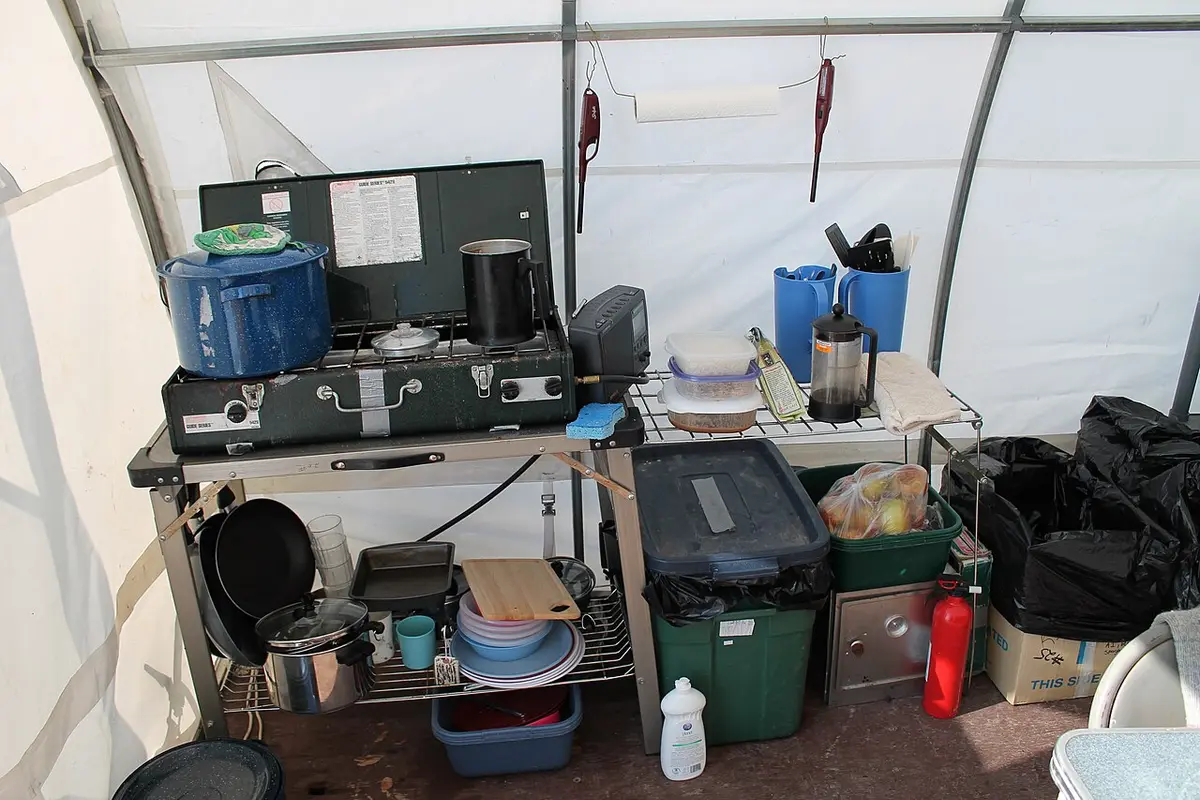
A BTU rating on a camp stove is the maximum rate at which the burner converts fuel into heat, expressed in BTU per hour. A single-burner backpacking stove typically lists 7,000 to 12,000 BTU/h, a classic two-burner propane camp stove lists 10,000 to 20,000 BTU/h per burner, and a larger one lists even more. Higher BTUs boil water faster, but they do not automatically mean a better stove, because efficiency, wind protection, simmer control and fuel use matter as much as the headline number.
BTU is the most quoted number on stove packaging and the least useful by itself. Two stoves with identical ratings can boil water in very different times, and a modest stove with a good windscreen can beat a powerful one in a breeze. Here is what the number measures, how to turn it into real cooking time and fuel use, and which other specs deserve your attention.
What a BTU is
A British Thermal Unit (BTU) is the amount of heat needed to raise the temperature of one pound of water by one degree Fahrenheit. In stove ratings, it appears as BTU per hour (BTU/h), meaning how much heat the burner can produce each hour at full output. For reference, 1,000 BTU/h is about 293 watts, so a 10,000 BTU/h burner produces roughly 2,900 W of heat at the flame, similar to an electric kettle's 1,500 W of electrical power but delivered by fire.
Here are conversions you can use:
| BTU/h | Watts (approx.) | Typical stove |
|---|---|---|
| 3,000 | 880 | Tiny alcohol or solid fuel stove |
| 7,000 | 2,050 | Ultralight canister stove |
| 10,000 | 2,930 | Standard canister or camp burner |
| 15,000 | 4,400 | Strong propane burner |
| 20,000 | 5,860 | Powerful camp burner |
| 30,000 | 8,800 | Large outdoor cooker |
The rating describes the energy released by burning fuel at the maximum setting, not the energy that reaches your food. The difference is efficiency, and that is where the real-world story begins.
Why BTU does not equal speed
Most of a burner's heat misses the pot. A camp stove in calm conditions might transfer 30 to 50 percent of the heat to the pot, while a windy day or a wide pot with a narrow flame can drop that to 20 percent. Stoves with a heat exchanger (a ring of fins on the base of the pot) and a shielded burner can reach 70 percent or better in mild conditions.
Consider boiling one liter of water from 60 degrees F to boiling. It takes about 2.2 pounds of water times about 152 degrees F of temperature rise, or roughly 335 BTU of heat. A 10,000 BTU/h burner at 40 percent efficiency delivers 4,000 BTU/h to the water, so it takes about 5 minutes. At 20 percent efficiency in wind, the same burner needs about 10 minutes. A stove rated at 7,000 BTU/h with a heat exchanger at 70 percent efficiency delivers 4,900 BTU/h, beating the more powerful stove in the wind.
| Stove | Rated BTU/h | Efficiency (illustrative) | Heat to the water | Approx. time to boil 1 L |
|---|---|---|---|---|
| Basic canister, open air, breezy | 10,000 | 25 percent | 2,500 | 8 minutes |
| Basic canister, windscreen | 10,000 | 40 percent | 4,000 | 5 minutes |
| Canister with heat exchanger | 9,000 | 70 percent | 6,300 | 3.2 minutes |
| Two-burner camp stove, large pot | 15,000 | 35 percent | 5,250 | 3.8 minutes |
| Alcohol stove, windscreen | 3,000 | 50 percent | 1,500 | 13 minutes |
The values are illustrations of how the math works, not test results. They show that efficiency and wind protection can matter as much as raw BTU, and why manufacturers' boil-time claims are taken under ideal conditions.
How BTU relates to fuel use
The fuel itself has an energy content. Propane contains about 21,500 BTU per pound, or around 91,500 BTU per gallon. A 1 pound (16.4 oz) propane cylinder therefore holds about 21,500 BTU, and at a 10,000 BTU/h burner on full, it lasts roughly 2 hours, assuming you could use all of it. Isobutane and butane hold similar amounts per pound, around 21,000 BTU per pound. A small 8 oz (230 g) backpacking canister holds about 10,000 BTU, which runs a 10,000 BTU/h burner on high for about an hour.
| Fuel container | Approx. energy | Burn time at 10,000 BTU/h full | Burn time at 5,000 BTU/h |
|---|---|---|---|
| 100 g canister | About 4,700 BTU | About 28 minutes | About 56 minutes |
| 230 g canister | About 10,800 BTU | About 65 minutes | About 130 minutes |
| 450 g canister | About 21,000 BTU | About 2 hours | About 4 hours |
| 1 lb propane cylinder | About 21,500 BTU | About 2 hours | About 4 hours |
| 20 lb propane tank | About 430,000 BTU | About 43 hours | About 86 hours |
Real life is shorter, because stoves rarely burn on full, and because canisters cannot always deliver their last portion in cold weather. For fuel planning, our guide to using a canister stove in cold weather gives daily per-person estimates.
A high-output burner is not a fuel hog if you use it well. A stove that boils water in three minutes at 12,000 BTU/h uses about 600 BTU, the same as a lower-power stove that takes six minutes at 6,000 BTU/h and uses 600 BTU. The total fuel depends on how much heat reaches the water, not on how fast the burner burns. In practice, high-output stoves lose more heat to the air around the pot, so they use more fuel for the same job unless they are well shielded.
How much BTU do you need?
Match the rating to the cooking you plan.
| Cooking style | Burner output that works | Why |
|---|---|---|
| Boil water for freeze-dried meals, solo | 5,000 to 9,000 BTU/h | A single liter is the main job |
| Cooking for 2 on a backpacking trip | 7,000 to 11,000 BTU/h | Boil, then simmer a pot meal |
| Family car camping, frying and boiling | 10,000 to 15,000 BTU/h per burner | Large pans need broad heat |
| Large pots, griddles, group cooking | 15,000 to 30,000 BTU/h | Big thermal mass takes power |
| Coffee and quick hot drinks | 5,000 to 8,000 BTU/h | Small volumes, precise control |
| Winter and snow melting | 9,000 to 15,000 BTU/h, regulated | Cold and wind raise losses |
For basic coffee making, small stoves handle the job. If a morning cup is the priority, see the best camping stoves for coffee. For general use, the best camping stoves lists show the typical ratings across the market.
Simmer control matters more than maximum power
Many cooks discover that the problem on a camp stove is not too little heat but too much. A burner with a high output and a crude valve scorches pasta sauce and makes it hard to hold a gentle simmer. Look for:
- A turn-down ratio. This is the ratio of maximum to minimum output. A stove that goes from 12,000 BTU/h down to 1,500 BTU/h has a wide range, and one that jumps from off to 6,000 BTU/h does not.
- Burner design. A wide, ring-shaped burner spreads heat across a pan. A single jet focuses heat on a spot and scorches food.
- A regulator. Maintains steady flow as the fuel level and temperature change, keeping the flame predictable.
- A good valve. A precise, smooth valve makes simmering possible.
If you plan to cook real meals rather than boil water, a stove that simmers well is more useful than one with a higher rating.
Wind, pots and other real-world losses
A few things change what the BTU number delivers:
- Wind. A light breeze can cut efficiency in half. A windscreen, or a stove with built-in wind baffles, is the cheapest upgrade.
- Pot size and shape. A pot that matches the burner width captures more heat. A tall, narrow pot loses less than a wide, shallow one. A pot much smaller than the burner lets heat escape around the sides.
- Heat exchangers. Fins on the base of a pot capture heat that would otherwise flow around it.
- Lids. A lid reduces heat loss and cuts boil time by 20 to 30 percent.
- Starting temperature. Boiling water from near freezing takes more energy than from room temperature.
- Altitude. Water boils at a lower temperature at altitude, so it reaches boil sooner, but cooking food in it takes longer. The stove itself burns about as well, though canisters can behave differently in cold.
- Fuel type and temperature. A cold canister cannot deliver the rated output.
Two-burner camp stoves and what the numbers hide
Classic two-burner propane stoves often advertise a combined figure, such as "20,000 BTU", which might be 10,000 BTU per burner or a larger total. Check whether the rating applies to each burner or to both together. Also note that large burners may not run at full output on a small 1 pound cylinder, because the cylinder can freeze up from evaporative cooling. Using a larger tank through a hose, or a regulated stove, solves that problem.
Features that matter for a two-burner camp stove include auto ignition, a wind guard, a sturdy grate and a folding design. See the best 2-burner camping stoves and the best 2-burner camping stoves with auto ignition for typical combinations of power and features.
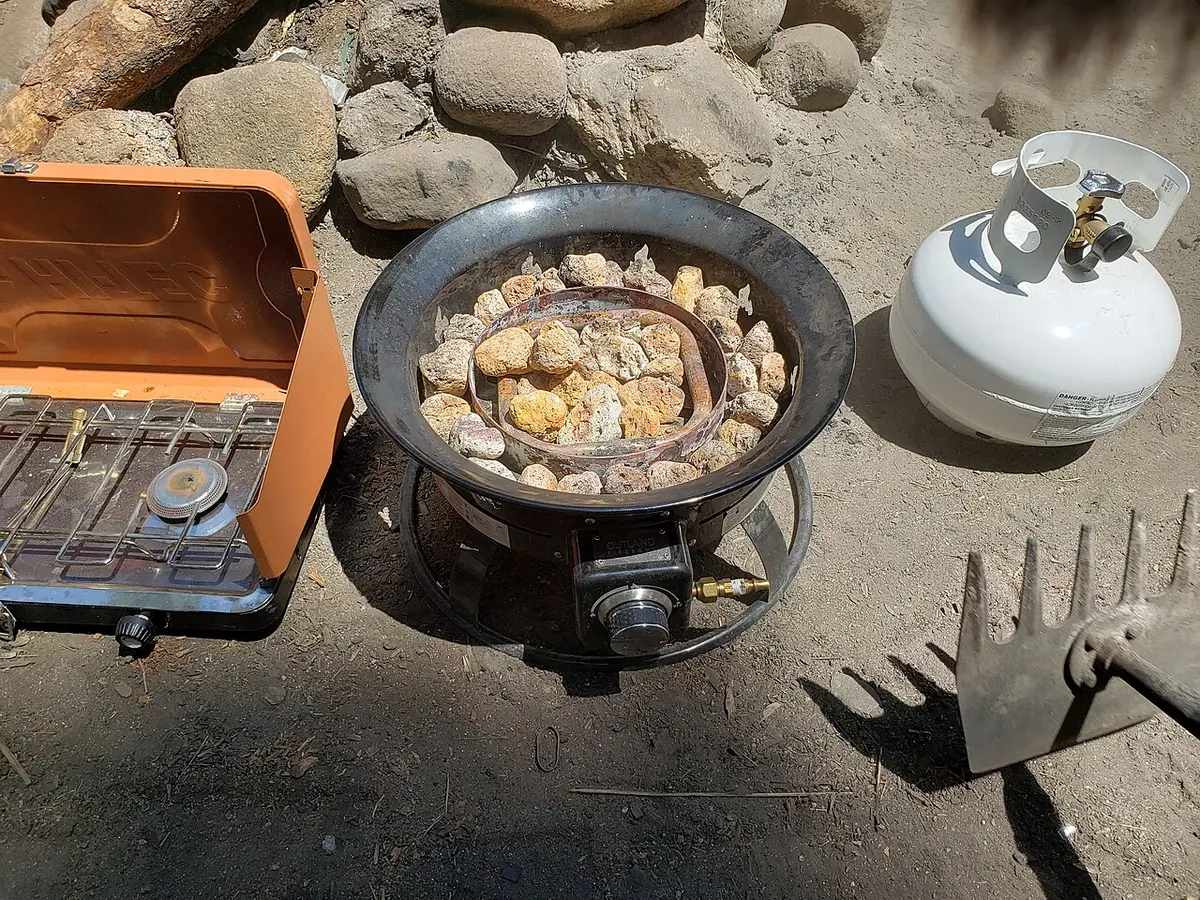
Worked example: dinner for four on a car camping stove
A family of four plans spaghetti, a vegetable side and hot chocolate. The big pot holds 4 liters of water for pasta, a skillet handles the sauce, and a small pot heats milk.
Pasta water. Bringing 4 liters from 60 degrees F to a boil takes about 1,340 BTU of heat in the water. On a 12,000 BTU/h burner at 35 percent efficiency in light wind, the pot receives 4,200 BTU/h, so the boil takes about 19 minutes. With a lid and a windscreen, efficiency may climb to 45 percent, which cuts that to roughly 15 minutes. If the burner were rated at only 7,000 BTU/h, the same pot would take 25 to 30 minutes, which feels long when the kids are hungry.
Sauce in the skillet. This job wants low, even heat, not power. A burner that can drop to 2,000 BTU/h makes a gentle simmer possible, while one that bottoms out at 6,000 BTU/h scorches the bottom of the pan. Here the turn-down range matters more than the maximum.
Hot chocolate. One liter takes about 4 to 5 minutes on the second burner. If the stove has two burners that share a regulator, running both at high output may reduce each flame slightly, which is normal and another reason combined ratings overstate what you will see on one burner.
Fuel. The whole dinner needs roughly 3,000 BTU of delivered heat, which at 40 percent overall efficiency means about 7,500 BTU of fuel, or about a third of a 1 pound propane cylinder. A weekend of three dinners, breakfasts and coffee might use one to two cylinders, depending on how much you boil and how cold it is. That is why many car campers connect a larger 20 pound tank through a hose, since it removes the fuel anxiety and keeps output steady.
Reading the fine print on stove listings
Product pages mix useful numbers with decoration. Here is how to separate them.
- "Up to" ratings. A rating described as "up to 20,000 BTU" is the maximum, achievable only at full valve opening and with the right fuel, regulator and temperature.
- Total versus per burner. If the listing shows one number for a two-burner stove, check whether it is a sum.
- Boil time claims. Look for the volume, starting temperature and conditions. A claim of "boils 1 liter in 3 minutes" with no further details is a marketing statement, not a specification.
- Fuel efficiency claims. Statements such as "saves 30 percent fuel" depend on a baseline, so find out which one.
- Fuel compatibility. Check whether the stove accepts propane, butane, isobutane blends or several. Some stoves list a BTU rating for only one fuel.
- Regulator details. A regulator keeps the flame consistent. Without one, the burner weakens as the cylinder cools or empties.
- Pot support size. The grate should fit your largest pot with room to spare.
When two stoves seem close, rely on the details that affect cooking, such as simmer control, wind protection and stability, and treat BTU as a tiebreaker.
Budget tiers
Price does not map neatly to BTU, but it does map to build quality, regulators and extras. Entry-level stoves in the lower price bands focus on basic burners and simple frames. As you move up, you get better wind protection, regulators, auto ignition and sturdier legs. Browse by budget using the best camping stoves under $30, the best camping stoves under $50, the best camping stoves under $75 and the best camping stoves under $100. Remember to check what fuel the stove uses, since propane, butane and isobutane blends perform differently. For that decision, see propane versus butane camping stoves.
Comparing different stove types
BTU numbers are most comparable within the same type of stove. Alcohol stoves have low ratings, around 3,000 to 4,000 BTU/h, yet they are efficient and silent, and they suit simple boiling. See alcohol stove versus canister stove to see how that trade-off looks. A backpacking stove and a camp stove have different jobs, as the guide on camping stoves versus backpacking stoves explains. Liquid-fuel stoves, which can produce 10,000 to 12,000 BTU/h, burn white gas, kerosene or unleaded fuel, and shine in cold conditions.
A quick method to compare any two stoves
- Check the BTU per burner and whether the figure is for one burner or combined.
- Look for a boil-time figure and the test conditions: volume, starting temperature, wind and altitude.
- Check the fuel type and whether the stove has a regulator.
- Compare the burner design (ring or jet) and the simmer range.
- Look at wind protection. A built-in windscreen is worth more than a few thousand BTU.
- Consider weight and pack size, which matter more than power for backpacking.
- Check the pot support and its stability with your pots.
- Read the fuel use claims skeptically, since they depend on test conditions.
Indoor use and safety reminders
BTU output also bears on safety. A high-output stove produces more carbon monoxide in poorly ventilated spaces, and many camp stoves are not designed for indoor or tent use. See whether you can use a camping stove indoors for the specifics. Keep a stove away from flammable materials, use it on a stable surface and never leave it unattended. Check hose and regulator connections for leaks with soapy water, and store fuel in a cool, ventilated place.
Common mistakes to avoid
- Buying purely by BTU. Efficiency, wind protection and simmer control change real results.
- Assuming the combined rating applies to each burner. Two burners at 10,000 BTU/h each are not 20,000 BTU/h in one burner.
- Ignoring pot size. A pot that is too small or too large wastes heat.
- Running a small cylinder at full output for long periods. Evaporative cooling can reduce flow.
- Skipping a windscreen. It is the cheapest efficiency boost.
- Cooking indoors with a camp stove. Carbon monoxide is a real risk.
- Using the manufacturer's boil time as a promise. It reflects ideal conditions.
Frequently asked questions
Is a higher BTU stove always better?
No. Higher BTU means more potential heat, but real performance depends on efficiency, wind, pot size and burner design. A lower-rated stove with a heat exchanger and a windscreen can boil water faster and use less fuel than a higher-rated one without them.
How many BTUs do I need for a camp stove?
For backpacking, 7,000 to 11,000 BTU/h is typical. For car camping with a family, 10,000 to 15,000 BTU/h per burner is common. Large groups and big pots can use 15,000 to 30,000 BTU/h. Match the rating to the largest pot you plan to use.
How long will a propane cylinder last on my stove?
A 1 pound cylinder holds about 21,500 BTU. At 10,000 BTU/h on high it lasts roughly two hours, and at medium output it lasts four hours or more. Real runtime is lower because of cold, wind and unused fuel at the end.
What is the difference between BTU and watts?
They both measure a rate of energy. One BTU per hour is about 0.293 watts, so 10,000 BTU/h is about 2,930 watts. Stove BTU measures the heat released by the flame, while electric appliances list the electrical power they draw.
Does altitude change a stove's BTU output?
The burner still releases roughly the same heat, but lower air pressure changes combustion slightly and some regulated stoves compensate. The main effect is on boiling: water boils at a lower temperature at altitude, which affects cooking time rather than stove output.
Why does my stove take longer than the box says?
Manufacturers test in calm air, with a lid, a heat-exchanger pot and a warm canister. Wind, a cold canister, a wide pot and a dull burner each add minutes. Using a windscreen and a lid recovers much of the difference.
Sources & further reading
- MSR: The ins and outs of canister fuels
- REI: Snow Peak GigaPower 110 Gold fuel canister
- Backpacking Light: Propane and cold temperatures
Image credits
- "Field camp Kitchen (8725939651)" by USFWSAlaska, Public domain, via Wikimedia Commons.
- "On-Off switch (50210741033)" by Region 5 Photography, Public domain, via Wikimedia Commons.


Ready to buy?
Compare the gear: Camp Kitchen
5 Best Camping Stoves Under 30 in 2026
Best camping stoves under $30: five canister and propane stoves compared on output, regulator, safety features and stability for car camping.
5 Best Camping Stoves Under 75 in 2026
Best camping stoves under $75: two-burner and 15,000 BTU stoves compared on output, windshields, fuel and packed size, for car-camping cooks.
6 Best Camping Stoves in 2026
Camping stoves compared: two-burner propane campsite stoves from 20,000 to 150,000 BTU, a butane tabletop and a compact backpacking burner.
6 Best Camping Stove For Coffee in 2026
Best camping stoves for coffee: six burners and percolators compared on simmer control, boil speed, base stability and fit for a pot or kettle of water.
4 Best Camping Stove Under 100 in 2026
Best camping stoves under $100: four propane and butane stoves from a two-burner Coleman Triton to compact 1-burner models, compared on power and control.
4 Best Camping Stove Under 50 in 2026
Best camping stoves under $50: four propane and butane burners compared on stated power, wind protection, ignition and how well they handle a pot.
5 Best 2 Burner Camping Stoves With Auto Ignition in 2026
Best 2-burner propane camping stoves with auto ignition, compared on listed BTU, ignition style, build and portability for car camping and tailgating.
6 Best 2 Burner Camping Stoves in 2026
Best 2-burner camping stoves compared on listed BTU output, ignition, wind protection and packed size, for car campers who cook real meals.
Keep reading