
Practical Camping Guide · 12 min read
Portable Grill vs Camp Stove
Compare a portable grill and a camp stove on cooking range, fuel use, weight, safety and fire rules so you pack the right cooking gear for your trip.

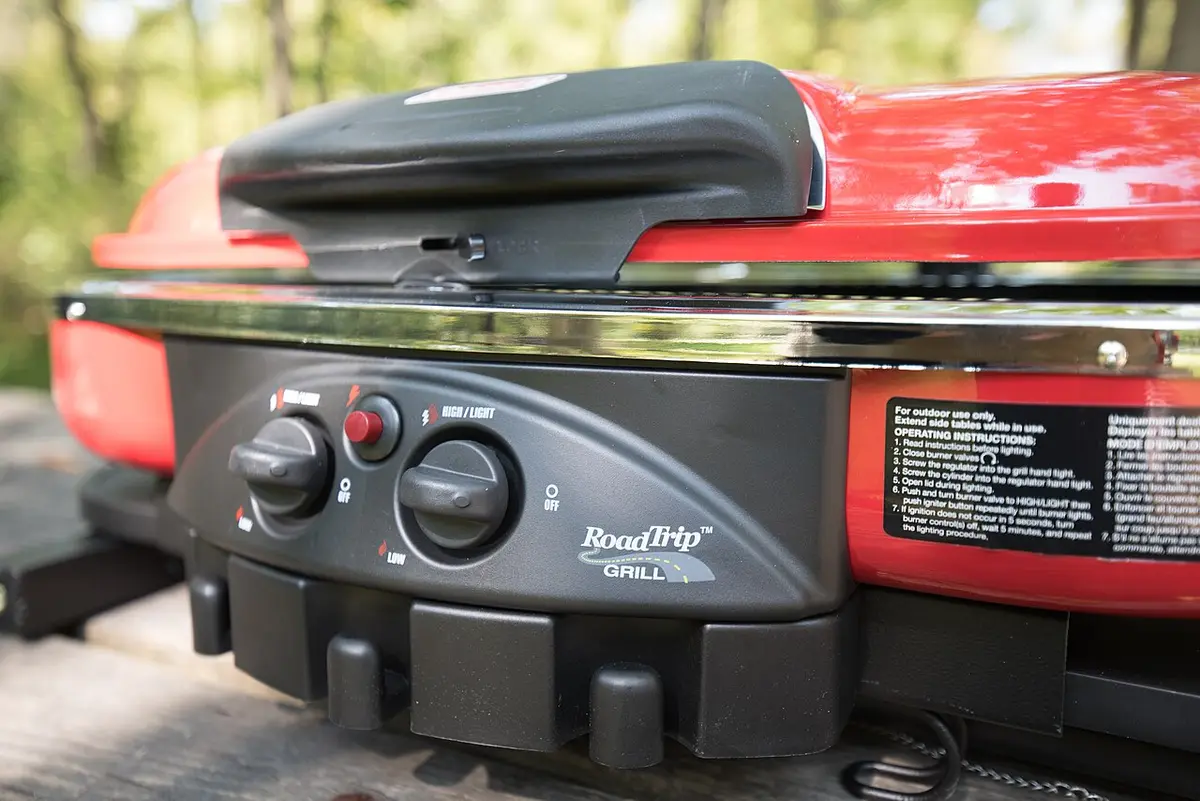
A camp stove is the better all-round tool: it boils water, fries eggs, simmers sauces and makes coffee in any weather, while a portable grill does one thing very well, which is searing meat and vegetables over open heat with real smoky flavor. If you can bring only one, bring the stove. If you cook for a group, camp in one spot for several days or love grilled food, a portable propane grill alongside a stove covers nearly every meal. Many campers end up with both, and that is the combination worth planning around.
The two tools overlap less than people expect. A stove delivers controlled heat under a pot or pan, and a grill delivers radiant and convective heat to food on a rack. Choosing between them is mostly a question of what you actually cook, how many people you feed, how much space you have and what fire rules apply. Here is a direct comparison, with numbers, and a way to decide.
What each one does best
Camp stove. A one- or two-burner stove with adjustable flame. It handles boiling, simmering, frying, sautéing and anything that needs a pot or pan. Breakfast, coffee, pasta, soups, one-pot meals and dishwater are all stove jobs. A stove works the same in any weather that is not violent, and it uses little fuel.
Portable grill. A compact gas or charcoal grill with a cooking grate. It sears burgers, sausages, chicken, steaks, kebabs, corn and vegetables. It is also good for toasting buns and flatbreads. A grill is less able to boil water, though you can place a pot on the grate, and it is a poor tool for sauces and eggs unless you add a griddle plate.
The simplest way to see it: a stove makes meals that need liquid, and a grill makes meals that need browning and char.
Side-by-side comparison
| Factor | Camp stove | Portable grill |
|---|---|---|
| Best at | Boiling, simmering, frying, breakfast | Searing, smoky flavor, cooking for groups |
| Typical output | 7,000 to 20,000 BTU/h per burner | 8,000 to 20,000 BTU/h total |
| Cooking surface | Pot or pan, 8 to 12 inches wide | 100 to 300 sq in of grate |
| Weight | 1 to 20 lb | 10 to 40 lb |
| Fuel | Propane, butane or isobutane canisters | Propane (small cylinders or tank), charcoal |
| Fuel use | Moderate | Higher on a gas grill, 1 lb cylinder lasts about 1.5 to 2 hours |
| Setup | Seconds | A few minutes, preheating helps |
| Cleanup | Wash a pot | Scrape the grate, handle grease |
| Wind | Needs a windscreen | Lid helps, still affected |
| Fire restrictions | Often allowed with a shutoff | Gas grills often allowed, charcoal often banned |
| Cost | Low to medium | Low to high |
| Versatility | High | Medium |
The BTU numbers help only within each category. To understand why a 10,000 BTU stove and a 10,000 BTU grill do such different jobs, see camp stove BTU ratings explained. A grill spreads that heat across a large surface, while a stove concentrates it under one pot.
Cooking comparisons: what actually happens to food
Searing and browning. A grill reaches surface temperatures of 450 to 600 degrees F at the grate, giving the Maillard browning that makes burgers and steak taste the way they do. A pan on a camp stove can sear too, but it browns food only on the pan surface and lacks the char and the smoke.
Boiling and simmering. A stove does this well. A grill is slow at it, since heat spreads out beneath a rack and most of it misses the pot.
Baking. A grill with a lid can act as an oven at 300 to 400 degrees F, good for foil packets, pizza on a stone and cornbread in a cast-iron pan. A stove needs a special baking accessory.
Breakfast. Eggs, bacon, pancakes and coffee are stove territory. A grill with a griddle plate is capable, though heating up a large griddle takes time and fuel.
Group cooking. A grill can handle 6 to 12 burgers at once, while a two-burner stove cooks two pots at a time. For groups of six or more, a grill speeds up dinner.
Weather. A stove with a windscreen keeps working in wind and light rain. A grill loses heat in wind and is a smoke and fire risk under a tarp, and neither should be used in a tent or under a closed canopy.
Food safety temperatures
Grills run hot, and it is easy to char the outside while leaving the inside undercooked. The U.S. Department of Agriculture recommends cooking poultry to a safe minimum internal temperature of 165 degrees F, ground meats to 160 degrees F and whole cuts of beef, pork and lamb to 145 degrees F with a rest time. Use an instant-read thermometer rather than guessing by color. A stove makes it easier to control heat with a lid and a pan, but you still need to verify the temperature.
| Food | Safe minimum internal temperature |
|---|---|
| Poultry, including ground | 165 degrees F |
| Ground beef, pork, lamb | 160 degrees F |
| Steaks, chops, roasts (with 3-minute rest) | 145 degrees F |
| Fish | 145 degrees F |
| Leftovers and casseroles | 165 degrees F |
Keep raw and cooked food separate, and keep perishables cold until cooking. The cooler is as important as the grill, and our comparison of hard coolers and soft coolers can help you choose how to carry the food.
Fuel and how long it lasts
A small 1 pound propane cylinder holds about 21,500 BTU. On a grill with a 10,000 BTU/h burner at medium-high, it lasts about 1.5 to 2 hours. A weekend of grilled dinners might use two cylinders. Larger grills draw more fuel, and many people connect a 20 pound tank with an adapter hose to avoid running out. A stove on a canister uses far less: boiling water for coffee and a pasta dinner may take a fraction of a 230 g canister.
Charcoal grills use a bag of briquettes, about 5 to 6 pounds for a small grill's evening, plus lighter fluid or a chimney starter. Charcoal produces a more traditional flavor, but it takes 15 to 20 minutes to ready, produces ash and embers that need careful disposal, and is banned in many dry-season fire restrictions. For choosing the right fuel for a stove or a grill, see propane versus butane camping stoves, since the same physics apply to cold performance of liquefied gases.
Safety and rules that matter
Carbon monoxide
Both stoves and grills produce carbon monoxide, and charcoal grills are the most dangerous. Never use a grill or a stove inside a tent, a camper, a garage or a screened enclosure. Keep them outdoors with plenty of ventilation. The safety points in using a camping stove indoors apply to grills as well, and then some.
Fire restrictions
Land managers often place restrictions on open flames in dry conditions. Gas stoves and gas grills with shutoff valves are frequently allowed, while charcoal and wood fires are often banned. Check the rules for your campground and the current fire danger before you leave. Some campgrounds also prohibit grills on picnic tables or require them to sit on bare ground or a fire ring.
Grease and flare-ups
Grills drip grease, which can flare up and cause burns or damage. Keep the grill clean, trim fat from meat and keep a spray bottle of water handy. Place the grill on a stable, level, non-flammable surface, at least a few feet from tents, canopies and dry grass. A picnic table can scorch, so use a heat-resistant mat or a stand.
Wildlife and cleanup
Grease and food scraps attract animals. Clean the grate after cooking and burn off residue, store food and cooking gear securely and pack out all waste. For a stove, wash pots away from water sources and strain food scraps.
Space, weight and packing
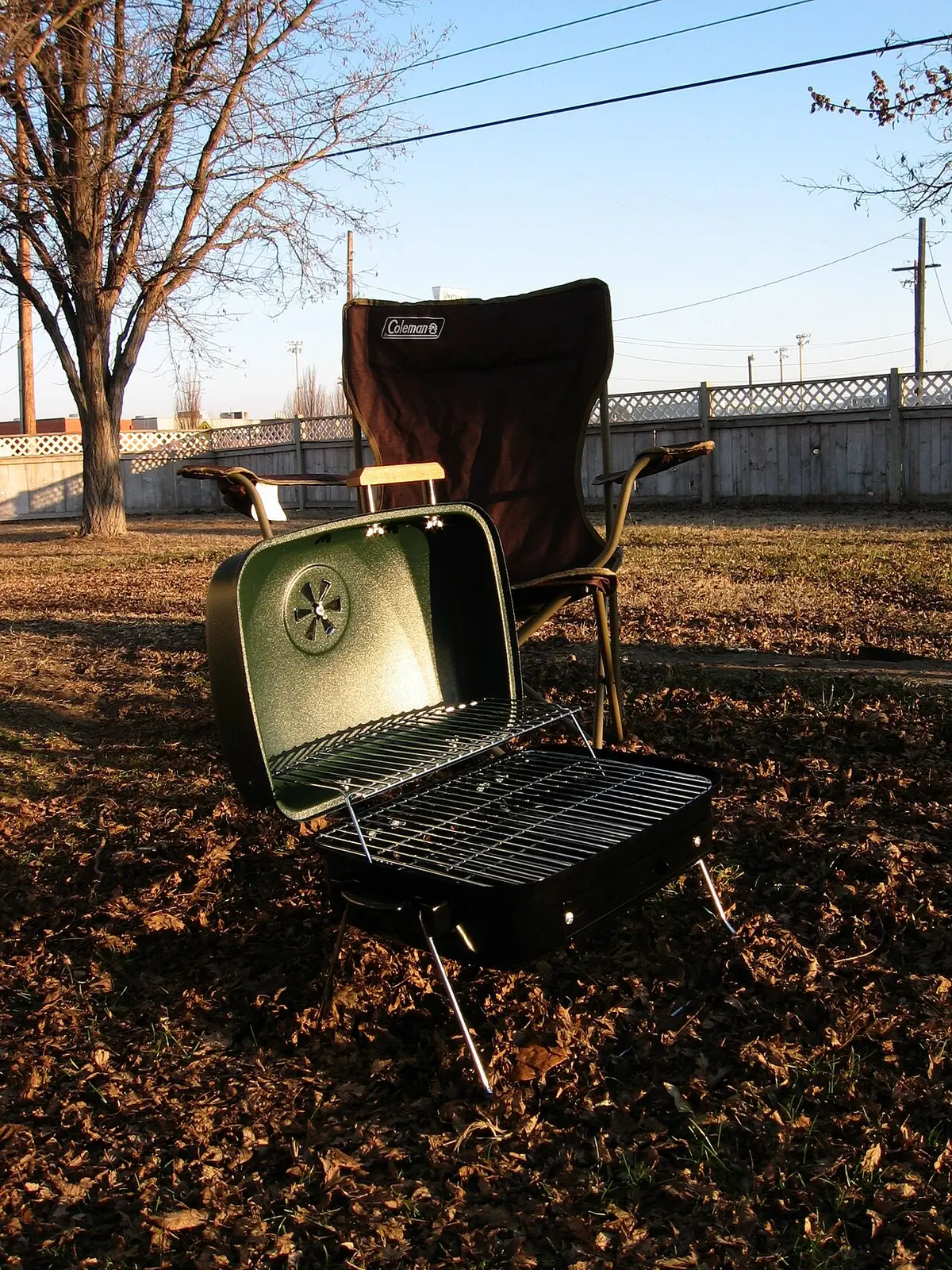
A portable grill takes more room than a stove. A tabletop propane grill is 10 to 25 pounds and sits in the trunk, while a charcoal grill adds a bag of fuel. A stove packs into a milk crate, and a backpacking stove fits in a pot. If you are car camping with space to spare, a grill is easy to bring. For backpacking, a grill is not practical, and a lightweight stove is the only choice.
Consider a layered kit: a two-burner stove as the foundation, a small tabletop grill for evening meals and a few accessories such as a griddle plate, a pair of tongs and a thermometer. The camp kitchen set-up guide covers where to put each piece and how to keep it organized, in how to set up a camp kitchen.
A worked three-day menu: who does what
Imagine a family of four camping for three days with a two-burner stove and a tabletop propane grill. Here is how the cooking divides in practice, and what it tells you about fuel.
Friday night. The group arrives late, so dinner is quick: grilled hot dogs and corn on the cob. The grill preheats for five minutes, cooks everything in fifteen and shuts off. The stove stays cold. Fuel use is about a third of a 1 pound cylinder.
Saturday morning. Pancakes, eggs and coffee. The stove runs two burners for about 40 minutes at medium and low, with a griddle on one burner and a kettle on the other. The grill sits idle, and there is no sensible way to make pancakes on it without a griddle plate. Fuel use is modest, about 15 percent of a canister or a quarter of a 1 pound cylinder if the stove runs on propane.
Saturday dinner. Burgers on the grill for four, vegetables in foil beside them, and a pot of beans simmering on the stove. Both run at once. The grill takes 25 minutes in total, the stove is on low for 30. This is the situation where owning both pays off, since a single appliance would force you to cook in two rounds and eat cold food.
Sunday morning. Oatmeal and coffee on the stove, then packing up. The grill gets its burn-off and is scraped while still warm.
Across the three days, the grill used about one and a half 1 pound cylinders, and the stove about half of one. The grill is the thirstier tool even though it cooked fewer meals, which is the trade-off for the flavor and capacity it delivers. If your budget or space allows only one, the same weekend on a stove alone works fine, with burgers pan-fried and vegetables sautéed. If you had only a grill, breakfast and coffee would need a side burner or a camping kettle on the grate, and the experience becomes clumsy.
Choosing grill features that matter
Not every grill spec helps at a campsite. Look for these:
- Fold-down legs and a carry handle. Portability is the whole point.
- Lid with a thermometer. A lid turns the grill into an oven and traps heat in wind.
- Wind baffles. Side shields stop a breeze from killing the flame.
- Even heat across the grate. Cheap burners create hot spots that scorch one side of the food.
- Removable grease tray. Easy cleaning means you will actually do it.
- Regulator and hose quality. A regulator that keeps pressure steady prevents surges and flare-ups.
- Grate material. Cast iron or coated steel holds heat, while thin wire grates warp.
- Stable footprint. A wobbly grill is a safety problem on uneven ground.
- Igniter reliability. Pack matches anyway.
For stoves, the equivalent list includes a wind guard, a precise valve for simmering, a sturdy grate that fits your pans and an auto igniter you do not need to trust.
Using a grill and stove together in a small camp kitchen
A tidy kitchen layout reduces accidents. Put the stove and grill on separate stable surfaces, ideally at least three feet apart, with the cook standing upwind. Keep the cooler in the shade, away from heat, and set a clean prep surface between the cooler and the cooking area. Use one table for raw food and another for cooked food whenever possible, or at least one cutting board for each. Keep a bucket of water or a fire extinguisher rated for grease and propane fires close at hand, and keep a lid for pans to smother a small flare-up. Place the fuel supply away from the cooking area and shaded from the sun. A simple routine of preheat, cook, shut off at the cylinder valve and let cool before packing prevents most mishaps.
Budget tiers
Grills range widely in price. Entry-level tabletop models cost little and work fine for occasional use, while higher-priced units add better burners, sturdier frames, wind baffles and larger cooking areas. Browse by budget in the lists of portable grills under $30, under $50, under $75 and under $150. For general guidance, see the best portable camping grills, the best portable grill and the best portable grill for camping and tailgating. If you want to stay with gas, the best portable grill for camping gas list is the closest fit.
Cleaning and care
A stove needs a quick wipe and a check of connections. A grill needs more work. Burn off residue after cooking with the burners on high for a few minutes, scrape the grate with a brush and wipe it with a lightly oiled paper towel. Empty the grease tray, since built-up grease is a fire hazard and attracts pests. Let the grill cool before packing, and store it in a bag so that grease does not spread in the car. See how to clean a camping stove for the stove side. Inspect hoses and regulators for cracks before each trip, and test connections with soapy water.
A decision guide
| Your situation | Pick |
|---|---|
| Solo or backpacking trip | Stove only |
| Weekend car camping for 2 | Stove, with a grill optional |
| Family of 4 or more, 3 or more days | Stove plus a small grill |
| You love burgers, steaks and grilled vegetables | Grill plus a basic stove for coffee |
| Dry season with fire bans | Stove, and a gas grill if allowed |
| Tailgating and day trips | Grill |
| Cooking mostly one-pot meals and breakfast | Stove |
| Tight space, small car | Stove |
| Group of 8 or more | Grill and a two-burner stove |
Common mistakes to avoid
- Expecting a grill to do everything. Boiling and breakfast are stove jobs.
- Cooking in or near a tent. Carbon monoxide and fire risks are real.
- Forgetting a thermometer. Charred outside does not mean cooked inside.
- Running out of fuel. Bring a spare cylinder, since grills use more than stoves.
- Placing a hot grill on a wooden table. It will scorch or ignite.
- Ignoring fire restrictions. Charcoal and open flames are often banned in dry seasons.
- Skipping cleanup. Grease and food scraps attract animals and cause flare-ups.
Frequently asked questions
Can I use a portable grill as my only cooking device while camping?
You can, but you will find breakfast and one-pot meals awkward. A grill with a griddle plate and a side burner covers more, but a stove is still handier for coffee and boiling. Most campers who try grill-only add a stove within a trip or two.
Is a gas grill or a charcoal grill better for camping?
Gas is faster, cleaner and usually allowed under more fire restrictions. Charcoal gives better smoke flavor but requires more time, produces ash and is often banned in dry conditions. For most campers, gas is the practical choice.
How much propane does a portable grill use?
A typical tabletop grill with a 10,000 BTU/h burner uses a 1 pound cylinder in about 1.5 to 2 hours at medium-high. For a three-day weekend with grilled dinners, plan on two or three cylinders, or use a 20 pound tank with an adapter hose.
Can I grill on a picnic table?
Only with a heat shield or a grill designed for tabletop use. Heat and grease can scorch wood or melt plastic, and some campgrounds forbid grills on tables. Use a stand or a fire-safe mat, and check the rules.
Which is safer, a grill or a stove?
Both are safe when used outdoors with attention. Grills have more grease and flare-up risk, and charcoal adds embers and carbon monoxide. Stoves have less exposed flame but can tip. Use either on a stable surface, away from tents and flammable items.
How do I cook for a large group with limited gear?
A grill covers meat and vegetables for many people at once, and a two-burner stove handles sides and drinks. Prepare food in advance, use foil packets and plan for staggered cooking so the grill and stove are never both waiting for each other.
Sources & further reading
- USDA FSIS: Safe minimum internal temperature chart
- MSR: The ins and outs of canister fuels
- U.S. CPSC: Portable generator safety alert (carbon monoxide guidance)
Image credits
- "Coleman Road Trip Propane Portable Grill (41159363705)" by Tony Webster from Minneapolis, Minnesota, United States, CC BY 2.0, via Wikimedia Commons.
- "Portable grill" by Bobjgalindo, CC BY-SA 4.0, via Wikimedia Commons.


Ready to buy?
Compare the gear: Camp Kitchen
5 Best Portable Grills Under 150 in 2026
Best portable grills under $150: five propane, charcoal and electric grills compared on cooking area, burner power and folded size for RV and camp cooking.
6 Best Portable Grills Under 30 in 2026
Best portable grills under $30: six small charcoal grills compared on cooking area, weight, assembly and fuel for campers, tailgaters and picnickers.
5 Best Portable Grills Under 50 in 2026
Best portable grills under $50: five charcoal and propane tabletop grills compared on surface area, fuel, weight and setup for camping and tailgating.
5 Best Portable Grills Under 75 in 2026
Best portable grills under $75: five charcoal, propane and electric grills compared on cooking area, fuel and carry size for camping and tailgating.
6 Best Portable Camping Grills in 2026
Portable camping grills compared: propane stand-up and tabletop models plus lightweight charcoal grills for campsites, tailgates and picnic tables.
6 Best Portable Grill in 2026
Portable grills compared for tailgates, campsites and patios: tabletop propane, an electric grill and a 14 inch charcoal grill from 150 to 360 square inches.
4 Best Portable Grill For Camping And Tailgating in 2026
Best portable grills for camping and tailgating: four propane grills from a 3-burner Coleman to a compact fold-and-go model, compared on BTU and size.
6 Best Portable Grill For Camping Gas in 2026
Best portable gas grills for camping: six propane tabletop grills from compact 1-burner models to 2-burner Coleman, compared on BTU, grilling area and cleanup.
Keep reading