

We research everything we recommend. When you buy through our links, we may earn a commission. Learn more

Buying guide · 10 min read · Updated October 2, 2026

2 Best 1000Wh Portable Power Stations in 2026: A Practical Camping Guide

Best 1000Wh portable power stations compared on capacity, weight, ports, solar input and battery chemistry for camping and outage backup.

Danny WalkerBy Danny WalkerCamping Editor at RV Gear Lab2 products comparedSpec-sheet researched
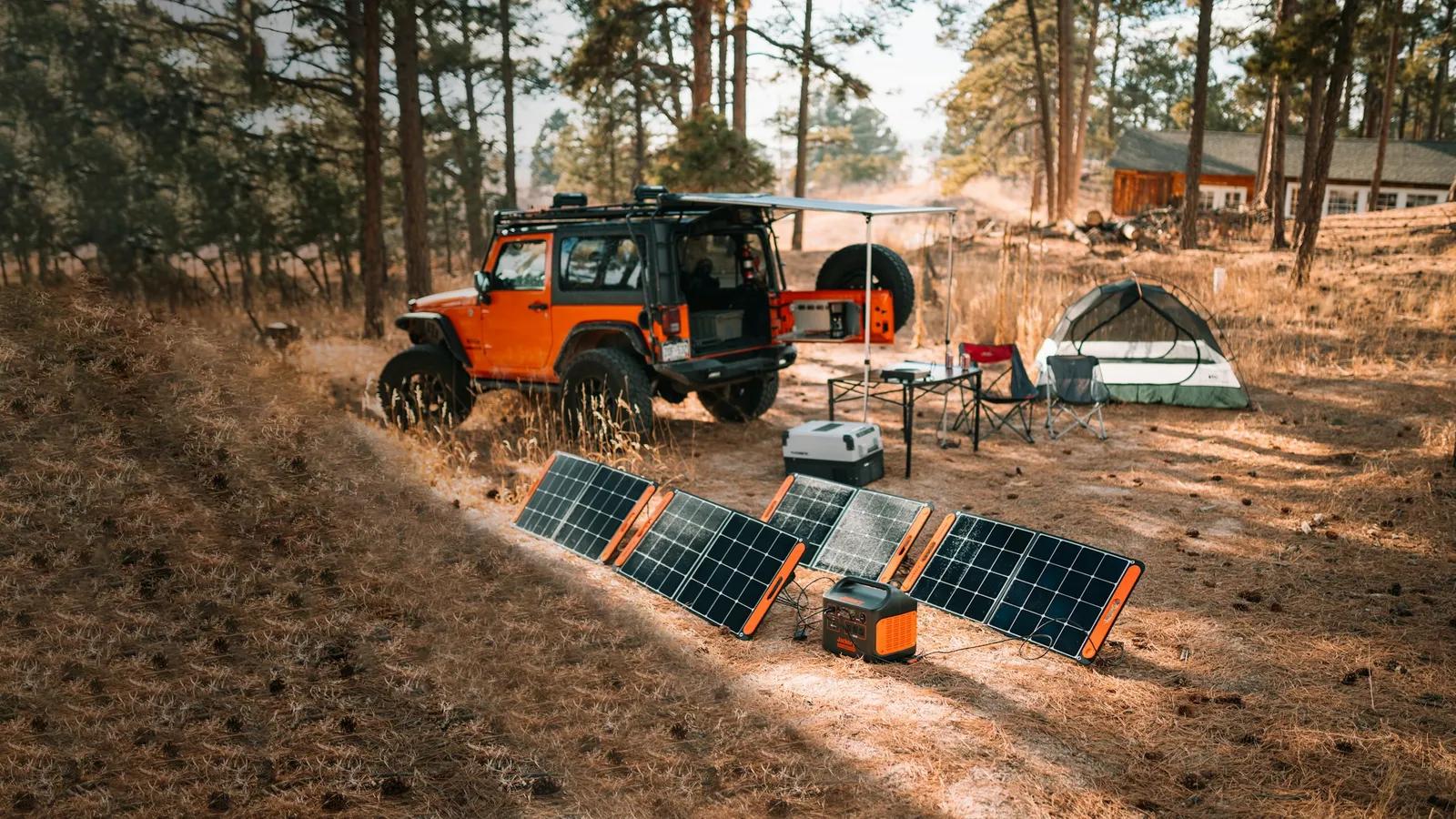
Jeep camp with a tent, solar panels and a portable power station at a pine forest campsite

At a glance

Our top picks

A 1000Wh power station is a weekend-camp battery: it can run a 12V fridge for a day or more, recharge phones and laptops many times, or keep a router and lights going through an outage. The number to watch is usable watt-hours against your daily use, not the marketing 1000W label alone.

Only two stations state a capacity right at 1000Wh in a listing, so this guide is short. They were compared on stated capacity, weight, port layout, solar input and battery protection.

RV Gear Lab field notes

The Campsite Fit Check

Start with the job
1000W Portable Power Station 999Wh leads this shortlist for Light carry for weekend camps. Use that fit as a reference point, then compare the alternatives against your own space and workload.
Specs that separate the picks
The first details to compare are 999Wh, 1000W pure sine, 1,024Wh LiFePO4, 1000W. Confirm the exact model and included components before ordering.
Trade-off to plan for
Fewer cycles than LiFePO4 rivals

Before you buy

What Matters Before You Choose a 1000Wh Portable Power Station

Key buying criteria so you get the right fit the first time.

  1. 01

    Watt-hours and real runtime

    Capacity in watt-hours is the fuel tank, and the loads in watts are the burn rate. A 1000Wh station running a 100W load lasts about 8 to 9 hours after inverter losses. Divide Wh by load watts and take about 85 percent, and check the listing for the stated Wh.

  2. 02

    Continuous versus peak output

    A 1000W continuous rating means the AC outlets can sustain 1000 watts, while the 2000W peak covers a brief start surge. A kettle or microwave can exceed the continuous limit and trip the inverter. Check the ratings against your appliance labels.

  3. 03

    Battery chemistry and cycles

    LiFePO4 cells usually give 3000 or more cycles and tolerate heat better, while other lithium types offer fewer. Cycle count matters if you plan to use it often. Look for the chemistry name and the cycle rating.

  4. 04

    Solar input limits

    A 300W input means panels above that wattage will not charge faster. Match your panel to the station's input range, and check the voltage window. Check the listing for the maximum solar input.

  5. 05

    Weight and ports

    A 17 pound unit is easy to carry, while 28 pounds suits a trunk. Count the ports you need, especially USB-C PD for laptops. Check the weight and port list.

Our standards

Why You Can Trust RV Gear Lab

At RV Gear Lab, we compare products based on campsite fit, verified specifications, usability, setup requirements, weight, durability, and real-world trade-offs. We do not rank products purely on marketing claims or commission rates.

We have not personally tested every product listed. Where hands-on testing is not available, recommendations are based on verified manufacturer specifications, product documentation, use-case fit, and comparative research.

How we review camping gear →

Detailed reviews

The 2 best 1000wh portable power stations, explained

01

Best Portable · 1 of 2

1000W Portable Power Station 999Wh
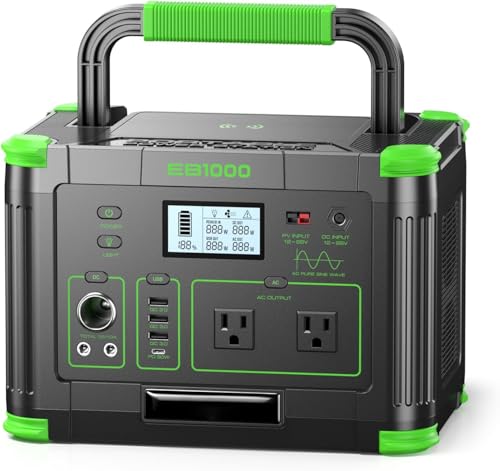
1000W Portable Power Station 999Wh
  • 999Wh, 1000W pure sine
  • 17 lb, 10 ports
  • 2000+ cycles, MPPT solar
Check price on Amazon for 1000W Portable Power Station 999Wh (opens in a new tab)
Best for: Light carry for weekend camps

Our take

A very portable 1000Wh that fits a pack-and-go routine. The lightest way to get this much capacity.

Why it made the shortlist

The GRECELL packs 999Wh and 1000W continuous pure sine AC output (2000W peak) into a 17 pound body. It has 10 ports, including two 120V sockets and a 60W USB-C PD port, and its automotive-grade battery is listed at 2000 or more cycles with a 10-year lifespan.

It is 10 pounds lighter than the STARYLINE 1000W, which makes it the carry-anywhere choice. Triple recharge via wall outlet, solar with MPPT or a 12V car port keeps it flexible.

It suits campers who move their power station between car, tent and cabin. The 60W USB-C port charges a MacBook Pro or flagship phone.

What works

  • Only 17 pounds for 999Wh
  • 10 ports including 60W USB-C PD
  • Solar, wall and car charging
  • BMS protection and 10-year lifespan

Watch out for

  • Fewer cycles than LiFePO4 rivals
  • Chemistry is not named
The catch
The listing names an automotive-grade battery, not LiFePO4.
02
Best for: Outage backup and long-life use

Our take

A solid LiFePO4 option for long-term use at a lower price. Choose it for the cycle life.

Why it made the shortlist

The STARYLINE 1000W stores 1,024Wh in automotive-grade LiFePO4 cells and outputs 1000W through a pair of 110V sockets. Phones and laptops plug into its USB-C PD and USB-A ports, and a 6-layer BMS and 3000-plus cycles are listed.

It costs less than the GRECELL 999Wh and comes in three colors.

It suits campers who want a long-life pack for outage backup and weekends, powering routers, lights and mini fridges. The listing says that load can last two to three days.

What works

  • Named LiFePO4 chemistry
  • Up to 300W solar input
  • Starlink compatible and low interference
  • Three color choices

Watch out for

  • 27.73 pounds is heavy to carry
  • Only one 60W USB-C port
The catch
At nearly 28 pounds it suits a trunk, not a trail.

Methodology

How We Built This Shortlist

Each pick was assessed across 4 criteria weighted for real-world use.

01

Capacity

Compared the stated watt-hours and continuous output.

02

Weight

Noted pounds for carry.

03

Ports and solar

Looked at port counts and solar input.

04

Battery protection

Checked chemistry, cycles and BMS.

Decision guide

Match a 1000Wh Portable Power Station to Your Camp Setup

By Trip Type

Your situationRecommended pickWhy
Frequent moves, trail to carGRECELL 999Wh17 pounds
Outage backup at homeSTARYLINE 1000WLiFePO4, 3000+ cycles
Laptop charging on a camp tableGRECELL 999Wh10 ports with 60W USB-C
Starlink at a cabinSTARYLINE 1000WStarlink compatible

By Budget

BudgetRecommended pick
$340 to $350STARYLINE 1000W
$370 to $380GRECELL 999Wh

Light vs long-life

Light

The GRECELL 999Wh weighs 17 pounds and charges many devices.

Long-life

The STARYLINE 1000W names LiFePO4 and 3000 or more cycles.

Most campers should default to the STARYLINE 1000W for value, or the GRECELL 999Wh if weight is the limit.

By Priority

Best fitRecommended pick
Lowest weightGRECELL 999Wh
Lowest priceSTARYLINE 1000W
Named LiFePO4STARYLINE 1000W
Most portsGRECELL 999Wh

For Camp Fridge and Lights Specifically

Look for

Capacity near 1000Wh and pure sine output

In this comparison

The GRECELL 999Wh and STARYLINE 1000W both list 1000W of AC output plus USB ports for phones.

When to Spend More

Spend more if

Spend more on the GRECELL 999Wh if weight and a 10-port layout matter.

Save if

Save with the STARYLINE 1000W if you want LiFePO4 and a lower price and can carry the weight.

FAQ

Before You Bring One Home

How long will a 1000Wh power station run a fridge?

A 12V camping fridge often draws 40 to 60 watts when cycling, so 1000Wh can last a day or two. A full-size fridge uses far more.

Can I run a microwave on it?

A 1000W continuous rating can run a small microwave only if its input is below that. Check the appliance label.

Is LiFePO4 worth it over other lithium?

It lasts longer in cycles and handles heat better. It is a good choice for frequent use.

How do I recharge it?

Use the wall outlet, a car 12V port or solar panels within its input range. Keep it ventilated while charging.

How do I store it?

Keep it at partial charge in a cool, dry place and top it up every few months. Avoid hot cars.

Bottom line

The short version

Browse more 1000wh portable power stations on Amazon →
Danny Walker, Camping Editor at RV Gear Lab

About the author

Danny Walker

Camping Editor at RV Gear Lab

Danny covers camping gear, campsite setup, outdoor power, sleep systems and practical camping advice, with a focus on helping campers make better gear decisions.

More from Danny →Editorial standards

Keep reading

Related guides