


We research everything we recommend. When you buy through our links, we may earn a commission. Learn more

Buying guide · 10 min read · Updated October 2, 2026

5 Best 12v Camping Batteries in 2026: A Practical Camping Guide

Best 12V camping batteries compared on amp-hours, chemistry, built-in BMS and size, for campers powering lights, fridges and electronics off-grid.

Danny WalkerBy Danny WalkerCamping Editor at RV Gear Lab5 products comparedSpec-sheet researched
Dome tent and hammock at a forest campsite at golden hour

At a glance

Our top picks

A 12V camping battery is only as useful as its amp-hours, its chemistry and the protection built in. Multiply volts by amp-hours and you get watt-hours, which is the number that tells you how long a light or a fridge will run.

Five 12V batteries made the list, from a 100Ah LiFePO4 with a 100A BMS to a 7Ah sealed lead-acid. They were compared on stated capacity, cycle life, protection circuits, series or parallel limits and the devices each listing names.

RV Gear Lab field notes

The Campsite Fit Check

Start with the job
12V 100Ah LiFePO4 Lithium Battery BIC Group 31 with 100A BMS 1280Wh leads this shortlist for Off-grid camp systems. Use that fit as a reference point, then compare the alternatives against your own space and workload.
Specs that separate the picks
The first details to compare are 12V 100Ah, 1280Wh, 12V 12Ah, 12A BMS, Two 12V 10Ah batteries. Confirm the exact model and included components before ordering.
Trade-off to plan for
Not a starting or golf cart battery

Before you buy

What Matters Before You Choose a 12v Camping Battery

Key buying criteria so you get the right fit the first time.

  1. 01

    Amp-hours and watt-hours

    Multiply volts by amp-hours to get watt-hours: 12V times 100Ah is 1200Wh, or 1280Wh at the 12.8V LiFePO4 nominal. A 12V 10Ah battery is about 120Wh, enough for lights but not a fridge. Find the Ah in the title and compute Wh for your load.

  2. 02

    Chemistry

    LiFePO4 offers thousands of cycles, a flat voltage curve and safer behaviour than other lithium types. Sealed lead-acid is cheaper but heavier and only gives about half its rated capacity safely. Check the listing for the chemistry name.

  3. 03

    BMS current rating

    A battery management system cuts power when current or temperature exceeds limits. A 12A BMS will shut down under an inverter load, while 100A can run larger loads. Look for the BMS amp rating.

  4. 04

    Charging temperature

    Most lithium batteries should not be charged below freezing unless they state low-temperature protection. Cold nights matter for a camp battery. Check whether the listing mentions a low-temperature cutoff.

  5. 05

    Wire gauge and fusing

    High current needs thick wire and a fuse near the battery. A 100A battery on thin wire can overheat. Match the wire gauge to the load and fuse at the positive terminal.

  6. 06

    Series and parallel

    Linking batteries raises voltage in series or capacity in parallel. Mismatched units can damage each other. Check how many identical units the listing allows.

Our standards

Why You Can Trust RV Gear Lab

At RV Gear Lab, we compare products based on campsite fit, verified specifications, usability, setup requirements, weight, durability, and real-world trade-offs. We do not rank products purely on marketing claims or commission rates.

We have not personally tested every product listed. Where hands-on testing is not available, recommendations are based on verified manufacturer specifications, product documentation, use-case fit, and comparative research.

How we review camping gear →

Detailed reviews

The 5 best 12v camping batteries, explained

01
Best for: Off-grid camp systems

Our take

The one to buy if you are building a true camp power system.

Why it made the shortlist

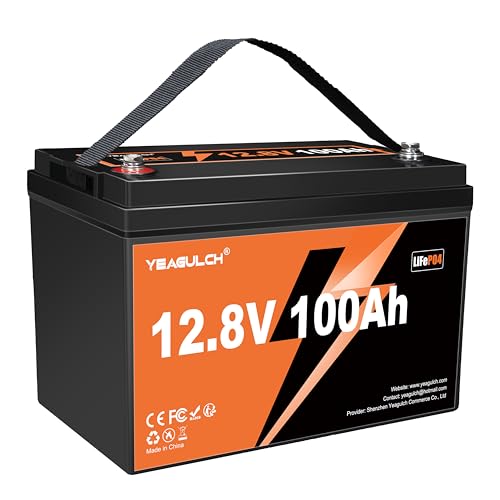
The yeagulch is a 12V 100Ah Group 31 LiFePO4 battery with a 100A BMS and 1280Wh of capacity. The listing cites up to 4,000 cycles at 100% depth of discharge, a flat discharge curve and a weight of 21.6 lbs.

It carries about eight times the energy of the 12Ah LiTime and many times the ExpertPower. Series or parallel wiring is allowed for up to four units, which the small batteries also list.

It suits campers building a real off-grid system for lights, a fridge and a small inverter. It pairs well with a solar charge controller set for LiFePO4.

What works

  • Largest capacity of the five
  • Flat discharge curve holds voltage
  • Listing says two thirds lighter than lead-acid
  • Up to four units can be linked

Watch out for

  • Not a starting or golf cart battery
The catch
The listing says not to use it as a starting battery, so keep it on the camp side.
02
Best for: Lights and small gear

Our take

A small LiFePO4 with real protections for LED and fish finder use.

Why it made the shortlist

The LiTime is a 12V 12Ah mini LiFePO4 battery with a 12A BMS covering overcharge, over-discharge, current, temperature and short circuits. It lists 4000+ cycles at 100% depth of discharge and CE, RoHS and FCC certification.

It holds a little more than the 10Ah Nermak units and has a stated certification list. It works for a fish finder, LED lights and small gear.

It suits campers who power a few lights or a small speaker. The compact body sits in a gear box.

What works

  • BMS protects against five fault types
  • Certification list on the listing
  • Long stated cycle life
  • Small enough for a gear bin

Watch out for

  • 12A BMS limits high-draw loads
  • Too small for a fridge
The catch
A 12A limit means it will not run an inverter or compressor.
03
Best for: Lights and routers

Our take

A cost-effective pair for small 12V jobs at camp.

Why it made the shortlist

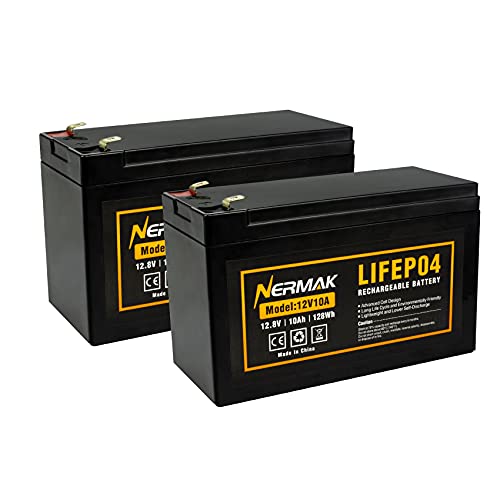
The Nermak gives two 12V 10Ah LiFePO4 batteries with built-in BMS, 2000+ cycles and a 5A quick charge. Each supports up to 10A continuous discharge, and up to four identical units can link in series or parallel.

A pair means a spare for lights and a spare for a router or camera. Against the single LiTime, the two units give more total capacity.

It suits campers who run LED strips, a 12V router or a trail camera. The listing names RV and outdoor camping among its uses.

What works

  • Two batteries in one purchase
  • 10A continuous discharge
  • 5A quick charge
  • Link up to four units

Watch out for

  • 10A limit rules out big loads
  • Cycle life is shorter than the LiTime
The catch
Do not link units of different ages or charge levels.
04
Best for: Cameras and LED strips

Our take

A grab-and-go pack for small 12V gear.

Why it made the shortlist

The Talentcell is a lithium-ion pack with a 12V DC output and a 5V USB output, listed at 66.6Wh (11.1V 6000mAh). Five LED indicators show charge, and a 12.6V 1A wall charger and splitter cable come in the box.

Its 12V output swings from 12.6 down to 9V, unlike the steady output of a LiFePO4 battery.

It suits campers who power a camera, LED strip or modem. A DC5521 plug connects the output.

What works

  • 12V and 5V outputs in one pack
  • Charge indicator with five LEDs
  • Charger and splitter included
  • Light enough to carry

Watch out for

  • 12V output voltage is not constant
  • 66.6Wh limits runtime
The catch
Check that your device tolerates a 9 to 12.6V range.
05

Best Budget · 5 of 5

ExpertPower EXP1270

ExpertPower EXP1270
  • 12V 7Ah, SLA
  • F1 terminals, spill-proof
  • Rugged ABS case
Check price on Amazon for ExpertPower EXP1270 (opens in a new tab)
Best for: Cheap spare

Our take

A simple, cheap lead-acid for small jobs.

Why it made the shortlist

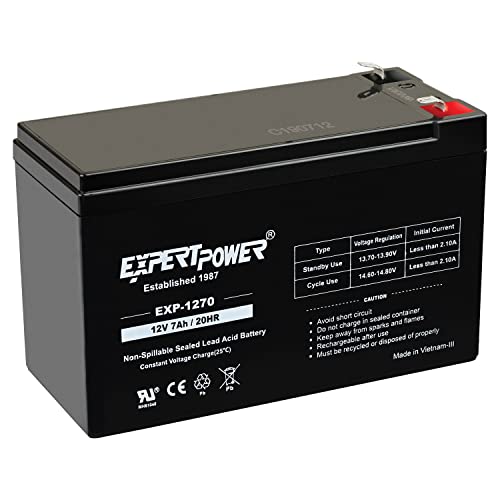
The ExpertPower EXP1270 is a 12V 7Ah sealed lead-acid battery with F1 terminals, a maintenance-free case and a spill-proof design. It replaces a range of 1270 batteries and suits alarms, UPS units and power wheels.

It costs the least here and covers small loads for the lowest spend. LiFePO4 options hold more usable energy per pound.

It suits campers who want a cheap spare for a small light or an alarm. A rugged ABS case resists vibration.

What works

  • Spill-proof, maintenance-free
  • Fits standard F1 terminals
  • Replaces many 1270 batteries

Watch out for

  • Heavier per watt-hour than lithium
  • Short cycle life next to LiFePO4
The catch
Discharging it deeply shortens its life, so keep loads small.

Methodology

How We Built This Shortlist

Each pick was assessed across 5 criteria weighted for real-world use.

01

Capacity in Ah and Wh

Compared stated amp-hours and converted to watt-hours using the 12V rating.

02

Chemistry and cycle life

Looked at LiFePO4, lithium-ion and sealed lead-acid, with stated cycle counts.

03

Protection circuits

Read BMS ratings and the faults they cover.

04

Series and parallel limits

Noted how many units can link.

05

Size and weight

Compared dimensions and weights.

Decision guide

Match a 12v Camping Battery to Your Camp Setup

By Load

Your situationRecommended pickWhy
Fridge and inverter systemyeagulch 100Ah LiFePO41280Wh and a 100A BMS.
LEDs and fish finderLiTime 12Ah LiFePO412A BMS with five protections.
Router and cameraNermak 10Ah 2-PackTwo units with 10A discharge.
Portable 12V and USBTalentcell 12V Pack66.6Wh with 12V and 5V.
Cheap spareExpertPower 7Ah SLALowest price.

By Budget

BudgetRecommended pick
$10 to $40ExpertPower 7Ah SLA or Talentcell 12V Pack
$60 to $70LiTime 12Ah LiFePO4 or Nermak 10Ah 2-Pack
$140 to $150yeagulch 100Ah LiFePO4

LiFePO4 vs Sealed Lead-Acid

LiFePO4

The yeagulch 100Ah LiFePO4, LiTime 12Ah LiFePO4 and Nermak 10Ah 2-Pack are lighter and list thousands of cycles with a BMS.

Sealed lead-acid

The ExpertPower 7Ah SLA costs less but weighs more per watt-hour and has a shorter cycle life.

Most campers should choose LiFePO4 like the LiTime 12Ah LiFePO4, with the ExpertPower 7Ah SLA only for a cheap spare.

By Budget

PreferenceRecommended pick
Under $25ExpertPower 7Ah SLA
Under $70Talentcell 12V Pack
Mid-range LiFePO4LiTime 12Ah LiFePO4
Full systemyeagulch 100Ah LiFePO4

For Camp Lighting Specifically

Look for

A capacity of 10Ah to 12Ah and a BMS rated for the lights' current.

In this comparison

The LiTime 12Ah LiFePO4 lists a 12A BMS and 4000+ cycles, which suits LED lights.

When to Spend More

Spend more if

Spend more on the yeagulch 100Ah LiFePO4 if you run a fridge or inverter.

Save if

Save with the LiTime 12Ah LiFePO4 or ExpertPower 7Ah SLA for small loads.

FAQ

Before You Bring One Home

How long will a 12V battery run my gear?

Divide watt-hours by the load in watts. The yeagulch 100Ah LiFePO4 holds 1280Wh, so a 50W load runs far longer than on a 12Ah battery. Leave a margin for inverter losses.

What is the common mistake?

Using a small battery on a big load. A LiTime 12Ah LiFePO4 cannot run an inverter safely because its BMS limits current. Match battery size to load.

Is LiFePO4 worth it over lead-acid?

For regular camping, yes. It weighs less and lists thousands of cycles. The ExpertPower 7Ah SLA suits only light, occasional use.

How do I charge a 12V camp battery?

Use a charger or solar controller set for the chemistry. Do not charge lithium below freezing. Use a fuse and the right wire gauge.

How do I store a battery?

Store it partly charged in a cool, dry place. Lithium packs should not sit empty. Check it every few months.

Bottom line

The short version

Browse more 12v camping batteries on Amazon →
Danny Walker, Camping Editor at RV Gear Lab

About the author

Danny Walker

Camping Editor at RV Gear Lab

Danny covers camping gear, campsite setup, outdoor power, sleep systems and practical camping advice, with a focus on helping campers make better gear decisions.

More from Danny →Editorial standards

Keep reading

Related guides